Remote Microgrid Systems for Reliable Off-Grid Power Supply

首页 / 博客 / Remote Microgrid Systems for Reliable Off-Grid Power Supply

Remote Microgrid Systems for Reliable Off-Grid Power Supply

作者 科泰德 6 月 6, 2026

Remote microgrid systems are changing the equation for off-grid power supply, replacing the fuel-only model with integrated energy that combines diesel generators, solar arrays, and battery storage. For project engineers and procurement teams managing operations far from the nearest grid, this shift means lower fuel logistics costs, reduced generator runtime, and greater power resilience. The reality we see across international projects is that the most practical remote microgrid isn’t one that discards proven diesel infrastructure, but one that layers clean energy onto it — building a hybrid system that works with the equipment and constraints already on site.

What Makes a Remote Microgrid Essential for Off-Grid Power?

Sites that rely on a single diesel generator operate in a constant cycle of fuel delivery, engine hours, and runaway logistics costs. When the nearest fuel station is hundreds of kilometers away or accessible only by seasonal road, the vulnerability becomes clear. A remote microgrid changes the model by making multiple energy sources work together, so the generator no longer carries the full load around the clock.

The Challenge of Powering Remote Sites

In isolated telecom towers, 初始 camps, and island communities, grid extension is often uneconomical. Standalone diesel gensets have been the default answer, but they come with high fuel burn, especially at light loads, and frequent maintenance visits that drain operational budgets. Over time, the uncertainty of fuel supply and the wear on a single engine turns reliability into a recurring gamble.

Key Benefits of an Integrated Remote Microgrid

When solar generation and battery storage join the generator in a coordinated system, several things happen. First, the generator can run at its most efficient load band or shut off entirely during peak solar hours, cutting fuel consumption by 30% to 60% depending on the site profile. Second, the battery bank provides instant response to load changes, so the generator avoids starts and stops that accelerate wear. Third, because the system is designed to operate in island mode — with a microgrid controller managing frequency and voltage — power quality remains stable even as sources switch. The outcome is fewer truck rolls, longer engine life, and consistent power that a single machine cannot match.

How Do Hybrid Remote Microgrids Combine Diesel, Solar, and Storage?

A hybrid remote microgrid is not simply three technologies placed next to each other. The value comes from a central energy management system that decides in real time which source serves the load, when to store energy, and when to run the generator. This coordination is what avoids the classic problem of off-grid solar — overproducing when demand is low and contributing nothing when the sun drops.

Balancing Diesel Gensets with Solar and Battery

The controller monitors load demand, battery state-of-charge, and solar availability continuously. During the day, solar PV handles base load and charges the battery. As solar ramps down, the battery takes over until it reaches a preset depth of discharge, at which point the controller signals the diesel generator to start. This sequence keeps the generator at higher average loads — often above 50% — where fuel efficiency is highest and wet-stacking is avoided. In many of the remote sites I’ve worked with, this simple load-shifting logic improves overall fuel economy more than any single hardware upgrade.

The Role of Energy Management Systems

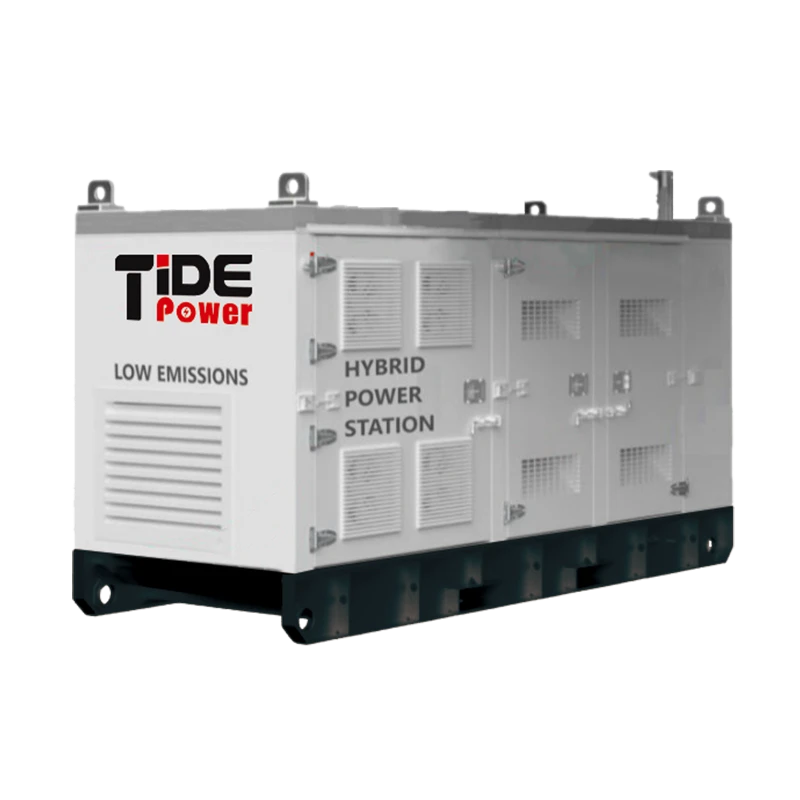
Industrial-grade microgrid controllers today can do more than source switching. They log run hours, track fuel rate versus kWh output, and enable remote monitoring over satellite or cellular links. This operational transparency means a project manager can verify whether the system is performing to its design spec without sending a technician to site. 科泰德’s hybrid power stations, for instance, incorporate an intelligent dispatch system that 支持s unattended operation and seamless switching — a real advantage when the site is hundreds of kilometers from the nearest service center.

TP-10P

Which Generator Sets Fit Best Into an Off-Grid Microgrid?

Not every diesel generator is suited to hybrid operation. A machine that runs continuously at high load in a grid-connected application may behave differently when started and stopped several times a day under microgrid control. The engine’s governor response, its ability to handle frequent startups, and the compatibility of its controller with external dispatch signals all matter.

Integrating Existing Diesel Generators into a Hybrid System

If you already own a proven generator set, replacing it outright is rarely the best first step. Many modern microgrid controllers can communicate with common engine controllers via CAN bus or Modbus, allowing external start/stop commands and load sharing. The key pre-work is commissioning a site load study and confirming that the genset’s alternator and cooling system can handle the expected duty cycle. In projects where the existing equipment is in good mechanical condition, this integration path preserves capital and shortens deployment time.

Selecting New Generator Sets for Remote Microgrids

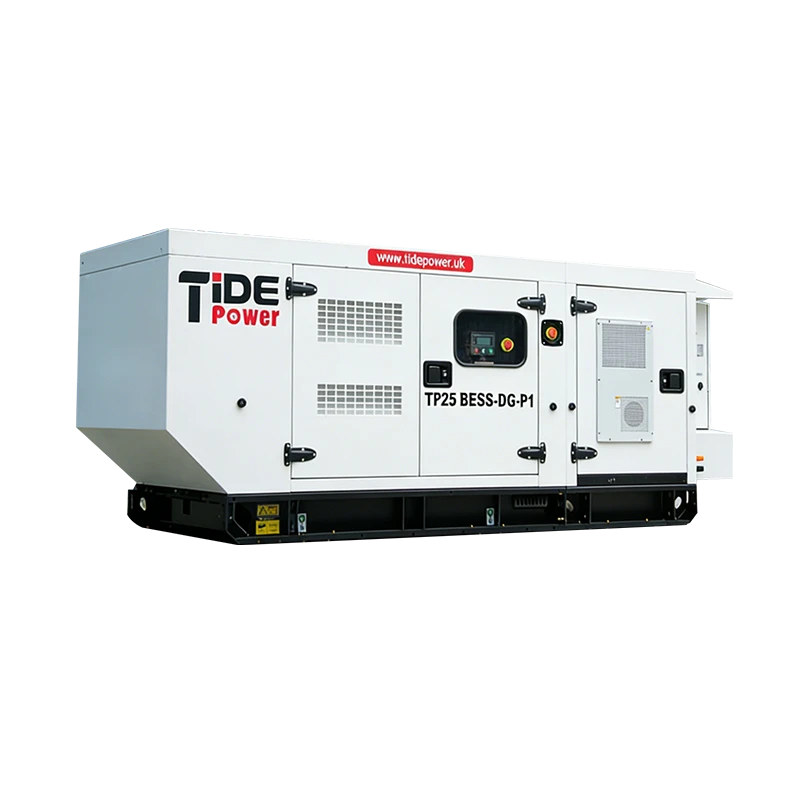
When a new generator is required, the selection criteria shift slightly for microgrid duty. Look for engines with fast load-acceptance capability, low fuel consumption at partial load, and a controller that supports remote dispatch. Tier 2 or Tier 3 emission ratings are often adequate for remote off-grid use, and selecting a machine with a proven service network in the region reduces downtime risk. 科泰德’s Fenova and Hemera series, for example, have been configured for hybrid microgrid duty in multiple overseas projects, with long fuel autonomy and rugged enclosures built for transport over rough terrain.

TP-50P

What Are the Practical Steps to Design and Deploy a Remote Microgrid?

The design sequence for a remote microgrid is straightforward, but skipping any step leads to oversizing or undersizing and poor return on investment. The process starts with the load, not the generation.

Load Profiling and Sizing for Remote Sites

Accurate load data is the foundation. For new sites, this means building a load schedule from the nameplate rating of each connected device, adjusting for duty cycle and coincident peaks. For existing diesel-only sites, fuel consumption records and generator runtime logs can be reverse-engineered into a load profile with reasonable accuracy. Once the daily energy requirement and peak load are known, the solar array size, battery capacity, and generator rating can be selected using a microgrid sizing tool — one that accounts for the site’s solar resource, autonomy days, and maximum allowable diesel fraction. There is no universal optimal ratio; a telecommunications site with zero tolerance for downtime may require higher generator redundancy, while an agricultural water pumping application might accept more battery-only runtime.

Logistics and Commissioning in Isolated Locations

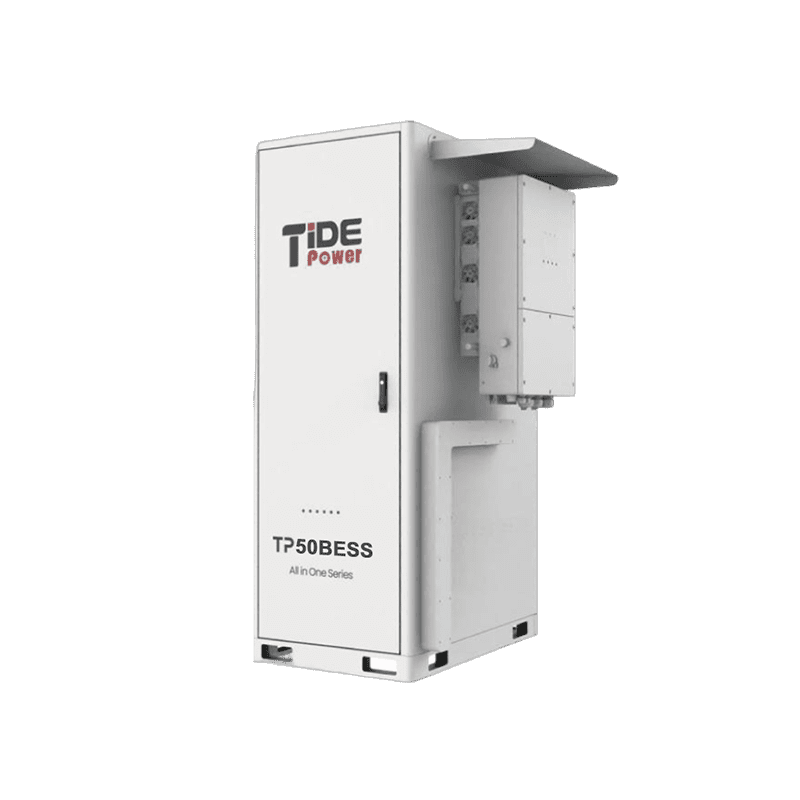
Shipping containerized power equipment to a remote site involves clearance procedures, last-mile transport, and assembly constraints that directly affect system design. I consistently advise teams to pre-commission the full energy storage and hybrid controller system at a staging facility before containerizing it for shipment. This reduces field commissioning time and catches integration issues early. Spare parts planning is equally important: stocking replacement controller modules, battery fuses, and solar charge controller cards prevents a minor failure from cascading into a long-duration outage when the nearest supplier is weeks away.

TP-50BESS

How Do You Maintain and Scale a Remote Microgrid Over Time?

A microgrid in a distant location demands a different maintenance philosophy than a genset in an urban depot. The goal is to reduce unplanned interventions while building the data that enables remote decision-making and gradual system expansion.

Remote Monitoring and Fuel Management

Even a basic supervisory control and data acquisition setup that reports generator status, battery state-of-charge, and fuel level daily changes the operational model. Fuel theft and misreporting are real problems in unattended sites, and a metered system with secure enclosures removes that ambiguity. Maintenance intervals can also be shifted from calendar-based to condition-based, triggering a service visit only when engine hours or oil condition cross a threshold. This approach stretches service runs and lowers cost per kWh.

Expanding Microgrid Capacity as Demand Grows

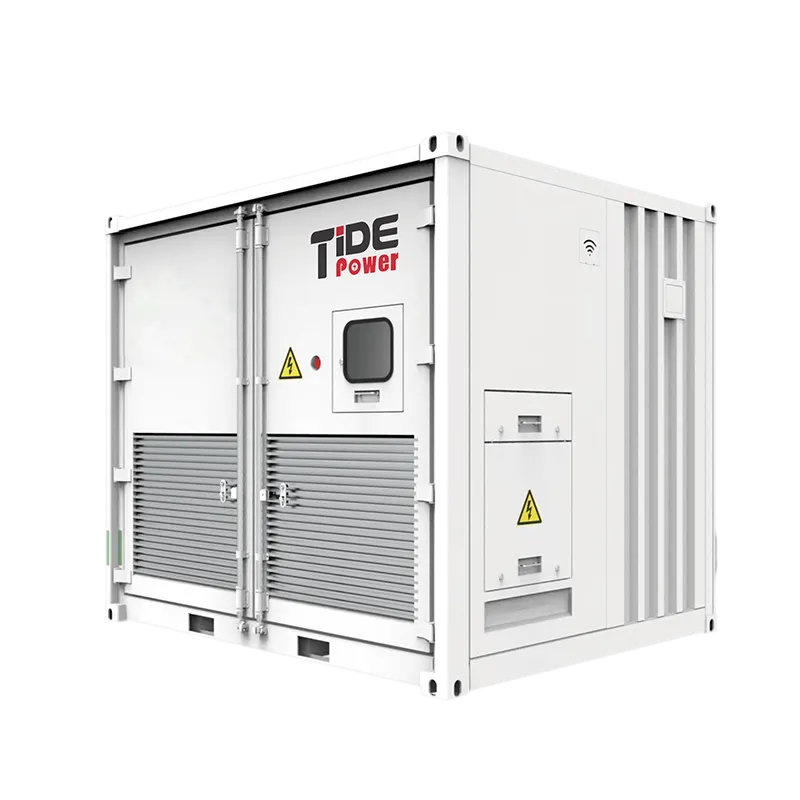
Because a hybrid remote microgrid is modular, capacity expansion is often a matter of adding another battery rack, increasing solar array size, or — when load growth exceeds renewable output — integrating an additional generator set in parallel. The original microgrid controller should be specified with extra communication and I/O slots from the start to avoid a full controller replacement later. When a site evolves from a small telecom station to a larger community service point, this forward compatibility keeps the system’s life cycle cost under control.

TP-261BESS

If your remote power operation is still running on diesel alone and you are evaluating the addition of solar and storage, the first practical step is confirming that your existing generator controller can interface with a modern microgrid energy management system. This compatibility check often takes less time than a fuel delivery cycle but can avoid costly integration rework. For a concrete assessment based on your equipment and site data, share your generator specifications and load profile with our team at [email protected] or call +86 591 2806 8999.

Common Questions About Remote Microgrids

How much does a remote microgrid cost?

Cost depends primarily on the required solar capacity, battery storage size, and the generator rating. A basic 25 kVA hybrid system for a small telecom site may fall in the range of $35,000 to $60,000, while a 250 kVA system for a mining camp or island community with several hundred kilowatt-hours of battery storage can exceed $400,000. These figures include the containerized power station, energy management controller, solar PV array, and transportation. To control cost, many organizations phase deployment — starting with a diesel-battery hybrid and adding solar in a second phase once load data is confirmed.

Can I add solar to my existing diesel generator?

In most cases, yes. You need a hybrid inverter or a microgrid controller that can accept solar DC or AC input and coordinate with the generator’s automatic start module. The generator’s controller must support remote start/stop, and the system must be designed to prevent reverse power flow to the generator. I have seen installations where older mechanical-governor gensets were integrated with external load-sharing modules, though the payback period shortens when the existing generator is already electronically controlled. A pre-project compatibility audit is always worth the effort.

What is the best microgrid for off-grid communities?

cURL Too many subrequests by single Worker invocation. To configure this limit, refer to https://developers.cloudflare.com/workers/wrangler/configuration/#limits

cURL Too many subrequests by single Worker invocation. To configure this limit, refer to https://developers.cloudflare.com/workers/wrangler/configuration/#limits

cURL Too many subrequests by single Worker invocation. To configure this limit, refer to https://developers.cloudflare.com/workers/wrangler/configuration/#limits

如果您感兴趣,请查看以下相关文章:

?科泰德新一代大功率发电机箱
走进科泰德中国生产基地
如何选择合适的水泵?专业买家指南