 EN
EN ZH
ZH FR
FR ES
ES AR
ARBattery backup for 5G base stations carries a different set of design constraints than 4G backup power did. A 5G site draws more power in dense urban areas, and an outage now hits voice, industrial automation, and fixed wireless access at the same time. The right bank is not a single chemistry choice. It is a runtime target matched to the load profile, temperature, and generator start behavior. Operators who treat the battery bank as a black box tend to undersize for radio transients or overpay for capacity they never use. The sizing path below follows the sequence I use with telecom energy buyers.
What Do 5G Sites Actually Demand From Battery Backup?
5G site power demand moves up because the radio geometry changes. Massive MIMO antennas and higher carrier counts draw more than older remote radio heads, and small cell installations put battery cabinets in locations where grid availability is weaker. The battery cannot be an afterthought sized by cabinet width. It has to cover a wider spread of loads, including active cooling, layer 2 switches, and security monitoring. Those loads do not rest until the generator takes over.
From a backup power perspective, the main shift is the length of the battery-only window. The site should ride through the first seconds and minutes without any transfer event, then hand over to a generator or a grid return. If the 48V bus dips during a carrier change, the rectifier and BMS may log alarms even when the battery still has capacity. Battery selection therefore starts with the actual load envelope, not the nameplate site rating. That is the core difference in battery backup for 5G base stations.
How Do You Size Runtime Without Overbuilding?
Runtime is not a specification to copy from another site. It should come from the longest outage the operator can tolerate without dispatching a technician.
What is a realistic runtime target?
For a grid-stable urban rooftop, four hours is a practical planning figure because it covers most utility restoration windows and leaves time for a generator trailer if something larger fails. For a rural hilltop with poor access, eight hours or more may be needed because fuel delivery and roads are constraints. The number should be set by operations, not by a datasheet. Once the hour target is fixed, the rest of the sizing is arithmetic.
Why temperature and aging change the calculation
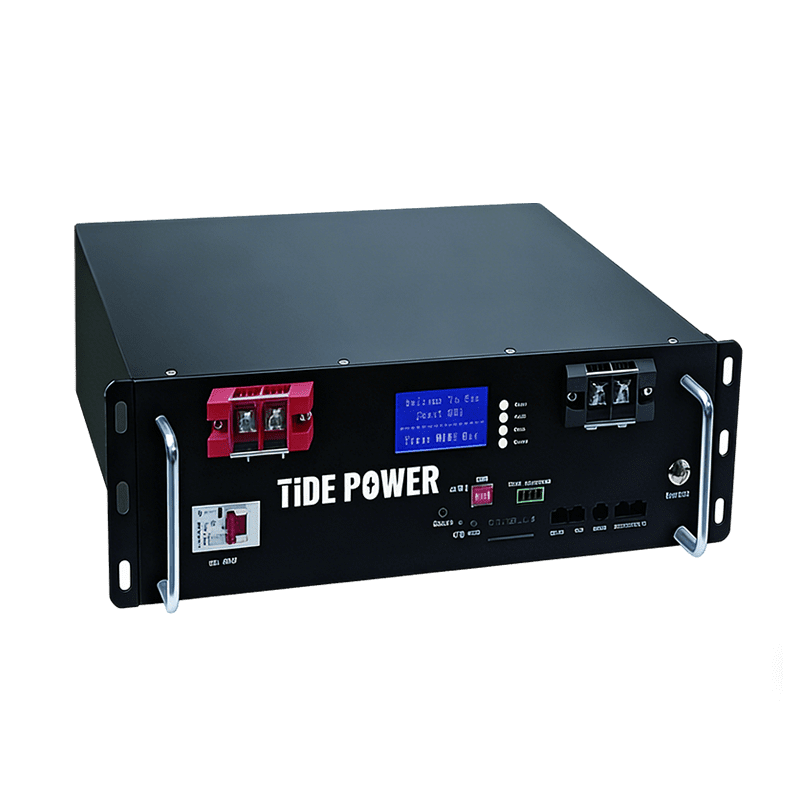
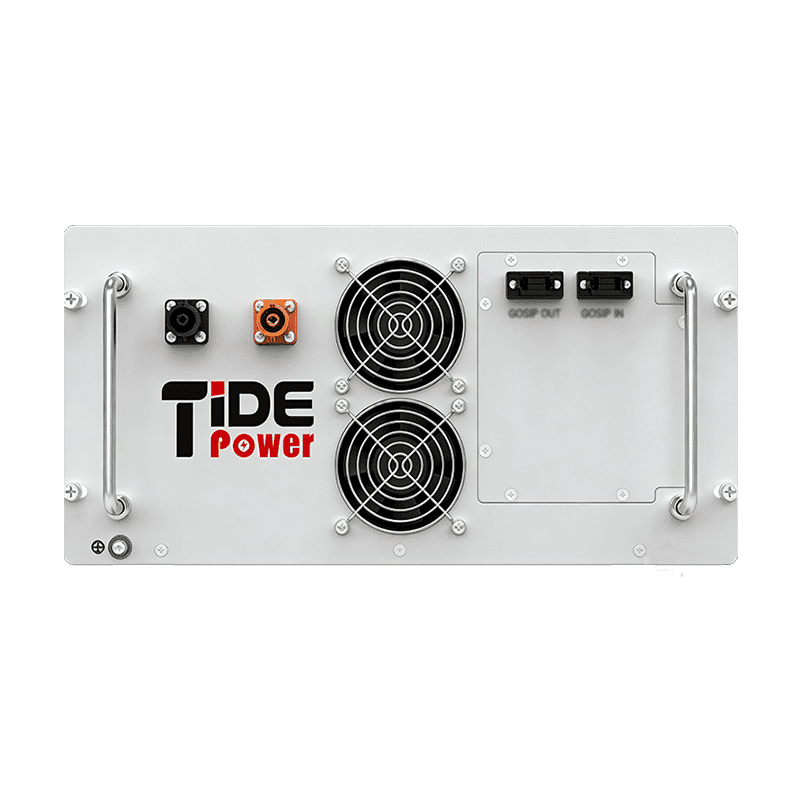
Battery capacity falls at low temperatures and degrades gradually with cycling at high temperatures. A bank sized exactly to the expected energy will come up short before its replacement date. The formula I use in bid reviews is straightforward. Required energy equals average load in kilowatts multiplied by hours, divided by allowable depth of discharge. A 5 kW site with four hours of autonomy needs 20 kWh. At 80 percent depth of discharge the minimum is 25 kWh. Add a 20 percent margin for aging and temperature and the procurement figure is 30 kWh. That is six 5.12 kWh LFP packs or two 16.1 kWh LFP modules after rounding, which keeps the installation modular and simpler to service.
Which Battery Chemistry and Topology Fit the Site?
Most 5G battery backup applications now default to lithium iron phosphate, or LFP, because it combines a long cycle life with predictable thermal behavior. Lead-acid still appears where first cost is the only variable, but it is heavy and replacement cost compounds over a ten year site life. NMC stores more energy for its weight, yet it needs tighter thermal management in an outdoor enclosure.
| Chemistry | Cycle life pattern | Behavior at high ambient temperature | Typical 5G role |
|---|---|---|---|
| Lead-acid | Shorter, sulfation risk | Capacity drops more | Low cost short backup only |
| LFP | Longer deep cycling | More stable | Primary telecom backup |
| NMC | Strong energy density | Needs thermal control | High density edge sites |
Topology is the second decision. A modular 48V LFP bank fits a standard macro shelter and lets the operator add capacity in blocks. A larger hub or aggregation site may justify an integrated BESS because the converter, management, and enclosure are designed as one system. Either way, the battery should be matched to the rectifier and existing monitoring so state of charge is visible to network operations.
Where Do Diesel Generators and Battery Backup Meet?
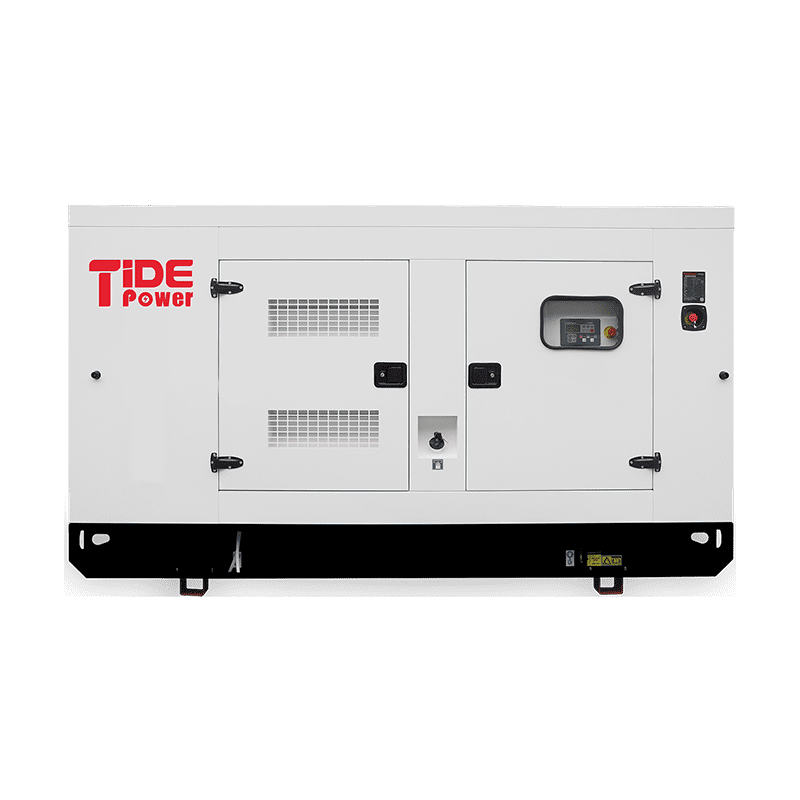
Battery and generator work as two stages of one ride-through sequence. The battery handles the first minutes or hours and avoids a generator start for short flickers. The generator then carries the site through longer grid failures. This arrangement reduces fuel use and run hours, and it makes the generator smaller than it would be if it had to start instantly against the full site load.
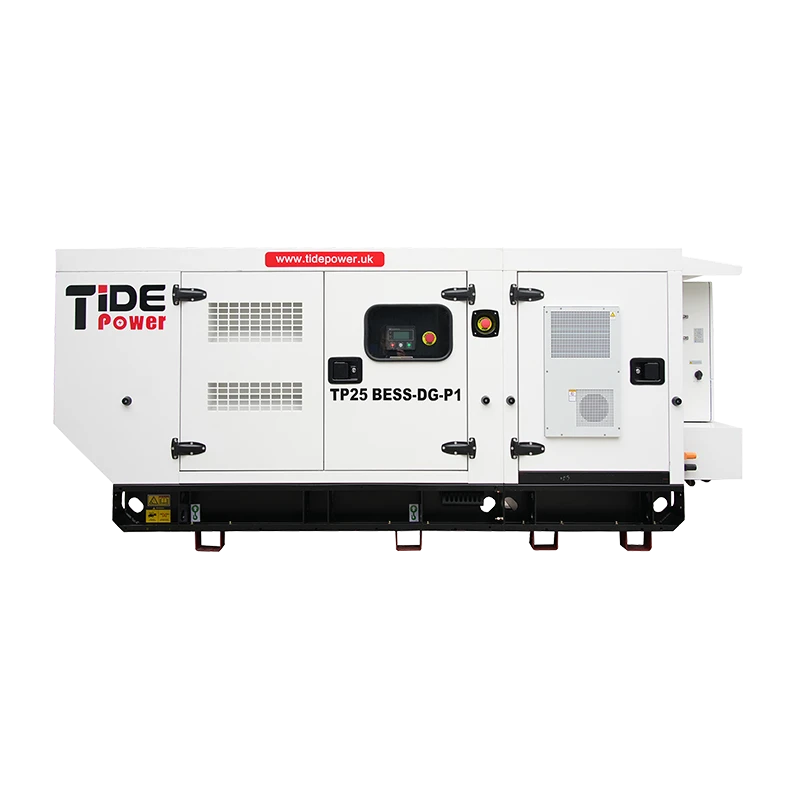
A common integration error is to set the generator start threshold too late. If the battery reaches a low state of charge before the generator has warmed up and accepted the load, the site may still drop. The controller must start the generator at a point that leaves enough reserve to cover that transfer window. Tide Power’s hybrid energy system covers 10 kVA to 250 kVA and combines solar, LFP storage, and diesel generation with millisecond-level switching for off-grid and critical loads.
If your program involves remote sites, restricted fuel transport, or frequent short outages, it is worth confirming the generator start threshold and battery autonomy hours together before finalizing the BOM. Send the site load profile and runtime targets to [email protected] and we will check the configuration.
What Should Procurement Teams Check Before Committing?
Start with the worst case, not the average outage. A battery that covers the typical event may fail the one event operations actually fears. Define the site load, the autonomy target, the lowest expected temperature, and the generator start delay before comparing bids.
- Ask for cycle life at your site temperature, not at an ideal test room figure.
- Confirm the BMS can communicate with the existing rectifier and remote monitoring system.
- Check enclosure protection and handling for rooftop, pole, or street cabinet mounting.
- Compare replacement module cost and availability, not just first bid price.
Most procurement delays come from leaving runtime and site voltage unclear. Once those numbers are fixed, the battery decision becomes a configuration decision. Share your part number requirements, site quantity, and voltage level with us at [email protected] or +86 591 2806 8999, and we will confirm the matching LFP modules, generator start settings, and delivery timing before you order.
What Questions Do Buyers Ask About 5G Battery Backup?
Is lithium battery backup replacing generators at 5G sites?
Rarely. The battery replaces the generator only for short outages that are shorter than the site’s autonomy target. Once the outage extends beyond that target, the generator still carries the load. Lithium backup has changed the generator from an immediate-start source into a second-stage source, which improves fuel use and run hours. Operators should think of the two technologies as one ride-through system, not as competitors in the same slot. In most 5G rollouts, the battery is the more important component only when grid quality is the main problem.
Does high ambient temperature shorten LFP battery life?
The common assumption is that any outdoor cabinet ruins lithium batteries. LFP handles heat better than lead-acid and NMC, but it is not immune. Sustained operation above 40 degrees Celsius accelerates capacity fade and shortens the replacement interval. That is one reason why site temperature should be part of the sizing margin. If the cabinet is mounted in direct sunlight or a closed shelter with poor airflow, the solution is not a larger battery. It is shade, ventilation, or a cooled enclosure. LFP is the right chemistry for most outdoor sites, but thermodynamics still apply.
How many hours of backup do most 5G sites need?
It depends on site type and access. In grid-stable urban areas, four hours is a common planning figure. In rural or mountain areas where roads are poor and fuel delivery is slow, eight hours or longer may be required. Some small cells are designed for shorter autonomy because grid failures are rare and repair is fast. The right number comes from the longest outage the operator will accept without a technician visit. Fix that number before requesting pricing. Otherwise suppliers will bid against different assumptions.
What is the difference between a battery pack and a BESS?
The useful distinction is between the energy storage module and the system around it. A battery pack is a DC energy source with cells and a battery management system inside. A BESS adds the converter, control interface, enclosure, and often cooling into an integrated unit. For a simple cabinet site, packs may be enough. For an aggregation site or a site that must operate in island mode, a BESS is usually easier to commission. Share your site voltage and autonomy figure with [email protected] and we will confirm whether a pack or a BESS matches your rollout.
If you’re interested, check out these related articles:
The Power Within: Unveiling the Advanced Industrial Generators from Tide Power
2024 Tide Power Latin America Distributor Training Conference was successfully held
Tide Power Shines at WETEX 2025 Dubai, Drawing Major Attention with Smart Hybrid Storage and Efficient Dewatering Solutions
?Tide Power shines with new products at the Jakarta International Expo