
 FR
FR EN
EN ZH
ZH ES
ES AR
ARSevere weather, scheduled grid maintenance, or an unexpected local fault can interrupt supply when critical equipment cannot wait. A portable diesel generator for emergency backup provides a transportable power source that can be positioned close to the load, connected to a transfer panel, and started without relying on utility voltage. The right selection balances load capacity, fuel availability, transport constraints, and the operating rules that keep diesel equipment reliable between outage events.
What Counts as a Portable Diesel Generator for Emergency Backup?
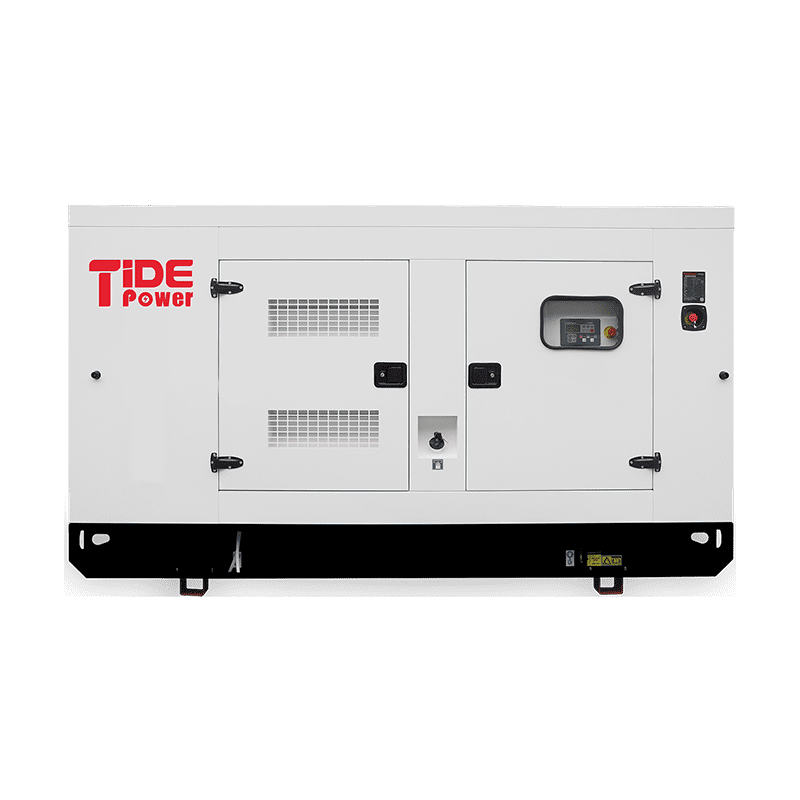
In this context, portable means deployable rather than permanently installed. The set is usually a skid-mounted or trailer-mounted unit, often housed in a sound-attenuated canopy, with a diesel engine coupled to an alternator. The operator can move it between buildings, equipment yards, field clinics, communications sites, or temporary response centers. These characteristics matter because emergency power is often needed where a fixed standby system has not been installed.
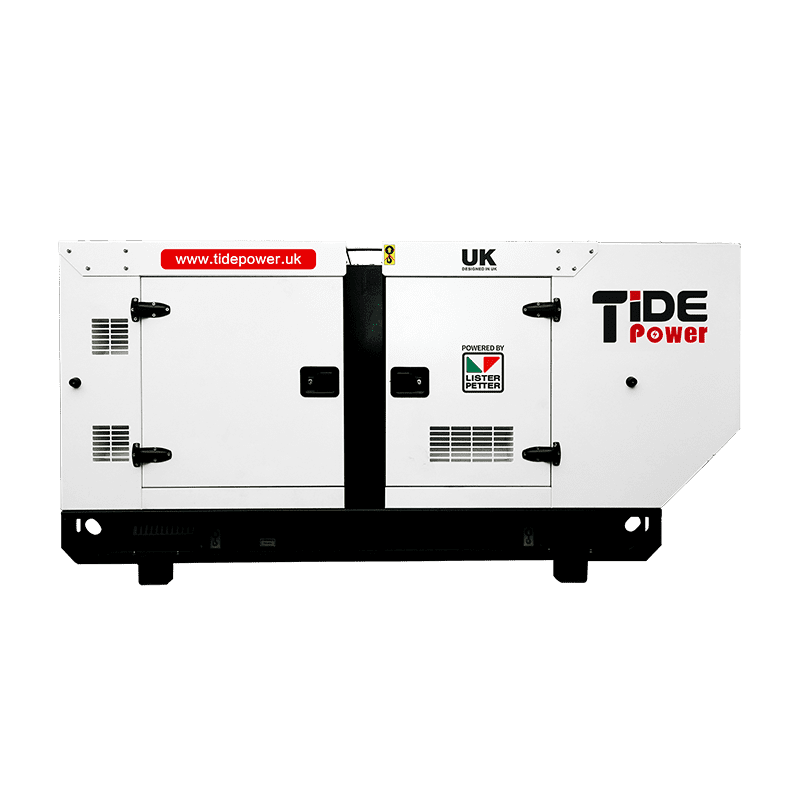
In product terms, the Tide Power Série Fenova Plus covers 5 kVA–900 kVA in a silent-type configuration alimenté par Lister Petter engines, while the Série Econic spans 16 kVA–1650 kVA with engines from Cummins, Perkins, DEUTZ, Baudouin, and Tide Power. Both illustrate the industrial format: enclosed for noise control, built for forklift or crane handling, and arranged for external fuel filling and large access doors.
Portable deployment is one part of a larger generator selection process. <Le Pouvoir Intérieur : Dévoilement des Générateurs Industriels Avancés de Tide Power> covers the wider industrial generator range, including continuous and standby configurations.
Read the Rating Plate Before You Size the Set
ISO 8528-1 defines common rating categories for reciprocating internal combustion engine driven generating sets [1]. For emergency backup, the most relevant is Emergency Standby Power, which permits operation for the duration of an outage under variable load, with maintenance according to the manufacturer’s schedule. Prime power and continuous power ratings are designed for longer or unlimited runtimes; a generator used for emergency backup should not be selected only by its maximum kVA number.
Each rating has different expectations for load factor, annual hours, and service intervals. A set rated for standby may carry a lower kVA figure than the same engine block can produce in prime duty, because the rating is connected to thermal, fuel, and service life limits rather than to the instantaneous peak alone. For this reason, the listed kVA on the canopy should be read together with the duty class in the supplier’s technical data.
Calculate Running Load and Starting Surge
Start by listing every load the generator must support during an outage. Separate the running power of each load from the starting surge caused by motors, compressors, pumps, and medical or IT equipment inrush. A frequent failure point is not undervoltage during steady running; it is voltage and frequency dip when several loads start at once.
Use this formula: total running kW or kVA of the connected loads, plus the highest individual starting surge that can occur at one time. Convert all loads to the same unit. In three-phase systems, check whether the load is balanced across phases; in single-phase systems, confirm allowable current per leg. Diesel engines tolerate brief overload poorly unless the set and alternator are oversized for the specific starting profile. The selected set should also match the required voltage, frequency, and phase: 50 Hz or 60 Hz, single-phase or three-phase.
For example, a site with 18 kVA of running load and a 6 kVA motor-start requirement may need a set sized for the combined 24 kVA condition, not just the running figure. Tide Power product data sheets list rated power at 50 Hz and 60 Hz for the Série Fenova Plus et Série Econic across multiple voltage and frequency build options.
Turning a Load List into a Specification
Once the load list is complete, specify the duty class, phase, voltage, frequency, ambient temperature, altitude, enclosure noise limit, and fuel storage requirement. For direct engineering support, send the load profile to [email protected]. Tide Power can confirm the correct series, engine brand, alternator sizing, and accessory set for the emergency backup application.
Enclosure, Fuel Tank, and Transport Features That Matter in an Outage
Diesel combustion is noisy, so most portable emergency sets use a canopy with acoustic lining and baffled air paths. The canopy also protects the engine, alternator, control panel, and fuel lines from rain, dust, and mechanical damage. Emergency use favors equipment that can be lifted with a forklift, towed behind a service vehicle, or placed on a compact trailer.
Fuel storage and refuelling are operational rather than cosmetic concerns. An external fuel filling inlet and a sufficiently sized base tank reduce handling around a running engine. In the Tide Power Série Econic, for example, the base frame includes a super large fuel tank, vertical ventilation, a steel enclosure, forklift sockets, and large access doors for routine inspection. These features shorten the time between arrival on site and full-load readiness.
Safety, Emissions, and Code Alignment
A diesel generator must be installed and operated according to local fire, electrical, and environmental rules. NFPA 110 addresses the performance and testing of emergency and standby power systems, including starting capability, load pickup, and routine exercising [2]. While its formal scope applies to critical facility systems, many of its principles are useful for smaller portable installations: the set should be able to start within the design time, accept the emergency load, and be tested under conditions that approximate the outage.
Position the generator outdoors or in a purpose-designed generator room with combustion-air and exhaust separation. Do not operate a diesel set in an enclosed occupied space, close to building air intakes, or where exhaust can enter doors and windows. Fuel should be stored away from ignition sources and in accordance with local regulations.
In the United States, U.S. EPA nonroad engine emission standards set emission limits for diesel engines used in portable generator service [3]. Buyers should confirm the engine certification applicable to the destination market and, where required, ensure the unit is operated within the permitted duty and fuel specifications.
Diesel vs. Gasoline, Natural Gas, and Battery/Hybrid Backup
Gasoline is convenient for small portable loads, but storage life is shorter and handling is more hazardous at volume. Natural gas avoids liquid fuel storage but depends on continuous pipeline supply; that supply can fail in the same event that removes grid power. Battery systems and hybrid microgrids offer quiet, low-maintenance operation for short-duration backup and power quality, but their energy capacity must be planned for the outage duration.
Diesel remains strong in emergency backup because of high energy density per tank volume, long storage stability with proper fuel maintenance, good load-step response, and the maturity of engine service networks. For sites facing long outages or high starting loads, a diesel set is often the first movable layer, with batteries or PV supplying daytime baseline energy.
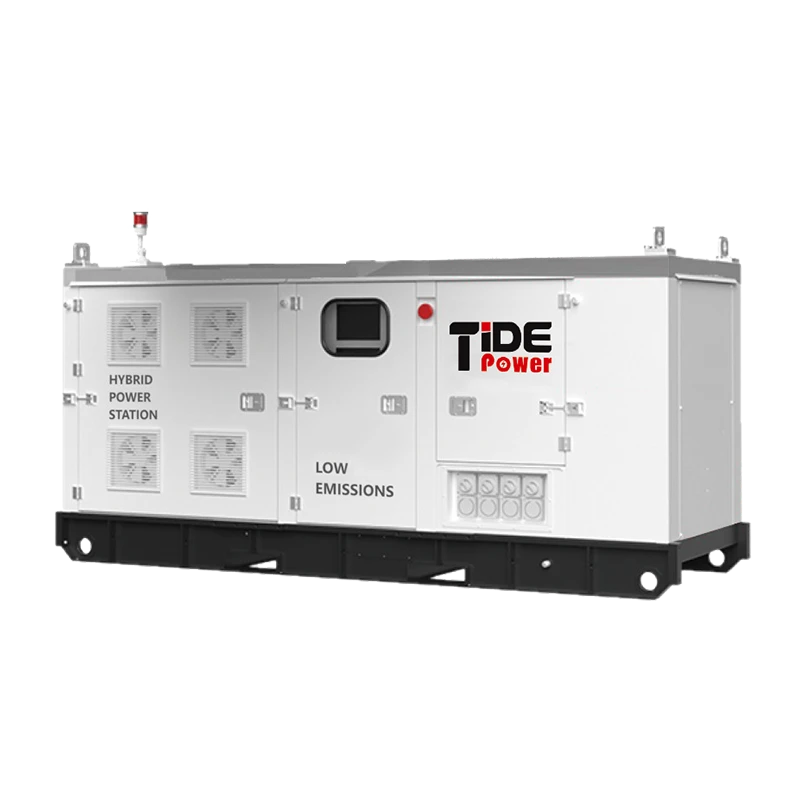
Where the site can use solar or battery storage, a hybrid system can reduce runtime and fuel burn. This is not a replacement for the diesel engine in most emergency-critical designs; it is a control strategy that manages which source serves which load.
A portable diesel set may be part of a broader off-grid or microgrid design. <La solution d'énergie hybride de Tide Power vole la vedette à la Foire de Canton> covers how solar, storage, and diesel generation can be integrated for long-duration backup and fuel savings.
Maintenance, Testing, and Outage Readiness
An emergency generator that starts once a year is not operationally credible. NFPA 110-style exercising under load helps identify battery charger faults, coolant leaks, air in fuel lines, stale fuel, and transfer switch failures before an outage [2]. Keep a maintenance log with oil, coolant, filter, and battery replacement dates. After an extended run, inspect the enclosure, fuel lines, hose routing, and alternator connections.
cURL Too many subrequests by single Worker invocation. To configure this limit, refer to https://developers.cloudflare.com/workers/wrangler/configuration/#limits.
cURL Too many subrequests by single Worker invocation. To configure this limit, refer to https://developers.cloudflare.com/workers/wrangler/configuration/#limits cURL Too many subrequests by single Worker invocation. To configure this limit, refer to https://developers.cloudflare.com/workers/wrangler/configuration/#limits cURL Too many subrequests by single Worker invocation. To configure this limit, refer to https://developers.cloudflare.com/workers/wrangler/configuration/#limits cURL Too many subrequests by single Worker invocation. To configure this limit, refer to https://developers.cloudflare.com/workers/wrangler/configuration/#limits cURL Too many subrequests by single Worker invocation. To configure this limit, refer to https://developers.cloudflare.com/workers/wrangler/configuration/#limits.
cURL Too many subrequests by single Worker invocation. To configure this limit, refer to https://developers.cloudflare.com/workers/wrangler/configuration/#limitsConstruire les réseaux résilients de demain : Solutions de micro-réseaux et de stockage d'énergie à l'échelle utilitaire de Tide PowercURL Too many subrequests by single Worker invocation. To configure this limit, refer to https://developers.cloudflare.com/workers/wrangler/configuration/#limits.
cURL Too many subrequests by single Worker invocation. To configure this limit, refer to https://developers.cloudflare.com/workers/wrangler/configuration/#limits
cURL Too many subrequests by single Worker invocation. To configure this limit, refer to https://developers.cloudflare.com/workers/wrangler/configuration/#limits [email protected] cURL Too many subrequests by single Worker invocation. To configure this limit, refer to https://developers.cloudflare.com/workers/wrangler/configuration/#limits cURL Too many subrequests by single Worker invocation. To configure this limit, refer to https://developers.cloudflare.com/workers/wrangler/configuration/#limits.
Foire aux questions
cURL Too many subrequests by single Worker invocation. To configure this limit, refer to https://developers.cloudflare.com/workers/wrangler/configuration/#limits
cURL Too many subrequests by single Worker invocation. To configure this limit, refer to https://developers.cloudflare.com/workers/wrangler/configuration/#limits.
cURL Too many subrequests by single Worker invocation. To configure this limit, refer to https://developers.cloudflare.com/workers/wrangler/configuration/#limits
cURL Too many subrequests by single Worker invocation. To configure this limit, refer to https://developers.cloudflare.com/workers/wrangler/configuration/#limits.
cURL Too many subrequests by single Worker invocation. To configure this limit, refer to https://developers.cloudflare.com/workers/wrangler/configuration/#limits
cURL Too many subrequests by single Worker invocation. To configure this limit, refer to https://developers.cloudflare.com/workers/wrangler/configuration/#limits.
cURL Too many subrequests by single Worker invocation. To configure this limit, refer to https://developers.cloudflare.com/workers/wrangler/configuration/#limits
cURL Too many subrequests by single Worker invocation. To configure this limit, refer to https://developers.cloudflare.com/workers/wrangler/configuration/#limits.
cURL Too many subrequests by single Worker invocation. To configure this limit, refer to https://developers.cloudflare.com/workers/wrangler/configuration/#limits
cURL Too many subrequests by single Worker invocation. To configure this limit, refer to https://developers.cloudflare.com/workers/wrangler/configuration/#limits.
cURL Too many subrequests by single Worker invocation. To configure this limit, refer to https://developers.cloudflare.com/workers/wrangler/configuration/#limits
cURL Too many subrequests by single Worker invocation. To configure this limit, refer to https://developers.cloudflare.com/workers/wrangler/configuration/#limits.
cURL Too many subrequests by single Worker invocation. To configure this limit, refer to https://developers.cloudflare.com/workers/wrangler/configuration/#limits
cURL Too many subrequests by single Worker invocation. To configure this limit, refer to https://developers.cloudflare.com/workers/wrangler/configuration/#limits.
cURL Too many subrequests by single Worker invocation. To configure this limit, refer to https://developers.cloudflare.com/workers/wrangler/configuration/#limits.
cURL Too many subrequests by single Worker invocation. To configure this limit, refer to https://developers.cloudflare.com/workers/wrangler/configuration/#limits.
Si cela vous intéresse, consultez ces articles connexes :
Tide Power prêt à faire sensation lors de l'Exposition Énergie du Moyen-Orient 2024 (MEE)
Journée de la Terre : Alimenter un avenir durable avec Tide Power
Soutenir une alimentation électrique stable pour les projets en France
GPOWER2023 se termine officiellement, Tide Power a hâte de vous revoir !
