
 FR
FR EN
EN ZH
ZH ES
ES AR
ARSmart microgrids are often described as solar, battery storage, and diesel generation connected to a common control system. That definition misses the point. The real proof is what happens during a cloud transient, a generator start, or a grid failure. Most published explanations stop at the architecture diagram. In my work with industrial energy projects, the difference between a functioning smart microgrid and a collection of installed assets shows up in source coordination and switching time. If a supplier cannot demonstrate millisecond-level switching and unattended operation, the design is not yet a smart microgrid.
Smart Microgrid Visibility Starts With the Control Layer
The field term smart microgrid is sometimes reduced to adding remote monitoring to an existing generator and battery system. That is not enough. A control layer becomes the system operator when it can start a generator, shift load, shed noncritical circuits, and change storage charge or discharge commands without operator action. Many sites have monitoring systems that show alarms but still require a technician to decide what to do. That delay is the weak point.
When I review a microgrid design, I trace the sequence from a fault event to the first automatic action. The controller must know which source is online, how much spinning reserve exists, and which loads can be dropped without disrupting the operation. Current and voltage measurements alone cannot establish that. The dispatch logic has to map source capability to load priority. If the controller only logs data, the site has energy visibility, not a smart microgrid.
A Microgrid Is Only as Stable as Its Source Coordination
Solar, battery storage, and diesel generator sets have fundamentally different response behavior. Solar output changes with irradiance. Battery storage responds in milliseconds but has limited energy. A diesel generator set supplies sustained power but needs seconds to start and synchronize. A stable microgrid coordinates all three so that each change in solar output or load is matched by the appropriate source, in the correct sequence.
| Source | Response character | Rôle principal |
|---|---|---|
| Solar PV | Millisecond output variation | Bulk renewable input |
| Stockage par batterie | Millisecond to seconds | Voltage and frequency reference during transition |
| Groupe électrogène diesel | Seconds to start and synchronize | Long duration reserve and base load |
| Microgrid controller | Continu | Source dispatch and load shedding |
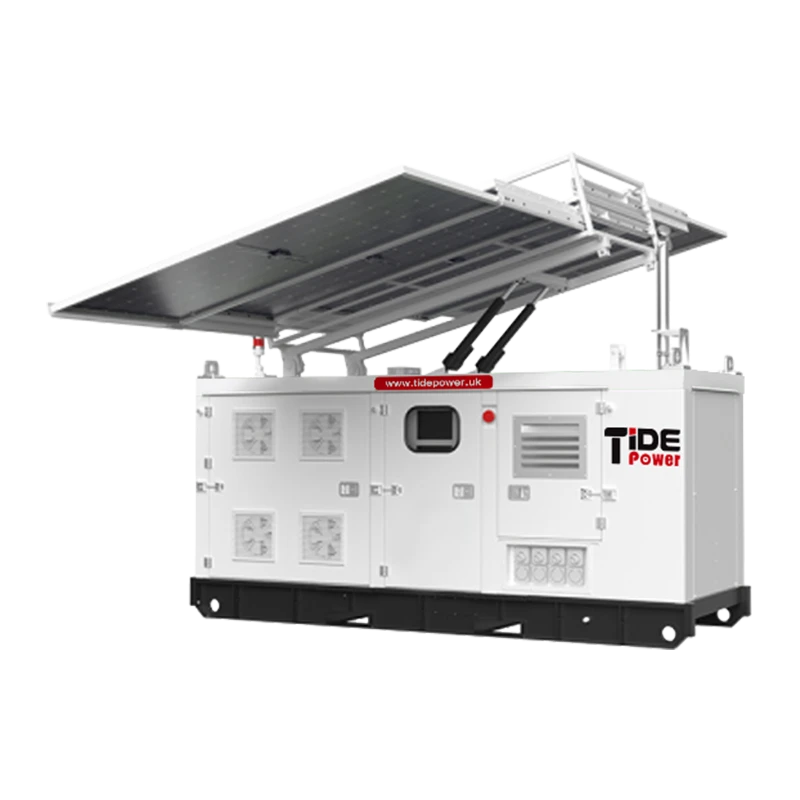
Tide Power’s hybrid energy system illustrates the practical architecture. It combines solar, battery storage, and diesel generation across a 10 kVA to 250 kVA range, with millisecond-level seamless switching between sources. The system is designed for unattended operation, which matters for remote sites where a control room is not staffed around the clock. The battery inverter creates the voltage and frequency reference when the diesel generator is offline, and the generator picks up sustained load as it reaches stable operating conditions.
One mistake I see in procurement is treating these assets as separate packages. The solar EPC, battery supplier, and generator vendor each deliver equipment that works on its own test bench. The microgrid fails later because no one owned the interface. The only way to avoid that is to specify the control integration as a deliverable, with a switching time test and an unattended operating demonstration before acceptance.
Energy Storage Defines How the System Rides Through Events
A microgrid without storage is just a solar diesel hybrid with poor transient response. Battery storage carries the system through the gap between a sudden load step and the generator set response. In most projects I have reviewed, the specification should focus less on nominal capacity and more on power response, state of charge limits, and how the battery behaves when the grid or generator drops out.
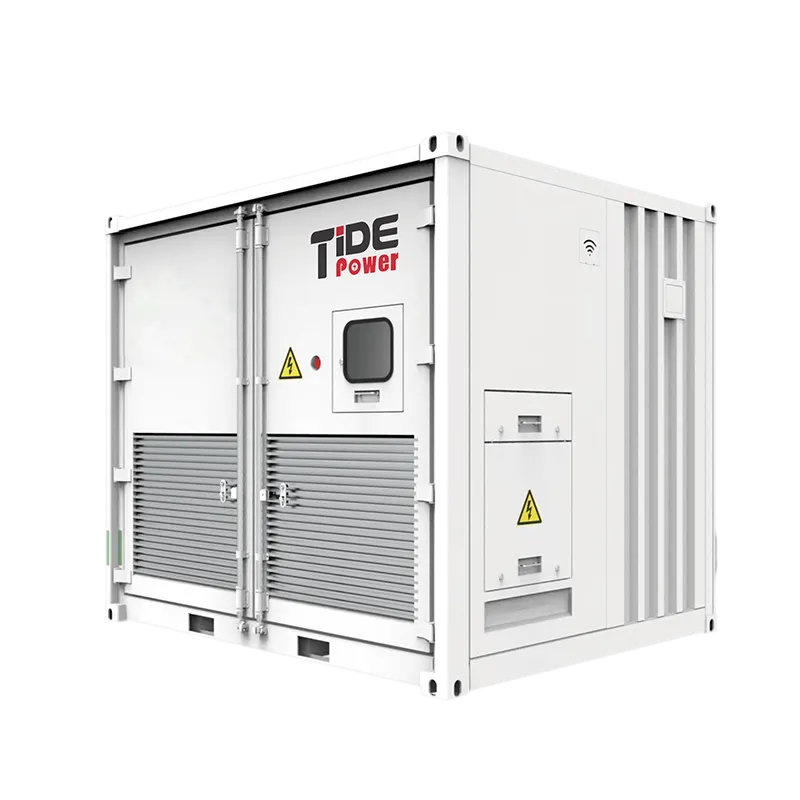
The storage component in a Tide Power hybrid system starts with 5.12 kWh LFP battery packs and scales through 16.1 kWh LFP modules to the TP-50BESS, TP-100BESS, TP-200BESS, and TP-261BESS configurations. The battery management system must enforce charge and discharge boundaries while leaving enough reserve for islanding. If the storage system is sized only for solar self consumption, it may not have the headroom to hold frequency during disconnection. The result is a transfer that depends on the generator set, which is slower.
Island Mode and Grid Reconnection Require Planned Sequencing
Island mode is not a single switch position. It is a sequence: isolate from the grid, establish the local voltage and frequency reference, shed loads that cannot ride through the transition, bring storage and generation online in priority order, and only then reconnect noncritical loads. Reconnection to the utility is equally sequenced. The inverter watches voltage, frequency, and phase angle, and closes the intertie only when those parameters match.
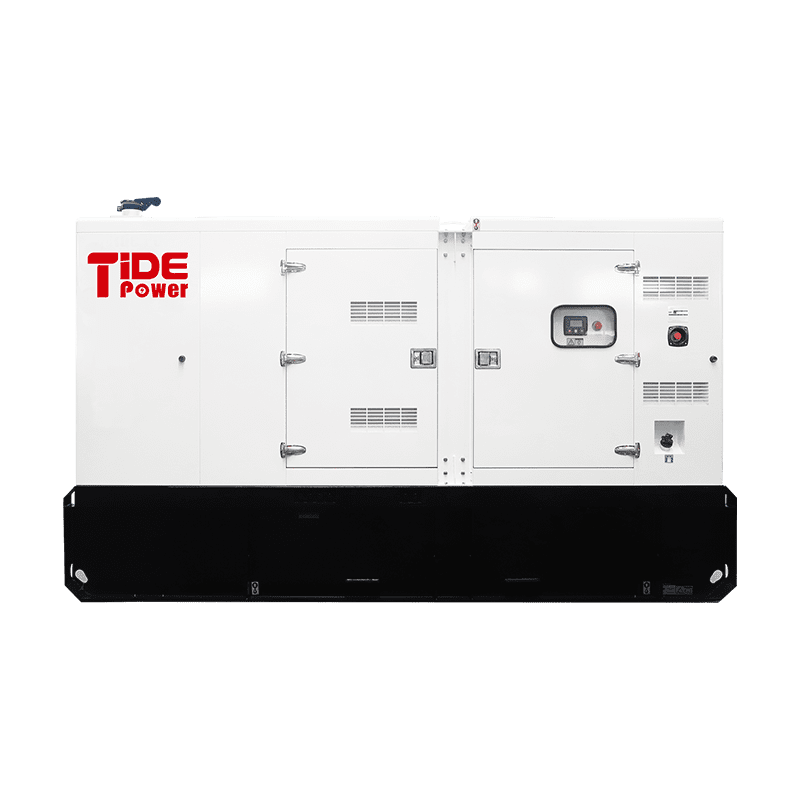
In hybrid microgrids with diesel generation, the sequence becomes more demanding. The generator cannot be treated as a passive source because its governor and exciter need time to settle. The controller has to manage load sharing between the battery inverter and the generator, then shift load gradually as the generator warms up. If the transfer is too fast, the generator set can trip on underfrequency or reverse power protection. If it is too slow, the battery may deplete below its reserve threshold.
Before you finish the bill of materials, ask the supplier to document the switching sequence for a generator dropout and a utility reclosure. If your site has multiple engine brands or a storage retrofit on an older genset, the sequence must be tested against those specific devices. Send your single line diagram and load profile to [email protected] and we can check whether the proposed control interface is practical.
Procurement Should Verify Microgrid Integration Before Sign-Off
Most buyers do not discover integration risk in the datasheet phase. They encounter it during commissioning, when the solar inverter, battery converter, and generator controller each follow different fault behavior. The equipment may all comply with its own standard and still not operate as one plant. That gap appears in the interface documents and the control narrative, not in the individual product specifications.
The end of procurement is therefore the right place to verify integration. I would ask for three items before accepting any design: a source switching test showing the exact transfer time, a priority table for load shedding, and a black start sequence that proves the site can recover without utility voltage. These are demonstration items, not paperwork.
If your team is evaluating a new microgrid or adding storage and solar to existing diesel generation, send the projected load profile, the renewable fraction you want, and the generator set model list to [email protected] or call +86 591 2806 8999. Ask for a switching and integration review before the purchase order is issued. That single step catches most of the faults that would otherwise appear during site commissioning.
Buyers Ask Where Smart Microgrid Integration Fails
Does a smart microgrid need battery storage?
Yes, except in the narrow case where the main grid remains available continuously and the system is only for peak shaving. For islanding or high renewable penetration, the frequency and voltage reference during the transition while a diesel generator set is starting must come from battery storage. Without it, the microgrid depends on generator response time and may shed more load than planned. The practical minimum is less about energy capacity than about power capability: the battery must cover the largest expected load step until generation catches up. If the site has no storage, treat it as a supervised generator system, not a smart microgrid.
Do solar and diesel generators share load automatically in a microgrid?
They do not, unless the controller is programmed to manage that sharing. A diesel generator set controls its own governor and voltage, while a solar inverter tracks the available DC power. The two sources will not divide load by themselves. The microgrid controller must receive measurements from both, then send charge or discharge commands to the battery and start or stop signals to the generator. In most designs, the battery inverter is the bridge that lets solar output vary without causing the diesel set to hunt. If the control layer is not configured, the sources fight each other during transitions.
Can an existing diesel generator become part of a smart microgrid?
It depends on the generator’s controller interface and condition. If the set has an electronic governor, speed control input, and can accept remote start, most modern hybrid controllers can integrate it. If it is an older set with a mechanical governor and limited telemetry, the retrofit is still possible but the transfer sequence is less precise, and the battery must carry more of the transition burden. The first step is to record the controller model, engine speed stability, and existing protection settings. From that data, a supplier can state whether the genset can participate in fast dispatch or should run only as backup.
What is the most common smart microgrid procurement mistake?
From projects we have worked on, the most common mistake is buying components before defining the control narrative. Procurement teams compare battery prices and generator ratings, then issue separate orders. The microgrid does not become integrated just because the equipment is on the same site. The switching logic, communication interface, and load shedding priority need to be specified before the bill of materials. Share your load log and generator requirements with us at [email protected] and we can confirm whether the proposed configuration has a practical integration path.
Si cela vous intéresse, consultez ces articles connexes :
Nigeria Energy 2024 : Tide Power fait sensation pour l'innovation
Tide Power : Énergie propre, conçue pour fonctionner
Tide Power présentera des solutions énergétiques innovantes lors de Middle East Energy 2025
La cérémonie annuelle de signature du contrat d'approvisionnement OEM entre Tide Power et MWM a été réalisée avec succès
