 FR
FR EN
EN ZH
ZH ES
ES AR
ARPour un ingénieur de projet, le choix entre un groupe électrogène diesel ouvert ou conteneurisé est rarement une simple question de budget. La décision a des répercussions sur la logistique, la préparation du site, l'accès à la maintenance et la durabilité de l'équipement tout au long de sa durée de vie. Ayant travaillé sur la configuration de groupes électrogènes pour des projets d'infrastructure sur plusieurs continents, j'ai constaté que le coût réel réside souvent dans la complexité de l'installation qui suit la décision d'achat, et non dans le groupe électrogène lui-même. Un groupe électrogène diesel conteneurisé peut éliminer des mois de travaux civils, tandis qu'une unité ouverte montée sur châssis maintient l'investissement bas pour une centrale intérieure contrôlée. Alors, quelle configuration convient à votre projet ? Examinons les principaux compromis.
Quelle est la différence fondamentale entre les groupes électrogènes ouverts et conteneurisés ?
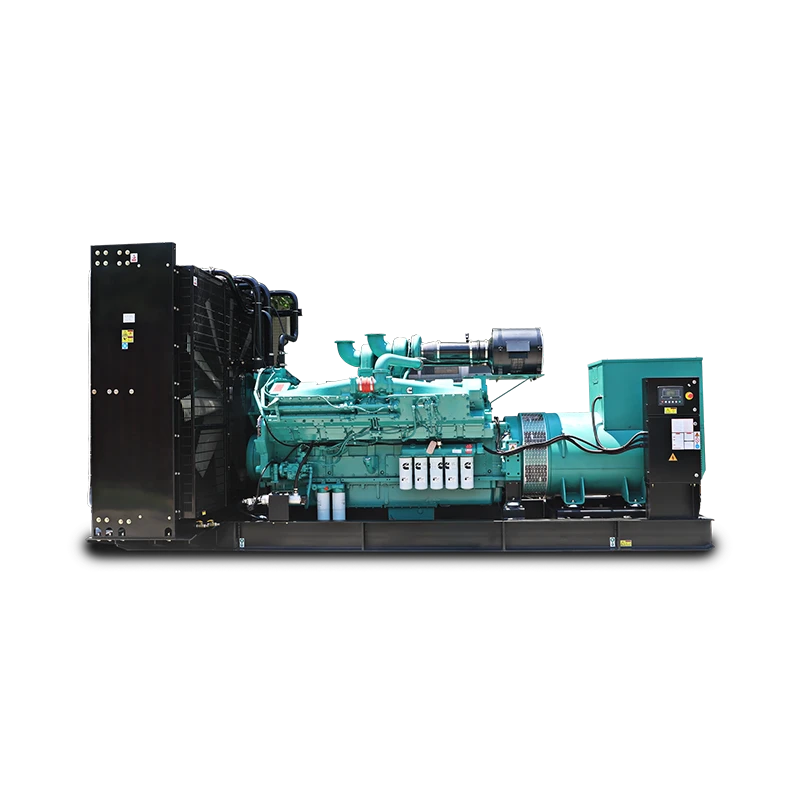
Un groupe électrogène diesel de type ouvert est un groupe électrogène complet monté sur un châssis en acier structurel, généralement avec le moteur, l'alternateur, le radiateur et le panneau de commande exposés. Il n'y a pas d'enceinte étanche aux intempéries. Ces unités sont généralement installées à l'intérieur d'une centrale électrique dédiée ou d'une salle de groupe électrogène, et l'acheteur se charge séparément de l'insonorisation, de la ventilation, de l'acheminement du carburant et de l'échappement sur site.
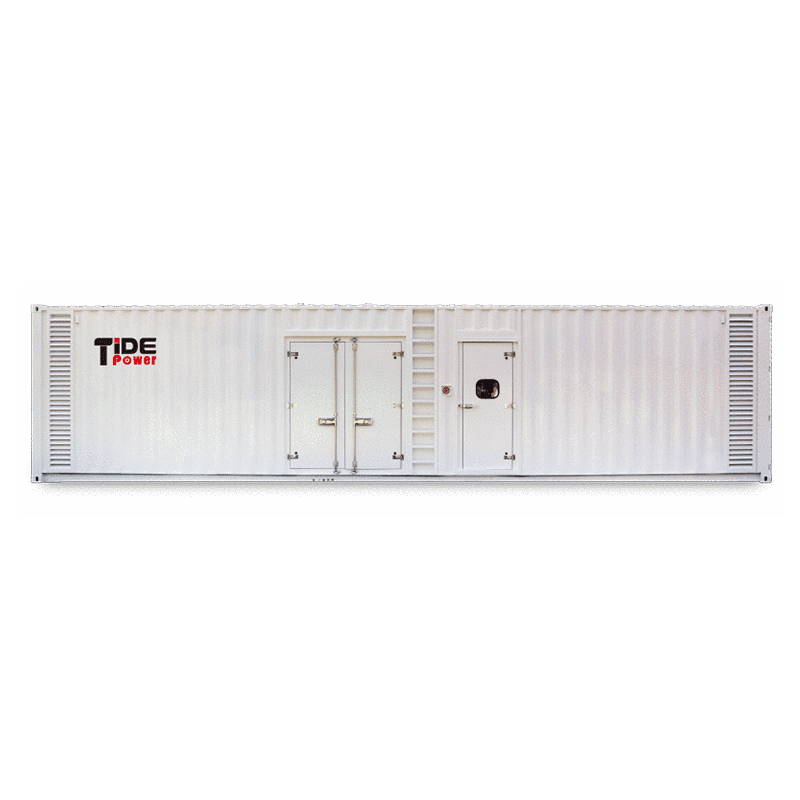
Un groupe électrogène diesel conteneurisé prend ce même groupe électrogène de base et l'intègre dans un conteneur d'expédition ISO standard, généralement un high-cube de 20 ou 40 pieds. Le conteneur devient une centrale électrique autonome : il comprend le groupe électrogène, un réservoir de carburant, des volets d'admission et d'évacuation, une isolation acoustique, un éclairage, un système de suppression d'incendie et souvent une salle de contrôle. Une fois le conteneur posé sur une dalle préparée et raccordé à la charge, l'unité est prête à fonctionner.
La différence n'est donc pas simplement “ fermé contre exposé ”. C'est un changement dans l'endroit où l'ingénierie a lieu : sur votre site pour une unité ouverte, ou à l'usine pour une solution conteneurisée.
Quand un groupe électrogène diesel de type ouvert offre-t-il la meilleure valeur ?
Les unités ouvertes restent le cheval de bataille des centrales électriques permanentes en intérieur. Si votre projet dispose déjà d'un hall pour groupe électrogène avec une fondation solide, un accès par pont roulant, un chemin de ventilation conçu et un système de stockage de carburant séparé, une unité à cadre ouvert élimine l'acier et l'insonorisation inutiles. Cela réduit directement le prix départ usine par kilowatt.
L'accès à la maintenance est dégagé de tous les côtés. Les techniciens peuvent accéder au moteur, à l'alternateur et au circuit de refroidissement sans ouvrir de portes ni travailler dans un couloir de conteneur étroit. Pour les sites où le groupe électrogène fonctionne dans un environnement propre, à température contrôlée, avec du personnel qualifié en permanence sur place, une unité ouverte est le choix logique. J'ai vu miniers des usines de transformation et des centres énergétiques universitaires déployer des unités ouvertes précisément parce que le bâtiment a été construit autour d'elles.
Dans quelles conditions un groupe électrogène conteneurisé représente-t-il l'investissement le plus judicieux ?
Lorsqu'un projet se situe dans un endroit éloigné, sur un sol instable, ou nécessite un déploiement rapide sans capacité locale saisons de construction de préparation du site, le groupe électrogène diesel conteneurisé change la donne. La structure du conteneur sert à la fois de logement et de cadre de transport. Il peut être transporté sur site comme une cargaison standard, déposé sur une dalle de gravier compacté et raccordé en une journée.
Cette nature clé en main est ce qui fait des unités conteneurisées le choix par défaut pour les tours de télécommunication dans les régions arides, l'alimentation de chantier temporaire, l'alimentation d'urgence humanitaire et le soutien offshore. L'atténuation sonore intégrée répond également aux réglementations locales en matière de bruit sans enceinte acoustique séparée. Parce que le réservoir de carburant est intégré et que le système de ventilation est testé en usine, les risques de mise en service diminuent considérablement. Pour un chef de projet qui doit fournir de l'électricité dans des délais serrés, ces facteurs l'emportent souvent sur le prix d'achat initial plus élevé.
Si votre programme nécessite un déploiement sur plusieurs sites avec une préparation minimale, il est utile de confirmer les spécifications du conteneur et la portée de l'intégration en usine avant de finaliser votre nomenclature. Une conversation rapide peut révéler des détails de configuration qui évitent des semaines de retravail sur site plus tard.
Comment la maintenance et les performances à long terme se comparent-elles ?
Les deux configurations suivent les mêmes intervalles d'entretien du moteur. Le groupe électrogène à l'intérieur d'un conteneur est mécaniquement identique à son équivalent ouvert. La différence réside dans l'accessibilité et la protection environnementale.
| Facteur | Type Ouvert | Conteneurisé |
|---|---|---|
| Accès quotidien pour inspection | Accès complet de tous côtés | Accès via portes et allées internes |
| Remplacement de composants | Le pont roulant peut soulever des pièces majeures | Restreint ; peut nécessiter une trappe de toit ou le retrait du conteneur |
| Exposition aux intempéries | Aucun lorsqu'il est installé en intérieur | Scellé contre la pluie, la poussière et le brouillard salin |
| Confinement des vibrations et du bruit | Se repose sur la structure du bâtiment | Absorbé par les murs du conteneur et le revêtement acoustique |
| Sécurité | Nécessite un bâtiment sécurisé | Un conteneur verrouillable dissuade l'accès non autorisé |
En pratique, les unités conteneurisées ont tendance à subir moins de défaillances liées aux intempéries sur une durée de 15 ans, en particulier dans les régions côtières ou à forte humidité. Le compromis est que les travaux de révision majeure peuvent prendre plus de temps car la structure du conteneur peut compliquer l'extraction du moteur. Pour les ensembles ouverts dans une centrale électrique appropriée, c'est le contraire : le bâtiment sert de barrière, et la machine reste entièrement exposée pour la maintenance.
Quelle configuration offre le coût total de possession le plus bas ?
Le coût total de possession est souvent là où les cadres de sélection échouent. Un générateur de type ouvert a un coût en capital par kilowatt inférieur, mais l'acheteur doit également prévoir le coût de la centrale électrique, du revêtement insonorisant, de la suppression d'incendie, du piping de carburant et du routage de l'échappement. Dans une zone développée avec des entrepreneurs disponibles, ces travaux civils ajoutent souvent de 30 à 60 pour cent au coût du projet.
Un générateur diesel conteneurisé arrive en système complet. La préparation du site représente une fraction d'un bâtiment, et l'installation se mesure en heures. Sur 10 à 15 ans, l'absence d'entretien du bâtiment, l'intégration système de carburant qui réduit les risques de fuite externe, et le traitement acoustique intégré réduisent souvent l'écart du TCO. Pour des applications à distance ou temporaires, l'ensemble conteneurisé évite de construire et de déclasser une structure permanente, ce qui peut faire pencher la balance financière en sa faveur.
Cela dit, si vous disposez déjà d’un bâtiment adapté avec les autorisations nécessaires et une ventilation adéquate, payer pour un conteneur dont vous n’avez pas besoin n’a pas beaucoup de sens. La décision doit suivre le site, et non l’inverse.
Questions fréquentes sur les configurations de générateurs diesel
Un générateur en conteneur peut-il être personnalisé pour des dimensions spécifiques du site ou des types de carburant particuliers ?
Oui. Les générateurs diesel en conteneur ne se limitent pas aux dimensions standard ISO. Les fabricants peuvent raccourcir ou allonger le conteneur, ajouter des radiateurs latéraux ou incorporer des compartiments de stockage de carburant en vrac. Les conversions bi-carburant et les salles de contrôle séparées sont également courantes. Si votre plan de site a une empreinte limitée, partagez votre disposition et nous pourrons confirmer quelles modifications du conteneur sont possibles.
Est-il possible de convertir un générateur de type ouvert en une unité en conteneur après l’installation ?
La rétrofit d’un ensemble ouvert en un conteneur est techniquement possible mais rarement rentable. La structure de base du générateur doit être renforcée, les voies de ventilation recalculées, et les systèmes d’échappement et de carburant reroutés pour s’adapter à une enveloppe de conteneur. Dans la plupart des cas, le coût d’ingénierie et le temps d’arrêt approchent le prix d’une unité en conteneur conçue sur mesure. Pour un nouveau projet, choisir la bonne configuration dès le départ évite tout ce problème.
Comment le transport diffère-t-il entre les deux configurations ?
Les générateurs de type ouvert sont transportés sur des remorques plate-forme et nécessitent une protection contre les intempéries ainsi qu’un arrimage pour l’expédition internationale. Les générateurs en conteneur sont expédiés en fret de conteneur standard, utilisant la même chaîne logistique que tout autre cargaison en conteneur. Cela signifie des coûts de fret plus faibles, une manutention prévisible et pas d’emballage spécial. Pour les projets dans des pays sans accès à une infrastructure de manutention de conteneurs, l’avantage logistique est considérable.
Quels sont les délais typiques pour un générateur diesel en conteneur ?
Parce que le conteneur fait partie du processus de production plutôt qu’un ajout après coup, les délais pour une unité en conteneur sont généralement de 2 à 4 semaines plus longs que pour un ensemble ouvert équivalent. Le calendrier précis dépend du degré de personnalisation : une unité standard de 20 pieds avec un réservoir intégré se déplace plus rapidement qu’une station d’énergie multi-conteneurs entièrement conçue. Dans les programmes que j’ai supported, intégrer cette marge d’ingénierie supplémentaire dans le calendrier du projet a permis d’éviter des retards de dernière minute.
Un générateur en conteneur nécessite-t-il une fondation en béton ?
Une unité en conteneur ne nécessite pas de fondation complète. Une dalle de gravier nivelée et bien compactée ou une paire de bandes de béton sous les coins du conteneur suffisent généralement. C’est l’une des principales raisons pour lesquelles les générateurs en conteneur sont choisis pour des sites temporaires ou isolés. Cependant, pour des installations permanentes sur un sol mou ou en zone sismique, une dalle renforcée offre une stabilité à long terme. Partagez votre rapport sur le sol du site et nous pourrons vous conseiller sur la préparation minimale nécessaire.
Si votre prochain projet est encore au stade conceptuel et que la décision entre open et en conteneur n’est pas encore arrêtée, contactez-nous avec les conditions de votre site et votre profil de charge. Nous pouvons analyser comment chaque configuration se traduirait dans votre environnement spécifique, de la logistique au coût sur le cycle de vie. Envoyez un email à [email protected] ou appelez le +86 591 2806 8999 pour une évaluation de configuration.
Si cela vous intéresse, consultez ces articles connexes :
Libérez l'indépendance énergétique et les économies : Solutions BESS évolutives de Tide Power pour les applications C&I
Guide d'entretien estival pour les générateurs électriques à gaz : assurer des performances optimales par temps extrême
Tide Power connaît un succès remarquable à Nigeria Énergie 2025