 EN
 ZH
 FR
 ES
 AR
A gas generator maintenance contract is priced by what it leaves out. Two offers can carry the same headline rate and behave nothing alike once a gas quality excursion meets a scheduled ignition service, or a top-end overhaul lands in year four of a five-year term. Gas engines also add scope a diesel unit never needed: an ignition system, a gas train, gas detection, and an exhaust aftertreatment device that an operating permit may depend on. Fix the boundary first, then the service levels, then the money. That order decides whether the contract survives its first serious fault.
What a gas generator maintenance contract has to cover
A maintenance contract is a map of responsibility, and most disputes trace back to a line item nobody owned rather than a task nobody could perform. Before comparing price, write three boundaries: physical, contractual, and temporal. The physical boundary says which equipment is inside the agreement. The contractual boundary says which party answers for it. The temporal boundary says when the obligation applies.
Where the physical boundary sits
Start at the gas inlet flange and finish at the generator terminals, then say explicitly what sits between. The gas train, the air and fuel metering, the ignition system, the controls and protection, the exhaust aftertreatment, and the auxiliaries that keep the room safe all need an owner. On the electrical side, the contract has to state whether the generator, excitation, breaker, and paralleling gear are inside the scope, and where the site distribution begins. Rating language matters as much as the list itself. ISO 8528-1:2018 sets out application, ratings and performance for generating sets, including the rating categories and the conditions attached to each [1], so two offers quoting the same kVA may be quoting different things.
| Item | Usual default owner | Why the contract must name it | Common gap |
|---|---|---|---|
| Gas train to the inlet flange (regulator, filters, shutoff valves, leak detection) | Gas supplier or site | Pressure and quality faults first appear as engine faults | Excluded as “fuel supply” with no measurement method |
| Gas detection and ventilation interlocks | Site safety system, often delegated | Safety devices need proof testing, not just presence | Absorbed into a general electrical line or omitted |
| Generator, excitation and protection | Contractor | Decides who investigates a trip and who resets it | Split between mechanical and electrical contracts |
| Exhaust aftertreatment and emissions checks | Contractor or engine maker | Permit compliance rests on measured performance | Treated as a consumable and excluded |
| Controls, telemetry and remote monitoring | Contractor | Decides who sees an alarm first | Software access and data ownership left undefined |
| Auxiliary power and stored fuel for dual-fuel sites | Site | Ageing fuel and water ingress cause starting faults | Fuel storage assumed to be maintenance-free |
Which responsibilities stay with the site
Gas quality, pressure at the inlet, room ventilation and zoning, permit holder duties, and load management usually stay with the site even when the work is delegated. Detection deserves a named test method rather than a promise. IEC 60079-29-1 specifies performance requirements for detectors used to detect flammable gases [2], which gives the contract something concrete to reference when it sets how often detection is proof-tested and who signs the record. A detector that is present but never tested is a document, not a safeguard.
The temporal boundary is the third piece. Define normal working hours, out-of-hours cover, planned outages, and the exact moment a fault becomes a callout. If “24/7 support” means a phone that rings, the contract says so; if it means a technician mobilised against a clock, the contract says that instead.
Why gas engines need a different scope than diesel units
A diesel maintenance schedule copied onto a gas engine leaves the most failure-prone parts of the machine untouched. The differences are structural, not cosmetic, and they change what a contract has to buy.
Spark-ignited gas engines depend on plugs, coils, and leads, together with air-fuel ratio control and knock sensing. Plug wear surfaces as misfire, rising exhaust emissions, and derating under load, so replacement belongs on a scheduled list with a defined interval basis rather than in a breakdown response. Knock margin matters too, because the control system protects the engine by reducing output whenever combustion moves toward the knock limit. A schedule built only on running hours can miss this entirely on a site where hours accumulate slowly.
Gas composition is the second difference. Every gas engine is sold against an assumed gas specification, and methane number, calorific value, pressure, and contaminants all move output and service life. Biogas diluted with carbon dioxide delivers less power per unit of volume and needs its own derating basis. The contract should attach the gas specification, name who measures it and how often, and state what happens when the fuel moves outside it. A blanket exclusion for poor fuel quality with no measurement method is a blank cheque written in the contractor’s favour.
Gas composition decides how much output a gas engine can hold before knock protection steps in, and that assumption belongs in the maintenance scope rather than in the sales file. <Tide Power & Lister Petter Launch Advanced Gas Power Solution for Sustainable Energy> covers a gas power platform developed for sustainable energy projects.
Oil, deposits, and the catalyst form the third group. Gas engine oils are low-ash formulations, and ash deposits plus oil consumption are the indicators that matter, which is why oil analysis is a maintenance activity and not an optional extra. Prolonged light-load running encourages deposits and can push the catalyst outside its working window. Aftertreatment performance also carries a compliance consequence. In the United States, stationary spark ignition engines in scope fall under the emission standards for stationary SI internal combustion engines in 40 CFR Part 60 Subpart JJJJ [3]. In the European Union, medium combustion plants are addressed by Directive (EU) 2015/2193 [4], which sets emission limits and permit duties for plants inside its rated thermal input range. Where either framework applies, catalyst condition is a compliance item, not a consumable.
Which contract model fits your site
Three structures dominate, and each transfers a different risk. The mistake is choosing on price per visit before deciding which risk the site can actually carry.
| Model | What you are buying | Fits when | Do not choose when |
|---|---|---|---|
| Fixed-fee preventive | Scheduled tasks and listed consumables at a set annual price; site carries corrective risk | Load is stable, technicians are on site, and visits are frequent | You have no run-hour or start data, so neither side can size the risk |
| Time and material | Labour rate plus parts at an agreed markup; you pay for what happens | The installation is new, or the site runs long idle periods | Output depends on fast recovery and a large unplanned invoice is unaffordable |
| Availability-based | A fee tied to measured uptime, with corrective work and parts inside the scope | Load is critical, the site is remote, and one accountable party is required | There is no metering, no agreed exclusion list, and no remedy you would enforce |
Availability contracts only work on evidence. Run hours, start counts, load profile, alarm history, and gas records are the inputs that make an uptime figure meaningful. Without metering, an availability clause measures the contractor’s willingness to argue rather than the plant’s reliability.
What to put in the maintenance RFQ
An RFQ that asks for a price gets a price. One that asks for the assumptions gets a contract. The fields below are the ones that change what suppliers quote, because they remove the room for interpretation that later becomes a variation order.
| RFQ field | What to request | Why it matters |
|---|---|---|
| Asset schedule and rating basis | Model, serial number, declared rating and its ISO 8528-1 category, plus alternator and control platform | Same kVA on two offers can mean different continuous capability |
| Operating profile and gas specification | Twelve months of run hours, start counts, load pattern, and the gas analysis with pressure at the inlet | Interval basis and warranty position both depend on it |
| Boundary schedule and exclusions | Item-by-item list of what is included, with the exclusions and how each is measured | An unmeasurable exclusion is a future dispute, not a protection |
| Task list with interval basis | Each task marked as hour-based, calendar-based or start-based, with the consumables it needs | Hours-only schedules under-serve cyclic and hybrid sites |
| Response and availability definitions | Clock start, acknowledgement, attendance, temporary repair, and the credit that applies | Response wording without a clock cannot be enforced |
| Reporting, data access and price structure | Report content and frequency, telemetry ownership, and the escalation index on the fee | Without data access, performance claims cannot be checked |
Reject a line that reads “full maintenance and 24/7 breakdown support included”. Replace it with a schedule that names the tasks and their interval basis, the consumables included, the physical and electrical boundary, the channels and clocks for a callout, the exclusions with their measurement method, and the credit that applies when the response misses. The same page, written that way, is a different contract.
How to write response times and availability so they can be enforced
Response clauses fail for one reason: nobody defined when the clock starts. Fix four things and the rest follows. First, name the channel that starts the clock, and treat acknowledgement and site attendance as separate milestones. Second, separate remote diagnosis from physical attendance, because a remote fix that closes the fault inside the first milestone is a different outcome from a truck rolling. Third, state what a temporary repair is worth and how long it may stand before it counts as a failure. Fourth, attach the availability formula to a measurement window and an evidence source.
Exclusions need the same treatment. Gas outside the attached specification, ambient conditions beyond the stated range, a site-issued stop, and load shedding are all legitimate exclusions, but each must be measurable by both parties. If the contractor cannot measure the gas quality it is excluding, the exclusion will be argued rather than applied.
Emergency systems have an existing benchmark. Where the set forms part of an emergency power supply system, testing and record-keeping expectations are often compared against NFPA 110, which covers classification, installation, maintenance, and periodic exercising of such systems [5]. Adopting its record discipline for a gas set is a reasonable starting point even where the standard has not been formally adopted.
Response times measured from the wrong moment say nothing about recovery, and remote support only helps when someone sees the alarm. <Case Study: Tide Power Generators Deliver Reliable Backup Power Across Latin America> covers backup power delivery across projects in Latin America.
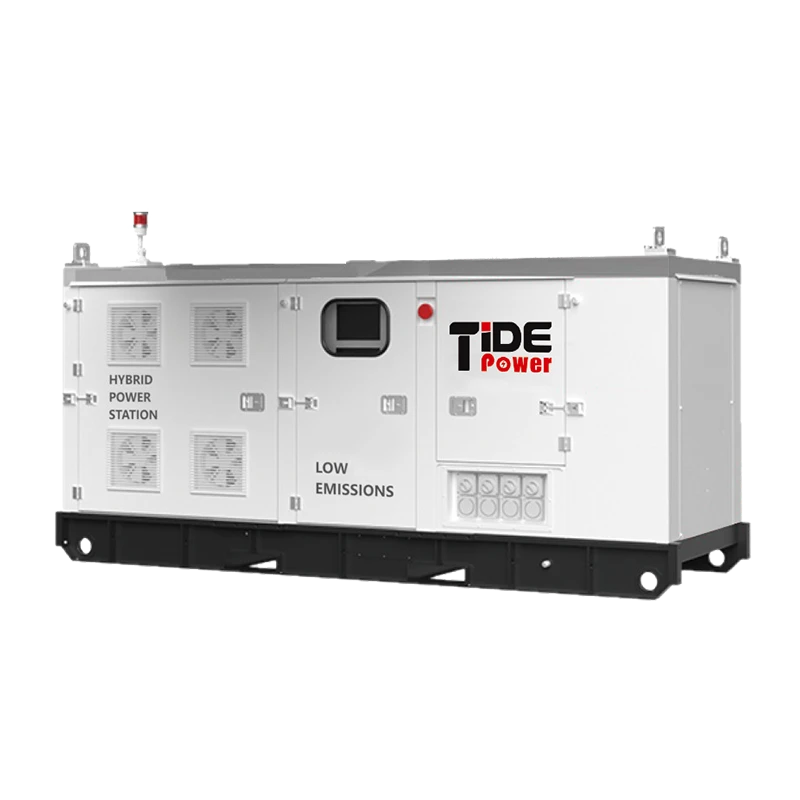
Hybrid and cyclic-duty sites need one adjustment that hour-based schedules rarely make. When a battery system carries the base load, generator running hours fall while start counts and load steps rise. A contract priced purely on hours will look cheap in year one and under-serviced by year three, because ignition wear and thermal cycling track starts as much as they track hours. Mark each task as hour-based, start-based, or calendar-based in the RFQ, and the mismatch disappears before signature.
How to allocate overhauls, spares and end of term risk
Overhauls are where maintenance contracts are won or lost, because the invoice arrives years after the negotiation. Separate them into top-end work, covering cylinder heads, valves, and ignition components, and major work, covering bearings, pistons, and liners. Valve lash adjustment and valve recession are scheduled items on gas engines, and skipping them shows up as compression loss and poor emissions long before anything fails outright.
Funding has three routes. Roll the intervention into the fixed fee, and the price rises but the cash flow is predictable. Hold a separate reserve funded monthly, and you keep visibility of the balance at the cost of administering it. Pay as you go, and the risk stays with the site, which is a defensible choice only when the same owner also controls the operating regime.
Spare parts deserve a named list. Long-lead items such as turbochargers, control modules, ignition components, and aftertreatment elements can idle a plant for weeks, and storage conditions matter for anything with electronics or catalyst substrate. The contract should name the critical spares held on site, who owns them, and who replaces them once used.
Parts and diagnostic access usually decide how fast a repair completes, not the labour rate. Check who holds an OEM authorisation for your specific engine model, whether diagnostic software and service tools come with it, and whether the supplier can document the parts lineage on a warranty-sensitive repair.

Parts and diagnostic access usually decide how fast a repair actually finishes, not the labour rate on the schedule. <The annual OEM procurement signing ceremony between Tide Power and MWM has been successfully completed> covers an OEM procurement agreement between Tide Power and MWM.
Consumable specifications belong in the contract even when the contractor supplies them. If the engine was released on a low-ash gas engine oil, the grade has to survive the purchasing decision, not just the first service. The same logic applies to filters, ignition parts, and any fluid that touches combustion.
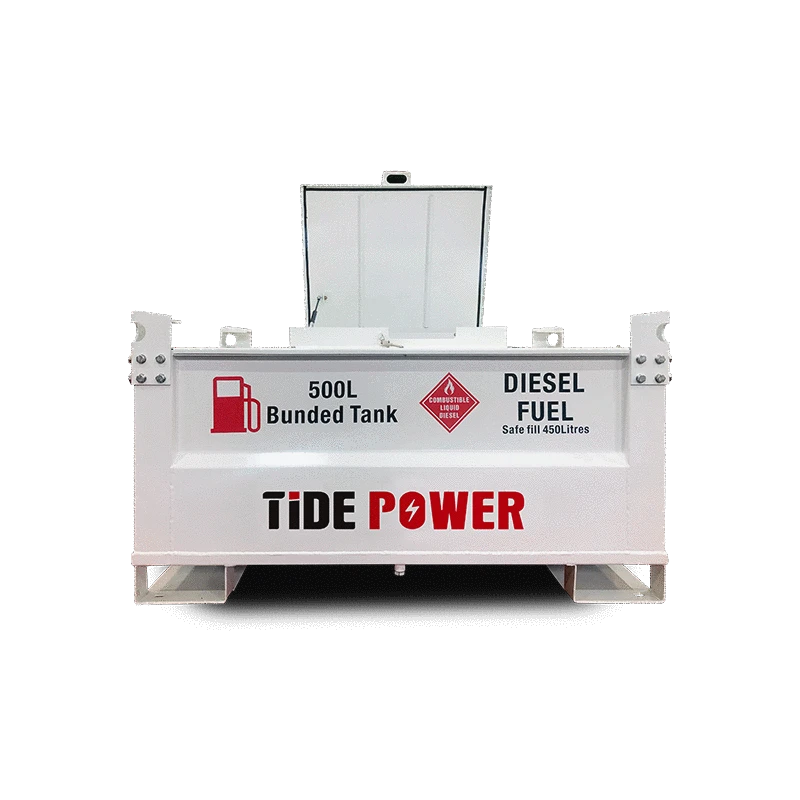
Sites that keep a diesel unit for backup or dual-fuel capability have one more exposure: the stored fuel itself. Water ingress, fuel ageing, and tank inspection intervals belong in the boundary schedule, because a generator that starts on demand needs both fuel paths to work.
End of term terms are usually written last and matter most. Insist on handover of service records, alarm history, and as-built documentation, a stated warranty period on repairs completed near the end of the term, clarity on ownership of spares bought under the contract, and a transition period during which the outgoing contractor supports the incoming one. Renewal pricing needs an index and a review point, or the second term begins with a number nobody can benchmark.
What the evidence can and cannot prove
Contract claims rest on documents, and each document has a limited scope. The table below sets out what each reference used in this guide can legitimately support, and where the inference should stop.
| Record | What it establishes | How to use it | Do not infer |
|---|---|---|---|
| ISO 8528-1:2018 | Rating categories and the conditions attached to a declared generating set output [1] | Put every offer on one rating basis before comparing | That two sets with equal declared kVA deliver equal output at your altitude, ambient, and gas supply |
| IEC 60079-29-1 | Performance requirements for flammable gas detectors [2] | Reference it when specifying detection and proof-test intervals | That a compliant detector makes the gas installation safe, or replaces ventilation and zoning |
| 40 CFR Part 60 Subpart JJJJ | US emission standards and testing duties for stationary spark ignition engines in scope [3] | Confirm whether the unit and its location fall inside the rule | That a unit built to this rule satisfies a permit somewhere else, or that an out-of-scope engine has no duties |
| Directive (EU) 2015/2193 | An EU framework for medium combustion plants with limits and permit duties [4] | Check rated thermal input and permit status first | That national implementing rules and local air quality conditions are identical across member states |
| NFPA 110 | A framework for classification, maintenance, and periodic exercising of emergency power supply systems [5] | Benchmark testing and record practice for emergency systems | That it sets the engine maker’s overhaul interval, or applies where it has not been adopted |
These records belong to their issuing bodies and are cited here as technical and regulatory references. None of them describes a specific generator, and none is a statement that a particular installation complies. Compliance is established unit by unit, site by site, by the authority with jurisdiction, and a maintenance contract that promises otherwise is promising something it cannot deliver.
What to re-check each year
A maintenance contract is a multi-year document built on assumptions that move. Re-run this list at the start of each contract year; the version below reflects the position for 2026.
- Permit and emissions status. Confirm the rated thermal input still sits where you believe it does, since scope under Directive (EU) 2015/2193 turns on that figure [4], and compare the latest emissions test against the previous results rather than only against the limit.
- Gas quality records against the specification attached to the contract. Trend the methane number and pressure, not just the pass or fail.
- Metering integrity. Check that run hours and start counts on the plant agree with the figures the contractor invoices against.
- Catalyst and aftertreatment trend. A slow drift is the earliest warning that compliance is about to become an event.
- Spare parts and control hardware obsolescence. Confirm that the control platform is still supported and that critical spares are still available at the agreed lead time.
- Price escalation and renewal terms. Verify the index was applied as written, and note the notice period for renegotiation.
Send the site data before you compare prices
The fastest way to compare offers is to stop comparing hourly rates. Send the asset schedule with models, serial numbers, and rating categories, twelve months of run hours and start counts, the gas analysis and inlet pressure, the permit conditions that apply to the plant, and the exclusion list from your current contract. A boundary review against that material shows which costs sit outside every offer on the table, and which supplier can actually carry them. Email [email protected] or call +86 591 2806 8999 to start the review. Tide Power Technology Co., Ltd. works with operators and procurement teams on gas and diesel generation scopes across multiple markets.
FAQ
Does a gas generator maintenance contract need to include the exhaust catalyst?
Yes, or it needs a named owner with a defined performance check. Catalyst condition drives measured emissions, and in regulated markets that turns aftertreatment into a compliance item. If the catalyst is excluded, the site keeps a risk the contractor has no incentive to watch. Include a periodic performance check, state the level the permit requires, and describe what happens when the trend falls below it.
How long should a gas generator maintenance contract run?
Long enough to cover at least one scheduled major intervention, so the price reflects real lifecycle cost rather than the cheap years. Shorter terms push overhaul risk into renewal negotiations, usually at the worst moment. Longer terms need three protections: an escalation index, a review point, and a termination route with a defined transition period so the next supplier can take over the records.
Does using an independent contractor void the engine warranty?
It can. Many engine warranties are conditional on approved parts, documented procedures, and trained technicians, and an undocumented repair is the easiest claim for a manufacturer to decline. Read the warranty conditions before signature, then translate them into contract requirements: approved parts, record format, technician competency evidence, and prior notification for any work that touches internals.
What happens when gas quality falls outside the contract specification?
The contract should answer that before it happens. Name who samples the gas, at what frequency, with which laboratory or analyser, and what the consequence is: derating, a remedy, or a suspension of the availability obligation. Without a measurement method agreed by both sides, a poor-gas exclusion cannot be applied consistently, and the argument moves to the invoice rather than the plant.
Is an availability guarantee worth the premium?
Only where downtime has a cost you can quantify and the site has metering to prove it. A guarantee without measurement prices risk without transferring it. Test the clause by asking how availability is calculated, which events are excluded, and what credit you would actually receive after a week-long outage. If the answer depends on the contractor’s judgement, the premium buys paperwork.
References
[1] ISO 8528-1:2018, “Reciprocating internal combustion engine driven alternating current generating sets, Part 1: Application, ratings and performance,” ISO, 2018.
[2] IEC 60079-29-1:2016, “Explosive atmospheres, Part 29-1: Gas detectors, performance requirements of detectors for flammable gases,” IEC, 2016.
[3] U.S. Environmental Protection Agency, “Standards of Performance for Stationary Spark Ignition Internal Combustion Engines,” 40 CFR Part 60, Subpart JJJJ, 2008, as amended. [Online]. Available: https://www.ecfr.gov/
[4] Directive (EU) 2015/2193 of the European Parliament and of the Council of 25 November 2015 on the limitation of emissions of certain pollutants into the air from medium combustion plants, Official Journal of the European Union, L 313, 2015.
[5] NFPA 110, “Standard for Emergency and Standby Power Systems,” National Fire Protection Association, 2022.
If you’re interested, check out these related articles:
Tide Power invites you to the PhilEnergy 2025
Tide Power 2024 Management Meeting Successfully Held
Tide Power Introduces the BK-460-52-DC: A High-Efficiency Dry Suction Sewage Pump Unit for Tough Dewatering Challenges