 EN
 ZH
 FR
 ES
 AR
A natural gas generator set is a spark-ignition engine package that burns pipeline gas to drive an alternator, and the buying decision is settled by three inputs before any kilowatt figure: the gas your site can deliver, the shape of the load rather than its peak, and the emission rules that apply where the unit will stand. Projects that fix the rating first usually renegotiate the gas train, the enclosure or the aftertreatment later. This guide works through those inputs in the order a project meets them, then converts them into fields you can put into a request for quotation.
What a Natural Gas Generator Set Includes and Where It Fits
The package is more than an engine. A complete set pairs a spark-ignition gas engine with an alternator, a coupling and baseframe, a cooling package, an exhaust system, a control panel and a gas train that filters, regulates and shuts off the fuel supply. The gas train is the part diesel buyers never had to budget for, and it is where most of the site-specific engineering sits.
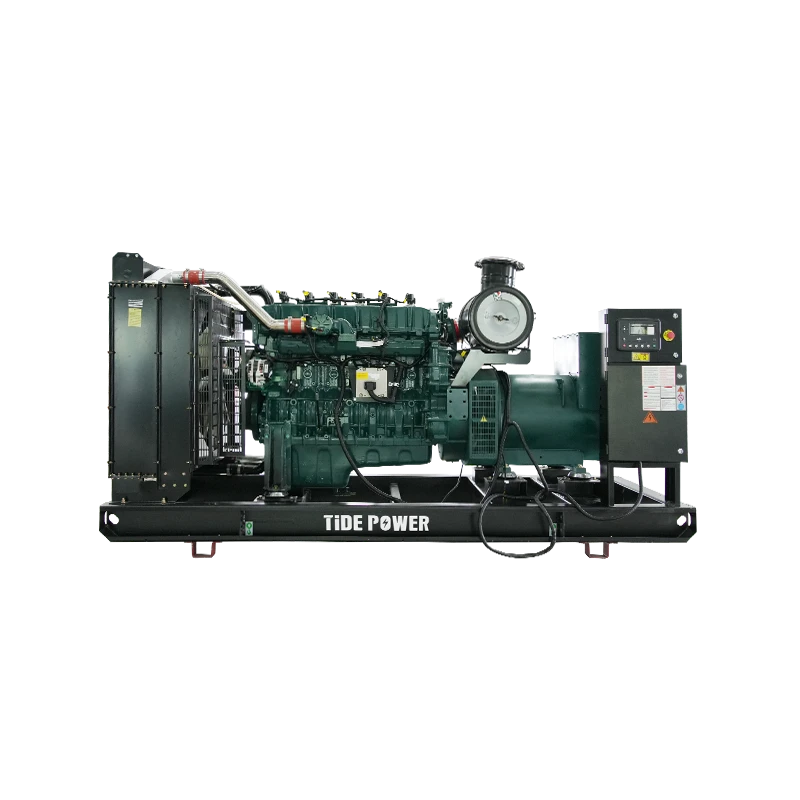
Combustion follows the Otto cycle: a spark ignites an air and gas mixture. Two strategies dominate the market. Stoichiometric engines run close to the chemically ideal air-to-fuel ratio and use a three-way catalyst to control nitrogen oxides, carbon monoxide and hydrocarbons, which demands tight air-fuel control to protect the catalyst. Lean-burn engines run with excess air, lowering peak combustion temperature and therefore the nitrogen oxides formed inside the cylinder, at the cost of higher ignition energy and greater sensitivity to gas quality. The strategy a manufacturer chooses decides the emission package you inherit, so it belongs in the comparison rather than the fine print.
Gas sets suit long running hours at steady load: industrial plants with a pipeline connection, hospitals and data centres with continuous demand, and combined heat and power schemes where exhaust heat is recovered. They fit badly where fuel must be stored on site, where the load changes faster than the engine can follow, or where the supply can be interrupted without warning.
Against diesel, the trade is easy to state and easy to underestimate. Gas usually costs less per unit of delivered energy where a pipeline exists, and it removes on-site fuel storage and the fire code obligations that come with it. In return, the engine produces less power per litre of displacement, responds more slowly to a step load, and depends entirely on a supply someone else controls. A diesel set carries its own fuel. A gas set carries a contract.
Reading the Gas Supply Before You Read the Specification
Composition and pressure decide the rating you can actually reach, and three numbers carry most of the weight.
Methane number expresses the knock resistance of a gas much as octane number expresses it for petrol. Pipeline gas varies by region and by season, and heavier components such as propane and butane lower the methane number, forcing the engine to retard timing or accept a derating. A supplier who quotes a rating without asking for a methane number is quoting a gas they have not seen.
Wobbe index combines calorific value with relative density and describes the energy flow through a fixed orifice. A shift in Wobbe index changes the air-fuel ratio a mixer delivers, which appears as unstable combustion and misfires rather than a clean loss of power. ISO 6976 calculates calorific value, density, relative density and Wobbe index from a gas composition [1], which is why the composition, not a single calorific value, is the useful input.
Pressure sets the mechanical scope. The datasheet specifies a minimum and maximum inlet pressure; above that band a regulating station is required, and expansion across a regulator cools the gas, so a large pressure drop may need a heater to prevent condensation and icing.
| Data to request | Where it lands in the quotation |
|---|---|
| Composition or methane number range | Combustion strategy, timing limits, derating and the fuel-quality warranty condition |
| Wobbe index and its seasonal swing | Air-fuel control hardware and whether a gas analyser is needed |
| Minimum and maximum pressure at the battery limit | Regulator station, heater and pipework scope |
| Interruption and curtailment history | Whether a second fuel, storage or a hybrid buffer is required |
| Sulphur, water and heavy hydrocarbon content | Lubricant selection, oil change interval and valve service life |
Ask for the interruption record rather than the average pressure. An average tells you what the engine will see on a good day, and the curtailment log tells you what the plant will do on a bad one.
Matching the Power Rating to the Load You Actually Run
Peak kilowatts are the least useful number in the project file. What the engine experiences is a sequence: how many hours at what load, how large the biggest step is, and how quickly the load returns after a start.
Start with the rating class. ISO 8528-1 defines four categories, and a quotation that does not name one cannot be compared with another [2].
| Rating class | What the standard permits | Where it is used |
|---|---|---|
| Emergency standby power | Maximum power during a utility outage, variable load, no overload capability | Standby only |
| Prime power | Unlimited hours under variable load, with 10 percent overload for one hour in twelve | Prime power |
| Limited-time running power | Limited annual running time, 500 hours per year in the 2018 edition | Temporary or seasonal supply |
| Continuous power | Constant load for unlimited hours | Baseload or heat-led cogeneration |
Then check the step. Every engine has a maximum permissible load step, published as a percentage of rating, and a start that exceeds it produces a frequency dip that protection may trip on. Verify the figure against your largest motor start, and treat soft starters and variable frequency drives as a change of problem rather than a solution: they reduce the starting current and add harmonic current that the alternator has to carry.
Then check the site. Engine output falls with ambient temperature, altitude and a lower methane number, and the manufacturer’s site rating curve is the only honest source for your conditions. Part load matters as much as full load, because a gas engine loses efficiency well below its rated point, and an oversized set burns the difference every hour it runs.
Frame size follows the available engine platforms, and the platforms are not interchangeable. The MWM range covers 600 kVA to 4500 kVA, while the Lister Petter Jupiter platform covers 28 kVA to 563 kVA, so the same plant load can be served by very different block sizes and very different service arrangements.
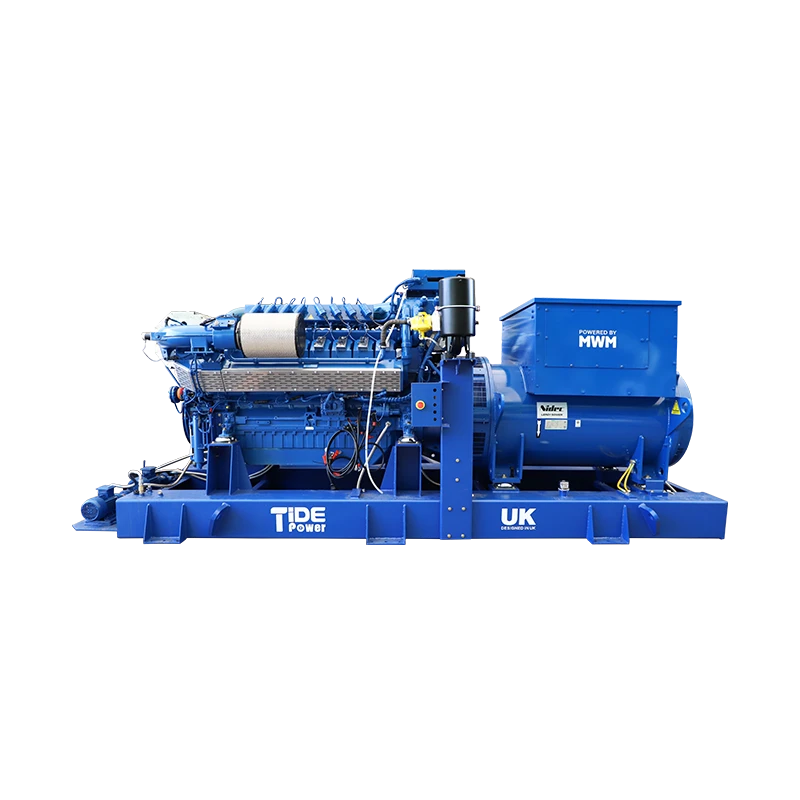
Engine choice often comes down to which platform sits closest to the load rather than which brand is better known. <Tide Power & Lister Petter Launch Advanced Gas Power Solution for Sustainable Energy> covers a gas power solution built on the Lister Petter platform.
How Emission Rules Change the Generator You Can Buy
Emission law decides the combustion strategy, the aftertreatment and the permitting route, and it is usually the item that arrives last in a project file.
In the United States, 40 CFR Part 60 Subpart JJJJ sets emission standards for new stationary spark ignition engines, with obligations that include certification, warranty and recordkeeping, and with emergency engines treated under separate provisions and operating limits [4]. In the European Union, Directive (EU) 2015/2193 applies to medium combustion plants with a rated thermal input from 1 MW up to 50 MW, with new plants covered from 20 December 2018 and existing plants facing staged limits [3].
The 1 MW threshold catches more gas projects than buyers expect. An engine delivering around 1 MW of electrical output at roughly 40 percent efficiency consumes about 2.5 MW of fuel energy and rejects something like 1.5 MW as heat through the exhaust and jacket, so an electrical rating in the low hundreds of kilowatts can already cross the thermal threshold and pull the plant into scope. Confirm the thermal input of the whole plant, not just the generator, before you choose the aftertreatment.
| Record | What it establishes | Responsible use | Do not infer |
|---|---|---|---|
| ISO 8528-1:2018 | The definitions of standby, prime, limited-time and continuous ratings [2] | Compare quotations only after the rating class matches | That a standby rating can absorb continuous load |
| ISO 6976:2016 | Calculation of calorific value, density and Wobbe index from composition [1] | Give the supplier the gas data in the same form the standard uses | That one seasonal Wobbe index covers the year |
| Directive (EU) 2015/2193 | Emission limits for combustion plants of 1 MW to 50 MW thermal input, new plants from 20 December 2018 [3] | Establish which limits apply before selecting an aftertreatment | That an engine certificate satisfies the site permit |
| 40 CFR Part 60 Subpart JJJJ | Standards, certification and recordkeeping duties for new stationary spark ignition engines [4] | Confirm the certification basis and the engine’s duty classification | That emergency and non-emergency engines carry the same obligations |
These records define methods and obligations. None of them approves your installation, and none replaces the local permit, the stack height assessment or the dispersion study the authority may request.
Fuel Cost, Efficiency and the Numbers Behind the Decision
Fuel cost per delivered unit is arithmetic once you have a guaranteed efficiency, and the arithmetic is where the business case stands or falls.
Fuel energy per kilowatt hour equals 3.6 MJ divided by electrical efficiency. If the guaranteed efficiency is 40 percent, one kilowatt hour requires 9.0 MJ of gas energy; multiply by your tariff per MJ to obtain fuel cost per kilowatt hour, then by annual output to compare against diesel.
That number is only as good as the conditions attached to it. A heat rate guarantee is meaningful when it states the ambient temperature, the altitude, the methane number, the load point and whether auxiliary loads such as radiator fans and pumps are included. Two suppliers quoting 9 MJ per kilowatt hour under different conditions may be two very different offers.
Capital cost is where gas departs furthest from diesel. The gas train, pressure regulation, gas detection, aftertreatment, ventilation and the heavier enclosure all appear on the gas side and not on the diesel side, and the regulating station may belong to the utility rather than the plant. Maintenance differs too: ignition components and spark plugs add planned work that a diesel set does not have, while gas engines avoid the diesel particulate filter and the fuel degradation that comes with long storage. Ask for the maintenance schedule in running hours and the parts list with prices, because an interval stated only in months hides everything about how the set is used.
The decision rule is simple to state. Take the annual fuel saving against diesel, subtract the extra capital and the extra maintenance, and require the result to pay back inside the period your finance will accept. If run hours are low, the saving rarely arrives.
Site, Gas Train and Installation Requirements
NFPA 37 addresses the installation of stationary combustion engines and gas turbines, covering siting, separation from combustible construction, ventilation, ignition control and exhaust [5]. Treat that document, your local gas code and the utility’s requirements as the minimum set, then resolve the following before the foundation is poured.
- Size ventilation for two separate airflows: combustion air for the engine and cooling air for the radiator. An enclosure louvre sized for one of them starves the other, and recirculation inside a container raises intake temperature until the site rating no longer applies.
- Route the exhaust to the back-pressure limit in the datasheet, terminating away from windows, air intakes and combustible surfaces. An undersized silencer costs power and adds noise at the boundary.
- Provide gas detection with automatic shut-off, and vent the gas train to a safe outdoor location. Detection is a safety device, not an operating instrument.
- Confirm the electrical interface: alternator voltage, switchgear, protection settings and the point of connection decide as much of the installation programme as the gas pipe.
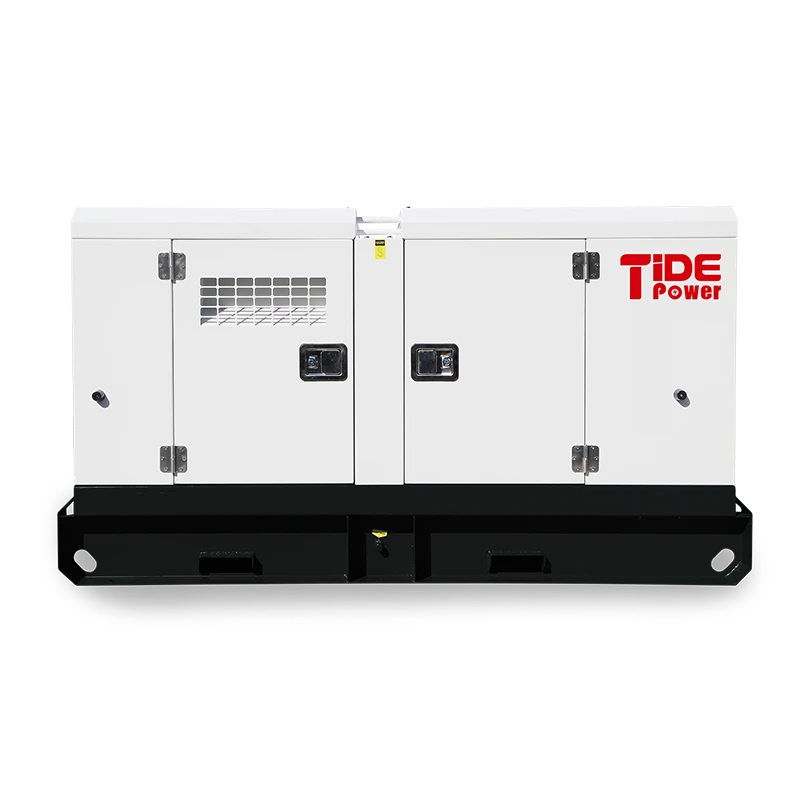
Cold climates add two failure points that rarely appear in a datasheet discussion: regulator freezing where the pressure drop is large, and cooling system protection where the set sits idle through freezing weather. For noise, compare the sound pressure level at one metre with the limit measured at the property boundary, because the distance and the surrounding surfaces do most of the work.
At commissioning, run four checks in sequence: a load bank test at site conditions, a step load test at the largest permissible step, a gas train leak and function test, and an emission measurement against the permit basis. Record the results with ambient temperature, methane number and load point, or the test proves nothing later.
Voltage class and protection coordination change the switchgear scope long before the engine is selected. <Exploring the Mysteries and Applications of High-Voltages Generator SETs> covers high-voltage generator set applications.
Pairing a Gas Generator With Solar and Battery Storage
A gas engine is most efficient near its rated point and least comfortable with fast transients. Battery storage is good at both problems, which is why hybrid configurations have moved from remote sites into ordinary industrial projects.
The mechanism is a dispatch decision. The controller keeps the engine running in blocks at high load, lets a battery absorb peaks and load steps, and uses photovoltaic output to reduce fuel consumption while the engine stays available. Uninterrupted transfer between sources matters where the load cannot tolerate a reset, and it is the specification most often taken for granted until a commissioning test.
The Tide Power hybrid platform combines solar, lithium iron phosphate storage and engine generation in all-in-one or split configurations from 10 kVA to 250 kVA, using 5.12 kWh battery packs or 16.1 kWh modules, with the TP-50BESS, TP-100BESS, TP-200BESS and TP-261BESS containers covering larger storage requirements.
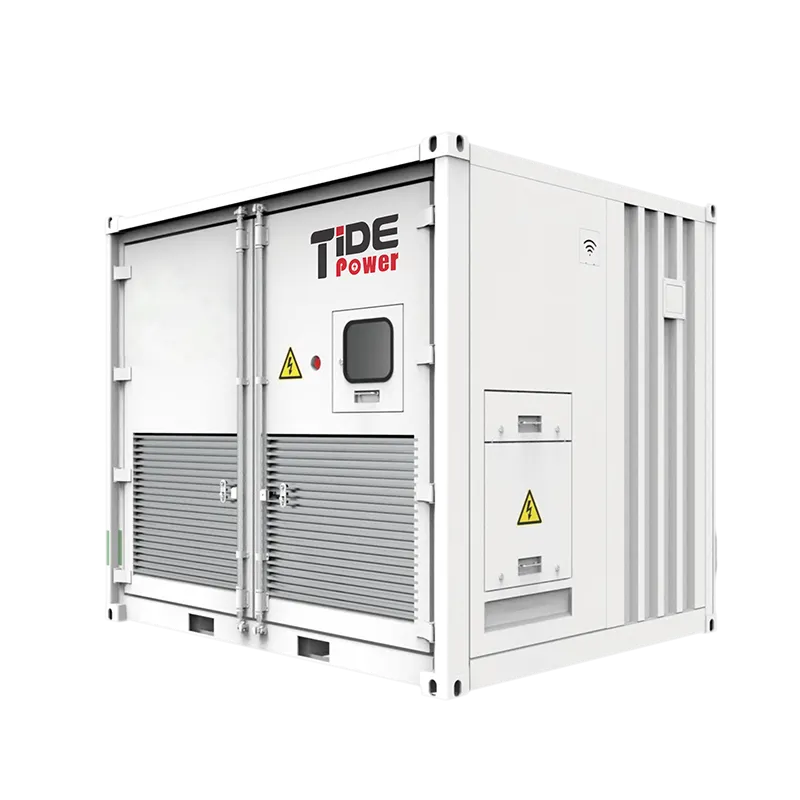
Storage is not free capacity. It adds capital cost, conversion losses and another maintenance regime, and it earns its place only where the load profile is variable, the fuel price spread is wide, or the grid connection cannot deliver the peak. For a plant running flat out at high load factor, the battery is a cost with no duty cycle to recover it.
Remote sites face the same dispatch problem with less support, and the operating pattern carries over to industrial plants. <Energizing Remote Operations: Hybrid Power Solutions for Off-Grid Success> covers hybrid power solutions for off-grid operation.
A Procurement Checklist for Comparing Suppliers
A quotation becomes comparable when every supplier answers the same fields. These six do most of the work.
| RFQ field | What to state | Why it changes the offer |
|---|---|---|
| Rating class and site rating | Prime or continuous kW at your ambient temperature, altitude and methane number | Stops an ISO-condition rating being offered against a derated requirement |
| Emission basis | The permit limit or directive that applies to the site | Decides lean burn, catalyst or selective catalytic reduction, and the documentation |
| Gas data | Composition or methane number band, Wobbe index, pressure range | Fixes the gas train scope and the fuel warranty conditions |
| Load profile | Hours by load band and the largest single step | Sets the engine frame and the alternator thermal margin |
| Heat rate | MJ per kWh with conditions and auxiliary loads stated | Makes efficiency claims comparable between suppliers |
| Scope split | Who supplies the regulating station, detection, switchgear, commissioning and training | Reveals the installed cost behind the price |
One line is worth rewriting before it goes out.
Reject this line: “Natural gas generator set, 500 kW, complete with gas train.”
Replace it with: “Spark-ignition gas generator set, prime rating X kW at site ambient temperature and altitude, methane number Z or better, inlet pressure A to B kPa at the battery limit, heat rate no more than C MJ per kWh under declared conditions including auxiliary loads, maximum permissible load step D percent of rating, nitrogen oxides within site limit E, sound pressure F dB(A) at one metre.”
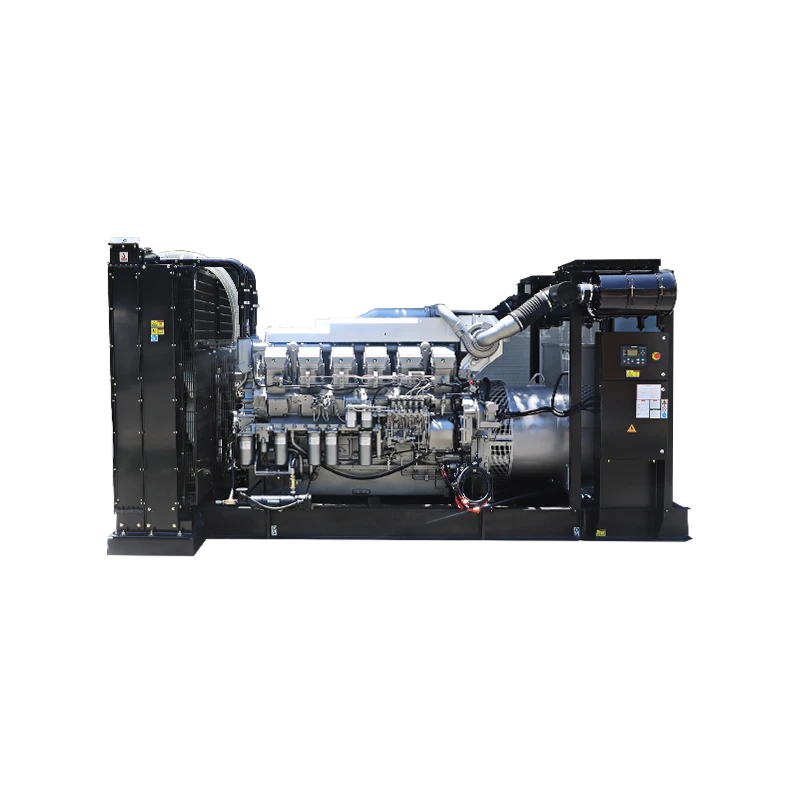
Supplier evaluation follows the same discipline. Authorized engine partnership, gas engine experience at your methane number, commissioning capability, spare parts holding and service response all belong in the comparison, and a reference list is a claim until you read a commissioning report. Ask for one from a site with comparable gas quality and load shape.
Send the Gas Data and the Load Profile First
Send the gas composition or the methane number range, the site rating you need at your ambient temperature and altitude, the ISO 8528 rating class, your largest single load step, the emission limits that apply to the site, and the supply pressure at the battery limit. Those six inputs are enough to size a set, price the gas train and tell you where the supply contract, not the engine, will decide the outcome.
Michael Chen, Tide Power Technology Co., Ltd.
Email: [email protected]
Tel: +86 591 2806 8999
FAQ
How much does a natural gas generator set cost?
Cost is driven by scope rather than by kilowatts alone: the rating class and site conditions, the gas train and regulating station, emission aftertreatment, the enclosure and its acoustic rating, and the controls and switchgear. Two offers at the same rating can differ by the scope each excludes. Ask for a priced scope split rather than a single figure, and state the gas data, the load profile and the emission basis first so the numbers refer to the same duty.
Can a natural gas generator set run continuously?
It can, if it is ordered with the right rating class. A continuous rating permits constant load for unlimited hours, while a prime rating permits variable load with limited overload and a standby rating assumes a utility outage. Continuous duty also depends on the fuel supply holding composition and pressure through the year, and on the maintenance schedule being followed. The rating class, not the engine model, decides whether continuous operation is inside the warranty.
Can the same set run on biogas or liquefied petroleum gas?
Usually not without changes. Biogas carries a lower and more variable methane number, so the engine is derated and the fuel system may need different components and wider control margins. Liquefied petroleum gas needs a different fuel delivery system and a different combustion setup. State the fuel and its expected variation in the request for quotation, because a set configured for pipeline gas will not deliver its rating on a gas with a lower methane number.
What gas pressure does a natural gas generator set need?
The datasheet states a minimum and maximum inlet pressure, and that band is narrower than most site supplies deliver. Where the pipeline pressure is higher, a regulating station reduces it, and the expansion cools the gas enough to require a heater in some installations. Ask the utility for the pressure at the battery limit and its variation, then let the supplier size the regulation and the pipework around that figure.
References
[1] ISO 6976:2016, “Natural gas — Calculation of calorific values, density, relative density and Wobbe index from composition,” International Organization for Standardization, Geneva, 2016.
[2] ISO 8528-1:2018, “Reciprocating internal combustion engine driven alternating current generating sets — Part 1: Application, ratings and performance,” International Organization for Standardization, Geneva, 2018.
[3] Directive (EU) 2015/2193 of the European Parliament and of the Council on the limitation of emissions of certain pollutants into the air from medium combustion plants, Official Journal of the European Union, 2015.
[4] U.S. Environmental Protection Agency, “Standards of Performance for Stationary Spark Ignition Internal Combustion Engines,” 40 CFR Part 60, Subpart JJJJ, 2006.
[5] NFPA 37, “Standard for the Installation and Use of Stationary Combustion Engines and Gas Turbines,” National Fire Protection Association, Quincy, MA, 2018.
If you’re interested, check out these related articles:
A New Era of Mobile Power: Tide Power Unveils Game-Changing Foldable Solar Container
How to Choose a Generator at Tide Power
?New P Series: Reliable and Cost-Effective Choice
Happy Mother’s Day