 EN
 ZH
 FR
 ES
 AR
A China diesel generator factory can quote a 500 kW set within a day, print any rating you ask for on the nameplate, and ship within six weeks. What it cannot do is make a specification match your site unless you write the site conditions down. Sourcing works better when you split it into two decisions: whether the supplier is a legitimate manufacturer of the parts it claims to control, and whether the unit it delivers meets your acceptance criteria. Most sourcing failures come from settling the first question and assuming it answers the second.
What a Chinese Generator Factory Actually Is
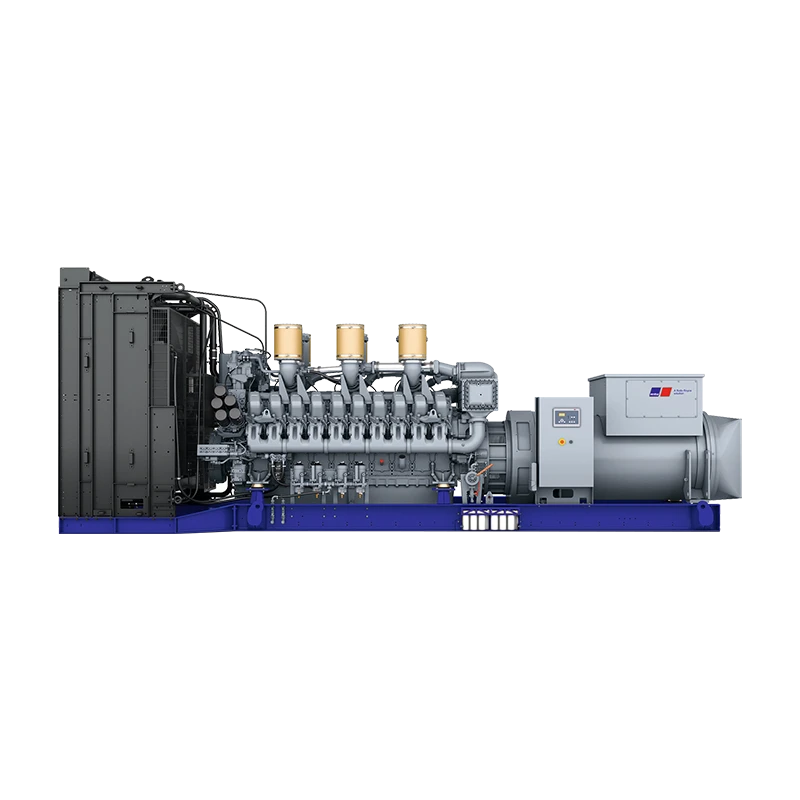
A diesel generator set is an integration product. The engine, alternator, controller, cooling package, base frame, canopy, fuel system and wiring are sourced or fabricated separately and then matched. Very few plants in any country make more than one or two of those items in house, and in China the split usually falls between the engine, which comes from an engine manufacturer, and the alternator, which comes from an alternator manufacturer. The quality of the delivered set depends heavily on those two choices and on how carefully the package around them is specified.
Three structures appear under the word factory. An assembly plant buys engines and alternators, fabricates the canopy and base frame, wires the control panel and load tests the finished unit. An OEM plant builds to another company’s drawings and cannot sell that design under its own name. An export company has no plant and coordinates production at a site you may never visit. All three can deliver a working generator. The differences appear when a specification has to change, when a test fails, or when a part is needed two years later.
Control over the build is what makes a technical conversation possible. A plant that assembles and load tests in house can tell you that a radiator sized for 40 °C ambient will not hold a site that runs well above it, and can re-rate before the canopy is cut. An intermediary relaying messages usually cannot, because the person answering your email is not the person who sizes the cooling package.
Integration depth matters more as the machine grows. A 20 kVA standby set for a workshop is a simple package and the market for it is competitive, so the gap between plant and trader is mostly a gap in paperwork and response time. At 800 kVA, in parallel operation, or where the set carries a process load without utility backup, control and protection design dominates the outcome and full-load test capability becomes part of the product.
Buying from the plant usually lowers the unit price and shortens the communication chain, but it also moves specification responsibility onto you. Buying through an export house can cost more and still ends at the same plant, yet the better ones handle inspection, consolidation and export documents that a small plant handles badly. Neither route removes the checks that follow.
What this section establishes is the nature of the entity you are dealing with. It does not establish that the unit will pass your test, and treating a factory visit or a licence check as technical approval is the most common way buyers get surprised.
Which Ratings and Figures Make Quotations Comparable
Two quotations can both say 500 kW and describe different machines. Generator capacity is normally stated in kVA at a power factor of 0.8, so 500 kVA corresponds to 400 kW, and a set sold as 500 kW prime power is a larger machine than one sold as 500 kW standby. Before price means anything, the quotation has to name the rating and the standard edition behind it.
ISO 8528-1 defines four ratings and the running hours each one permits [1].
| Rating | What it authorizes | Where buyers use it | What it does not authorize |
|---|---|---|---|
| COP | Continuous operation at constant load, unlimited hours | Sites with no utility running at steady load | Any overload above the declared figure |
| PRP | Variable load for unlimited hours, with 10% overload for one hour in twelve | Off-grid and weak-grid sites where the set carries the load | Sustained overload, or a smaller set justified by the overload allowance |
| LTP | Limited-time running, capped at 500 hours per year in the standard | Seasonal or temporary supply where annual hours are known | Year-round base load |
| ESP | Emergency supply, capped at 200 hours per year with average load factor no higher than 70% | Utility-backed sites where the set runs during outages | Prime power, or construction and commissioning supply |
The same physical set can be offered at more than one rating because a rating describes permitted duty, not hardware. A supplier who quotes a power figure without the rating and the standard edition leaves the two things that decide whether the machine survives, duty class and overload allowance, outside the contract.
Site conditions change the available output. ISO 3046-1 sets the reference conditions at which engine power is declared: 25 °C air temperature, 100 kPa barometric pressure and 30% relative humidity [2]. A site at 1,500 m, or a plant room that reaches 45 °C, will not deliver the catalogue figure, and the correction has to be applied before the set is chosen. Ask for the site-corrected rating and the correction method, not the reference-condition rating.
Speed follows frequency. A four-pole alternator runs at 1,500 rpm at 50 Hz and 1,800 rpm at 60 Hz, so a 60 Hz enquiry is a different engine and alternator selection rather than a setting change. Fuel consumption needs a basis as well: grams per kWh at stated load points against a named rating can be compared, while litres per hour cannot unless the density assumption is stated. Noise follows the same logic, because a canopy figure quoted only in dB(A), with no distance, load or measurement standard, cannot be checked at commissioning.
| RFQ field | What to request | Why it matters |
|---|---|---|
| Rating and standard | ESP, PRP, LTP or COP, with the ISO 8528-1 edition named | Two quotes at different ratings are not the same machine, and the contract has no duty limit without it |
| Site conditions | Maximum and minimum ambient, altitude, humidity, indoor or outdoor installation | Output falls with heat and altitude, so an uncorrected rating overstates what the site will get |
| Fuel consumption basis | g/kWh at stated load points, or L/h with the assumed density | Litres-per-hour comparisons hide different load points and different fuel |
| Acoustic requirement | dB(A), measurement distance, load, and standard | A canopy number without a distance cannot be verified on arrival |
| Electrical interface | Voltage, phase, frequency, largest motor and starting method, permitted voltage dip | Motor starting decides alternator size more often than total load does |
| Control and protection | AMF, synchronizing, protection settings, remote monitoring protocol | Retrofitting controls costs more than specifying them with the set |
How to Screen a Factory Before You Pay a Deposit
Screening answers one question: is this supplier a legitimate business performing the activity it claims? That is a different question from whether the delivered unit meets your specification, and evidence that answers one does not answer the other. The checks below are cheap, remote, and worth completing before a deposit leaves your account.
What the Business Licence Proves
The business licence, identified by the unified social credit code, is the first document to request, and it can be checked against the national enterprise credit system rather than taken on trust. Read the registered scope. Wording that covers manufacture or assembly of generator sets and power equipment supports the supplier’s claim, while a scope limited to machinery sales, import and export, or technical services describes a different business. Check the establishment date and the registered address as well. What the licence proves is legal existence and registered activity. What it does not prove is that the address contains a production line, a test bay, or the unit you are buying.
Which Documents Can Be Checked Independently
An ISO 9001 certificate is useful only when the scope wording covers the activity you are buying and the certification body can be found in its own public register. A certificate with no readable accreditation mark, or a scope covering trading rather than manufacturing, tells you little.
The CE mark is misunderstood more often than any other document in this trade. For most directives that apply to generator sets, the declaration of conformity is issued by the manufacturer on its own responsibility, and a notified body certificate appears only where a directive requires third-party assessment. A buyer who asks for a CE certificate, receives a document, and never checks who issued it and under which directive has verified nothing.
Engine and alternator supply claims are best confirmed with the component maker’s regional office rather than the supplier’s reference list. Ask for the brand authorization, then verify it independently.
When a Third Party Audit Is Worth Paying For
An inspection visit costs money and time, so it should answer a question you cannot answer remotely. It earns its cost when the order value is high, the unit is bespoke or the first of a series, your own engineer cannot travel, or control and protection design is part of what you are buying. Scope it around the build rather than the reception area: assembly area and production line, test bay capacity and instrument calibration, sub-supplier list, and a witnessed load test. For a single standard unit at a modest rating, a pre-shipment inspection plus a documented test record usually covers the risk at lower cost.
Volume capability deserves a direct question, because a plant building a few units a month and a plant building several hundred are different suppliers with different failure modes. Ask for monthly output by rating band, how much of the build is subcontracted, and whether engines and alternators are stocked or ordered per project. Delivery timing follows from those answers: a stocked standard configuration ships quickly, while a non-standard voltage or a parallel-ready panel waits for components.
Volume and repeatability are easier to judge from a supplier’s project record than from a brochure. <150 diesel generator sets supporting the construction of telecommunications projects in Africa> covers a supply of 150 generator sets for telecommunications construction in Africa.
| Record | Method context | Responsible use | Do not infer |
|---|---|---|---|
| Business licence with unified social credit code | National enterprise credit system, checked against the legal name on the contract | Confirms legal identity, registration status and stated scope | That the registered address is a production plant |
| ISO 9001 certificate | Certification body’s public register, scope wording and expiry date | Confirms a certified quality system covers the stated activity | That every unit is built to your specification |
| CE declaration of conformity | Document issued by the manufacturer on its own responsibility | Confirms the manufacturer claims conformity for the listed models | That an independent body tested the unit |
| Engine plate and serial number | Physical check before dispatch, matched to the purchase order | Confirms the engine model actually supplied | That the engine’s history or running hours are known |
| Witnessed load test record on one unit | Test bay, one unit, date and ambient conditions recorded | Confirms that unit reached the declared load on that day | That serial production units will perform identically |
What a Factory Acceptance Test Can and Cannot Prove
A witnessed test is the only point before shipment where the machine is under your control while remedying defects is still the supplier’s responsibility. Plan it as a set of recorded checks rather than an invitation to watch the set run.
- Agree the test standard, the witnessing arrangement and the record format before production starts. A test you cannot compare with the next one has limited value.
- Check the nameplate against the purchase order: rating, voltage, frequency, power factor, and the engine and alternator serial numbers.
- Confirm protection settings against the approved schedule before the first start.
- Record a cold start and the time to reach stable voltage and frequency, then verify automatic start and transfer if an AMF panel is in scope.
- Apply step loads at 25%, 50%, 75% and 100% of the declared rating, recording voltage dip, frequency dip and recovery time at each step.
- Run at full load long enough for coolant and oil temperatures to stabilize, and measure fuel consumed over a stated interval at a stated load.
- Confirm the protective shutdowns operate, including low oil pressure, high coolant temperature and overspeed, using the method the supplier’s procedure permits.
- Collect the record package: test sheet with ambient conditions, instrument calibration status, fuel consumption calculation, and the alternator test certificate.
The limits matter as much as the checks. A witnessed test on one unit does not certify serial production. A set that passes in a cool test bay at sea level is not thereby rated for a hot high-altitude site. A short full-load run says nothing about wear at 8,000 hours, and a resistive load bank does not show how the alternator behaves with the harmonic content of a variable-speed drive. Fuel quality, installation quality and behaviour in parallel with a weak grid stay open until commissioning.
Recording ambient conditions is not paperwork for its own sake. Without them, the result cannot be corrected to site conditions, and a marginal pass at 20 °C may be a fail at the design temperature.
How Engine and Alternator Choices Change Cost and Lead Time
The engine decides fuel burn, maintenance interval, emissions route, and in most markets resale value. Global brands cost more per kW and bring a service network that may already exist near your site. Domestic engines cost less and usually depend on parts shipped from China. Neither is automatically right. The useful question is where the first unscheduled repair will happen and who will be standing there when it does.
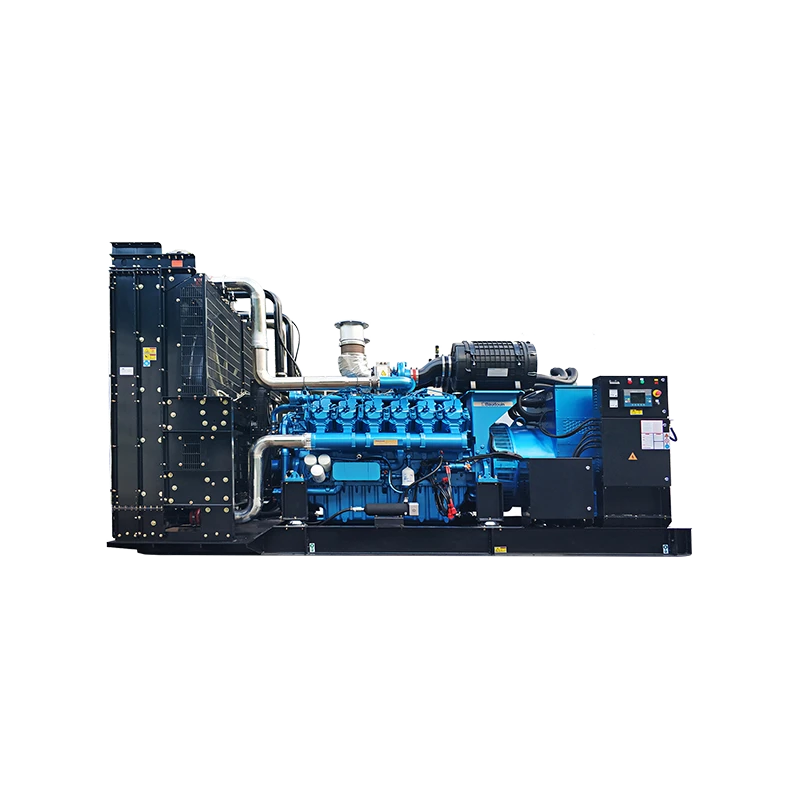
A brand name on a quotation is a claim, not a specification. Check the engine plate on the unit before dispatch, match the serial number to the documents, and ask whether the engine maker’s own warranty registration will be completed in your company’s name. That registration is what turns an engine warranty into a factory warranty rather than a promise from the assembler.
Engine supply claims are worth confirming with the component maker rather than with the assembler alone. <Senior executives from Perkins visit Tide Power> covers a visit by Perkins senior executives to the company’s operations.
Alternator selection is usually driven by motor starting rather than total load. A set sized on kW alone can be too small to start the largest motor on site without an unacceptable voltage dip, and the remedy is a larger alternator or a different starting method, not a larger engine. Ask for short-circuit capability, voltage regulation, insulation class and the temperature rise basis in writing. Single-bearing alternators mount on the engine flywheel and suit a coupled package; double-bearing machines need a bedplate and careful alignment but can be replaced or sourced locally.
The package around the machine needs the same attention. A canopy is not cosmetic: it changes cooling airflow, maintenance access, lifting points and shipping volume. Open sets cost less and suit a plant room where acoustic treatment is already part of the building. Controls deserve equal care, because a basic panel and a parallel-ready panel with protection relays differ in cost, lead time and commissioning hours.
| Configuration | Choose when | Do not choose when |
|---|---|---|
| Global-brand engine | Critical load, long running hours, or a service network already near the site | No local dealer supports that model and every repair will need imported parts |
| Domestic engine | Standby duty, low annual hours, cost-driven projects with in-house maintenance | Prime power at high load factor, where parts lead time decides downtime |
| Single-bearing alternator | Standard coupled package and the shortest lead time matter | You expect to replace the alternator independently of the engine |
| Double-bearing alternator | Local alternator sourcing, coupling drive, or later upgrade flexibility | Shipping volume is tight and the standard coupling already suits the site |
| Open-frame set | Indoor plant room with acoustic treatment already designed | The site is near noise-sensitive receptors and no treatment is planned |
| CKD kit | Local assembly, duty advantage, or local content rules favour destination-country build | You have no build area, torque control or load test capability |
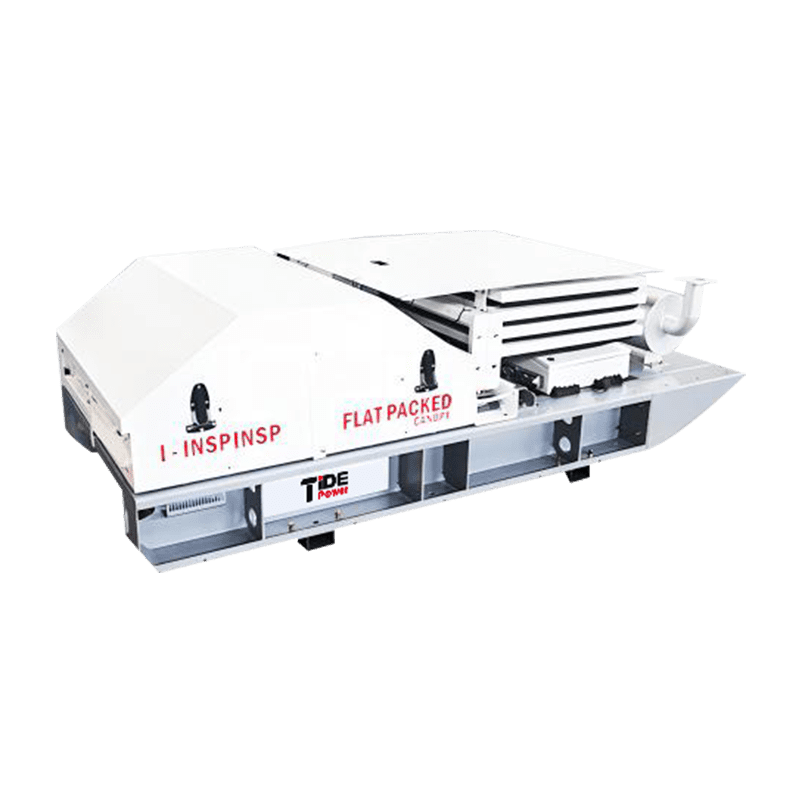
One configuration deserves separate mention. CKD, or completely knocked down, ships as an assembly kit: canopy panels, base frame, cooling package, wiring harness and documentation, with the engine and alternator supplied loose or sourced locally. The advantages are shipping volume, duty treatment in some markets, and the ability to use an engine your own market supports. The condition is that assembly quality and testing move to your site. Tide Power supplies its I Series as a CKD platform in the 5 kVA to 650 kVA range with engine, alternator and accessory selection left to the project, which is the form this model takes when a buyer wants configuration control rather than a finished package.
Agreeing Scope, Documents and Delivery Before Production
Once the technical specification is settled, the commercial documents decide who pays for what when something goes wrong. Four items are worth fixing in writing before the deposit.
Scope should list what sits inside the battery limit and what does not. A quotation covering the set, canopy and control panel but not the exhaust system, fuel tank, cabling or foundation is not wrong, but it is not comparable with one that covers them. Write the boundary down, including who supplies the circuit breaker, the neutral earth link and the remote monitoring gateway.
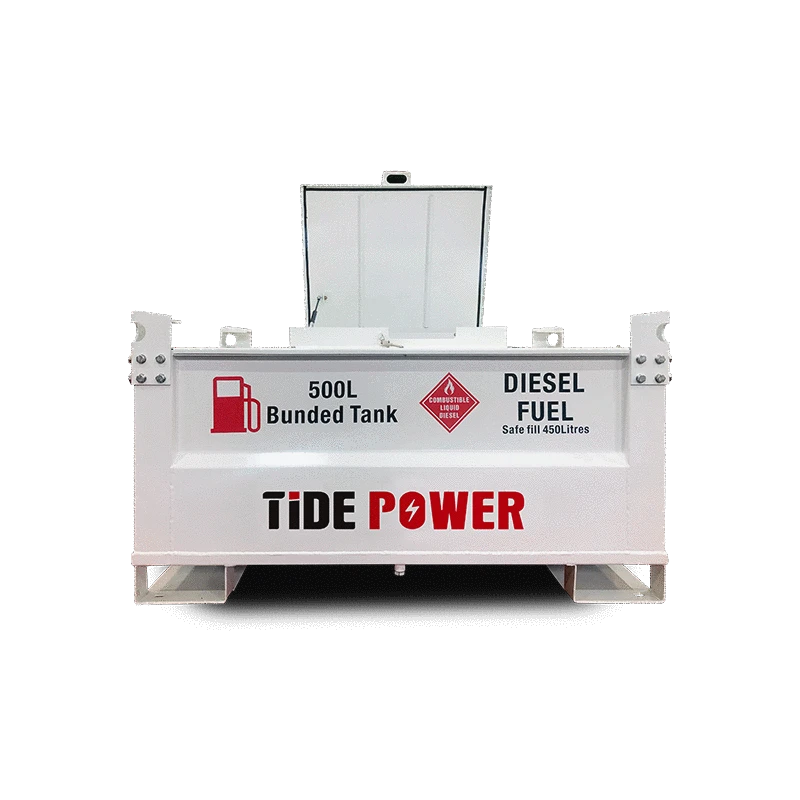
Fuel storage is often left until installation and then becomes a delay. Capacity, bunding and the standard the tank is built to belong in the scope, particularly for Australian projects, where the storage arrangement has to satisfy AS1940 and the tank is assessed against it. Ask for the tank certificate rather than a statement of compliance.
Packing decides how the unit arrives. A silent canopy is a large steel box that can be damaged by forklift contact long before the engine is affected, so shock and tilt indicators, corner protection and a lifting plan in the shipping documents are worth more than a thicker coat of paint. Condensation inside a canopy during a long sea voyage is normal, and desiccant or barrier film should be specified rather than assumed.
The Incoterm decides where your risk starts. FOB gives you control of freight and loading, and it also leaves you with a forwarder who will not chase a supplier on your behalf. CIF adds insurance to the freight cost but still stops at the destination port. DAP suits a buyer who wants the container at the site gate and accepts the cost of that convenience.
Payment terms usually follow the sequence of evidence: a deposit against the signed contract and approved drawings, a balance against a copy of the bill of lading, and original documents released through the bank. Whatever the split, tie each payment to a document you can check, such as the witnessed test record or the pre-shipment inspection report, rather than to a calendar date.
The document set for a generator shipment normally includes the commercial invoice, packing list, bill of lading, certificate of origin, test record, wiring diagrams, the operation and maintenance manual in the destination language, and component certificates for the engine and alternator. Missing manuals and diagrams delay commissioning more often than late containers, because the site electrician cannot terminate a control panel without them.
A pre-shipment inspection is the last cheap check. Scope it around quantity, nameplate data, visible damage, accessories against the packing list, and the presence of the full document set. It does not replace a load test, and a report stating that the unit was photographed is not an inspection. Projects with staged deliveries need the same discipline on every batch, not only the first.
Export documentation and batch consistency matter most when a project ships repeat units rather than a single set. <93 FENOVA Series Soundproof Generator Sets Shipped To East African Banks> covers a shipment of 93 FENOVA soundproof generator sets to East African banks.
Warranty and Spare Parts After the Container Leaves
Warranty is where a low price often turns into a long argument. The terms that matter are who performs the work, where the parts come from, and what voids the cover.
What a Warranty Should Cover
Ask for the hours limit and the calendar limit, since generator warranties usually run on whichever expires first, and for the labour arrangement: reimbursement at destination, a site visit by the supplier’s engineer, or parts only. Parts-only cover sounds adequate until the first failure needs two technicians and a crane. Read the exclusions closely, because fuel contamination, overload beyond the declared rating, unauthorised repair and missing maintenance records are commonly excluded, and those are the causes most often at issue when a claim is refused.
Which Spares to Hold
A spares list built around failure consequence rather than price is more useful than a full parts kit. Filters, belts and hoses cover scheduled maintenance. The controller, automatic voltage regulator and sensors are single points of failure that stop the set, and they are cheap to hold relative to the downtime they cause. Beyond that, the engine maker’s local network usually beats air freight from the assembler for major components, which is one reason the engine brand decision and the service decision are the same decision. Ask for a recommended two-year spares list with part numbers, unit prices and lead times, and check that the numbers match the engine and alternator nameplates rather than a generic catalogue.
Commissioning closes the loop. The factory test record proves the set worked there; the commissioning record proves it works on your site, with your fuel, your load and your switchgear. Keep both, along with the maintenance log that follows, because a warranty claim without a maintenance history is a negotiation rather than a claim.
Send the Load List Before You Ask for a Price
A price without a load list is a guess in both directions. Send the rating and duty class you need, the site ambient and altitude, the largest motor and its starting method, the single line diagram or load schedule, the destination port and required delivery window, the noise limit with its measurement distance, and the fuel storage requirement. Those items are enough to size the set, choose the alternator and quote a configuration that can be compared with the next one.
Tide Power Technology Co., Ltd. prepares proposals for energy solution projects. Send the list above to [email protected] or call +86 591 2806 8999, and the reply can state the rating basis and included scope rather than a single figure.
FAQ
Is buying directly from a Chinese factory cheaper than going through a trading company?
The unit price is often lower, but that comparison is incomplete. A plant quotes the machine; an export house quotes the machine plus coordination, inspection, consolidation and documents, and some of those services cost more to replace than to buy. The gap narrows when a small plant subcontracts the canopy or the control panel. Compare landed cost on the same scope, the same rating basis and the same inspection arrangement, then treat the remaining difference as the real difference between the two routes.
How can I confirm a Chinese generator manufacturer is a real factory?
Check three things independently. The business licence through the national enterprise credit system, reading the registered scope rather than the company name. The certification body’s public register, matching the ISO 9001 scope wording to manufacturing rather than trading. A live video walk-through or witnessed visit of the assembly area and test bay, with engine and alternator stock visible. None of these proves the unit will meet your specification, but together they separate a plant from a mailbox.
What makes one Chinese generator quotation cheaper than another?
Rating basis, engine and alternator brand, alternator margin for motor starting, control panel scope, canopy construction and test regime. A quote at emergency standby rating describes a smaller machine than one at prime power for the same kW figure. A quote that excludes the exhaust, fuel tank, breaker or commissioning is not cheaper, only shorter. Give each supplier the same written scope at the same rating, and the remaining differences usually trace back to the engine and alternator selection.
Can I order CKD kits and assemble generator sets locally?
Yes, and it is a common route where duty, freight volume or local content rules favour assembly in the destination country. The kit usually includes canopy, base frame, cooling package and wiring, with the engine and alternator supplied loose or sourced locally. The requirement falls on your side: a clean build area, controlled torque, and the ability to load test the finished unit before it enters service. Without test capability, assembly faults reach the site undiscovered.
References
[1] ISO 8528-1:2018, “Reciprocating internal combustion engine driven alternating current generating sets. Part 1: Application, ratings and performance,” ISO, 2018.
[2] ISO 3046-1:2002, “Reciprocating internal combustion engines. Performance. Part 1: Declarations of power, fuel and lubricating oil consumptions, and test methods,” ISO, 2002.
If you’re interested, check out these related articles:
Tide Power Launches Revolutionary BESS & Hybrid Power Solutions
Tide Power Shines at WETEX 2025 Dubai, Drawing Major Attention with Smart Hybrid Storage and Efficient Dewatering Solutions
Tide Power invites you to the PhilEnergy 2025
Tide Power Introduces the BK-460-52-DC: A High-Efficiency Dry Suction Sewage Pump Unit for Tough Dewatering Challenges
Building Smarter: Hybrid Energy for Construction Sites & Commercial Buildings