 EN
 ZH
 FR
 ES
 AR
Smart microgrid system cost is usually presented as a battery price per kilowatt hour, and that figure is the least reliable number in the budget. What decides whether a project goes ahead is the total installed cost inside a defined scope: generation, storage, conversion, protection, civil works, interconnection approvals, commissioning and the service arrangement that follows. Two suppliers can price the same storage stack and land far apart once their boundaries of supply diverge, and neither quote is dishonest. This guide shows what belongs inside that boundary, how to normalize competing offers, and which fields to demand before any number becomes comparable.
What Drives the Cost of a Smart Microgrid System
A microgrid has two cost engines that behave differently. Storage and generation scale with energy: more autonomy hours mean more battery modules, more racking, more thermal management and more floor space. Conversion equipment, switchgear, cabling and protection scale with power: the same quantity of energy delivered across two hours needs a very different inverter and feeder set from the same energy delivered across ten. Buyers who ask for a price on energy alone get a system shaped for the wrong duty cycle.
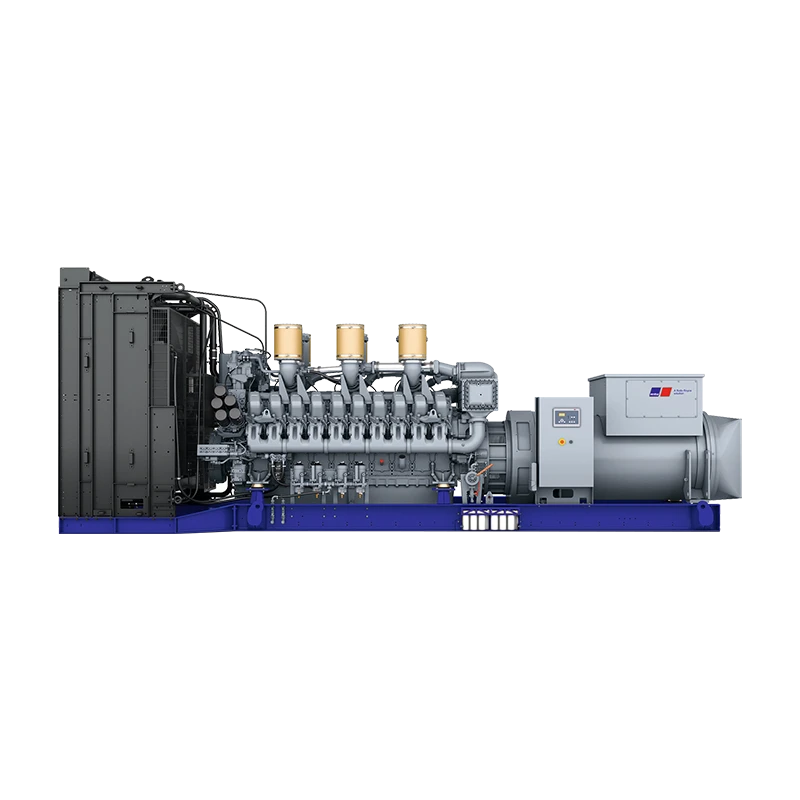
The third engine is the site. Transport to a remote location, foundation design, acoustic treatment, ambient temperature derating and the local utility’s interconnection process can shift the total more than a change of battery chemistry. Rating definitions matter here as well: a generating set declared for prime power under ISO 8528-1 [1] is not interchangeable with a standby unit of the same frame, and quoting one against the other distorts the comparison before cost is even discussed.
| Cost line | What scales it | Where it normally sits in a supplier quote |
|---|---|---|
| Generation equipment | Rated kW and redundancy level | Quoted as equipment, ancillaries sometimes separate |
| Storage modules and thermal management | Usable kWh and discharge window | Quoted on nominal kWh, usable kWh often unaudited |
| Power conversion and transformers | Continuous kW and overload rating | Sometimes split into a separate package |
| Switchgear, protection, metering and cabling | Fault level, feeder count, cable route length | Usually excluded from an equipment quote |
| Civil works, enclosures and site logistics | Access, terrain and transport distance | Usually excluded |
| Interconnection studies, permits and commissioning | Utility process and grid code edition | Almost always excluded |
The practical consequence is a single question worth asking every bidder: which of these six lines is inside your number, and which is mine to carry?
Why Two Microgrid Quotes for the Same Site Rarely Match
A quote is a price attached to a scope, and scopes are usually written as lists of what is included rather than what is not. When one bidder carries transformers, protection settings and commissioning and another leaves them to the buyer, the lower total is not cheaper. It is less complete, and the missing items return later as variations at the point in the project when the buyer has the least leverage.
This is where cost records need to be read for what they actually are, because the same graph can hold numbers produced five different ways.
| Record | Method context | Responsible use | Do not infer |
|---|---|---|---|
| Supplier budgetary quote | Priced from a load list you supplied, valid for a stated period | Setting a budget range before detailed design | That it is a firm price; exclusions and validity can change it materially |
| Firm offer with a scope schedule | Priced against a defined scope, single line diagram and site survey | Comparing bidders once scopes are normalized | That the lowest total is the lowest cost; excluded items return as variations |
| Installed cost published for a different project | Different climate, labour market and grid connection regime | A sanity check on order of magnitude | That cost scales linearly with system size; interconnection and civil work do not |
| Module price per kWh of storage | Hardware only, with no conversion, installation or warranty structure | Comparing cells of similar chemistry and comparable warranty | That it equals installed cost per usable kWh at the point of connection |
| Your own meter data and outage log | Measured across a full year at the connection point | Sizing load and valuing avoided outage hours | That average consumption reveals peak demand, which sets the power-side cost |
These records describe how a number was produced, not how good the equipment behind it is. A high figure from a careful scope and a low figure from a narrow one are both honest; they are simply not answers to the same question.
Sizing the System Before Pricing It
Four inputs fix most of the price before a single component is chosen: peak demand, average demand, required autonomy hours, and the share of load that must ride through an outage. Measure them rather than estimate them. A year of interval data, plus a log of the outages the site actually experiences, is a better design basis than any questionnaire.
Peak and average do different jobs. Peak sets the power side: inverter rating, transformer size, switchgear fault level and genset frame. Autonomy sets the energy side: modules, racks, cooling and space. A site with a sharp morning start-up and a low overnight base has a power problem, not an energy problem, and paying for storage to solve a power problem is one of the more expensive mistakes in this category.
Usable energy is not the number on the pack label. It equals nominal capacity, multiplied by the usable state-of-charge window, multiplied by the capacity retention the supplier warrants at the end of the term. Take both multipliers from the written warranty rather than from a data sheet headline. Two quotes can show identical nominal capacity and deliver measurably different energy a decade later, and that gap is a cost line that appears in neither spreadsheet.
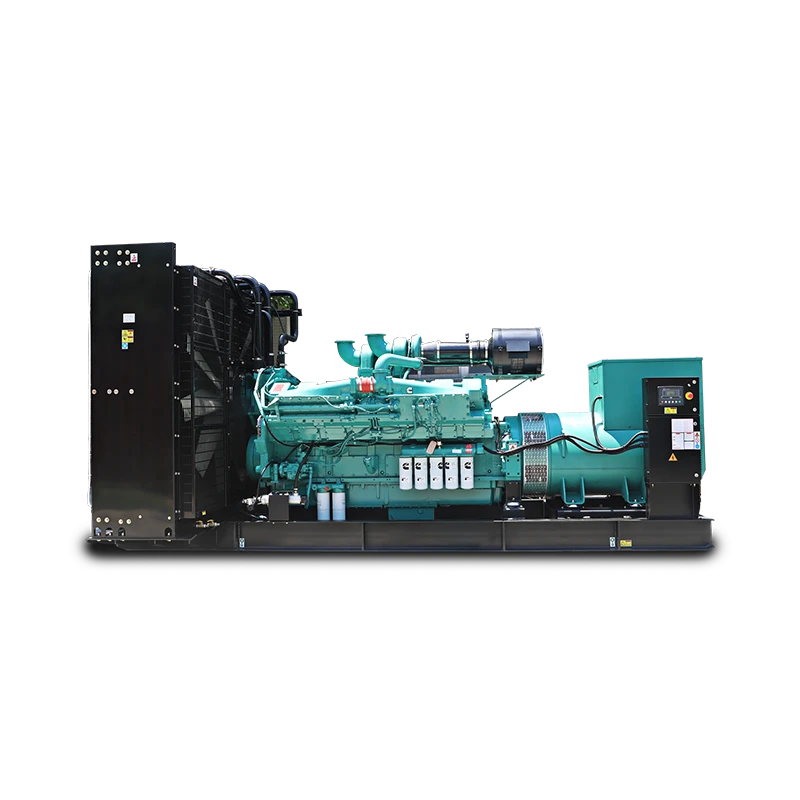
Generating sets are sized to the load steps they must accept, not to the average. Motor starting, simultaneous restart after an outage and step-load acceptance determine the frame; altitude and ambient temperature determine the derating applied on top. A set chosen on average load alone will either be oversized and run at poor load factor, or undersized and stall on the first cold start.
The Cost Lines Buyers Usually Forget
Interconnection is typically the largest line outside the equipment quote, and the one most often left unpriced. Studies, protection coordination, metering and the utility’s own network works run on the utility’s schedule, not the supplier’s, and a design that satisfies one grid code edition can require rework under the next. For inverter-based resources, IEEE 1547-2018 [2] sets the interconnection and interoperability requirements that commissioning tests are built around.
Fire safety is a design cost, not an accessory. NFPA 855 [3] sets installation requirements for stationary storage, including separation, fire protection and hazard mitigation, and authorities commonly ask for large-scale fire test evidence produced under UL 9540A [4]. IEC 62933-5-2 [5] covers safety requirements for grid-integrated electrochemical storage systems. Detection, suppression, separation distance and enclosure construction all follow from those requirements, and they change with chemistry and with how close the installation sits to occupied buildings.
Acoustic treatment belongs in the same category. A site beside housing needs a soundproof enclosure and a different siting plan from an industrial yard, and that enclosure changes transport weight, lifting arrangements and maintenance access as much as it changes the price.
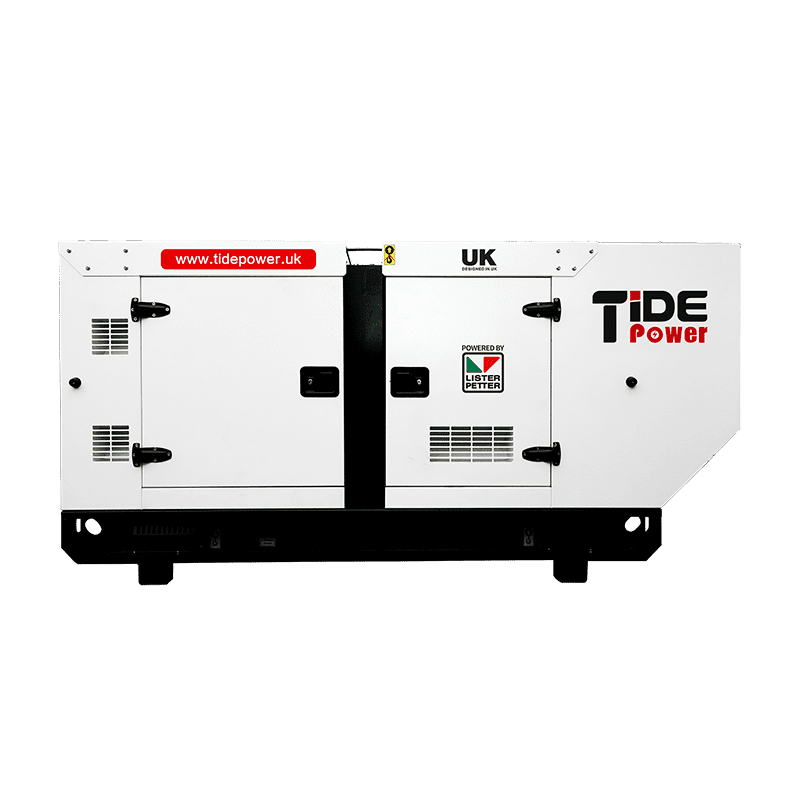
Acoustic and siting decisions carry cost consequences that reach well beyond the enclosure itself. <Tide Power Empowers Central American Immigration Office with Cutting-Edge Soundproof Generator Sets> covers a soundproof generator set installation for an immigration office.
Where the site runs on gas, fuel supply becomes a capital line of its own. Conditioning and treatment, pressure regulation, pipeline connection or on-site storage, and the delivered gas quality that determines the engine rating all sit ahead of the generator in the budget. Buyers frequently price the engine and discover the fuel infrastructure afterwards, at which point the economics of the whole scheme have already been presented to a board. Treating fuel supply as a first-order line rather than a utility allowance keeps the comparison honest from the first estimate onward.
Fuel supply infrastructure is a capital item with its own schedule and its own approvals. <Cheers for the completion of the first phase of the Gas Project in Africa> covers the completion of the first phase of a gas project in Africa.
The last forgotten group is operational: commissioning and site acceptance testing, operator training, a spares holding, specialist tools, decommissioning and end-of-life handling. None of these are large individually, and together they are the difference between a system that runs for its design life and one that is quietly derated because nobody on site can service it.
Comparing Battery, Generator and Hybrid Cost Bases
The comparison only works at the same service level. A diesel-only system concentrates cost in a single asset with a familiar maintenance regime. A battery-only system concentrates cost in storage and hits a hard limit on autonomy. A hybrid moves cost from fuel into equipment and controls, reduces run hours, and adds assets whose failure modes are new to the site team.
| Basis | Main capital driver | Main operating driver | Suits | Works against |
|---|---|---|---|---|
| Diesel only | Genset rating sized to peak load | Fuel price, run hours, overhaul intervals | Sites with reliable fuel access and infrequent outages | Long autonomy, strict noise limits, remote fuel logistics |
| Battery only | Usable kWh and power conversion | Cycle life and replacement timing | Grid-charged peak shaving and short outages | Multi-day autonomy without a grid or a large array |
| PV with battery | Array size, storage and conversion | Yield assumptions and soiling losses | Daytime-heavy loads in good irradiance | Night-time peaks and low-irradiance seasons |
| PV, battery and genset | All three packages plus the control layer | Fuel for residual hours and maintenance of more assets | Remote sites that need firm capacity | Simple loads where a generating set alone is adequate |
Genset sizing in a hybrid is where the real saving sits. Sizing the set to average load with storage carrying the peaks can drop it a frame or two, which cuts capital cost and keeps the engine at a healthier load factor. The tradeoff is a control layer that must carry step loads and a set that must accept them without stalling.
Hybrid operation moves cost from fuel into equipment and controls, and that shift is what makes or breaks the business case. <Hybrid Power Systems: Combining BESS with Diesel Generators for Maximum Efficiency> covers how battery storage and diesel generation are combined to raise overall system efficiency.
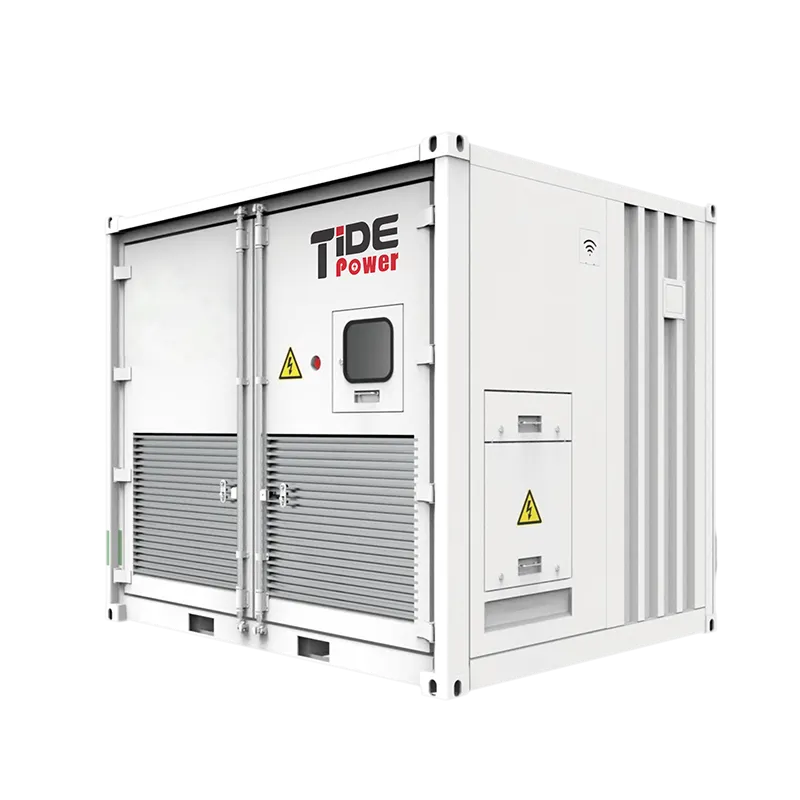
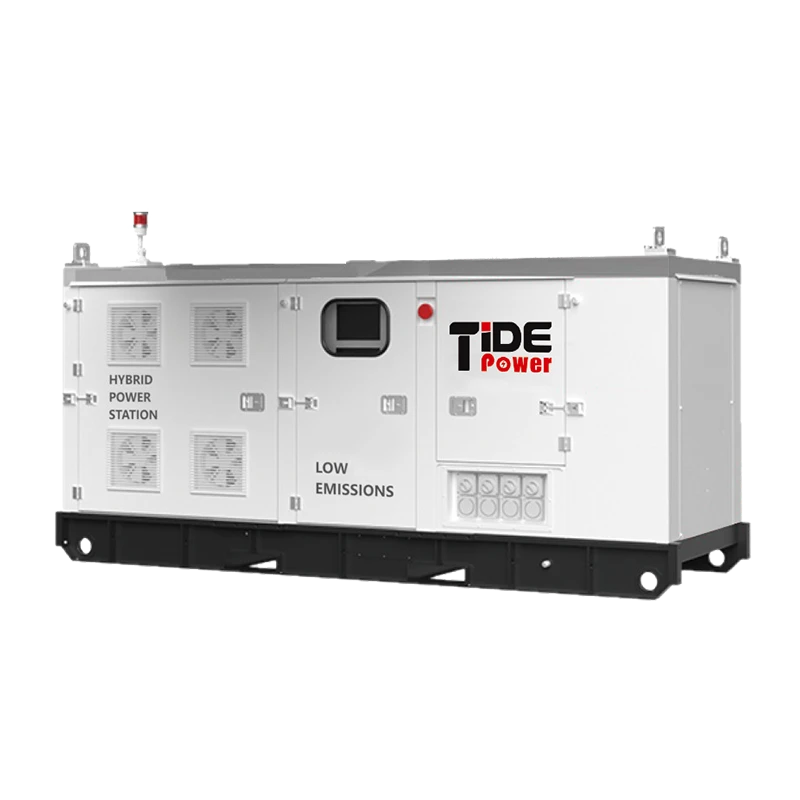
Packaged architectures shorten the boundary problem. An all-in-one hybrid power station in the 10 kVA to 250 kVA range, such as Tide Power’s TP-60P, places solar input, LFP storage and a diesel generator behind a single controller with millisecond-level switching. The useful point is not the package itself but the fact that one boundary of supply makes one comparable number, whereas three vendors create two interfaces where unbudgeted cost tends to collect.
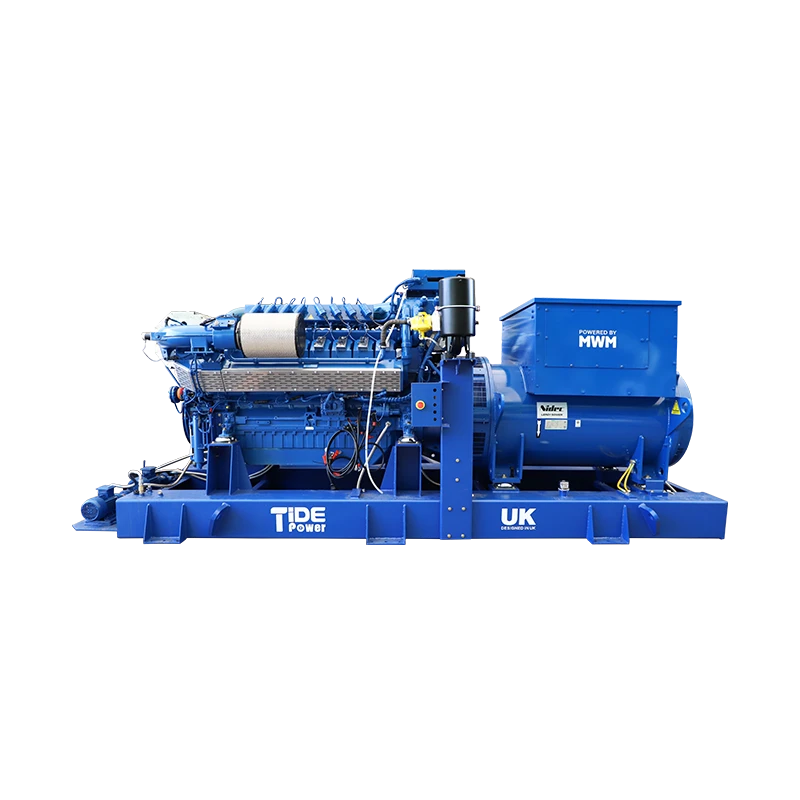
Gas changes the cost shape once more, because the engine is priced against a fuel specification and the fuel specification is priced against treatment and supply infrastructure. Methane number, inlet pressure and supply variability set the rating and the derating applied to it, so a gas price without a stated fuel analysis leaves the largest variable open. Sites that recover a waste gas stream carry a different calculation again, since the fuel cost falls away while the treatment cost does not.
How to Structure an RFQ That Returns Comparable Prices
The purpose of an RFQ is to make every bidder price the same scope. Six fields do most of that work.
| RFQ field | What to request | Why it matters |
|---|---|---|
| Scope boundary | A line-by-line included or excluded schedule covering generation, storage, conversion, switchgear, civil, interconnection support, commissioning and training | Exclusions return as variations, which is where budgets overrun |
| Energy basis | Nominal kWh, usable kWh at the DC terminal and at the point of connection, usable state-of-charge window, warranted end-of-term retention and cycle definition | Two quotes can share a nominal figure and deliver different energy over the term |
| Power basis | Continuous kW, overload capability and the load steps the system must accept | Motor starting and step loads size conversion equipment and genset frames |
| Load and yield assumptions | The load profile and PV specific yield the price was built on, with the source of each | A price built on optimistic yield is an undersized array with a low headline cost |
| Service and warranty | O&M scope, response times, spares list, warranty exclusions and firmware support | Maintenance and replacement timing sit outside capital cost but inside lifecycle cost |
| Commercial terms | Validity period, currency, indexation, payment milestones and delivery basis | Comparisons across currencies and delivery terms are otherwise meaningless |
One request pattern is worth abandoning deliberately.
Reject this line: “Please quote a 500 kWh battery microgrid, installed and commissioned.”
Replace it with: “Quote against the attached scope schedule and single line diagram, stating usable kWh at the point of connection, the warranted end-of-term retention and cycle definition, the load profile and autonomy hours priced, the power rating and load steps accepted, and every line marked included or excluded, with the offer’s validity period.”
The second version takes longer to write and returns numbers that can be compared without a second round of clarification.
Reading Lifecycle Cost on a Delivered-kWh Basis
One normalization makes the comparison honest: the delivered-kWh basis. Total the cost over the service term, including capital, fuel, scheduled maintenance, overhaul, replacement, insurance and the value of unserved energy, then divide by the usable kWh the system actually delivers at the point of connection across that term. Every technology can be expressed in that unit, and the unit does not favour any of them.
Capital-only comparison quietly rewards undersized storage and oversized generating sets. The oversized set wins on paper because its purchase price is visible and its fuel bill is not, and the undersized battery wins because the warranty claim arrives after the purchasing decision has been signed off. Moving the same numbers onto a delivered-kWh basis removes that distortion without changing a single technical fact.
Warranty language belongs in the numerator. Throughput limits, the method used to count cycles, exclusions triggered by third-party spares or unapproved firmware, and response-time commitments all convert into cost over ten years. A warranty that covers failures but not capacity means the operator funds the degradation, and that obligation should be priced before the contract is signed rather than discovered in year six.
What to Re-check on a 2026 Budget
A microgrid budget ages faster than the equipment inside it. Four variables move most: standards editions, lead times and freight, fuel price across the operating term, and the utility’s connection queue. Publication of a standard and its local adoption are not the same event, so the edition to design against is the one your authority and insurer actually enforce, not the newest one listed.
- Confirm the current edition of every standard your utility and insurer require, and check whether your internal specification still cites a superseded one.
- Re-quote freight, lifting and heavy transport for the actual route rather than a generic estimate.
- Re-price fuel across the whole operating term instead of the year of purchase.
- Confirm the currency of each offer, the indexation clause and the payment milestones.
- Ask the utility for its current study lead time in writing, and hold the equipment order until the study scope is agreed.
- Confirm the fire test evidence your insurer will accept before the enclosure design is frozen.
Get a Comparable Number Before You Commit
Send us the load profile, the required autonomy hours, the critical load share, the site location and access constraints, the fuel available on site, the grid connection status, and the standards editions your utility and insurer enforce. With those inputs a budget can be built on a stated scope instead of a headline unit price, and every bidder can be held to the same basis.
Email [email protected] or call +86 591 2806 8999 to start that scope.
FAQ
How much does a smart microgrid system cost in 2026?
There is no defensible single figure, because cost is set by peak demand, autonomy hours, critical load share and site conditions rather than by system size alone. A supplier who quotes a per-kWh number without stating the scope boundary, the usable energy basis and the assumptions behind it has given you a starting point, not a price. Request those three items alongside the figure and compare offers on that basis.
Is a battery microgrid cheaper than a diesel-only system?
It depends on run hours and fuel access. A diesel-only system has the lower purchase price and the higher operating cost, which matters little at twenty run hours a year and a great deal at two thousand. Battery systems win where fuel logistics are difficult or outages are short and frequent. Compare both on a delivered-kWh basis across the same service term before deciding.
What is the difference between nominal and usable battery capacity?
Nominal capacity is the figure on the pack label. Usable capacity is nominal capacity multiplied by the usable state-of-charge window and by the capacity retention warranted at the end of the term. Both multipliers are contractual, so two suppliers can quote the same nominal figure and deliver different usable energy. Always ask for usable kWh at the point of connection, not at the module.
Which warranty terms change lifecycle cost most?
Throughput limits, the cycle counting method, end-of-term capacity retention, response-time commitments, and exclusions triggered by third-party spares or unapproved firmware. A warranty that covers failures but not capacity leaves the operator funding degradation. Read these clauses as cost items rather than legal boilerplate, and price the difference between two offers before signing.
References
[1] ISO 8528-1:2018, “Reciprocating internal combustion engine driven alternating current generating sets — Part 1: Application, ratings and performance,” ISO, 2018.
[2] IEEE 1547-2018, “IEEE Standard for Interconnection and Interoperability of Distributed Energy Resources with Associated Electric Power Systems Interfaces,” IEEE, 2018.
[3] NFPA 855, “Standard for the Installation of Stationary Energy Storage Systems,” National Fire Protection Association, 2023.
[4] UL 9540A, “Test Method for Evaluating Thermal Runaway Fire Propagation in Battery Energy Storage Systems,” UL Standards & Engagement.
[5] IEC 62933-5-2:2020, “Electrical energy storage (EES) systems — Part 5-2: Safety requirements for grid-integrated EES systems — Electrochemical-based systems,” IEC, 2020.
If you’re interested, check out these related articles:
Summer Maintenance Guide for Gas Power Generators: Ensuring Peak Performance in Extreme Weather
The Role of Tide Power Generator Sets in Data Centers