 EN
 ZH
 FR
 ES
 AR
Natural gas, biogas and LPG generators can share a frame size and still behave like three different machines. What separates them is the gas itself: its energy content per cubic metre, its knock resistance, what else travels with it, and how steady the supply is. Choosing between natural gas, biogas and LPG generators therefore starts with a gas analysis and a duty profile, not with an engine brochure. This guide works backward from the fuel data and the permit limits to the equipment scope, so the comparison you take to a supplier is one the supplier can actually quote against.
What Changes Inside the Engine When the Fuel Changes
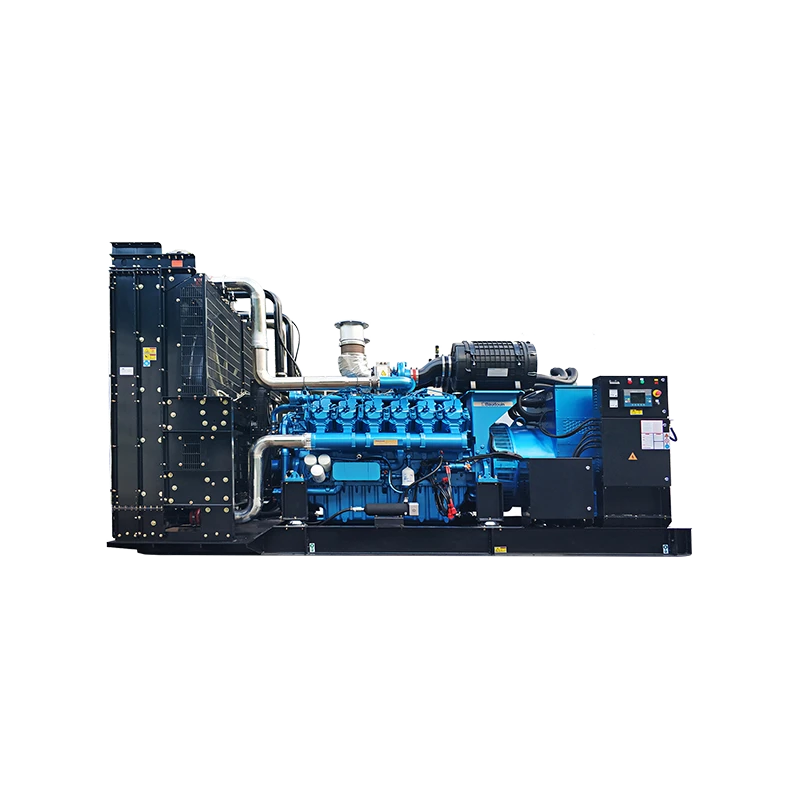
All three fuels burn in spark-ignition engines, so the differences appear in three places: how much gas the engine has to breathe, how much compression the fuel tolerates, and what has to be removed before the gas reaches the mixer. A gas generator set is configured around one fuel family, not around a label on a brochure.
Start with energy per cubic metre. Raw biogas carries carbon dioxide and nitrogen alongside its methane, so a cubic metre of it releases less energy than a cubic metre of pipeline gas. For the same electrical output the engine has to move a larger volume of gas, which changes gas train sizing, pipe diameter and the response of the air-fuel control. Biogas projects quoted against a default methane figure tend to discover this at commissioning, when the gas train turns out to be too small for the volume the engine actually needs.
The second variable is knock resistance, usually expressed as a methane number. It falls as the mixture moves away from pure methane, so a compression ratio chosen for pipeline gas may be too aggressive for a biogas whose composition drifts. Engine makers publish fuel-specific derating data and, for some frames, different compression variants. That data, requested against your own gas analysis, is worth more than a nameplate kilowatt figure.
Ratings are the third trap. A generating set can be rated for standby, prime or continuous duty, and the same engine produces different numbers under each [1]. Comparing a set quoted at standby rating with one quoted at prime rating is not a comparison at all.
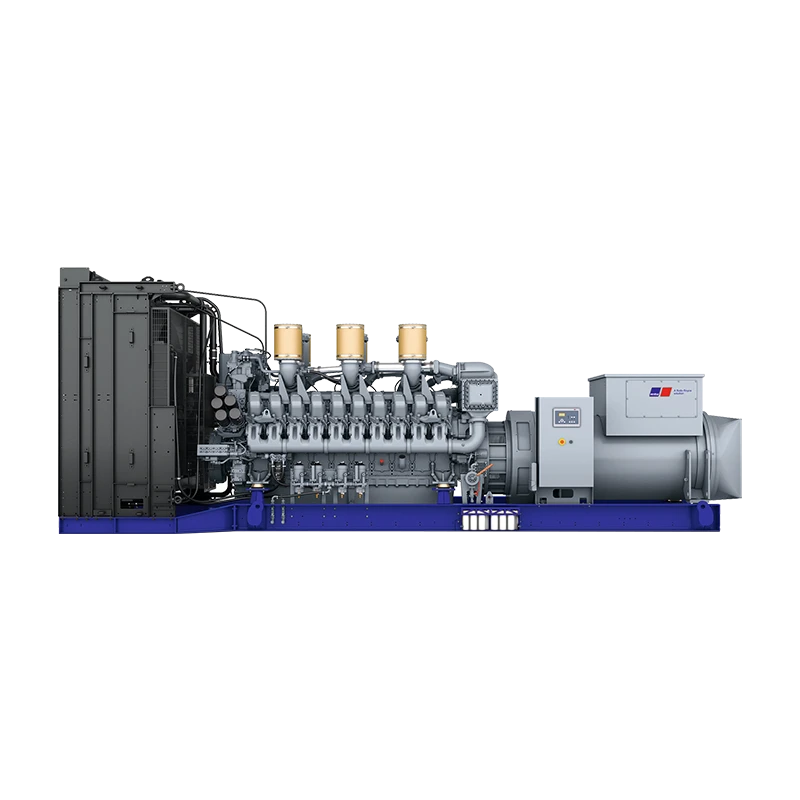
Above a few hundred kilowatts the fuel decides more than the gas train. Frame size, cylinder count and turbocharging are chosen together with a fuel, and the largest gas frames are built for a defined band of gas quality. A project that starts with a fuel analysis usually ends up with a shorter equipment list and fewer late changes than one that starts with an output figure.
Natural Gas, Biogas and LPG Compared on the Same Basis
The table below compares the three fuels on the points that change a quotation. The final column carries as much weight as the fuel columns, because it says how much authority each comparison point really has.
| Comparison point | Natural gas | Biogas | LPG | Basis of the statement |
|---|---|---|---|---|
| Energy per unit volume | High and steady where network quality is enforced | Lower and variable, because carbon dioxide and nitrogen dilute the methane | High in liquid form, high again once vaporised | Natural gas and LPG from published fuel specifications; biogas from your own analysis |
| Parameters to fix in the RFQ | Wobbe index, methane number, sulphur, water dew point, supply pressure | Methane number, carbon dioxide, hydrogen sulphide, water, siloxanes, halogens | Propane to butane ratio, vapour pressure, sulphur, residue | Standard-defined parameters plus site-specific limits |
| Fuel-side equipment | Pressure reduction, filtration, gas train | Desulphurisation, drying, carbon dioxide removal, buffer storage | Bulk tank, vaporiser, gas train | Scope follows measured gas data, not a default |
| Engine response | The reference case for most gas engine ratings | Derating, lower methane number, larger gas volumes | Different air-fuel settings, higher knock resistance from propane | Engine maker data for the exact gas analysis |
| Compliance driver | Nitrogen oxide and carbon monoxide limits for stationary engines | The same limits, plus odour and digestate rules | The same limits, plus bulk storage rules | Permit-driven; check the rule that applies to your site |
| Supply risk | Contract terms and pipeline capacity | Feedstock quantity and process stability | Delivered volume, storage autonomy, cold weather | Site assessment |
The rows do not carry the same kind of authority, and that difference matters when you write a specification. Wobbe index, sulphur and dew point limits come from published gas quality specifications such as ISO 13686 and the LP gas specification ASTM D1835, so they can be written into an enquiry before a site even exists [2], [3]. Biogas numbers cannot be handled that way. ISO 20675 gives the shared vocabulary for production, conditioning and upgrading, but no standard can tell you the methane number of next season’s feedstock [4]. Derating figures belong to the engine manufacturer and have to be requested for your own analysis. What none of these rows proves is that a set rated on natural gas will hold that rating on biogas or LPG.
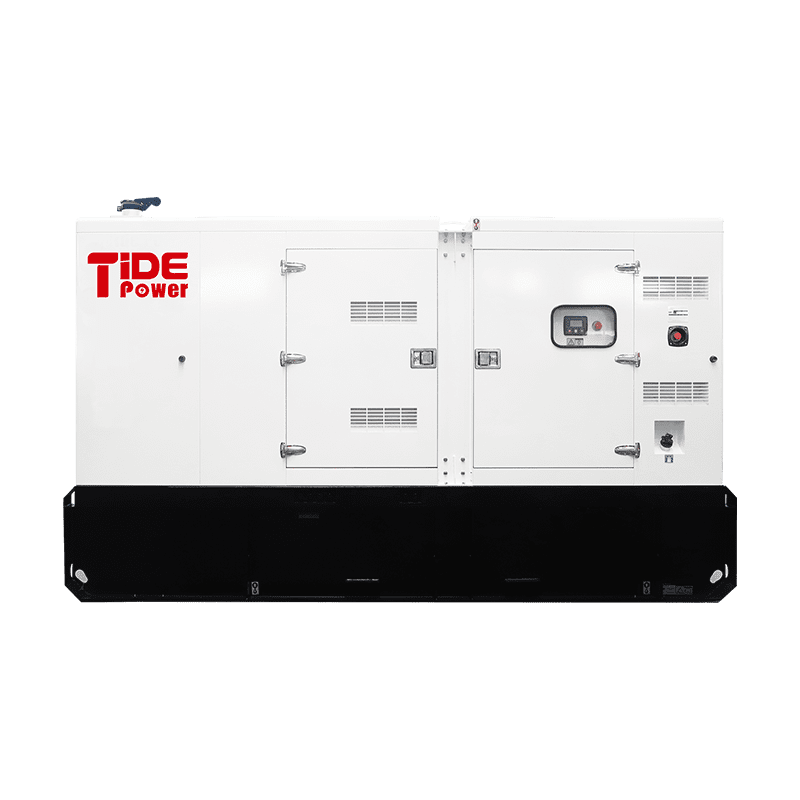
Engine platform choice shapes the rest of the project life. Common platforms carry parts availability, technician familiarity and predictable service intervals; a less common platform may suit the fuel better and still cost more across ten years of maintenance. Tide Power builds gas generator sets from 28 kVA on the Lister Petter platform up to 4500 kVA on MWM engines, and the fuel analysis is what decides which end of that range a project belongs to. The useful conclusion is not the range itself but the fact that one supplier may offer two engine families with different gas quality limits, so the fuel data has to travel with the enquiry.
Which Fuel Fits Your Site and Duty Cycle
Fuel selection is a site question before it is an engine question. Pipeline access, storage space, delivered volume, ambient temperature and annual running hours eliminate options faster than any efficiency comparison. The table below puts the exclusion conditions next to the fit conditions, because the exclusions are what usually decide.
| Fuel | Fits when | Do not choose it when |
|---|---|---|
| Natural gas | A firm pipeline or LNG supply exists, the site runs long hours, and gas quality is governed by a network specification | No firm supply can be secured and the site cannot carry a storage buffer, or annual hours are too low to justify a connection |
| Biogas | The site controls the feedstock, can treat the gas to engine specification, and can buffer supply with a gas holder or flare | Feedstock quantity or quality swings beyond what the treatment and control system can absorb, or no party owns the treatment scope |
| LPG | No pipeline is available, output is modest or the duty is peak shaving, and delivered fuel can be stored on site | Load factor is high and delivered cost per kWh dominates, or tank siting and refuelling logistics cannot be secured |
Read the exclusion column first. Most failed fuel decisions were not made on the wrong efficiency figure; they were made on a supply assumption that did not survive the first winter.
Fuel price comparisons go wrong when they compare price per cubic metre or per tonne. Convert to cost per kilowatt hour of fuel by dividing the delivered price per unit by the lower heating value of that unit expressed in kilowatt hours. Multiply by annual output, then divide by engine efficiency at your load profile. Only that number can sit next to a diesel price or a grid tariff. A fuel that looks cheap per cubic metre can lose once derating, treatment power and storage losses are counted.
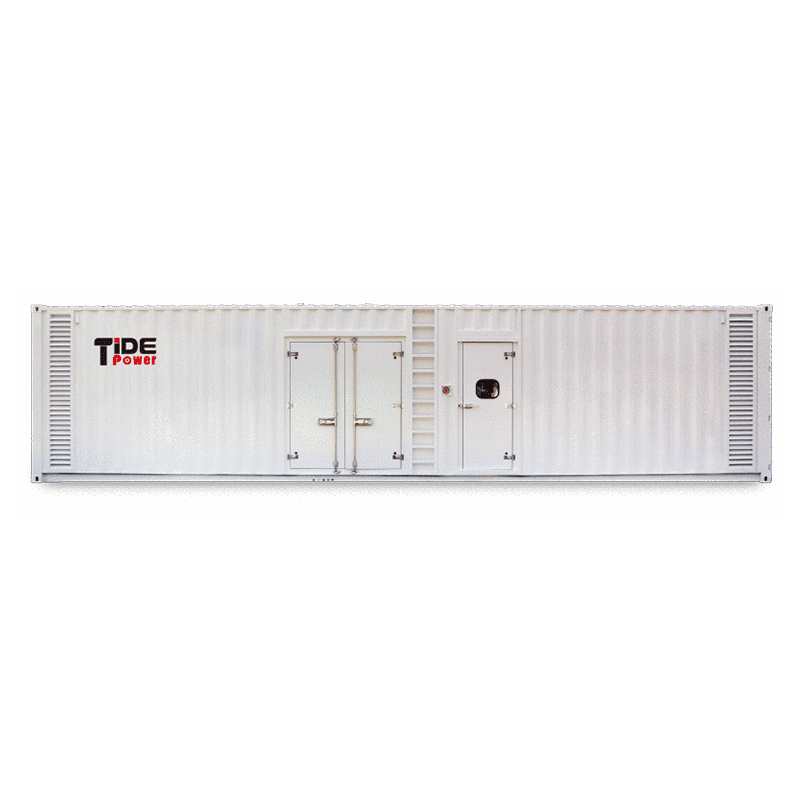
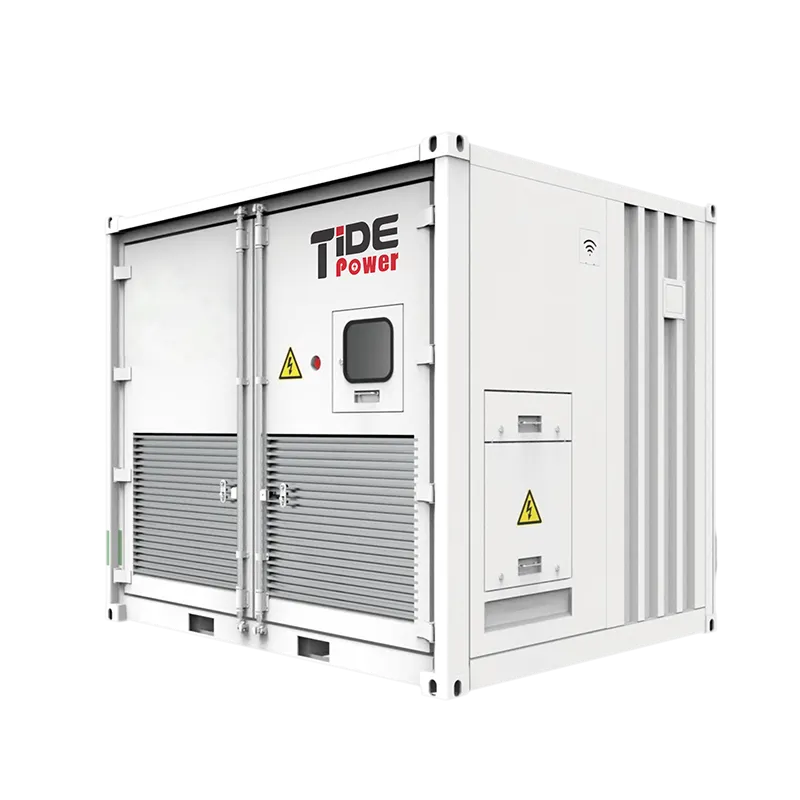
How the set is packaged follows site conditions as well. Soundproof canopies, containerised builds and remote radiators are chosen for noise limits, ambient temperature and access, not for fuel. A packaged set that has to meet a boundary noise limit may need a different canopy than the same engine in an open plant room, and the gas train still has to fit inside whatever space the canopy leaves.

Fuel availability settles more projects than engine choice does. In markets where the pipeline network is thin, LPG or LNG delivery can carry a project that a gas connection would delay by years, while in markets with cheap pipeline gas the same output is hard to justify on LPG. Where gas generation itself is expanding, the choice also follows the grid.
Regional gas build-out follows fuel logistics as much as demand. <The Asian market will make gas power generation one of the fastest growing regions> covers why gas power generation is expected to grow fastest in Asian markets.
Why Biogas Projects Succeed or Fail on Gas Treatment
Biogas leaves the digester saturated with water and carrying hydrogen sulphide, and landfill gas adds siloxanes. Each of these changes the engine rather than the fuel label. Hydrogen sulphide forms acidic compounds that attack lube oil and poison oxidation catalysts. Siloxanes burn to silica that deposits on pistons, valves and turbocharger surfaces. Water condenses in the gas train wherever the pipe runs below the dew point. Carbon dioxide simply dilutes the fuel and forces larger volumes through every component.
The treatment train therefore belongs in the same scope discussion as the generator. Biological or chemical desulphurisation, drying, activated carbon for siloxanes, and carbon dioxide removal if the gas is being upgraded all have to be sized against measured gas data and monitored afterwards. Continuous measurement of methane, carbon dioxide, hydrogen sulphide and oxygen turns a treatment problem into a maintenance task before it becomes an engine failure.
If the gas is going into a network rather than an engine, the specification changes completely. EN 16723-1 sets the requirements for biomethane intended for injection into natural gas networks, and those limits are tighter than what most engines accept [5]. Deciding between on-site combustion and upgrading is a commercial question as much as a technical one, and it should be answered before the generator is ordered, not after.
What a working biogas plant proves is bounded by its own feedstock. A digester running on food waste with a stable process and a well sized gas holder says little about a landfill with variable gas and no buffer. Feedstock changes, seasonal temperature and digester upsets all reach the engine as changes in methane number and energy content, which is why buffer capacity and continuous gas monitoring matter as much as the desulphurisation unit.
Where LPG Makes Sense and Where It Stops
LPG suits sites without a pipeline, peak-shaving duty and short projects where a gas connection would never pay back. It also suits remote locations where delivered fuel is the only reliable supply. Propane’s knock resistance is helpful, and a well sized vaporiser turns liquid LPG into a gas that behaves predictably at the mixer.
The vaporiser is where LPG projects are usually lost. For continuous duty, liquid LPG has to be vaporised at a rate that matches full engine demand at the coldest ambient the site will see, and a butane-rich blend vaporises less readily than propane. Tank siting, bunding, refuelling access and storage autonomy all belong in the early layout discussion, because they decide how many days the site can run without a delivery.
Cost is where the comparison has to be honest. LPG avoids pipeline construction and connection lead time, and it adds a tank, a vaporiser, deliveries and the labour to manage them. Convert everything to cost per kilowatt hour at the same annual output before deciding, and keep the calculation separate from the diesel alternative, which has its own storage and delivery profile.
On sites where gas supply is intermittent or expensive at peak, pairing the generator with battery storage changes the sizing arithmetic. The battery carries short peaks and lets the gas engine run at a steadier, more efficient point, which matters most on LPG where fuel is delivered rather than piped.
Gas is not the only dispatchable asset on a remote or commercial site. <Building Smarter: Hybrid Energy for Construction Sites & Commercial Buildings> covers how hybrid energy systems combine generation and storage for construction sites and commercial buildings.
Permits and Emission Limits That Rule Out Some Fuels
Emission rules often narrow the fuel choice before the economics do. In the United States, stationary spark-ignition engines fall under the standards for stationary spark ignition internal combustion engines in 40 CFR Part 60, Subpart JJJJ, which sets limits and requires certification or performance testing depending on the engine and date of manufacture [6]. In the European Union, the Medium Combustion Plant Directive 2015/2193 applies emission limit values and permitting requirements to combustion plants in the 1 to 50 MW thermal input range [7].
Those frameworks change the engine configuration rather than the fuel. A lean-burn engine with selective catalytic reduction, or a stoichiometric engine with a three-way catalyst, will both meet a nitrogen oxide limit, and both need the fuel to stay inside a composition band. A biogas high in sulphur can poison the catalyst that the permit depends on, which links gas treatment directly to compliance rather than to engine wear alone.
Noise is the other limit that reshapes the package. A gas set at a hospital or a commercial boundary is judged at the nearest receptor, not at the canopy, and attenuation, remote radiators and enclosure layout all follow from that number. The fuel does not change the acoustic requirement, but it does change the space left inside the canopy for the gas train.
One timing point deserves care. A directive’s publication year is not an installation deadline for every plant, and transitional provisions differ by plant size and commissioning date. Check the permit cycle that applies to your specific unit rather than the date on the regulation.
What to Put in the RFQ Before Comparing Prices
A quotation is only comparable when both suppliers priced the same scope, and the scope is defined by the fuel data. The table below lists the fields that remove most of the ambiguity.
| RFQ field | What to request | Why it matters |
|---|---|---|
| Gas analysis basis | Full composition, lower heating value, Wobbe index, methane number, hydrogen sulphide, water dew point, siloxanes, supply pressure, with sampling point and date | A quote built on a default methane figure can miss the derating and the gas train size the site actually needs |
| Duty profile | Load profile, annual hours, prime or standby rating, expected starts | A rating mismatch turns a standby set into an unreliable prime set |
| Treatment scope | Who supplies desulphurisation, drying, carbon dioxide removal, buffer storage and flare | Treatment left out of both scopes delays commissioning and blurs responsibility |
| Emissions and permit | Applicable limit, test method, catalyst or SCR responsibility, reporting duty | A set that meets a limit on paper can fail a stack test once sulphur has poisoned the catalyst |
| Fuel storage and supply | LPG tank size and vaporiser duty, or pipeline pressure and backup arrangement | Cold weather or a pressure dip stops the set before the load does |
| Acceptance test | Fuel used during the test, load steps, duration, measured output and gas consumption | A test run on a different gas proves little about site performance |
A supplier who quotes without asking for the first two rows is quoting a different machine from the one your site needs.
Send the Gas Analysis Before You Choose a Fuel
Send the gas composition with its heating value and methane number, the site ambient and altitude, the rating basis and expected annual hours, the emission limit and test method that apply, the treatment scope you expect to own, the fuel storage or supply arrangement, and the acceptance test you want witnessed. Those seven items let a supplier size the set against your gas instead of a default. Tide Power reviews enquiries against gas generator sets from 28 kVA to 4500 kVA across Lister Petter and MWM platforms, and will say which parts of the quoted scope your analysis changes. Email [email protected] or call +86 591 2806 8999.
FAQ
Can one generator run on natural gas, biogas and LPG?
Not without changes. The gas train, compression ratio, ignition timing and control map are set for a fuel family, and a set configured for pipeline natural gas will not hold its rating on a biogas with a lower methane number or on liquid LPG that needs vaporising. Multi-fuel and dual-fuel versions exist, but their output and efficiency are set by the least favourable fuel in the set, and the changeover hardware belongs in the original scope rather than in a later retrofit. Ask the supplier to state which fuels the quoted rating applies to.
Does biogas reduce generator output?
Often it does, and the size of the reduction depends on the gas rather than on the engine label. Carbon dioxide and nitrogen dilute the methane, so the engine moves more gas for the same power, and a lower methane number can force a lower compression ratio or retarded timing. Treatment also consumes power, which reduces net output. The only reliable figure is the engine maker’s derating data applied to your own gas analysis at your site ambient.
Is LPG cheaper than natural gas for a generator?
It depends on delivered cost per kilowatt hour, annual hours and what storage costs you. Where firm pipeline gas is available and annual hours are high, pipeline gas usually wins because the fuel arrives without a tank, a vaporiser or a refuelling schedule. For a remote site, a peak-shaving duty or a short project, LPG can be the cheaper route because it avoids a connection that may never be built. Compare both at the same annual output, including treatment and storage.
What gas data should I ask for before ordering?
Ask for a full composition with sampling point and date, lower heating value, Wobbe index, methane number, hydrogen sulphide and total sulphur, water dew point, and for landfill or digestate gas the siloxane and halogen content. Add the supply pressure range and its expected variation. A single spot sample is a starting point, not a specification; the useful document shows how far those values move across a week and across a season.
Which fuel needs the most gas treatment?
Biogas, and landfill gas more than digestate gas. Hydrogen sulphide, water, siloxanes and carbon dioxide all have to be handled before the gas reaches a mixer, and the treatment train is usually the largest non-engine cost in the project. Natural gas normally needs filtration, pressure reduction and metering, while LPG needs vaporisation and filtration. Treat the treatment scope as part of the generating set scope and name the responsible party in the contract.
References
[1] ISO 8528-1:2018, “Reciprocating internal combustion engine driven alternating current generating sets. Part 1: Application, ratings and performance,” ISO, Geneva, 2018.
[2] ISO 13686:2013, “Natural gas. Quality designation,” ISO, Geneva, 2013.
[3] ASTM D1835, “Standard Specification for Liquefied Petroleum (LP) Gases,” ASTM International, West Conshohocken, PA, USA.
[4] ISO 20675:2018, “Biogas. Biogas production, conditioning, upgrading and utilization. Terms, definitions and classification scheme,” ISO, Geneva, 2018.
[5] EN 16723-1:2016, “Natural gas and biomethane for use in transport and biomethane for injection in the natural gas network. Specifications for biomethane for injection in the natural gas network,” CEN, Brussels, 2016.
[6] U.S. Environmental Protection Agency, “Standards of Performance for Stationary Spark Ignition Internal Combustion Engines,” 40 CFR Part 60, Subpart JJJJ, Washington, DC, USA.
[7] Directive (EU) 2015/2193 of the European Parliament and of the Council on the limitation of emissions of certain pollutants into the air from medium combustion plants, Official Journal of the European Union, 2015.
If you’re interested, check out these related articles:
Advocating for Stronger Electricity Grids to Meet Rising AI Demands
Earth Day: Powering a Sustainable Future with Tide Power
Beyond the Grid: How All-in-One Mobile Power is Reshaping Energy for Industry
Tide Power to Showcase Innovative Energy Solutions at Middle East Energy 2025
Installation of Tide Power Generator Sets at a South American University