 EN
 ZH
 FR
 ES
 AR
A light tower supplier is only as strong as the documents behind the mast, the luminaire and the power unit, so build the shortlist on verifiable capability rather than a catalogue cover. Most buyers compare price first and look for evidence later; the order works better reversed. A tower that cannot state its wind-load basis, its photometric data or a spares list will cost more across a two-year project than one that can. The checks below separate light tower suppliers who can support a site from those who can only ship a container.
What you actually buy from a light tower supplier
A light tower is not one product. It is a mast and base, a luminaire array, a power unit and a control enclosure, carried on a trailer or a skid. Few suppliers build all four to the same standard. A fabricator that makes excellent masts may buy its floodlights from a third party and know little about photometric files, while a lighting brand may assemble towers from imported masts. The first screening question is therefore not what a supplier makes, but which of the four parts it controls and which it resells.
Mast and structure
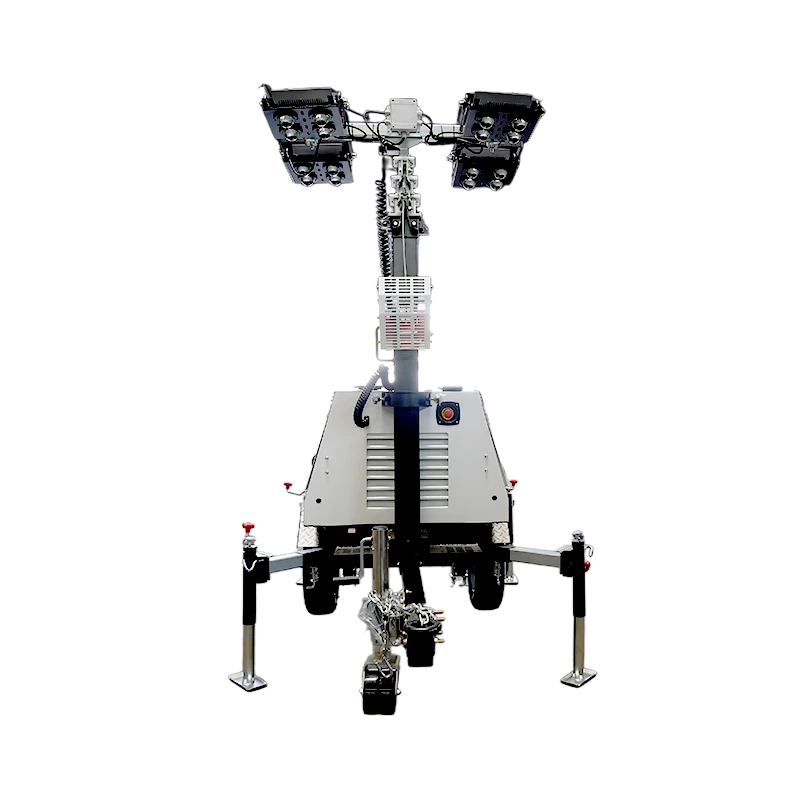
Mast choice sets deployment time, maintenance load and the structural limit of the whole unit. Manual winch masts cost less and remove hydraulic seals, hoses and pumps from the service list; the trade is slower raising, more operator effort and a firmer discipline about wind. Hydraulic masts raise quickly with fewer people but add a circuit whose seals and oil become routine items. Horizontal masts suit transport and low-clearance sites.
The structural question is the wind-load basis. Stability depends on mast height, the sail area of the floodlight array, the outrigger or jack-leg footprint, and the ground bearing underneath. A supplier that cannot state the wind speed and the exact configuration behind a mast rating has not given you a rating.
Luminaire and optics
Lumens on a datasheet do not describe light on the ground. What matters on site is illuminance at the working plane, how evenly it spreads, and how much glare reaches operators and passing traffic. Two towers with identical total lumen figures can produce very different coverage because beam angles and aiming differ. Ask for the photometric file for the exact luminaire model and drive current, then compare calculated illuminance at your mast height and working distances instead of headline lumens.
LED arrays also age. Lumen depreciation and driver failure are the two common end-of-life modes, so a supplier that names the driver brand and stocks it as a spare is easier to keep running than one that treats the array as a sealed module.
Power unit and controls
The power source shapes the daily routine more than any other decision.
| Power source | What it suits | What changes the decision | What the quote must state |
|---|---|---|---|
| Diesel generator | Long shifts, high load, sites with refuelling access | Noise limits, fuel storage, site emissions rules | Output at site ambient, tank capacity, consumption at stated load |
| Battery only | Events, night work near housing, enclosed areas | Runtime between charges, charge time, charger availability | Usable capacity, runtime at stated load, charge time and charger rating |
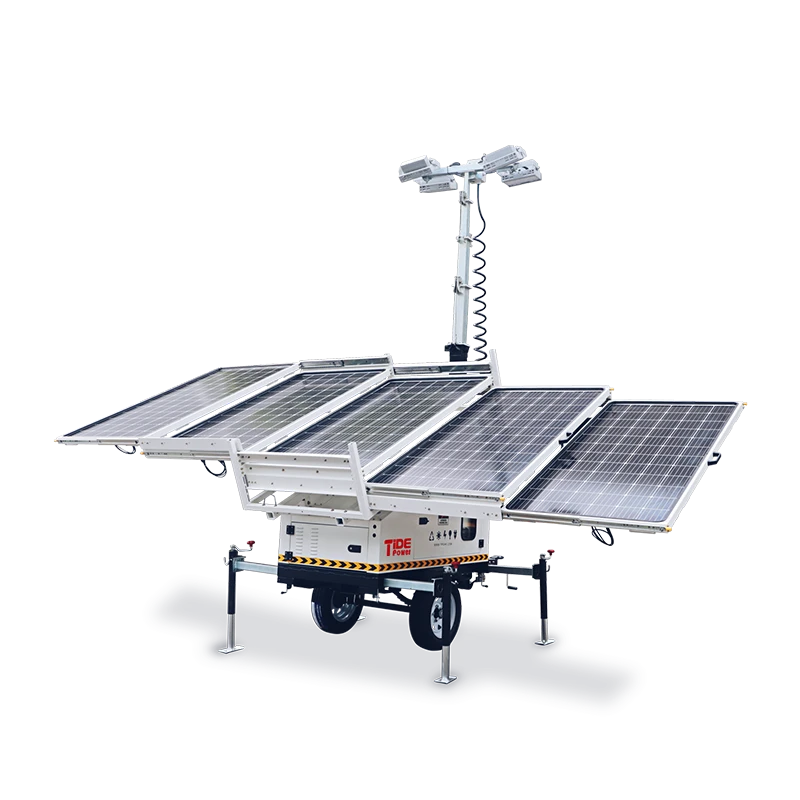
| Solar hybrid | Remote sites with no refuelling route | Seasonal sun hours, panel cleaning access, battery sizing | Array rating, battery capacity, autonomy at stated load |
| Mains or site supply | Yards and fixed compounds | Cable runs, protection, supply reliability | Input voltage and protection requirements |
Every figure needs its conditions attached, because runtime and output depend on load fraction, ambient temperature and battery age. A runtime quoted at half load in mild weather does not describe a winter night at full output.
A diesel tower keeps working as long as fuel reaches the site, which is why it remains common on construction and mining projects. The cost is a daily routine of fuel runs, storage and spill control, plus filter and oil intervals. Battery and solar towers remove that routine and replace it with a charging plan and a battery that will be replaced within the asset’s life. On a remote site with no reliable supply, a hybrid arrangement often fits better than either extreme, and the power section is worth specifying separately from the lighting.
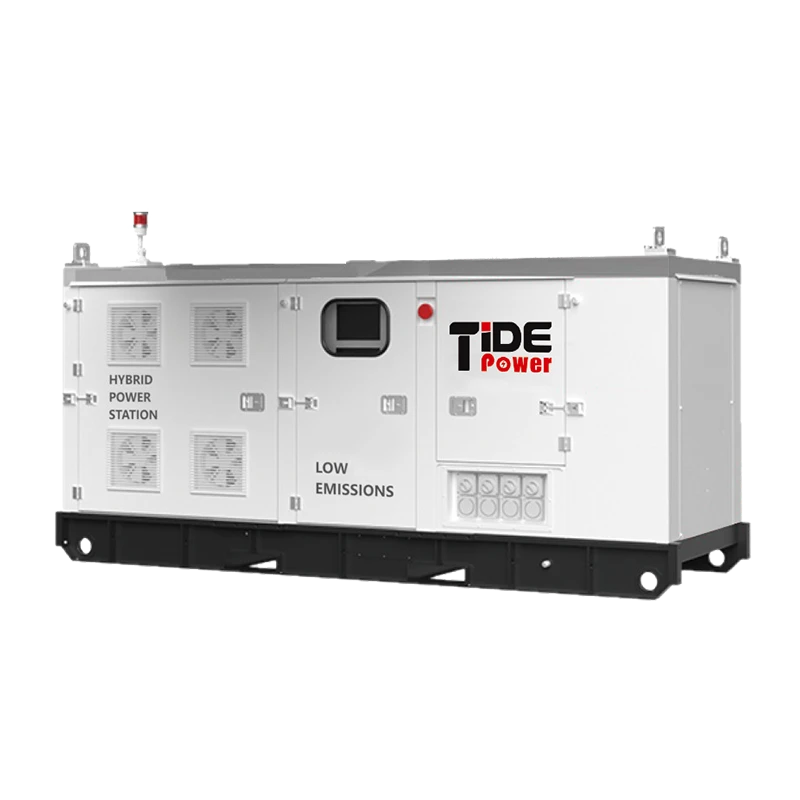
Remote sites often pair lighting with a small hybrid power system rather than a dedicated diesel generator. <Energizing Remote Operations: Hybrid Power Solutions for Off-Grid Success> covers how hybrid power is configured for off-grid operations.
Which type of light tower supplier fits the project
Supplier labels overlap, so treat them as capabilities rather than a clean list. A rental fleet operator may also sell ex-fleet units. An export trading company may own part of the factory that builds its towers. A generator manufacturer may bundle towers into a temporary power package. Two separate questions sit behind the label: who controls the design, and who carries responsibility after shipment.
| Supplier type | Strength | Common gap | Question that exposes the gap |
|---|---|---|---|
| Factory or OEM | Controls mast, canopy and assembly; can supply drawings and spares | Narrow range; minimum order quantities | Which parts are made here and which are bought in? |
| Export trading company | Flexible quantities, freight experience, paperwork handling | Thin technical depth; split responsibility | Who signs the conformity declaration and who holds spares? |
| Rental fleet operator | Proven units, uptime experience, operator familiarity | Units sold after heavy duty cycles with patchy records | Can I see the service record and hour meter? |
| Power or EPC integrator | Single point of responsibility across lighting and site power | Towers sourced from a third party without disclosure | Which factory builds the tower, and can I audit it? |
Condition is a separate axis, and the supplier label says nothing about it. New, ex-rental and rebuilt towers are three different procurements. Ask for the hour meter reading, the service history and the battery date, because the remaining life of a tower sits mostly in the battery, the mast and the trailer rather than the paint.
Any supplier directory you build should be organised by demonstrated capability, not by country or price rank. A category does not establish suitability on its own, and no label proves that a tower will hold up in dust, salt air or heat.
What a supplier’s evidence can and cannot prove
Suppliers send documents, and buyers often read them as approval. Each record supports a narrower claim than it appears to.
| Record | Conditions it was produced under | What you can rely on it for | What it does not establish |
|---|---|---|---|
| Photometric file (IES or LDT) | Measured on a sample luminaire at a stated drive current | Beam distribution and intensity at rated output | Illuminance on your site at your mast height, aim and ambient light |
| Declaration of conformity | The supplier’s own assessment of the model against listed directives | That the model family was assessed against those directives | That the delivered unit matches the assessed configuration, or that site conditions are covered |
| Mast load calculation or test | A stated wind speed applied to a stated height and floodlight count | The structural basis for that configuration | That a taller mast, extra lamps or soft ground stays inside the same limit |
| Factory audit report | An audit on a stated date against a stated checklist | The process observed on that date | That later production lots follow the same process |
| Spares list with lead times | Supplier catalogue and stock data | Which parts the supplier says it can supply | That the part is on the shelf the week your tower fails |
| Runtime figure from a sales sheet | Often stated at part load, a new battery and moderate ambient | A comparative order of magnitude between models | Runtime at full load, in cold weather or at end of battery life |
Read each document against the question it was written to answer. A declaration of conformity is not a type test report: one records the supplier’s own assessment, the other records an external laboratory’s measurement of a sample. A certificate covering a model family does not automatically cover your order if it adds a taller mast, more floodlights or a different trailer. A demonstration unit proves what that unit did under those conditions, and site acceptance still needs a defined test on the delivered tower.
RFQ fields that make light tower quotes comparable
Quotes arrive incomparable because each supplier answers a different question. A short RFQ with fixed fields turns a price into a price for a specified configuration.
| RFQ field | What to request | Failure it prevents |
|---|---|---|
| Luminaire | Model, drive current, photometric file, lumen maintenance figure | Comparing headline lumens across different optics |
| Mast | Type, height, wind-load basis with floodlight count, deployment method | A rating that assumes fewer lamps than you ordered |
| Power unit | Source type, output at site ambient, runtime at stated load | Runtime figures taken at half load |
| Environment | IP rating for luminaire and enclosure, ambient range, corrosion finish | Early failures in dust, salt or heat |
| Transport | Trailer or skid, towing configuration, weight, lifting points | Freight, access and handling surprises |
| Documentation and spares | Drawing set, wiring diagram, spares list with lead times, warranty exclusions | A tower idling while a driver or mast cable is ordered |
Reject this line: “LED light tower, 8 m mast, diesel, suitable for construction sites.”
Replace it with: luminaire model and IES file; mast height with wind-load basis for the stated floodlight count; power unit rating at the site’s maximum ambient temperature; runtime at full lighting load; IP rating for luminaire and enclosure; trailer weight, towing and braking configuration; spares list with lead times; warranty exclusions in writing.
Agree the acceptance method before shipment. Name the measurement points, the mast height, the aim and the ambient conditions, and state the illuminance tolerance in the contract. Without that, a delivered tower that misses its calculated values becomes a discussion rather than a measurable shortfall.
How to verify a light tower supplier before you order
- Confirm the legal entity and the production site. The registration name, factory address and the name on the declaration of conformity should match, because a warranty claim follows that chain and not the sales contact.
- Tie the documents to the configuration. Record the model, serial, luminaire model, power unit model, battery make and capacity, then ask the supplier to confirm in writing which documents apply to that exact build.
- Inspect before shipment with defined checks: mast raise and lower cycles, hydraulic leak inspection where fitted, luminaire function and aim, load test on the power unit, battery date code and state of charge, earthing continuity, seal condition, trailer lights and brakes.
- Run a site acceptance test on the delivered unit. Record illuminance at the agreed points, runtime at the agreed load and any fault, then compare the result with the calculated values from the photometric file.
- Check the spares position. Ask which parts are consumable, what the supplier stocks and how long mast cables and control boards take to arrive.
- Read the warranty exclusions. Operation without outriggers, extra floodlights beyond the mast rating, missed hydraulic service and unauthorised controller changes usually void cover; get those limits confirmed before payment.
These checks take a day or two and protect a season of night work. They also change the conversation, because a supplier that expects them prepares the documents before you ask.
Where the cheapest light tower quote costs more later
Price is a poor ranking signal in this category because much of the cost sits where the quote does not look: energy, consumables, service access and downtime.
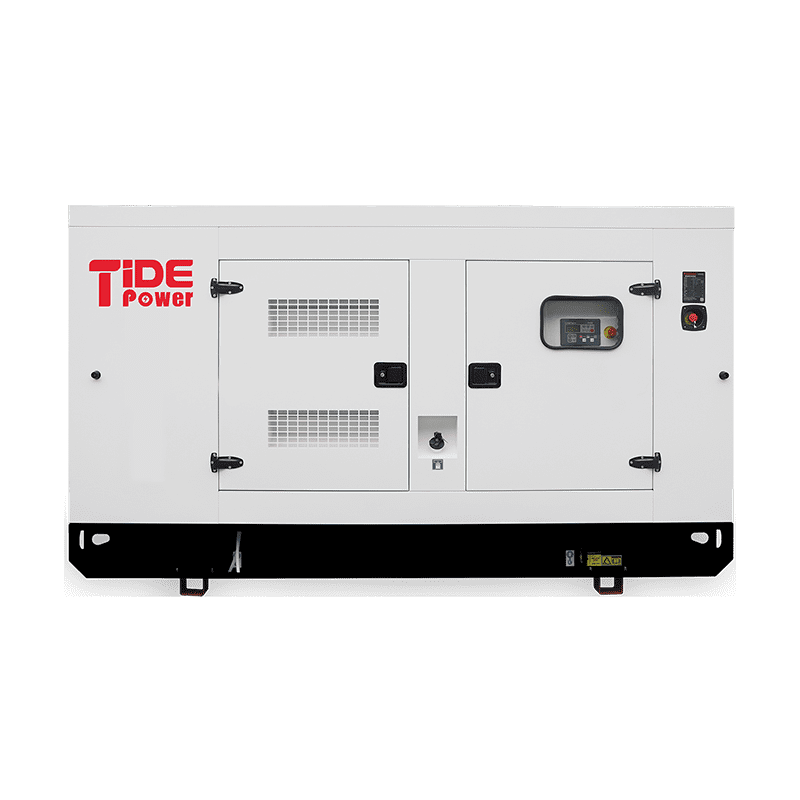
A diesel tower keeps running as long as fuel arrives, and the running cost lives in fuel runs, storage, spill control and engine service rather than the purchase order. Noise limits near housing or hospitals can take a diesel unit off the site entirely, whatever its price.
A battery tower removes refuelling and engine service and replaces them with a charging plan. Runtime moves with load, ambient temperature and battery age, and the battery is a capital item that will be replaced inside the asset’s life. A site without a reliable charging supply has moved the problem, not solved it.
A solar hybrid tower trades a higher purchase price for fewer energy deliveries. Whether that pays depends on sun hours across the year, how safely the panels can be cleaned, and the autonomy designed for cloudy spells. In a dusty or shaded location the array underperforms and the battery carries more load than the design assumed.
Every configuration shares one risk: a tower standing idle while a driver, mast cable or control board is ordered. Ask what the supplier stocks, how fast it ships and who performs the repair, then price that risk alongside the unit.
A workable scoring method separates gates from preferences. Gates are pass or fail: documents that match the ordered configuration, a spares list with lead times, warranty terms in writing, and a stated wind-load basis. Preferences are then scored: lead time, service distance, telematics, finish and branding. The weights are a policy choice for your organisation rather than an industry standard, so set them before quotes arrive, and do not let a strong preference score rescue a supplier that failed a gate.
Send your site conditions for a configuration review
Send the inputs that actually change the specification: working area and required illuminance, hours of operation per night, power available on site, expected ambient temperature, transport access and any noise curfew. Tide Power builds lighting towers in manual mast, hydraulic, horizontal mast, solar and solar-hydraulic configurations, so a proposal can be matched to those inputs instead of a generic model. Email [email protected] or call +86 591 2806 8999. The acceptance checks above still belong in your contract, whichever supplier you choose.
FAQ
How many light tower suppliers should I shortlist?
Three is usually enough to compare configurations without turning the exercise into a full-time job. Pick them by capability rather than by country or price rank: one factory that controls mast and assembly, one alternative power source, and one option for local service if distance matters. Keep a fourth in reserve in case a gate check fails during documentation review. More suppliers rarely improve the decision once the RFQ fields are fixed, because the comparison stops being about the sales contact and starts being about the evidence each one can produce.
Can a distributor quote the same tower as the factory?
Sometimes, and the physical unit may be identical while the documentation chain is not. Ask who signs the declaration of conformity, who holds the spares and who handles the warranty claim. If the distributor answers all three clearly, the offer can be competitive on service and freight. If it cannot, the price difference is a risk transfer rather than a saving, and the risk lands on you the first time a mast cable or a driver fails mid-project.
What should a light tower acceptance test record include?
Record the unit serial and full configuration, the mast height used, the measurement points and their distance from the tower, the aim of the floodlights, and the ambient conditions at the time of the test. Add illuminance readings at each point, runtime at the agreed load, battery state and date code, and any fault observed. Both parties should sign it. This record becomes the reference if performance is questioned later, and it makes a second unit easier to accept because the method is already fixed.
Is a solar light tower worth it on a remote site?
It depends on three conditions: usable sun hours across the year, safe access for cleaning the panels, and the autonomy designed for cloudy spells. Where all three hold and refuelling is expensive or slow, a solar hybrid tower usually wins on running cost despite a higher purchase price. Where the site sits in dust, shade or a low-sun season, a diesel or battery unit with a defined charging plan is the more predictable choice. Compare calculated autonomy, not panel wattage.
What voids a light tower warranty most often?
The usual causes are operating the mast without outriggers, fitting more floodlights than the mast is rated for, skipping hydraulic service, changing controller settings without approval, and water ingress after damaged seals. None of these are exotic failures, and most appear in the exclusions section rather than the headline warranty. Ask the supplier to confirm the specific exclusions for your configuration in writing before payment, then brief the site team on them so the first mistake is not also the last covered repair.
If you’re interested, check out these related articles:
Tide Power Unveils Advanced Hybrid Power Solutions, Redefining Industrial Energy Resilience
Building the Resilient Grids of Tomorrow: Tide Power’s Microgrid and Utility-Scale Energy Storage Solutions
Tide Power’s gas gensets for CHP