 EN
 ZH
 FR
 ES
 AR
Portable and standby diesel generators both convert stored diesel energy into electrical power, but they answer different site-level questions. A portable generator answers, “Where can we take power?” A standby generator answers, “How fast can the facility recover from an outage?”
Selecting between them involves more than kW. It includes how often the set runs, how it starts, how fuel is stored and refilled, where exhaust and ventilation are placed, and how the unit will be maintained across its expected service life. The comparison below separates the two options by operating logic, application, and total cost of ownership.
What Separates Portable and Standby Diesel Generators
Portable Diesel Generator
A portable diesel generator is built for movement. It may be an open-frame unit, a compact canopy unit, or a trailer-mounted set that moves between site sections or project locations. It is commonly used for construction tools, agricultural operations, events, emergency field response, and temporary production where the grid is not available. Portable sets often run for long continuous periods while work is active [1]. The operator connects the load manually through a distribution board or twist-lock arrangement, refuels from an onboard tank or external day tank, and relocates the set as the job changes.
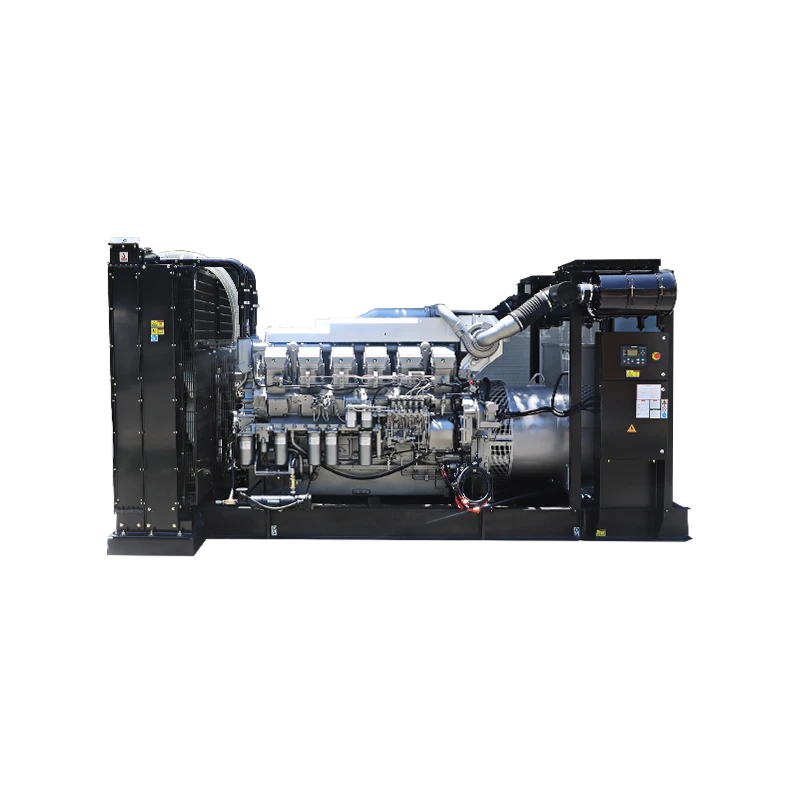
Because portability is a priority, these units often trade some sound attenuation and automatic controls for simpler access and lighter enclosures. The right portable diesel generator is selected on fuel burn at the expected load, voltage regulation under motor-starting events, trailer or skid mounting, and compliance with nonroad diesel emission rules [3].
Standby Diesel Generator
A standby diesel generator stays in one place and waits. It is connected to the facility through a fixed electrical installation, often with an automatic transfer switch (ATS). When the grid supply falls outside the acceptable voltage or frequency window, the ATS sends a start command, and the generator accepts the critical load. When the utility returns and stabilizes, the load transfers back and the generator cools down before shutdown.
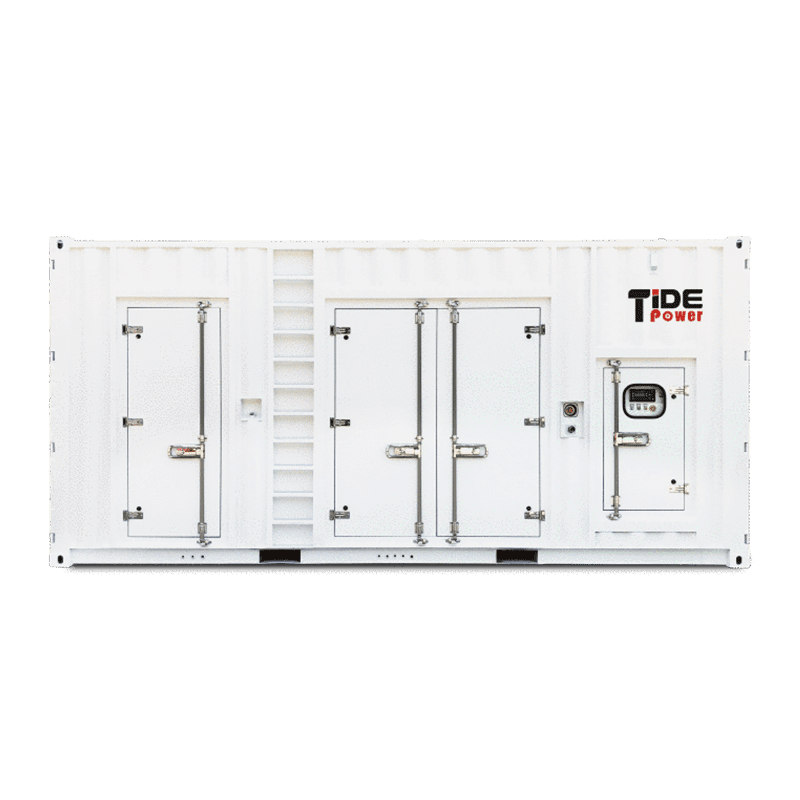
Standby sets are common at hospitals, data centers, telecom facilities, water and wastewater plants, commercial buildings, cold storage, and residential backup applications. Installation includes a pad or platform, fuel storage and containment, exhaust routing, combustion air, ventilation, protection coordination, and local permits. NFPA 110 is a widely referenced framework for installation, testing, and performance of emergency and standby power systems such as these [2].
Head-to-Head Comparison
| Factor | Portable Diesel Generator | Standby Diesel Generator |
|---|---|---|
| Operating model | Moved to the load and used when required | Installed at the load and starts automatically during utility failure |
| Typical use | Construction, field service, agriculture, events, temporary production | Hospitals, data centers, telecom, commercial buildings, residential backup |
| Start method | Manual start, key switch, or local control panel | Automatic transfer switch, remote monitoring, or building management system |
| Mobility | Hand portable, skid, trailer, or vehicle mounted | Fixed pad, containerized, or plant room installation |
| Fuel system | Small onboard tank or external day tank | Larger base, day, or bulk tank with longer autonomy |
| Enclosure | Open frame or compact sound-attenuated canopy | Weatherproof canopy, container, or indoor enclosure |
| Cost structure | Lower equipment cost; higher per-use logistics and manual oversight | Higher equipment and installation cost; lower intervention on each outage |
| Maintenance focus | Fuel condition, air filters, cable routing, transport inspections | Block heater, battery bank, ATS, load testing, fuel-quality program |
This table should not be read as a rigid ranking. A properly configured portable set can be highly reliable, and a standby set can operate for extended outages when it is rated and maintained for that duty [1].
Five Selection Factors to Evaluate
1. Duty Cycle and Run Time
If the generator is expected to supply most of the project electricity for hundreds of hours per year, the specification should follow a prime or continuous rating. If the generator is expected to run occasionally but must start under load during an outage, a standby rating is more appropriate. ISO 8528-1 defines the application classes and rating categories used by most generator set manufacturers [1].
2. Transfer and Control Logic
Standby applications usually require automatic starting, load transfer, and retransfer. A portable set can be fitted with a transfer switch, but it is more often deployed with manual connection and a simple operator sequence. The control decision should follow the required response time and whether qualified staff are on site.
3. Fuel Storage and Refueling
Portable sets are practical when the work period is short, roads allow fuel delivery, and the site can manage frequent refueling. Standby installations are more durable when the fuel supply can be sized for a defined autonomy period and protected against water, sediment, and biological growth. Fuel quality programs become more valuable as tank size and reserve time grow.
4. Noise, Enclosure, and Site Constraints
Open-frame portable sets favor access and cooling but tend to put out more sound. Sound-attenuated canopies, containers, and plant rooms reduce noise but add size, cost, and ventilation requirements. Facility sites must also account for nonroad diesel engine emission compliance and local permits where the set will operate [3].
5. Total Cost of Ownership
Purchase price is only one line item. Portable operation includes transport, operator labor, temporary distribution panels, fuel logistics, and cable management. Standby operation includes civil works, ATS integration, permits, battery and block-heater maintenance, and periodic load testing. The better choice depends on whether the duty is frequent and mobile or rare and fixed.
Need a unit sized and configured for your site? Send the load list, daily run hours, and installation constraints to [email protected]. Tide Power can help match the engine, alternator, enclosure, and transfer-switch arrangement to the application.
How Tide Power’s Diesel Generator Range Supports Both Applications
Tide Power’s product range covers both mobile and fixed installations. The Fenova Series offers a silent diesel generator platform from 5 kVA to 900 kVA with Lister Petter engine options for sustained and backup duty. For construction, telecom, factories, and temporary power arrangements, the Econic Series spans 16 kVA to 1650 kVA and includes large fuel-storage capability, durable enclosure design, and simplified transport features. For hospitals, data centers, commercial buildings, and residential backup, the Hemera Series provides 5 kVA to 650 kVA with DCEC, Perkins, and SME engine options. The I Series (CKD) provides a customizable assembly platform for projects that need flexible engine and alternator selection, while the FB Series Open Type Diesel fits open-frame and cost-driven mobile applications.
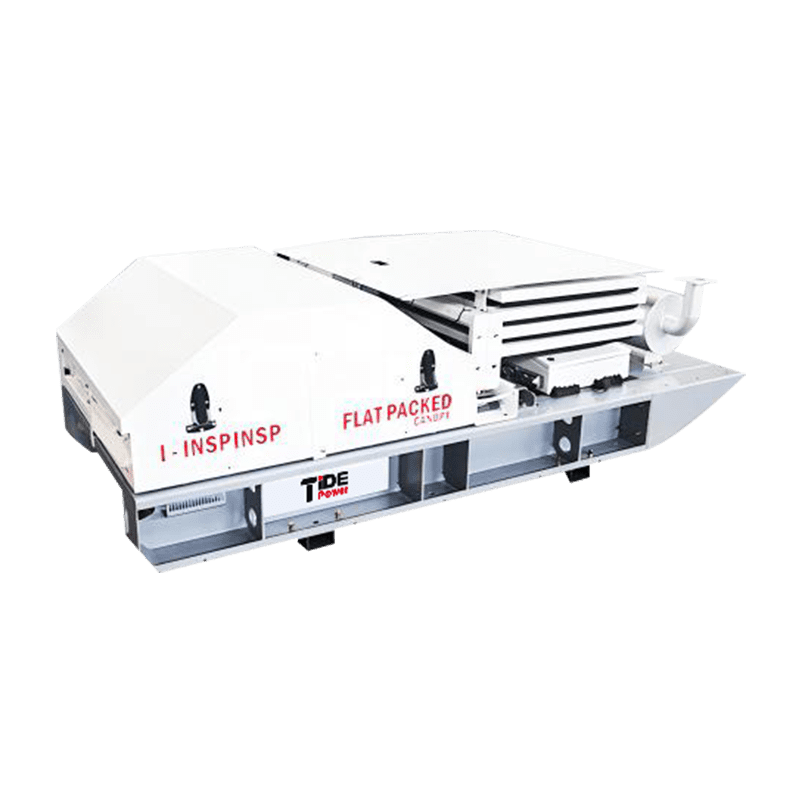 > Diesel generator selection follows site profile, duty, and fuel logistics rather than a single brand preference. A New Era of Mobile Power: Tide Power Unveils Game-Changing Foldable Solar Con… covers how mobile power systems are expanding beyond conventional trailer-mounted generator sets.
Standby and temporary power choices are also shaped by how buyers evaluate equipment in the field. Join Tide Power at bauma CHINA 2024 covers how construction and mining professionals compare mobile and fixed power equipment at a major industry platform.
Common Selection Mistakes
- Choosing a portable set for an automatic backup role and expecting it to start without transfer-switch integration.
- Sizing by physical dimensions or horsepower instead of peak kVA, motor-starting current, and site voltage dip.
- Ignoring nonroad diesel emission requirements for the jurisdiction where the set will operate [3].
- Underestimating fuel logistics for a portable set on continuous duty.
- Specifying a standby rating for a prime or continuous load, which can reduce service life and violate the rating class [1].
- Missing the exhaust, ventilation, and fire-code requirements for a permanently installed standby unit [2].
Generator Selection Support
To get the right configuration in one round, prepare:
- Peak kVA/kW and the largest motor-starting load
- Prime or standby duty and estimated annual run hours
- Site location, fuel-storage capacity, and refueling access
- Enclosure and noise limits
- Required certifications, utility connection details, and permits
Email [email protected] or call +86 591 2806 8999. Use “Generator project” in the subject line so the team can route the inquiry correctly.
FAQ
Can a portable diesel generator be used as a standby generator?
A portable unit can provide backup power, but it will not automatically start and transfer unless it is integrated with the correct controls and transfer switch. For automatic outage response, a fixed standby configuration is normally simpler and more code-aligned [2].
What is the difference between prime power and standby power?
Prime power is the rated output for continuous or open-ended operation under variable load. Standby power is the maximum output available for a limited duration during an outage. ISO 8528-1 defines the application classes and rating categories used in generator set specifications [1].
Do standby diesel generators always require an automatic transfer switch?
Not every standby set requires an ATS, but automatic outage response does. Some installations use a manual transfer switch or a safety interlock for lower-priority loads. The choice depends on the criticality of the load and the speed of recovery required [2].
Which is less expensive: portable or standby?
A portable set usually has a lower initial equipment cost but higher setup repetition, operator involvement, and fuel-handling demand. A standby set has higher installation cost but lower intervention cost across many automatic starts. The correct comparison is total cost over the expected duty cycle, not purchase price alone.
Can Tide Power supply both portable and fixed standby diesel generators?
Yes. Tide Power’s generator platform includes open-frame mobile sets, silent diesel generator sets, and containerized or customized configurations. The starting point is the application definition: load profile, run hours, location, and delivery schedule.
References
- International Organization for Standardization, ISO 8528-1:2018 — Reciprocating internal combustion engine driven alternating current generating sets — Part 1: Application, ratings and performance. Geneva, Switzerland, 2018.
- National Fire Protection Association, NFPA 110: Standard for Emergency and Standby Power Systems, 2022 ed. Quincy, MA, USA.
- U.S. Environmental Protection Agency, “Nonroad Compression-Ignition Engines: Exhaust Emission Standards,” 40 C.F.R. Part 1039, Washington, D.C.
If you’re interested, check out these related articles:
Tide Power 2025 Global Sales Annual Meeting & Team Activities Conclude Successfully
Tide Power staff conference ends successfully
Powering the EV Revolution: Sustainable Charging with BESS & Hybrid Systems
Ensure Reliable Power with Tide Power Gensets in the Hot Season