
 EN
EN ZH
ZH FR
FR ES
ES AR
ARA towable light tower has to do more than illuminate a job site. It needs to survive towing, stay stable in wind, run long enough for a full shift, and deliver usable light where crews actually work. For construction, mining, rail, emergency response, and outdoor events, the right tower reduces downtime and safety risk without becoming a maintenance burden.
The buying decision usually comes down to four areas: mast configuration, light output, power source, and total cost of operation. Understanding those areas first makes pricing conversations easier and keeps the specification work grounded in site requirements.
How a Towable Light Tower Is Built for the Field
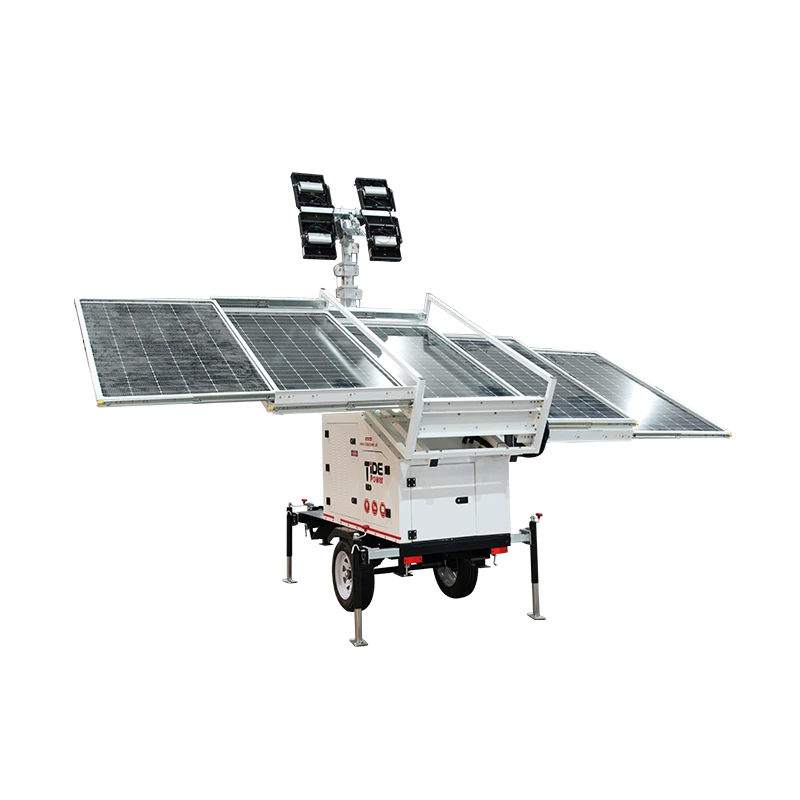
A towable unit is essentially a trailer-mounted lighting platform. The main components include the chassis and hitch, outriggers or stabilizers, the mast, the luminaire array, and the power package. Each element affects transport safety and setup time.
Towing hardware should meet the relevant coupling and safety chain requirements for the road conditions in your market. SAE J684 provides a widely referenced trailer coupling, hitch, and safety chain standard [2]. Before purchasing, confirm the trailer weight, hitch class, brake requirements, and lighting for road transport.
Mast type also changes how the tower behaves on site. Manual masts keep the design simple and are suitable where the tower stays in one position for longer periods. Hydraulic masts allow faster raising, lowering, and repositioning, which helps when crews move the tower across a large site. Horizontal mast designs can be useful where overhead clearance or transport height is restricted.
Core Features That Determine Performance
Light Output and Coverage
LED arrays have largely replaced metal halide in modern light towers because they start faster, operate at lower temperatures, and consume less energy. The more practical measure is the light distribution pattern: lumens alone do not guarantee useful coverage if the beam angle does not match the work area. Construction illumination requirements are generally framed as minimum foot-candle levels. Under OSHA 1926.56, general construction areas commonly require at least 5 foot-candles, with higher levels for first-aid stations and other task-specific zones [1].
For outdoor units, ingress protection matters. A luminaire or electrical enclosure rated to at least IP65 is normally expected for wet and dusty conditions. IEC 60529 defines the IP rating system used to compare dust and water protection [3]. In mining, flood control, and high-pressure washdown environments, an IP66 rating can be worth the additional cost.
Mast Configuration and Aiming
The mast should be evaluated by deployed height, rotation range, and the effort required for aiming. On uneven ground, outrigger travel and independent leveling make a measurable difference. For temporary roadwork or emergency scenes, speed of deployment is a safety feature, not just a convenience.
Powertrain, Fuel, and Runtime
Diesel remains the common baseline for continuous runtime and easy refueling in remote areas. The tradeoff is noise, exhaust, and fuel logistics. For noise-sensitive or emissions-limited locations, solar and solar-hybrid light towers reduce engine hours and can operate in battery mode for a shift before the generator runs.
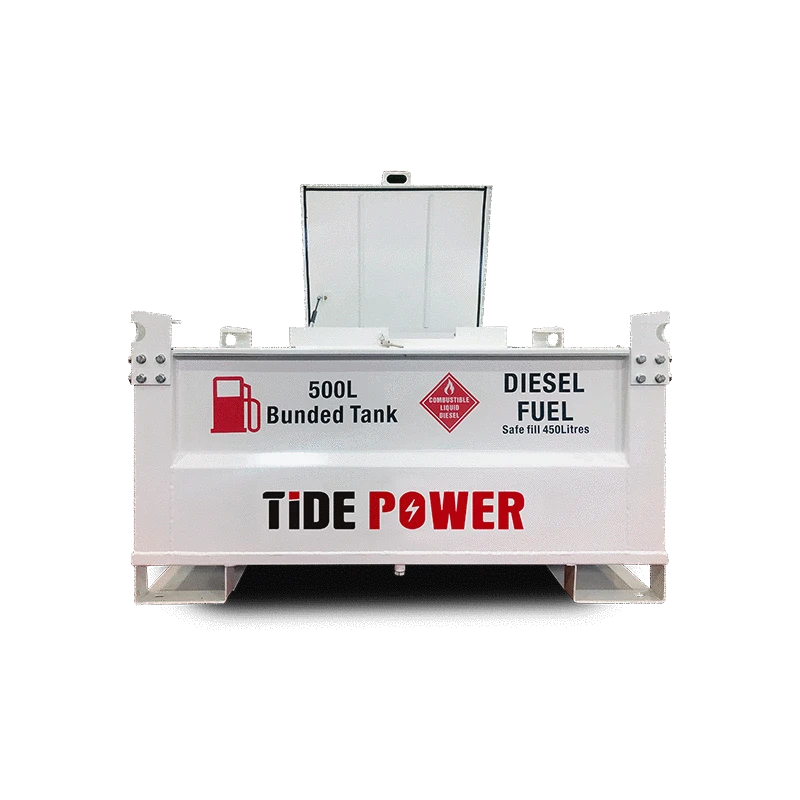
A fuel tank affects more than runtime. Look for bunding, easy external filling, a readable gauge, and protection from site debris. Where the tower may be left unattended, a secure fill point and a generous tank help reduce refueling trips.
If the tower will be towed into a regulated market, verify whether the diesel engine meets the applicable nonroad emissions standard. In North America, EPA Tier 4 Final is the key reference point for many nonroad compression-ignition engines [4]. Solar-hybrid configurations can reduce engine hours and improve the sustainability case without eliminating the diesel backup entirely.
Towing and Safety
The tower should have safe lifting points, a secure mast lock, and adequate weight distribution. During specification review, ask for the full transport weight, the recommended towing speed, and any restrictions on towing with the mast raised. These details are easy to overlook but directly affect insurance, driver training, and site safety.
Pricing and Total Cost of Ownership
Pricing does not move in a single line. The quote should break out the mast system, luminaire package, engine or battery configuration, trailer package, and optional features such as telematics, external chargers, or corrosion-resistant coatings. A manual-mast diesel tower with a basic LED array will generally sit at the lower end of the range. A hydraulic solar-hybrid tower with larger battery storage, remote monitoring, and stronger ingress protection can cost substantially more.
Operating costs also shape the decision. Diesel units carry fuel, filter, and engine service costs. Solar-hybrid units shift some of that cost into battery replacement cycles, charge controller maintenance, and panel cleaning. A lower purchase price is not automatically a lower total cost if the tower requires more frequent maintenance or cannot cover the required work area.
When comparing options, request a configuration comparison rather than a single model price. Include site area, required foot-candle level, mast height, expected continuous runtime, and any noise or emission restrictions. That gives you a comparable line-item view across vendors.
To narrow the field, send your site layout, required lux or foot-candle target, mast height, and expected continuous hours of operation to [email protected]. Ask for a configuration comparison rather than a single model quote so the savings in runtime and maintenance are visible alongside the purchase price.
Matching a Light Tower to Site Conditions
Construction sites usually value deployment speed, diesel runtime, and mast stability. Mining and quarry work add dust, rough towing, and high-vibration exposure. Event sites often prioritize low noise, clean operation, and light quality. Emergency response teams need fast setup and dependable operation in unstable conditions.
For solar and hybrid applications, the economics change when the site has strong daytime solar access and the lighting load can be covered by stored energy during the evening. In these cases, the tower behaves less like a generator trailer and more like an off-grid power asset.
For operations that need solar, storage, and generator power to work as one dispatchable system, <Tide Power Unveils Advanced Hybrid Power Solutions, Redefining Industrial Energy Resilience> covers how hybrid architectures reduce fuel demand while holding critical loads online.
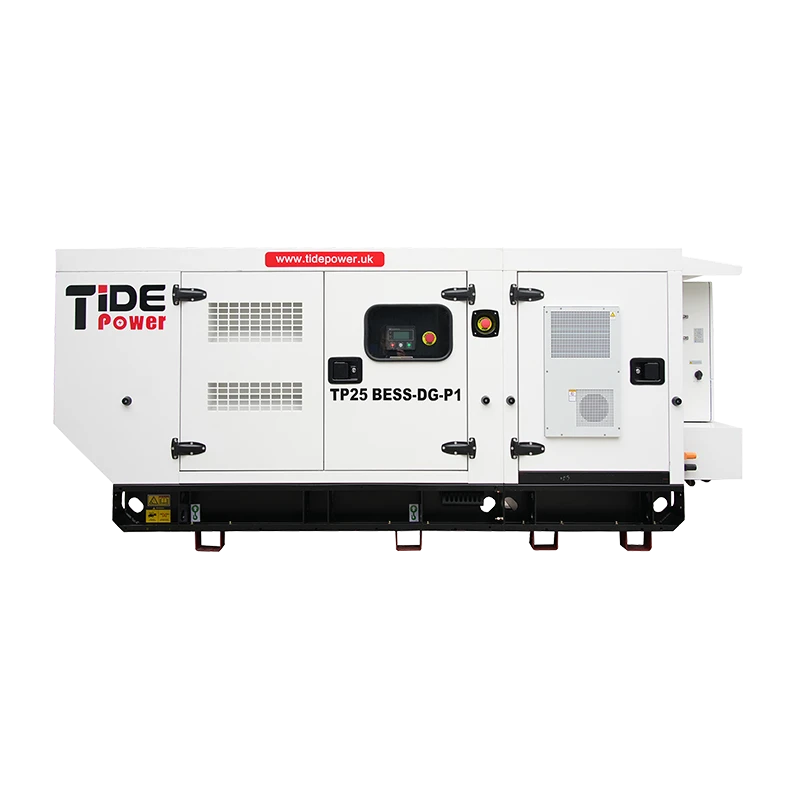
Tide Power’s lighting tower range is organized around deployment needs rather than a single specification. The lineup includes manual mast, hydraulic, horizontal mast, solar, and solar hydraulic lighting tower configurations, which makes it easier to match the tower to the site instead of forcing the site around the equipment.
Maintenance and Lifecycle Considerations
A light tower should be maintained as both a lighting system and a trailer. Check hitch components, tire pressure, mast cables or hydraulic lines, outrigger locks, and road lighting before transport. On the power side, air filters, fuel water separators, coolant, and battery health determine how reliably the tower starts after a long weekend or a weather shutdown.
In dusty, sandy, or high-humidity environments, shorten inspection intervals. Dust intrusion shortens filter life, clogs cooling surfaces, and accelerates wear on mast components. Sealed electrical compartments, protected connectors, and weather-rated junction boxes become more important than extra lumens in such conditions.
For sites where airborne sand and dust shorten service intervals, <Generator Maintenance for Extreme Environments: Combating Heavy Sand and Dust> covers the engine-protection, filtration, and inspection practices that translate directly to longer light tower runtime.
Get a Light Tower Specification for Your Site
Tide Power provides lighting tower solutions for construction, mining, emergency response, and remote-area operations. To discuss a configuration or request pricing, contact [email protected] or call +86 591 2806 8999. Include the site location, required coverage area, mast height, continuous runtime, and any noise or emission restrictions so the proposal can focus on the right configuration.
FAQ
What is the difference between a towable light tower and a trailer-mounted light tower?
The terms are often used interchangeably. Both describe a light tower mounted on a trailer for road towing. The specification difference lies in mast type, trailer weight class, braking system, and whether the unit is configured for highway transport or slower site-only towing.
How do I calculate the right coverage area for a construction light tower?
Start with the required foot-candle level for the work being performed, not just the total lumens of the fixture array. General construction area lighting often follows the 5 foot-candle reference under OSHA 1926.56 [1]. Then compare the fixture beam angle, mast height, and aiming pattern to the dimensions of the work zone.
Are solar or hybrid light towers cheaper to operate than diesel light towers?
They can be, but the answer is site-dependent. Solar-hybrid units reduce engine hours and fuel consumption, especially when the lighting period aligns with charged battery capacity. The tradeoff is higher initial cost and battery-related maintenance. A lifecycle comparison should include fuel, filters, engine service, battery replacement, and panel cleaning.
What maintenance schedule should a towable light tower follow in dusty conditions?
Inspect and clean intake filters, fuel filters, cooling surfaces, and mast components more frequently. Check battery terminals, breather valves, and electrical connections for dust ingress. A sealed enclosure with an appropriate IP rating reduces the amount of dust reaching sensitive components, but it does not remove the need for regular inspection.
References
- U.S. Department of Labor, Occupational Safety and Health Administration. “1926.56 – Illumination.” https://www.osha.gov/laws-regs/regulations/standardnumber/1926/1926.56
- SAE International. “J684: Trailer Couplings, Hitches, and Safety Chains.” https://www.sae.org/standards/content/j684_201407/
- International Electrotechnical Commission. “IEC 60529: Degrees of Protection Provided by Enclosures.” https://webstore.iec.ch/publication/2452
- U.S. Environmental Protection Agency. “Nonroad Compression-Ignition Engines: Exhaust Emission Standards.” https://www.epa.gov/regulations-emissions-vehicles-and-engines/regulations-emissions-nonroad-engines-and-equipment
If you’re interested, check out these related articles:
Earth Day: Powering a Sustainable Future with Tide Power
Share Your Story! Celebrating 20 Years of Tide Power
A delegation from the CCPIT Fujian visit to Tide Power
Tide Power Announces Global Exhibition Schedule for Second Half of 2025
Join Tide Power at bauma CHINA 2024
