 EN
 ZH
 FR
 ES
 AR
A 1MW battery energy storage system (BESS) is not a single fixed-price product. Utilities, developers, and industrial buyers evaluate cost as a stack of power conversion, energy capacity, balance-of-plant, commissioning, and lifetime operating expense. Recent industry benchmarks place a 1MW/2MWh turnkey system in a broad range from roughly $600,000 to more than $1.2 million before incentives; the final number moves with duration, chemistry, regional labor rates, interconnection requirements, and warranty structure [1], [2]. This guide breaks that range into line items that buyers can verify in an actual quote.
1MW vs MWh: Why Capacity Duration Changes the Quote
The 1MW rating defines how much power the system can deliver at once. The megawatt-hour rating defines how long it can sustain that output. A 1MW/1MWh asset supports one hour of full-power discharge, while a 1MW/4MWh asset supports four hours. This distinction matters because battery modules typically represent the largest single cost category, and longer duration adds module cost without proportionally increasing every other line item [3].
A 2-hour or 4-hour configuration is common for peak shaving, demand response, solar shifting, and resilience applications. A 1-hour system may be suitable for high-power grid services, but it carries a different cost-per-cycle profile. Buyers should therefore compare quotes by both total installed cost and cost per usable kilowatt-hour of delivered energy, not by power rating alone.
Capital Cost Breakdown for a 1MW BESS
A credible vendor quote should separate the major capital cost categories. The table below shows typical ranges reported in industry cost benchmarks for utility-scale and commercial battery storage projects [1], [3].
| Cost Component | Typical Share of CAPEX | What to Verify |
|---|---|---|
| Battery modules and racks | 25–40% | Cell chemistry, cycle life, usable depth of discharge |
| Power conversion system | 10–15% | Peak power rating, overload duty, round-trip efficiency |
| BMS and EMS controls | 8–12% | Cybersecurity, scheduling capability, telemetry integration |
| Container or enclosure | 10–15% | HVAC, fire suppression, thermal runaway protection |
| Transformer, switchgear, interconnection | 8–12% | Grid code compliance, protection coordination |
| EPC, installation, and commissioning | 10–20% | Commissioning tests, startup support, punch list |
| Engineering, permitting, and studies | 5–10% | Interconnection study, site plan, fire review |
| Developer overhead and construction financing | 5–12% | Payment schedule, retention, performance guarantees |
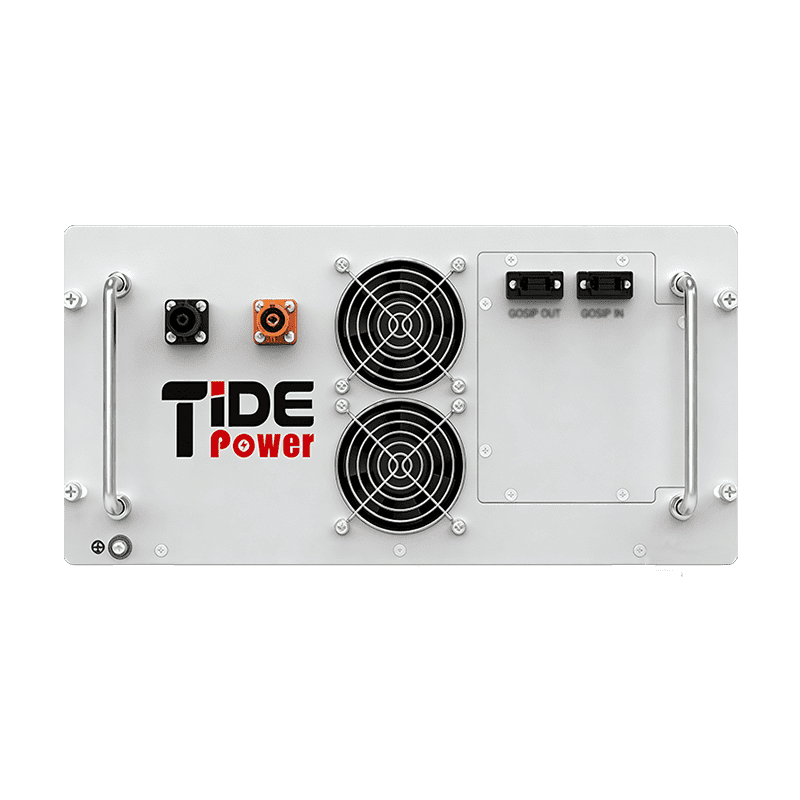
Battery module cost is the most volatile line item because it follows lithium carbonate, nickel, and manufacturing capacity trends. The power conversion and enclosure categories are more stable but still vary with configuration and local codes.
What Market Benchmarks Suggest for 1MW Turnkey Pricing
For planning purposes, a 1MW/1MWh system often falls in the $400,000 to $700,000 range, while a 1MW/2MWh system typically lands between $600,000 and $1.1 million. A 1MW/4MWh system can exceed $1.2 million before tax credits, grants, or utility incentives [1], [2], [3]. These are planning ranges, not fixed offers, and they assume standard lithium-ion technology and open-field or containerized installation.
Regional labor productivity, local fire code interpretation, seismic requirements, and interconnection distance can shift the final installed cost by 15% or more. Procurement timing also matters; upstream cell pricing has moved quickly enough to change project budgets within a single quarter in recent years [1].
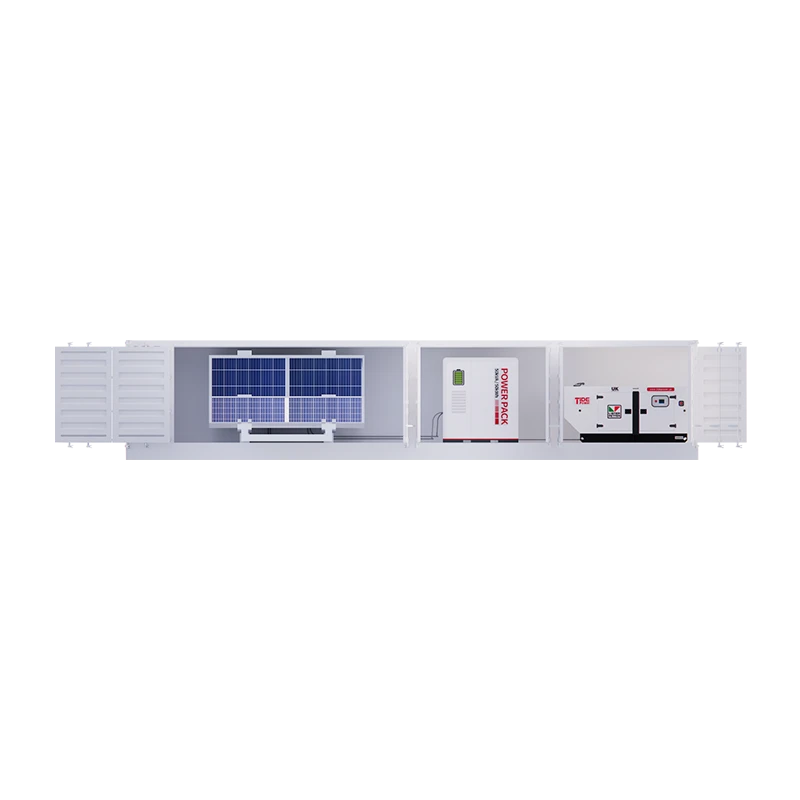
A containerized or modular design often reduces site labor and commissioning time compared with a fully custom build. For projects with constrained space or future expansion plans, this integration approach can be worth the incremental hardware cost.
Soft Costs and Site-Specific Variables
Soft costs are easy to underestimate. Interconnection studies, grid impact analysis, protective relay settings, utility witness testing, and permitting can add 5% to 10% of installed cost before any equipment arrives [5]. Fire safety compliance is another material variable. Energy storage systems must meet applicable installation standards, and UL 9540 certification is commonly referenced in procurement specifications [7].
Site conditions also matter. A 1MW system installed at grade inside an existing industrial facility may require different fire suppression, ventilation, and access provisions than a containerized system in a rural substation. Buyers should ask vendors to separate interconnection and civil work from the battery equipment price so that site-specific costs are visible.
Operating Costs and 20-Year Economics
The capital price is only the entry point. Operating expenses include scheduled maintenance, battery augmentation, insurance, energy losses, and end-of-life replacement. Round-trip efficiency, typically in the high-80s to low-90s for modern lithium-ion systems, affects how much energy the asset must purchase to deliver a given output [2], [4].
Augmentation is often the largest life-cycle operating cost. If the use case cycles the battery frequently, capacity degradation may require adding or replacing modules before the original warranty ends. One way to reduce that risk is modular architecture. If the DC block is built from cabinets such as TP-100BESS or TP-200BESS, augmentation can be planned as cabinet-level replacement rather than full-system replacement, which helps preserve the original AC infrastructure.
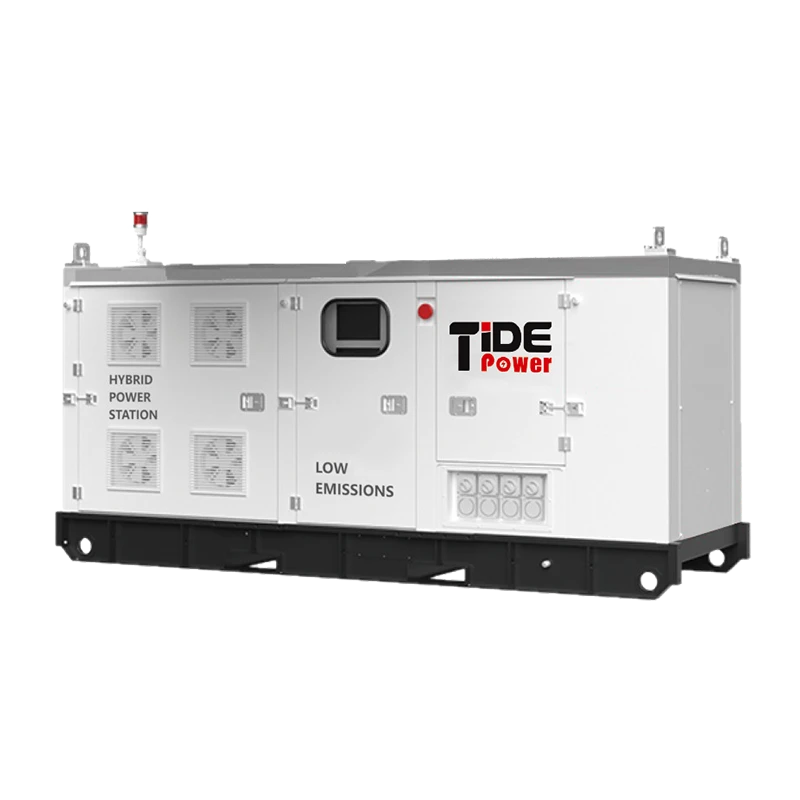
Levelized cost of storage remains the most defensible way to compare projects with different durations, chemistries, and augmentation schedules. The right metric is not simply dollars per kilowatt-hour of installed capacity; it is the total levelized cost of delivered energy over the intended service life [2].
Cost Reduction Trends and What They Mean for 2026 Procurement
Pack-level lithium-ion prices have declined substantially over the past decade, with some surveys showing pack prices below $120/kWh in 2024 [1]. System-level cost reduction has been slower because balance-of-plant, engineering, interconnection, and commissioning do not fall as quickly as cell prices [3]. However, longer-duration configurations have become more accessible as LFP chemistry increases its share of the stationary storage market [6].
For a 2026 buyer, this creates a practical decision point. Waiting may capture lower cell prices, but it may also expose the project to rising interconnection costs, grid capacity constraints, or tariff uncertainty. A buyer with available incentives and a defined revenue stream may find that commissioning a system sooner lowers overall lifecycle cost, even if the upfront cell price is not the absolute lowest possible.
Manufacturing capacity and integration capability directly influence delivered battery storage cost. <Tide Power: Clean Energy, Built to Work> covers Tide Power’s clean-energy production positioning and how integrated manufacturing supports system cost control.
How to Evaluate a 1MW BESS Quote Line by Line
A quote is only useful if it is comparable. Buyers should require the vendor to specify usable energy, depth of discharge, auxiliary power consumption, round-trip efficiency, warranty degradation curve, and whether the 1MW rating is continuous AC or a less demanding rating point [3], [8]. Without these definitions, two quotes that appear similar may differ by hundreds of thousands of dollars in real project value.
The strongest proposals include a mass-and-energy balance, a thermal management plan, a single-line diagram, a commissioning plan, and a degradation warranty that states both energy throughput and calendar life limits. Buyers should also confirm whether the vendor is supplying the full system or only the DC block, because the division between DC battery scope and AC integration scope is a common source of hidden cost.
EPC execution and commissioning discipline shape final project cost as much as cell pricing does. <Tide Power Breaks Ground on New Smart Generation Equipment Manufacturing Hub> covers the manufacturing base expansion intended to support smart generation equipment output and quality control.
Cost Check: Request a Line-Item Quote
If your project is in active procurement, request a line-item breakdown before comparing vendors. Ask for a 20-year LCOE model, warranty degradation schedule, and augmentation assumptions. For a preliminary 1MW BESS configuration and cost model, contact the energy storage team at [email protected] and include your target duration, grid connection voltage, and expected annual cycle count.
Start Your 1MW Battery Storage Budget
A reliable 1MW BESS budget depends on clear definitions: AC power rating, usable MWh capacity, site conditions, interconnection scope, and warranty terms. Without those inputs, any price is only an estimate.
If you are evaluating a 1MW battery storage project, contact Tide Power Technology at [email protected] or +86 591 2806 8999 to request a preliminary configuration and a line-item cost model matched to your operating profile.
FAQ
How much does a 1MW battery energy storage system cost?
A 1MW/2MWh turnkey system typically ranges from about $600,000 to more than $1.2 million before incentives. The final price depends on battery chemistry, system duration, site preparation, interconnection, and warranty structure [1], [2].
How long does a 1MW battery energy storage system last?
Modern lithium-ion systems are commonly designed for 10 to 15 years of calendar life, with usable cycle life depending on chemistry, depth of discharge, and thermal management. LFP systems in stationary applications often support thousands of cycles before reaching warranty limits [2], [4].
What is the difference between 1MW power and MWh capacity?
The 1MW rating is the maximum instantaneous power output. The MWh rating is the total energy the battery can deliver. A 1MW/2MWh system can deliver 1MW for about two hours before reaching its energy limit.
What hidden costs should be included in a 1MW BESS budget?
Buyers should include interconnection studies, permitting, fire system integration, civil work, commissioning, warranty escalation, insurance, and future battery augmentation. These costs can add 15% or more to the hardware price [5], [7].
References
[1] BloombergNEF, “Lithium-Ion Battery Pack Price Survey 2024,” Bloomberg Finance L.P., 2024.
[2] Lazard, “Lazard’s Levelized Cost of Storage Analysis—Version 10.0,” Lazard Ltd., 2024.
[3] National Renewable Energy Laboratory, “2024 Annual Technology Baseline: Utility-Scale Battery Storage,” NREL, 2024.
[4] International Renewable Energy Agency, “Electricity Storage Valuation Framework,” IRENA, 2020.
[5] U.S. Department of Energy, “Energy Storage Grand Challenge Cost and Performance Assessment,” DOE, 2022.
[6] International Energy Agency, “Batteries and Secure Energy Transitions,” IEA, 2024.
[7] UL Standards & Engagement, “ANSI/CAN/UL 9540: Energy Storage Systems and Equipment,” UL, 2023.
[8] Clean Energy Associates, “BESS Cost Benchmarking Report 2024,” CEA, 2024.
If you’re interested, check out these related articles:
Generator Maintenance for Dry and Dusty Conditions: Ensuring Reliability Through Seasonal Changes
“Inciting?sales?in?leading?the?changing?trend”2022?Tide?Power?Global?Sales?Conference was successfully held
Light Up the Future with Tide Power Lighting Towers
?Thank You for Joining Us at Electric & Power Indonesia 2024