 EN
EN ZH
ZH FR
FR ES
ES AR
ARIndustrial operations depend on stable, balanced power delivery. When motors, compressors, and production lines draw current unevenly across a single-phase system, voltage drops and equipment stress become unavoidable. A 3 phase generator distributes electrical load across three separate conductors, each carrying current 120 degrees out of phase with the others. This configuration delivers smoother power output, reduces conductor sizing requirements, and extends motor lifespan compared to equivalent single-phase systems. For facilities running welding equipment, CNC machines, HVAC systems, or heavy pumps, three-phase power is not optional—it is the baseline for operational reliability.
Selecting the right 3 phase generator involves more than matching nameplate kVA to your load estimate. You need to account for motor starting surges, power factor correction, altitude derating, and whether your application requires prime power or standby duty. This article walks through the technical considerations that determine whether a generator will meet your facility’s actual demand or fall short during peak load conditions.
Why Three-Phase Power Outperforms Single-Phase in Industrial Settings
Single-phase generators deliver power through two conductors with current flowing in a single sinusoidal waveform. This works adequately for residential loads and light commercial applications. Industrial facilities face different demands. Three-phase motors, which dominate manufacturing and processing environments, require the rotating magnetic field that only three-phase power provides.
The efficiency advantage is measurable. A three-phase motor of equivalent horsepower rating draws approximately 75% of the current required by a single-phase motor performing the same work. This reduction translates directly to smaller conductor cross-sections, reduced I²R losses in distribution wiring, and lower heat generation in motor windings. Over a 10-year equipment lifecycle, these efficiency gains compound into significant operational cost differences.
| Parameter | Single-Phase | Three-Phase |
|---|---|---|
| Power delivery | Pulsating (zero crossing twice per cycle) | Continuous (overlapping phases) |
| Motor starting current | 5–7× running current | 3–5× running current |
| Conductor requirement | 2 conductors + neutral | 3 conductors (neutral optional) |
| Typical industrial application | Lighting, small tools | Motors, compressors, production equipment |
Three-phase generators also handle reactive loads more effectively. Industrial motors, transformers, and fluorescent lighting systems draw reactive power that single-phase systems struggle to supply without significant voltage distortion. The balanced load distribution across three phases minimizes neutral current and reduces the harmonic distortion that damages sensitive control electronics.
 ## Sizing a 3 Phase Generator: kW, kVA, and the Power Factor Gap
Generator ratings appear in both kilowatts (kW) and kilovolt-amperes (kVA), and confusing these values leads to undersized installations. The relationship between them depends on power factor—the ratio of real power consumed to apparent power supplied.
Most industrial loads operate at power factors between 0.8 and 0.85. A generator rated at 500 kVA with a 0.8 power factor delivers only 400 kW of usable power. If your facility load calculation shows 450 kW required, that 500 kVA generator will be overloaded despite appearing adequate on paper.
Motor starting presents the most common sizing trap. Induction motors draw 5 to 7 times their running current during startup. A 50 kW motor with a starting current multiplier of 6 requires 300 kW of generator capacity during the first few seconds of operation—even though it settles to 50 kW once running. Facilities with multiple large motors need either soft starters to reduce inrush current or generators sized for worst-case simultaneous starting scenarios.
The calculation sequence matters:
- List all connected loads with their kW ratings and power factors
- Identify motor loads and their starting current multipliers
- Determine which loads may start simultaneously
- Calculate peak demand including motor starting surge
- Apply derating factors for altitude, ambient temperature, and fuel type
- Add 10–20% margin for future expansion
Altitude derating catches many project engineers off guard. Diesel engines lose approximately 3% of rated output per 300 meters above sea level due to reduced air density. A generator rated at 500 kW at sea level delivers only 450 kW at 1,000 meters elevation without turbocharger compensation.
Prime Power Versus Standby: Matching Duty Cycle to Application
Generator manufacturers rate their equipment for specific duty cycles, and misapplying these ratings leads to premature failure. The distinction between prime power and standby ratings reflects fundamental differences in how the engine and alternator are designed to operate.
Standby-rated generators are engineered for emergency backup during utility outages. They assume limited annual running hours—typically under 200—and allow brief overload capacity during the emergency period. Running a standby-rated generator as a primary power source accelerates wear on pistons, bearings, and injectors because the engine was not designed for continuous thermal cycling.
Prime power ratings assume the generator will operate as the primary power source for extended periods, often in locations without grid connection. These units incorporate heavier-duty components, larger cooling systems, and more conservative power curves. A prime-rated generator typically delivers 10–15% less peak output than the same physical unit with a standby rating, but it will sustain that output for thousands of hours annually.
Continuous power ratings represent the most conservative category—generators designed to run at constant load 24 hours per day, 365 days per year. Mining operations, remote telecommunications sites, and offshore platforms require this rating level.
| Rating Type | Typical Annual Hours | Overload Allowance | Application Example |
|---|---|---|---|
| Standby | 50–200 | 10% for 1 hour in 12 | Hospital backup, data center UPS support |
| Prime | 500–8,000 | None | Construction site, remote facility |
| Continuous | 8,760 | None | Mining operation, island grid |
Selecting the wrong rating category does not void the warranty immediately, but it does create a documentation trail that manufacturers will reference when components fail prematurely.
Engine Selection: Diesel, Natural Gas, and Hybrid Configurations
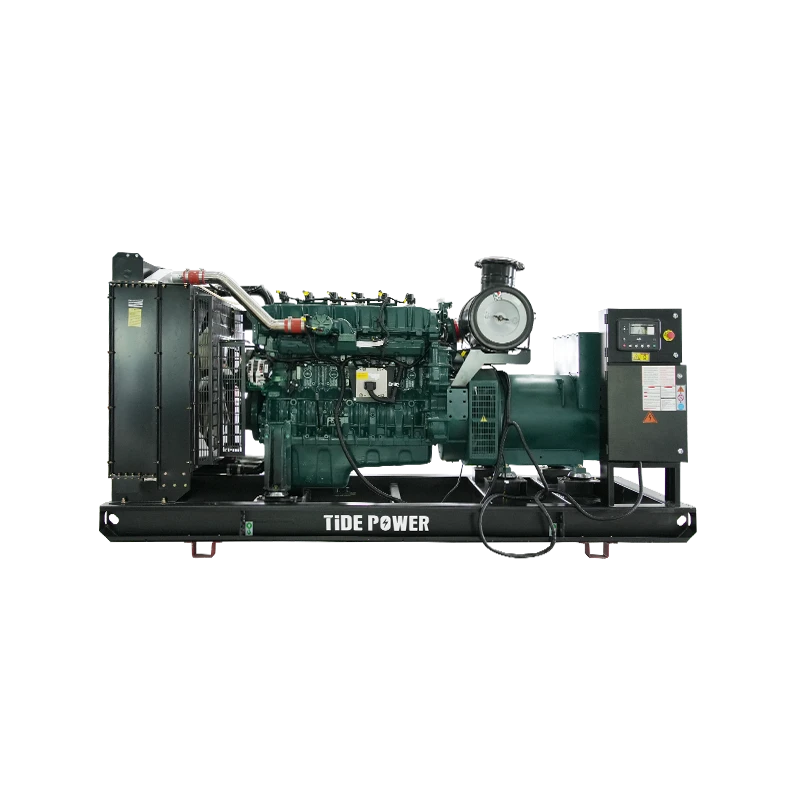
The prime mover choice affects fuel cost, emissions compliance, maintenance intervals, and installation complexity. Diesel engines dominate industrial generator applications for reasons that extend beyond fuel availability.
Diesel generators achieve thermal efficiencies of 40–45%, compared to 30–35% for natural gas reciprocating engines. This efficiency advantage translates to lower fuel cost per kWh generated, particularly at partial loads where gas engines lose efficiency more rapidly. Diesel fuel also stores indefinitely with proper treatment, making it the default choice for standby applications where the generator may sit idle for months between utility outages.
Natural gas generators offer advantages in emissions-sensitive locations and facilities with existing gas infrastructure. They produce lower particulate emissions and eliminate the need for on-site fuel storage tanks. However, gas supply interruptions during regional emergencies—precisely when backup power is most needed—represent a reliability concern that diesel avoids.
Dual-fuel and bi-fuel configurations attempt to capture benefits from both fuel types. Bi-fuel generators start on diesel and transition to a diesel-gas mixture once warmed up, reducing fuel cost while maintaining diesel-only backup capability. These systems add complexity and require more sophisticated control systems, but they can reduce operating costs by 20–30% in prime power applications where natural gas prices are favorable.
For facilities evaluating power generation options, the fuel decision should account for local fuel pricing, emissions regulations, maintenance infrastructure, and the criticality of uninterrupted operation during regional emergencies.
Voltage and Frequency Specifications for Industrial Loads
Industrial three-phase generators produce power at standardized voltages and frequencies that vary by region. North American facilities typically operate at 480V/60Hz or 208V/60Hz, while most of the rest of the world uses 380–415V/50Hz systems. Specifying the wrong voltage or frequency creates compatibility problems that range from inconvenient to dangerous.
Voltage selection depends on distribution distance and load characteristics. Higher voltages reduce current for a given power level, allowing smaller conductors and lower distribution losses over long cable runs. A 480V system serving loads 500 meters from the generator requires significantly smaller cable than a 208V system delivering the same power.
Frequency stability matters for motor-driven loads. Induction motors run at speeds directly proportional to supply frequency—a 1,800 RPM motor at 60Hz becomes a 1,500 RPM motor at 50Hz. Process equipment designed for one frequency will not perform correctly on the other. Electronic variable frequency drives can compensate, but adding drives to every motor load defeats the purpose of direct generator connection.
Generator voltage regulation specifications indicate how much output voltage varies between no-load and full-load conditions. Industrial generators typically maintain ±1% voltage regulation under steady-state conditions, with transient deviations of ±10–15% during sudden load changes. Sensitive electronic loads may require tighter regulation or supplementary voltage conditioning equipment.
The alternator winding configuration—star (wye) or delta—affects available voltages and neutral current handling. Star-wound alternators provide both line-to-line and line-to-neutral voltages, supporting mixed 480V three-phase and 277V single-phase loads from the same generator. Delta configurations offer only line-to-line voltage but handle unbalanced loads with less neutral conductor heating.
Installation Requirements That Affect Generator Performance
Generator performance depends heavily on installation conditions that project specifications sometimes overlook. Ventilation, fuel supply, exhaust routing, and vibration isolation all influence whether the generator meets its rated output in actual operation.
Combustion air requirements scale with generator size. A 500 kW diesel generator consumes approximately 35 cubic meters of air per minute at full load. Restricted airflow causes elevated intake temperatures, reduced power output, and accelerated filter clogging. Engine rooms require properly sized intake louvers, and containerized generators need clear approach paths for cooling air.
Exhaust backpressure limits appear in every engine specification sheet but rarely receive adequate attention during installation. Excessive backpressure from undersized piping, too many elbows, or inadequate muffler sizing reduces engine efficiency and can cause exhaust valve damage. Most diesel engines tolerate 3–4 kPa of backpressure; exceeding this limit requires engine derating.
Fuel system design affects both starting reliability and sustained operation. Day tanks provide immediate fuel availability for rapid starting, while bulk storage tanks supply extended runtime. The fuel transfer system must deliver fuel at rates exceeding maximum engine consumption, with adequate filtration to remove water and particulates that damage injection systems.
Vibration isolation prevents generator operation from damaging building structures and sensitive equipment. Spring or rubber isolators between the generator base and foundation reduce transmitted vibration, while flexible connections in exhaust, fuel, and electrical systems accommodate the movement that isolation allows.
Control Systems and Paralleling Capabilities
Modern industrial generators incorporate digital control systems that manage starting sequences, load sharing, protective functions, and remote monitoring. The control system specification determines how well the generator integrates with facility electrical infrastructure.
Automatic transfer switches (ATS) detect utility failure and command generator starting without operator intervention. Transfer time specifications range from sub-second for critical loads to 10–30 seconds for standard commercial applications. The ATS must be rated for the full generator output and configured for the appropriate transfer mode—open transition (break-before-make) or closed transition (make-before-break).
Paralleling controls enable multiple generators to share load and provide redundancy. Synchronizing generators requires matching voltage, frequency, and phase angle before closing the paralleling breaker. Modern digital controls accomplish this automatically, but the underlying electrical infrastructure must support parallel operation with appropriate bus ratings and protective relay coordination.
Load sharing between paralleled generators can operate in isochronous or droop mode. Isochronous sharing maintains constant frequency regardless of load, with active power sharing between units. Droop mode allows frequency to decrease slightly as load increases, providing inherent load sharing stability without communication between generator controls. Most industrial applications use isochronous sharing with digital load-sharing modules.
Remote monitoring capabilities have become standard expectations rather than premium options. Cellular and satellite connectivity enable real-time performance monitoring, predictive maintenance alerts, and remote diagnostic access. For facilities with multiple generator installations across geographic locations, centralized monitoring reduces the staffing required for routine operational oversight.
Maintenance Planning and Lifecycle Cost Considerations
Generator acquisition cost represents only 20–30% of total lifecycle cost. Fuel consumption, maintenance labor, replacement parts, and eventual overhaul or replacement constitute the majority of ownership expense. Maintenance planning decisions made during specification affect these costs for the equipment’s entire service life.
Oil and filter change intervals vary by manufacturer and duty cycle. Standby generators with limited annual hours may require oil changes based on calendar time rather than operating hours—typically every 6–12 months regardless of runtime. Prime power units follow hour-based intervals, commonly 250–500 hours between oil services depending on oil analysis results.
Coolant system maintenance prevents the corrosion and cavitation damage that shortens engine life. Supplemental coolant additives require periodic testing and replenishment. Coolant replacement intervals of 2–3 years apply to most industrial applications, with more frequent replacement in severe service conditions.
Fuel system maintenance addresses the biological contamination and water accumulation that plague stored diesel fuel. Fuel polishing systems circulate and filter stored fuel to maintain quality. Injector cleaning or replacement becomes necessary when fuel quality degrades or when operating hours accumulate.
Load bank testing verifies generator capacity and exercises the engine under realistic conditions. Standby generators that rarely experience full-load operation benefit from annual load bank tests that burn off carbon deposits and verify performance. The test duration and load profile should simulate actual emergency operating conditions.
Extended service agreements transfer maintenance responsibility and cost variability to the manufacturer or dealer. These agreements typically cover scheduled maintenance, emergency service response, and sometimes major component replacement. For facilities without dedicated generator maintenance staff, service agreements provide predictable costs and guaranteed response times.
Emission Regulations and Compliance Documentation
Environmental regulations governing generator emissions have tightened significantly over the past decade. Compliance requirements vary by generator size, application type, and geographic location, but the trend toward stricter standards continues globally.
The U.S. Environmental Protection Agency Tier 4 Final standards represent the current benchmark for diesel generator emissions in North America. These standards require 90% reduction in particulate matter and nitrogen oxides compared to earlier Tier 2 levels. Meeting Tier 4 Final typically requires diesel particulate filters, selective catalytic reduction systems, or both—adding cost and maintenance complexity.
European Stage V standards impose similar requirements, with additional provisions for particle number limits that affect smaller generators more significantly than previous mass-based standards. Generators sold in the European Union must carry CE marking and comply with applicable emissions directives.
Stationary generator installations often face additional permitting requirements beyond the engine emission standards. Air quality permits may impose operating hour limits, fuel sulfur content restrictions, or stack testing requirements. Emergency standby generators typically receive more lenient treatment than prime power installations, but the distinction requires proper documentation and permit applications.
Compliance documentation should accompany every generator throughout its service life. Engine emission certifications, installation permits, stack test results, and maintenance records demonstrate regulatory compliance during inspections. Facilities operating in multiple jurisdictions need documentation systems that track varying requirements across locations.
Evaluating Generator Suppliers and Support Infrastructure
The generator itself represents only part of the procurement decision. Supplier capabilities in application engineering, installation support, parts availability, and service response determine whether the equipment performs as specified throughout its service life.
Application engineering support matters most during the specification phase. Suppliers who simply quote the lowest-priced unit meeting basic requirements provide less value than those who analyze your load profile, identify potential problems, and recommend appropriate solutions. The time invested in proper specification prevents expensive corrections after installation.
Parts availability affects both scheduled maintenance and emergency repairs. Generators from major engine manufacturers benefit from global parts distribution networks, while units from smaller manufacturers may require longer lead times for replacement components. For critical applications, maintaining on-site spare parts inventory reduces downtime risk regardless of supplier capabilities.
Service response commitments should be documented in writing before purchase. Response time guarantees, technician qualifications, and geographic coverage all affect how quickly a failed generator returns to service. Remote diagnostic capabilities can reduce response time by enabling technicians to arrive with the correct parts and tools.
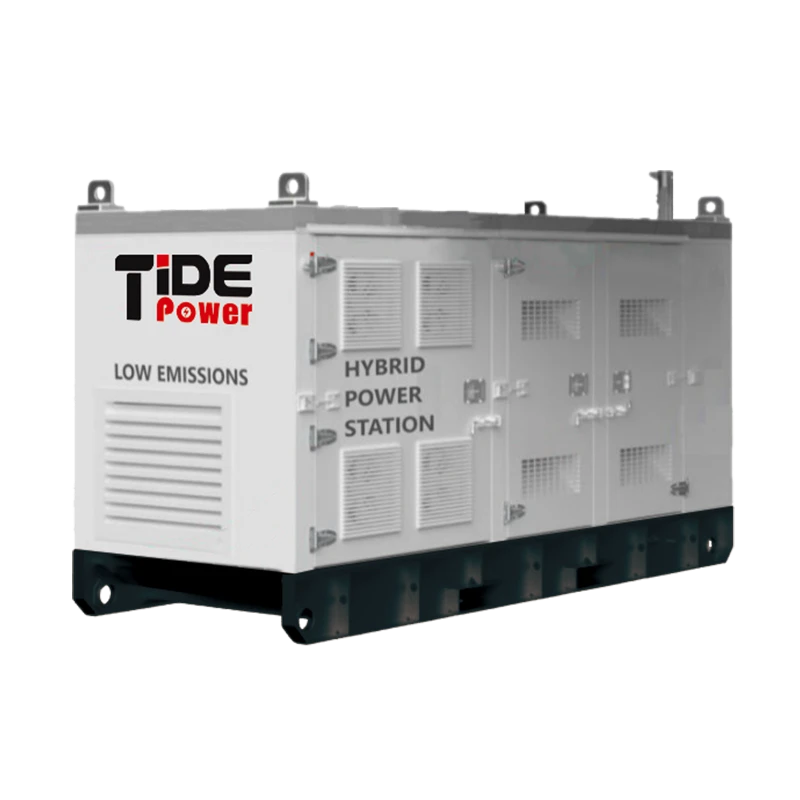
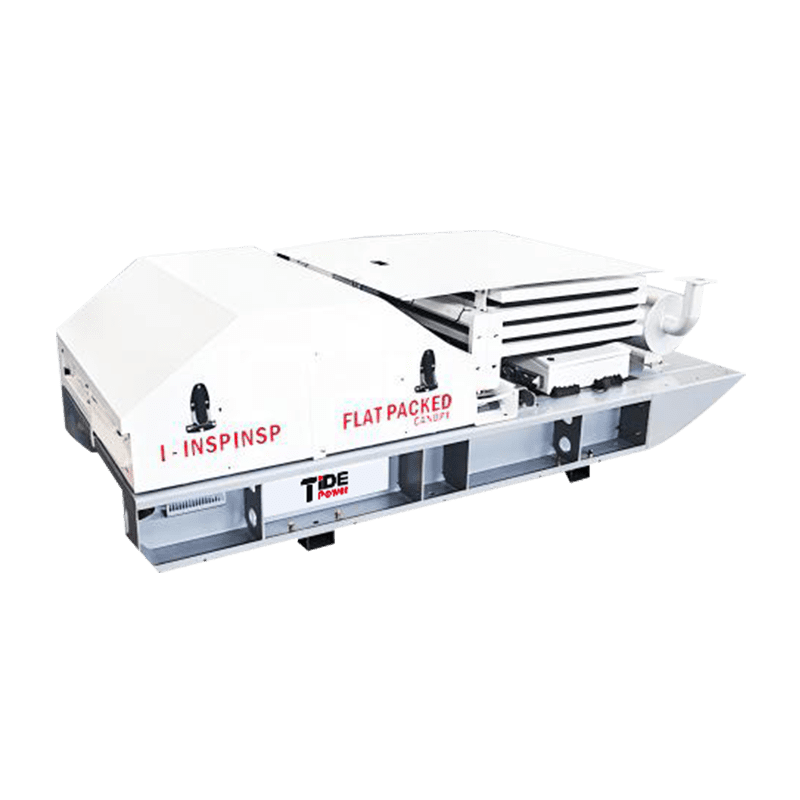
Tide Power Technology provides generator systems across the 5 kVA to 4,500 kVA range, with configurations spanning silent diesel units, gas generator sets, and hybrid power systems. For industrial facilities evaluating three-phase generator options, confirming that the supplier’s product range and service infrastructure align with your specific application requirements is worth discussing before finalizing specifications. Reach out at [email protected] or call +86 591 2806 8999 to review your load profile and installation conditions.
What Industrial Buyers Ask About 3 Phase Generators
Can I run single-phase loads from a three-phase generator?
Three-phase generators with star-wound alternators provide both three-phase and single-phase output simultaneously. You can connect single-phase loads between any phase conductor and neutral, receiving line-to-neutral voltage (typically 277V in 480V systems or 120V in 208V systems). The limitation is load balancing—single-phase loads should be distributed across all three phases to prevent unbalanced operation. If single-phase loads exceed 10–15% imbalance between phases, the generator’s voltage regulation degrades and alternator heating increases. For facilities with substantial single-phase loads alongside three-phase equipment, discuss the load distribution with your supplier to confirm the alternator configuration supports your mix.
How do I determine if my facility needs a 3 phase generator or if single-phase is sufficient?
Check your existing electrical service and equipment nameplates. If your facility has three-phase utility service and any motors above 5 HP, you almost certainly need three-phase generator backup. Single-phase generators cannot start or run three-phase motors without phase conversion equipment, which adds cost and reduces efficiency. Even facilities with predominantly single-phase loads often benefit from three-phase generators because the balanced power delivery reduces conductor sizing and improves voltage stability. The decision point typically falls around 20–25 kW of total connected load—below this threshold, single-phase may suffice; above it, three-phase becomes the practical choice.
What happens if I overload a 3 phase generator?
Sustained overload causes progressive damage through multiple mechanisms. The alternator windings overheat, degrading insulation and eventually causing short circuits. The engine labors to maintain frequency, increasing fuel consumption and exhaust temperatures. Protective systems should trip the generator offline before catastrophic failure, but repeated overload events cause cumulative damage that shortens equipment life. Brief overloads during motor starting are normal and expected—generators are designed to handle 10–15% overload for short durations. Continuous overload above rated capacity is not a design condition and will result in premature failure. If your loads regularly exceed generator capacity, the unit is undersized for the application.
How often should a standby 3 phase generator be tested?
Monthly no-load tests verify starting reliability and exercise engine components that deteriorate during extended idle periods. Run the generator for 15–30 minutes to reach normal operating temperature. Annual load bank tests at 75–100% of rated capacity verify actual power delivery capability and burn off carbon deposits that accumulate during light-load operation. Facilities with critical loads—hospitals, data centers, water treatment plants—often test more frequently and maintain detailed test logs for regulatory compliance. The testing schedule should also account for fuel system maintenance, as diesel fuel quality degrades over time and requires periodic circulation or replacement.
What is the typical lifespan of an industrial 3 phase generator?
Properly maintained diesel generators commonly achieve 20,000–30,000 operating hours before requiring major overhaul. For standby applications with 100–200 annual operating hours, this translates to 100+ years of calendar life—far exceeding the practical service period before obsolescence. Prime power applications accumulating 4,000–6,000 hours annually may reach overhaul intervals in 5–7 years. The engine typically requires overhaul before the alternator, and overhaul costs run 40–60% of new equipment cost depending on the extent of work required. Many facilities find that technological improvements in efficiency and emissions compliance justify replacement rather than overhaul when major work becomes necessary. Share your operating profile and we can estimate realistic lifecycle costs for your application.
Industry Standards and Data Sources Cited
U.S. Environmental Protection Agency — Stationary Engine Standards, 2024
NFPA 110 — Standard for Emergency and Standby Power Systems, 2022 Edition
If you’re interested, check out these related articles:
Tide Power Announces Global Exhibition Schedule for Second Half of 2025
Light Up the Night, Sustainably: The Solar Hydraulic Lighting Tower Revolution
Empowering Australian Agriculture: Tide Power & Lister Petter Join Forces