 EN
EN ZH
ZH FR
FR ES
ES AR
ARSolar hybrid power systems have changed the equation for off-grid electrification. By pairing photovoltaic panels, lithium battery storage, and a diesel backup generator into a single portable unit, these systems deliver round-the-clock electricity to remote telecom towers, mining camps, and humanitarian outposts. But from a decade of supporting international energy projects, I’ve learned that the real success of a solar hybrid deployment isn’t on the spec sheet; it’s in proper system sizing, transport packaging rugged enough for unpaved roads, and the supplier’s ability to provide parts and technical support when the nearest paved road is 500 kilometers away. A low upfront price means nothing if the system fails and the manufacturer has no regional service presence.
Solar Hybrid Power Keeps Remote Sites Online Without Grid Access
A portable solar hybrid energy system combines three components: a photovoltaic array that converts sunlight to DC electricity, a lithium iron phosphate (LFP) battery bank that stores excess energy for use at night or during cloudy periods, and a diesel generator that covers extended low-solar intervals or peak loads. An intelligent charge controller and inverter manage power flow between these sources, automatically switching to the optimal source based on real-time solar production, battery state of charge, and load demand. When the battery voltage drops below a set threshold, the diesel generator starts, delivers power directly to the load while simultaneously charging the battery, then shuts down once the battery reaches full capacity. This fully automated handover happens in milliseconds, making it suitable for sensitive telecom and IT equipment.
Systems range from compact 10 kVA all-in-one units housed in weatherproof enclosures with forklift pockets for easy positioning, up to 250 kVA containerized configurations that separate the solar array, battery module, and genset for greater scalability. The table below outlines typical Tide Power hybrid units available for remote applications.
| Model | Power Rating | Configuration | Key Feature |
|---|---|---|---|
| TP-10P | 10 kVA | All-in-one | Plug-and-play, towable design |
| TP-30P | 30 kVA | All-in-one | Rugged steel enclosure, silent operation |
| TP-60P | 60 kVA | Split | Modular battery expansion |
| TP-250P | 250 kVA | Split | High capacity, multi-unit parallel |
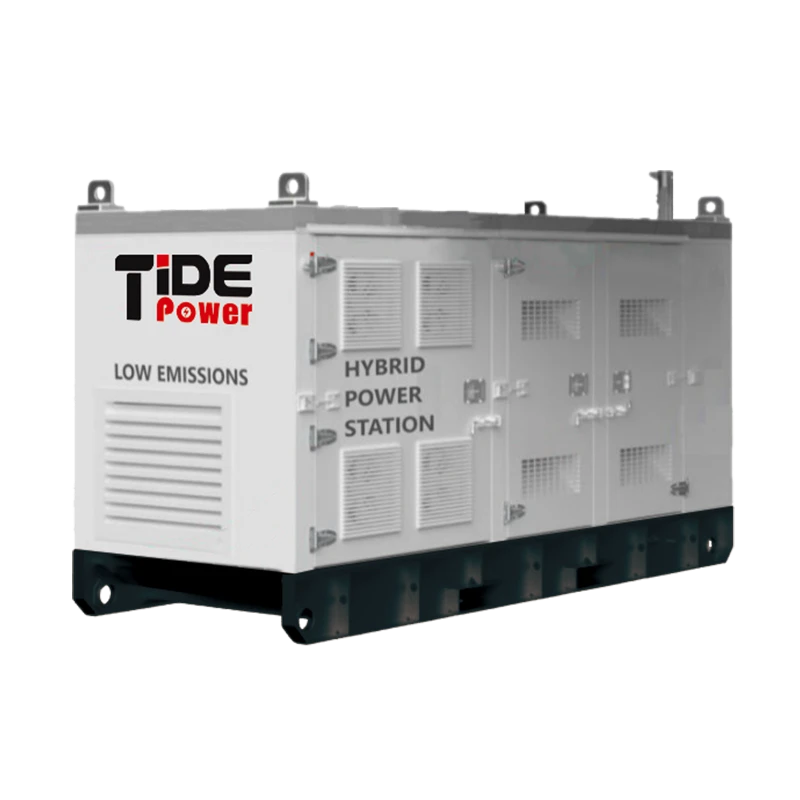
The latest LFP battery packs used in these systems deliver 5.12 kWh per module. A standard TP-60P configuration can accommodate up to four 16.1 kWh battery modules, offering 64.4 kWh of usable storage — enough to support a 5 kW continuous load through 12 hours of darkness before the diesel generator would need to run.
Sizing a Portable Hybrid System to Meet Site Load Demands
Getting the sizing right avoids two common pitfalls: overspeccing, which wastes capital and complicates transport, and underspeccing, which leads to excessive diesel runtime and shortens battery life. For telecom base stations, the load typically includes the base transceiver station (BTS), microwave backhaul, security cameras, and climate control, often totaling 3-8 kW continuous. For a mining camp or humanitarian center, the load profile can swing from 15 kW during daytime operations to 2 kW at night.
How to determine daily energy consumption for remote equipment
List every piece of equipment that must run during a 24-hour cycle, note its power draw in watts, and multiply by daily operating hours. Sum these to get total watt-hours per day. Add a 20% margin for converter losses and load growth. For example, a telecom site with 4 kW average load over 24 hours needs 96 kWh per day. With a safety margin, the system should be capable of producing at least 115 kWh.
What battery capacity provides overnight autonomy?
The battery bank must cover the nightly load without dipping below 20-30% depth of discharge to preserve cycle life. Using LFP chemistry with 80% usable capacity, a 115 kWh/day site would need at least 115 kWh / 0.80 = 144 kWh of rated battery capacity to cover one full night, assuming no solar input. In practice, autonomy is often set for 12-18 hours of battery-only operation, after which the diesel generator takes over. For a 5 kW load over 18 hours, you need 90 kWh usable, which translates to roughly six 16.1 kWh Tide Power battery modules. The diesel generator then acts as a generator of last resort rather than a primary power source.
Transport and Deploying Hybrid Units in Hard-to-Reach Locations
Moving a solar-diesel-battery system to an off-grid site typically means navigating unpaved roads, river crossings, or narrow mountain tracks. Equipment damage during transit is one of the most underestimated project risks. I recall a project in Southeast Asia where a competitor’s pre-assembled units arrived with cracked solar panels because the shipping crates were not reinforced for vibration from corrugated dirt roads. The resulting delay cost the operator weeks of downtime while replacement parts were air-freighted.
To avoid this, specify packaging that matches the last-mile transport mode. All-in-one units should be mounted on welded steel skids with fork pockets and lifting lugs, so they can be safely handled by forklift or crane. The outer enclosure must be IP54 rated or better to keep out dust and moisture, and the internal modules, particularly the batteries and inverter, need vibration-damping mounts. For containerized systems, the container itself becomes the shipping and operational housing; once it arrives, only external PV panels and grounding need to be installed on site. This plug-and-play approach drastically reduces local labor requirements and commissioning time.
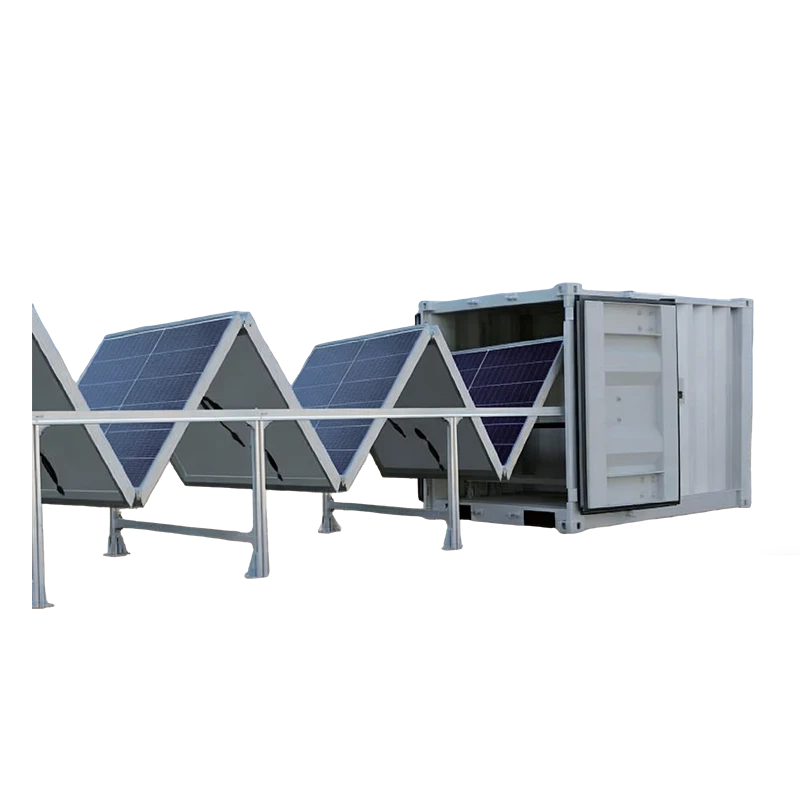
When site preparation is limited, choose a split configuration where the solar array can be ground-mounted separately from the generator-battery module. This reduces concentrated weight and makes it easier to carry components over the final kilometers by light truck or even by laborers in the most inaccessible terrain. Always verify that the supplier provides a pre-commissioning checklist and can dispatch a technician for remote-site startup if the local installer lacks hybrid experience. This single step prevents about half the callouts I’ve seen in the first 90 days of operation.
Choosing a Supplier with Proven Remote-Site Service Experience
The technical performance of a hybrid system on paper means little if the supplier cannot support it after the sale. Remote-site operators need quick access to spare parts, regionally based service engineers, and remote system monitoring that can diagnose faults before they cause an outage. When evaluating suppliers, request concrete evidence of projects in similar geographic conditions, not just a list of distributors. Ask how many warranty claims were resolved within 72 hours over the past two years, and ask for the location of the nearest stocked spare-parts depot relative to your site.
I have seen mining clients eliminate potential suppliers simply by asking for the name and phone number of a field service manager responsible for the Africa region, and receiving none. For any deployment beyond 200 km from a major city, choose a vendor that offers a remote monitoring platform with GSM or satellite connectivity as standard. This lets off-site engineers review battery state of health, genset runtime logs, and solar yield data daily, and flag anomalies before the system fails. Tide Power, for example, integrates remote monitoring into its hybrid range and maintains distributor networks in multiple continents, providing regional parts stocks and trained service partners to reduce mean time to repair. The goal is not just a generator but a sustained power service.
Calculating the True Cost of Off-Grid Solar Hybrid Power
The upfront capital cost of a portable solar hybrid system is generally 20-40% higher than a diesel-only genset of equivalent rating, but the operating cost profile reverses quickly. For a typical remote telecom site burning 15,000 liters of diesel annually, a hybrid system can cut fuel consumption by 60-80%, saving roughly USD 12,000-18,000 per year at a diesel price of $1.20 per liter, depending on solar irradiation at the site. Add in savings from reduced generator maintenance hours, because the genset runs far fewer hours, and the hybrid setup often reaches total-cost parity within 24-36 months. Beyond that, every year is net savings, and the battery bank usually has a calendar life of 10 years or more with proper thermal management.
Beyond direct fuel and maintenance costs, factor in the value of uninterrupted power. A single 24-hour telecom outage in a competitive market can trigger regulatory fines and customer churn costing far more than the hybrid system premium. The smarter financial decision is to treat the hybrid system as an insurance policy with a positive return on investment, not as a cost center.
When your remote site needs a power system that combines solar, battery storage, and diesel backup in a rugged, transport-ready design, and you require a partner with proven global deployment capability, send your load profile and site location to [email protected] or call +86 591 2806 8999. We will engineer a modular hybrid configuration sized to your operations and backed by local service support.
Frequently Asked Questions About Portable Solar Hybrid Power
How long can a portable solar hybrid system run without sunlight?
It depends on the battery bank size and the load, but most properly sized systems are designed for 12 to 18 hours of battery-only operation at full load. Beyond that, the diesel generator automatically starts, supplies the load, and recharges the battery. In a hybrid system, there is no maximum off-sun period; as long as fuel is available, the diesel generator maintains indefinite power, and the solar array re-enters operation automatically as soon as sunlight returns.
Can the system be expanded if power demand increases later?
Yes, and this is one of the strongest advantages of a modular hybrid architecture. Additional battery modules can be racked into an existing cabinet, and the solar array can be extended by adding more panel strings as long as the charge controller has spare input capacity. Diesel generator capacity can also be increased by paralleling a second genset. When planning a system, specify a charge controller and inverter sized 30-50% above current requirements so that future expansion happens without replacing core electronics.
What happens if the diesel generator fails while the system is unattended?
The system controller continuously monitors genset health signals. If a failure is detected, such as low oil pressure, coolant overtemperature, or failure to start, the controller switches entirely to battery and solar mode, shedding non-critical loads if necessary to preserve battery charge. At the same time, it sends an alert via satellite or cellular modem to the remote monitoring center. In many deployments, a redundant generator can be configured for automatic failover, but even without it, the battery typically provides sufficient buffer time for a maintenance team to reach the site.
Is the hybrid system truly portable across rough terrain?
Portability is designed into the mechanical base, not just the power rating. All-in-one units up to 60 kVA can be built on a towable trailer or skid with lift points, allowing relocation by a standard pickup truck or helicopter sling load. For larger split systems, the containerized battery and inverter modules are handled as standard ISO shipping containers, while the solar panels are shipped on pallets. In all cases, the packaging should be specified for off-road vibration and water ingress. Before ordering, identify the worst-case section of the route and require the supplier to certify the packaging for that road class.
How does Tide Power support installations in remote international locations?
We maintain distributor and service partner networks across multiple continents, with spare-parts depots stocked for our hybrid system family. Each system ships with a pre-commissioning checklist and can be remotely monitored from our support center to detect issues early. For sites where local expertise is limited, we can arrange a factory-trained technician for on-site startup and training. Share your project location and site description with us at [email protected], and we will confirm the nearest service support center and lead time.
If you’re interested, check out these related articles:
The Role of Tide Power Generator Sets in Data Centers
Tide Power’ s exhibition at the 135th Canton Fair has successfully concluded
The annual OEM procurement signing ceremony between Tide Power and MWM has been successfully completed