 EN
 ZH
 FR
 ES
 AR
Choosing a dewatering pump manufacturer is not mainly a brand decision. The right manufacturer matches pump design, construction quality, and service support to your actual site conditions: flow rate, total dynamic head, suction lift, water quality, solids content, runtime, and access. A low-price pump that cannot hold its duty point or supply wear parts quickly can raise project cost through downtime and repeat failures. The checks below separate a dependable supplier from a catalogue reseller and show what to request before you commit.
Match the Pump to the Site Before Comparing Manufacturers
Before you compare manufacturers, define the duty in measurable terms. Flow rate and total dynamic head determine where the pump must operate on its curve. Suction lift and priming method determine whether a self-priming pump can start and re-prime after the suction line drains. Solids size, water chemistry, and temperature determine impeller type, wear material, and seal selection. Runtime and fuel supply determine engine sizing, cooling, and tank capacity. Skid or trailer dimensions and lifting points determine whether the pump can be moved and installed safely.
Write these requirements into a single duty summary. Two manufacturers can offer the same nominal pump size and still be quoting different hydraulic designs, so the purchase decision should be based on that complete duty point rather than the catalogue title alone.
Check Production Capability Before Accepting Product Claims
Factory capacity and quality control deserve more attention than marketing language. Ask whether the supplier controls pump-end production, engine integration, testing, and warranty decisions or simply resells another maker’s equipment. Useful evidence includes manufacturing audit reports, material certificates, test records, and a documented quality management process. A trade company can still deliver a reliable package when it has technical staff, supplier accountability, and spare parts access, but those resources must be confirmed.
Product series structure is a useful signal. A manufacturer that offers distinct Z, B, K, S, D, and C pump ranges should also be able to show which series fits your head and flow point and which wear parts are interchangeable. For higher-flow drainage, check that the equipment can be configured for the application, for example through a double-suction split-casing pump unit where the duty supports it.
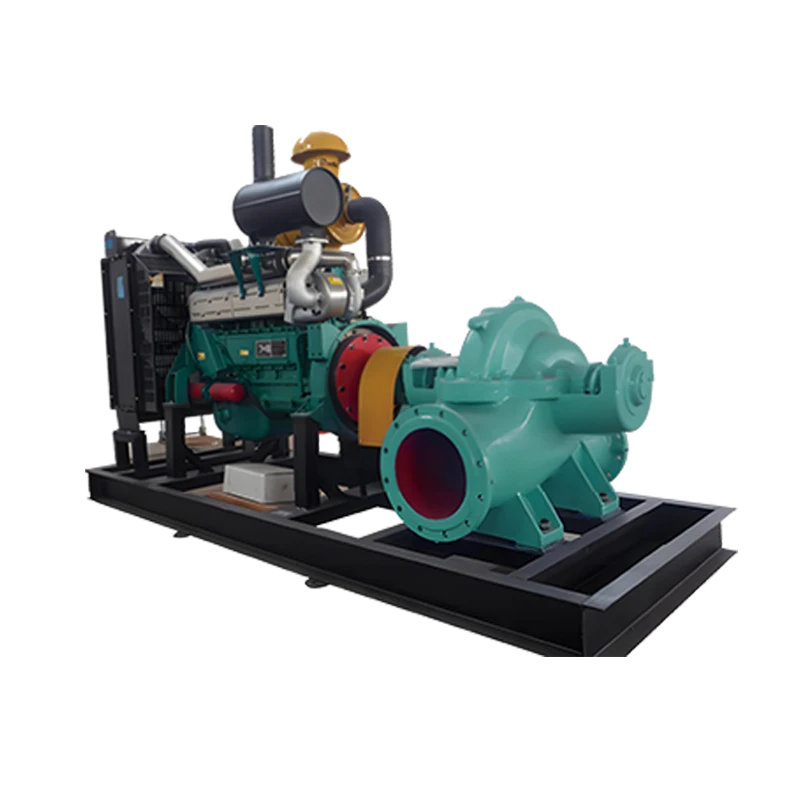
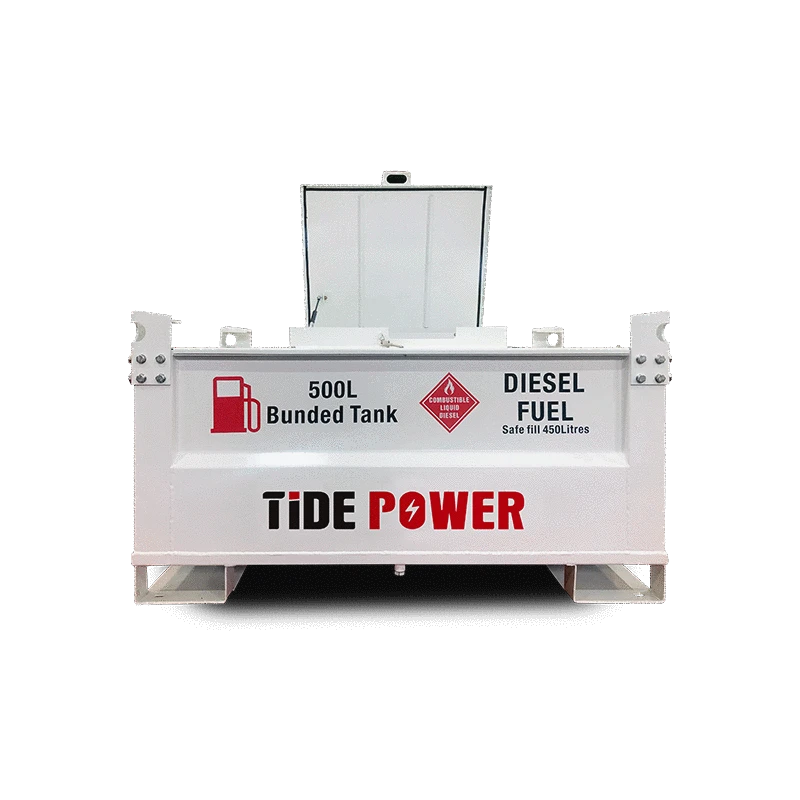
Continuous and unattended dewatering also depends on the engine and fuel system integration. Ask whether the manufacturer can document engine options and a fuel storage arrangement that supports the planned runtime, rather than leaving those interfaces to a local installer.
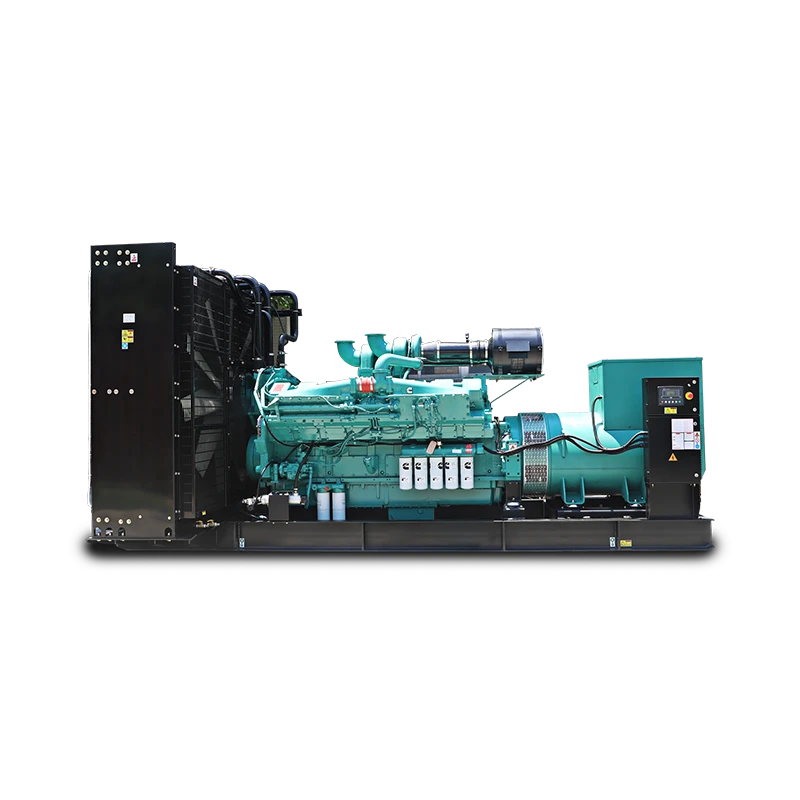
Production claims should be supported by traceable records rather than brochure language. <Tide Power’s Innovative Products and Solutions at Big5 Construct Saudi> covers how a manufacturer presents its product lines in a construction-focused setting, which can help confirm whether dewatering pumps sit within a supported equipment range rather than an incidental listing.
Read Hydraulic Design and Materials for Your Water Conditions
A pump that meets the site duty can still fail early if the materials do not match the water. For clean stormwater or low-abrasive water, a standard cast iron casing and a simple impeller may be sufficient. For mine water, construction slurry, or water carrying fine grit, request hardened wear plates, replaceable liners, and seals that tolerate abrasives. Corrosive or saline water may require a different casing material or protective coating. Ask for a material list tied to your water sample, not a generic heavy duty description.
| Site condition | What to request | Why it matters |
|---|---|---|
| High solids or abrasive water | Impeller and wear plate material with clearance limits | Prevents rapid loss of flow and pressure |
| Corrosive or saline water | Casing material, coating, and seal compatibility | Avoids hidden corrosion and seal failure |
| Deep suction lift | Priming system and suction line configuration | Confirms the pump can lift and re-prime |
| Continuous duty | Engine duty rating and cooling design | Avoids derating and overheating |
| Tight access | Skid or trailer dimensions and lifting points | Determines whether the unit fits the site |
| Remote operation | Recommended spare parts and consumable list | Keeps downtime manageable |
Verify Performance Data and Test Evidence
Request the factory performance curve for the exact engine, impeller, speed, and fluid conditions being quoted. A catalogue curve only helps when the test basis is clear. Ask what standard or internal procedure was used, what tolerance applies to head and flow, and how the manufacturer handles a factory test failure. If the purchase volume justifies it, ask for a witness test, test video, or final test record. Compare pump curves at the same impeller trim and speed, otherwise the comparison can be misleading.
Lead with the duty point and make each supplier return a curve or selection report. Ask for guaranteed head and flow rather than only maximum values. Confirm the fuel consumption or engine loading at your operating point, and check whether the unit can meet the required suction lift without excessive cavitation margin. A manufacturer that cannot produce a test curve or cannot explain the test basis is not necessarily unusable, but the risk shifts to the buyer. If the pump will run unattended or in a critical drainage role, require documented performance evidence before shipment.
Evaluate Spares, Service, and Lifecycle Support
After-sales support often determines the final cost of ownership. Ask whether the manufacturer keeps wear parts in stock, how long common spares take to ship, and whether the model identification on the pump matches the parts book. A clear recommended spare parts list helps you decide which items to hold on site for long dewatering campaigns. Check whether warranty covers manufacturing defects separately from wear components and who covers freight and inspection costs.
Look for a service response that matches the site. A pump on a remote mining project needs a different support model from a unit used for seasonal construction dewatering. Confirm whether the supplier can provide commissioning guidance, operator training, and remote technical review before relying on that support.
Next Step: Shortlist With a Complete Duty Specification
Before you commit, prepare a one-page dewatering duty summary: required flow, total dynamic head, suction lift, water and solids description, runtime, site access, and location. Send it with the evaluation requests above to dewatering pump suppliers that can return a matched pump curve, material list, test evidence, and spare parts plan. If you are selecting for mining drainage, construction dewatering, flood control, or irrigation, have the supplier confirm the proposal against that duty rather than only pricing a model number.
Contact Tide Power Technology at [email protected] or +86 591 2806 8999 to compare dewatering pump options against your site requirements.
FAQ
How can I verify a manufacturer without visiting the factory?
Request manufacturing audit records, material certificates, factory test reports, and a documented quality management procedure. A video walkthrough of the production and test areas can also help. The goal is to confirm that the supplier has a repeatable process for the specific pump model, not only attractive marketing material.
Should I choose a high-head pump or a high-flow pump?
Choose by the duty point. A high-head pump is needed when the total dynamic head is high, while a high-flow pump suits large volume removal at moderate pressure. Some pumps can handle both through impeller changes, but forcing one pump far from its best operating zone increases wear and fuel use.
What after-sales support should a dewatering pump manufacturer provide?
Look for a parts book, a recommended spare parts list, clear lead times, commissioning guidance, warranty terms, and a reachable technical contact. For remote or continuous-duty projects, also confirm who provides operator training and how the supplier reviews a performance problem after installation.
Can one dewatering pump handle both clean water and solids-laden water?
Only when the impeller, casing material, and seal arrangement are designed for the solids being pumped. A clean-water pump can still move slightly dirty water in an emergency, but abrasive solids will shorten impeller and seal life. Confirm the solids size and concentration with the manufacturer before using a unit outside its intended water condition.
How do I compare pump quotes with different ratings?
Do not compare maximum flow or maximum head in isolation. Put every quote on the same operating point, impeller trim, speed, suction lift, fluid condition, and test basis. Request the factory performance curve for the quoted configuration and compare guaranteed head and flow at that point.
If you’re interested, check out these related articles:
Beyond Generation: Tide Power’s Integrated Energy Solutions & Tailored Service
Senior executives from Germany’s MWM company visit Tide Power
?New P Series: Reliable and Cost-Effective Choice
Summer Maintenance Guide for Gas Power Generators: Ensuring Peak Performance in Extreme Weather
Senior executives from Perkins visit Tide Power