 EN
EN ZH
ZH FR
FR ES
ES AR
ARThe difference between a site that loses power for hours and one that switches seamlessly in milliseconds often comes down to whether the microgrid was designed with intelligence or just assembled from components. Smart microgrid technology delivers measurable advantages that conventional distributed generation cannot match: automated load balancing, predictive maintenance triggers, and the ability to island from unstable grids without manual intervention. For project managers evaluating off-grid or grid-edge installations, understanding these benefits determines whether the system pays for itself in three years or becomes a maintenance burden. This article examines the specific operational, financial, and reliability gains that smart microgrids provide, drawing on deployment patterns across telecom, mining, and remote community applications.
Why Conventional Distributed Generation Falls Short
Diesel generators paired with solar panels can produce power, but they cannot think. A conventional hybrid system relies on fixed dispatch rules: the generator starts when battery state of charge drops below a threshold, solar feeds the load when available, and the battery absorbs whatever remains. This approach works until conditions change.
When cloud cover fluctuates rapidly, a rule-based system either cycles the generator excessively or drains the battery prematurely. Neither outcome is acceptable for critical loads. I have seen telecom sites where generator runtime doubled simply because the control logic could not anticipate a passing weather front that lasted forty minutes.
The core limitation is reactive operation. Conventional systems respond to what has already happened. Smart microgrids anticipate what will happen next and adjust dispatch before problems materialise.
| Characteristic | Conventional Hybrid | Smart Microgrid |
|---|---|---|
| Dispatch logic | Fixed thresholds | Predictive algorithms |
| Generator cycling | Frequent under variable conditions | Minimised through forecasting |
| Fault response | Manual or delayed automatic | Millisecond islanding |
| Maintenance triggers | Calendar-based | Condition-based |
| Remote visibility | Basic alarms | Full telemetry and control |
How Smart Microgrids Achieve Millisecond Switching
The defining technical capability of a smart microgrid is seamless transition between grid-connected and islanded modes. When utility power fails or falls outside acceptable parameters, the system must isolate the local network and stabilise voltage and frequency before sensitive loads notice the disturbance.
This requires three coordinated elements: fast-acting switchgear rated for the fault current, an inverter or generator capable of forming the grid reference, and a controller that makes the islanding decision within one to two cycles. The controller monitors voltage, frequency, and phase angle continuously. When any parameter exceeds programmed limits, it commands the transfer switch to open and simultaneously signals the grid-forming asset to take over.
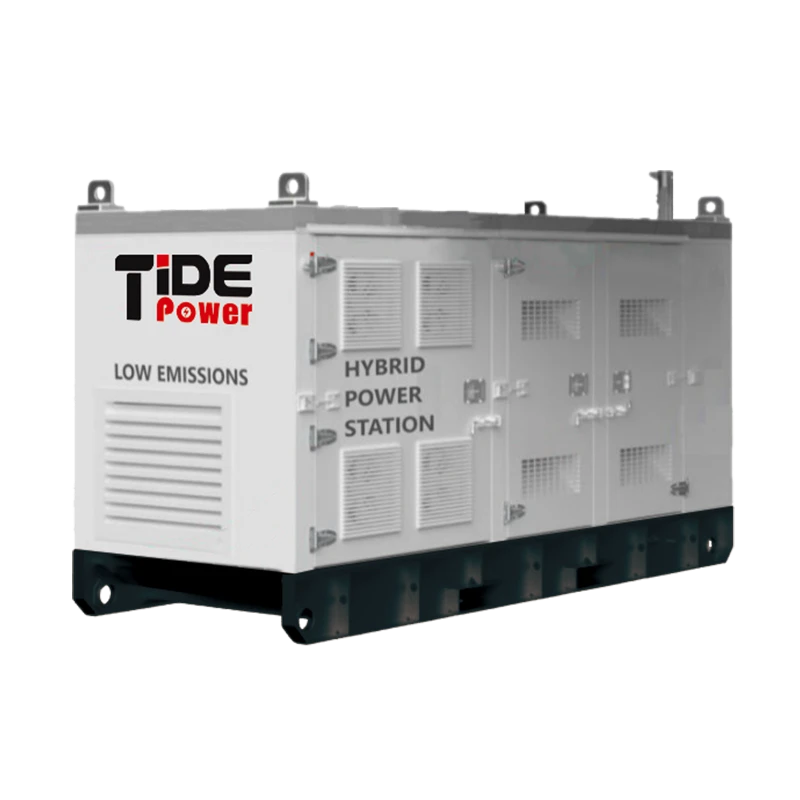
In Tide Power hybrid systems, the TP-25P through TP-250P units integrate these functions into a single platform. The energy management system handles dispatch optimisation, islanding logic, and generator start sequencing without requiring separate devices from multiple vendors. This integration eliminates the communication latency that causes transfer failures in systems assembled from disparate components.
The practical result is that a data centre or base station experiences no interruption during a grid fault. Servers continue operating, communication links remain active, and the site operator may not even know an outage occurred until reviewing the event log.
Predictive Dispatch Reduces Fuel Consumption and Wear
Fuel cost and generator maintenance represent the largest operating expenses for off-grid and hybrid sites. A smart microgrid reduces both by running the generator only when it delivers the most value.
The optimisation algorithm considers multiple inputs: current battery state of charge, forecasted solar irradiance, expected load profile, generator fuel consumption curves, and battery cycle cost. It then calculates the lowest-cost dispatch schedule for the next several hours and updates continuously as conditions change.
In practice, this means the generator runs at higher load factors for shorter periods rather than idling at partial load for extended stretches. Diesel engines operate most efficiently between 50% and 80% of rated capacity. Below 30%, fuel consumption per kilowatt-hour increases sharply, and incomplete combustion causes carbon buildup that accelerates wear.
A site I reviewed in a mining support application reduced generator runtime by 38% after upgrading from threshold-based control to predictive dispatch. The generator still produced roughly the same total energy, but it did so in fewer, more efficient cycles. Annual fuel savings exceeded the cost of the control system upgrade within eighteen months.
Condition-Based Maintenance Prevents Unplanned Downtime
Calendar-based maintenance schedules assume average operating conditions. A generator that runs four hours daily in a temperate climate does not accumulate wear at the same rate as one running twelve hours daily in a desert. Treating them identically either wastes money on unnecessary service or risks failure from deferred maintenance.
Smart microgrids track actual operating parameters: runtime hours, start cycles, coolant temperature, oil pressure trends, battery charge-discharge cycles, and inverter thermal history. The system compares these values against manufacturer thresholds and historical baselines to flag components approaching service intervals.
This approach catches problems that calendar schedules miss. A gradual rise in coolant temperature over several weeks may indicate a developing thermostat issue or radiator fouling. Addressed early, the fix is a minor service call. Ignored until failure, it becomes an emergency generator replacement during a critical load period.
For remote sites where technician dispatch costs thousands of dollars per visit, consolidating maintenance tasks based on actual condition rather than arbitrary dates produces significant savings. The smart microgrid controller can generate work orders that group multiple items into a single site visit.
Islanding Capability Protects Against Grid Instability
Grid-connected sites in regions with unreliable utility power face a specific challenge: the grid may not fail completely, but it may operate outside acceptable parameters. Voltage sags, frequency deviations, and harmonic distortion can damage sensitive equipment even when the lights stay on.
A smart microgrid continuously monitors power quality at the point of common coupling. When parameters drift outside programmed limits, the system can island proactively rather than waiting for a complete outage. This protects critical loads from the cumulative damage that poor power quality inflicts on electronics, motors, and control systems.
The decision to island involves tradeoffs. Disconnecting from the grid means relying entirely on local generation and storage until conditions improve. The controller must verify that local resources can sustain the load before initiating the transfer. If battery state of charge is low and solar production is minimal, the system may need to start the generator before islanding rather than after.
These calculations happen automatically and continuously. The site operator sets the power quality thresholds and the controller handles the rest.
Scalability Through Modular Architecture
Energy requirements change over time. A telecom site that starts with a single base station may add equipment as subscriber counts grow. A mining camp that begins with essential services may expand to include processing facilities. A smart microgrid must accommodate these changes without requiring complete system replacement.
Modular architecture addresses this requirement. Battery capacity can be expanded by adding storage modules to the existing system. Solar arrays can be extended by connecting additional strings to available inverter inputs. Generator capacity can be increased by paralleling additional units with the existing set.
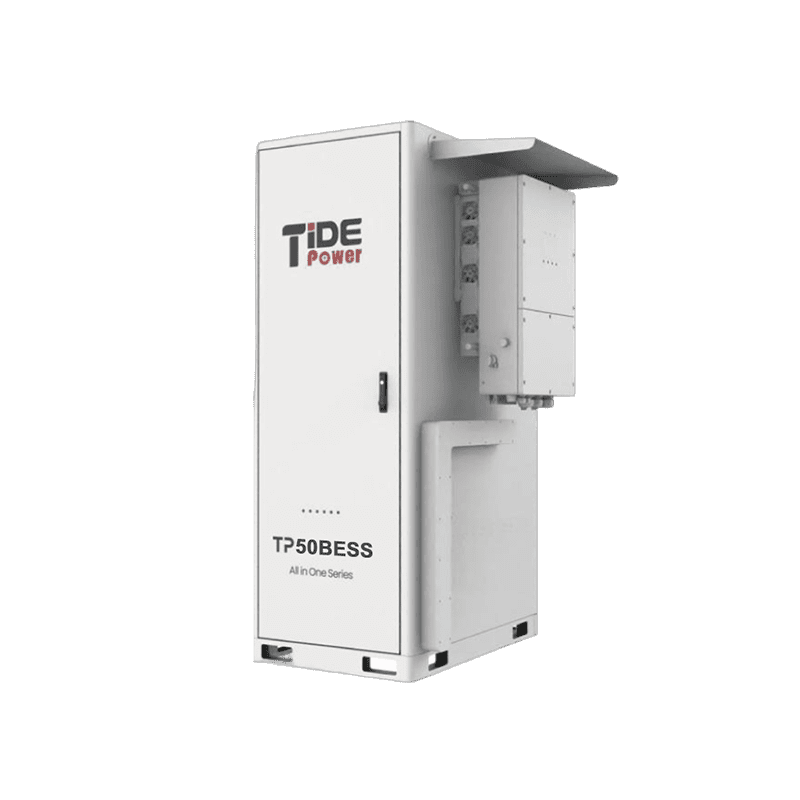
The Tide Power hybrid platform supports configurations from 10 kVA to 250 kVA using standardised building blocks. The TP-50BESS, TP-100BESS, and TP-200BESS storage units share common communication protocols and can be combined as site requirements evolve. This modularity protects the initial investment by ensuring that early-stage equipment remains useful as the system grows.
| System Component | Expansion Method | Typical Lead Time |
|---|---|---|
| Battery storage | Add modules to existing rack | 4–8 weeks |
| Solar generation | Connect additional strings | 6–10 weeks |
| Diesel generation | Parallel additional genset | 8–12 weeks |
| Control system | Software update for new assets | 1–2 weeks |
Remote Monitoring Enables Centralised Operations
Operating multiple distributed sites from a central location requires visibility into each system’s status and the ability to adjust settings remotely. A smart microgrid provides both through integrated telemetry and secure communication links.
The monitoring interface displays real-time data: power flows between sources and loads, battery state of charge, generator status, solar production, and grid availability. Historical data supports trend analysis and performance benchmarking across sites. Alarm management filters critical events from routine notifications to prevent operator fatigue.
Remote control capability allows operators to adjust dispatch parameters, initiate manual generator starts, and modify islanding thresholds without travelling to the site. For organisations managing dozens or hundreds of distributed assets, this centralisation reduces staffing requirements and improves response times.
Security considerations are significant. Remote access creates potential attack vectors that must be addressed through encrypted communications, role-based access controls, and audit logging. A smart microgrid controller should support industry-standard cybersecurity protocols rather than relying on proprietary schemes that may not receive ongoing updates.
Financial Returns Depend on Site-Specific Conditions
The economic case for smart microgrid technology varies with fuel costs, grid reliability, load criticality, and available renewable resources. A site with expensive diesel delivery and abundant solar irradiance will see faster payback than one with cheap grid power and limited renewable potential.
Quantifying the benefits requires site-specific modelling. The analysis should include fuel savings from optimised dispatch, maintenance cost reductions from condition-based scheduling, avoided downtime costs from improved reliability, and any applicable incentives for renewable energy or emissions reduction.
For sites where unplanned downtime carries severe consequences, the reliability benefits alone may justify the investment. A mining operation that loses production during a power outage measures the cost in tonnes of ore not processed. A telecom site that drops coverage loses subscriber trust and may face regulatory penalties. These avoided costs often exceed the direct energy savings.
If your project involves a remote location, critical loads, or unreliable grid supply, it is worth modelling the specific financial case before committing to a system architecture. Share your site parameters and load profile with Tide Power at [email protected] or call +86 591 2806 8999 to receive a preliminary assessment of smart microgrid benefits for your application.
Common Questions About Smart Microgrid Implementation
What distinguishes a smart microgrid from a standard hybrid power system?
The distinction lies in the control intelligence. A standard hybrid system uses fixed rules to dispatch generators, batteries, and renewable sources based on simple thresholds. A smart microgrid employs predictive algorithms that consider weather forecasts, load patterns, equipment condition, and economic factors to optimise dispatch continuously. This intelligence enables millisecond islanding, condition-based maintenance, and fuel consumption reductions that rule-based systems cannot achieve. The hardware may look similar, but the operational outcomes differ substantially.
How long does smart microgrid installation typically take?
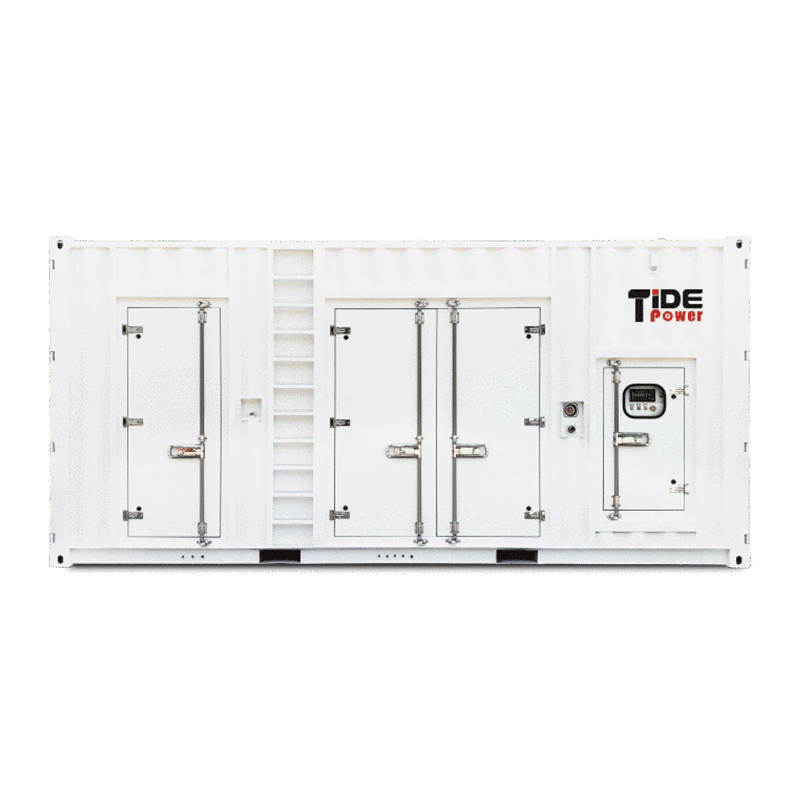
Installation timelines depend on system size, site preparation requirements, and component lead times. A containerised system with pre-integrated components can be operational within 8 to 12 weeks from order confirmation for sites with existing civil infrastructure. Larger custom installations involving multiple generator sets, extensive battery storage, and significant solar arrays may require 16 to 24 weeks. The longest lead time items are typically generators and battery modules, so early ordering reduces overall project duration.
Can existing diesel generators be incorporated into a smart microgrid?
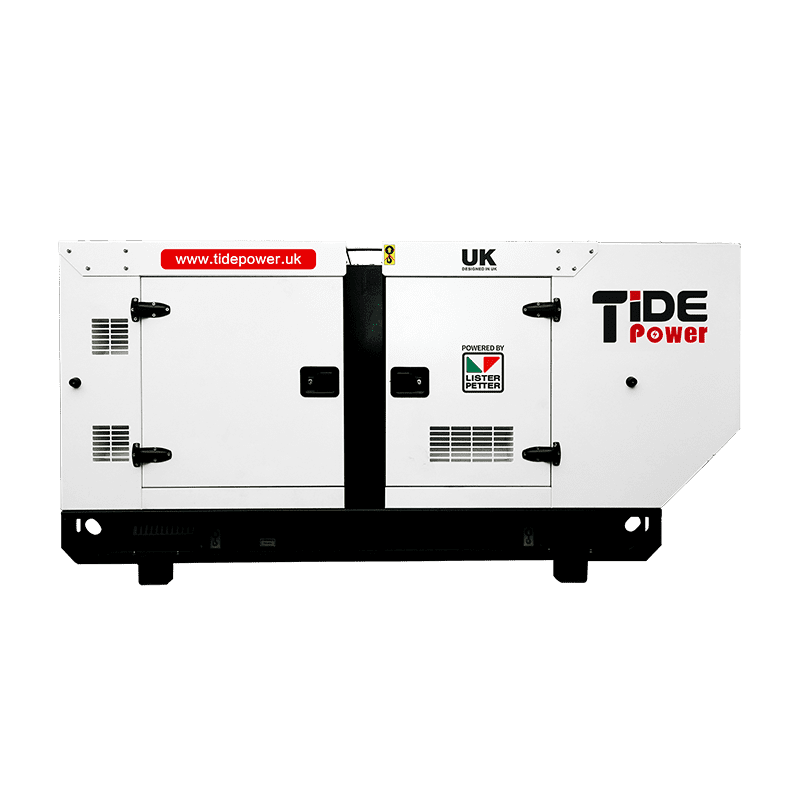
Yes, existing generators can often be integrated if they meet certain requirements. The generator must have an electronic governor capable of accepting external speed references and a compatible communication interface for status monitoring. Older mechanical governors may require retrofit or replacement. The smart microgrid controller needs accurate data on the generator’s capacity, fuel consumption characteristics, and protection settings to include it in the dispatch optimisation. A site survey can determine whether your existing equipment is suitable for integration.
What maintenance does a smart microgrid require beyond standard generator service?
The additional maintenance requirements are modest. Battery systems need periodic inspection of connections, ventilation systems, and cell balancing. Inverters require filter cleaning and firmware updates. The control system itself needs software updates and cybersecurity patches. Most of these tasks can be performed during routine generator service visits. The condition monitoring capability of the smart microgrid actually reduces total maintenance burden by identifying issues before they cause failures and by consolidating service tasks based on actual equipment condition rather than arbitrary schedules.
How does smart microgrid technology handle rapid load changes?
Rapid load changes are managed through coordinated response from multiple assets. Battery inverters provide immediate power injection or absorption within milliseconds. Generators ramp up or down over several seconds to take over sustained load changes. The control system continuously monitors load and adjusts the dispatch of each asset to maintain voltage and frequency within acceptable limits. For sites with large motor loads or other sources of sudden demand spikes, the system can be configured with appropriate spinning reserve margins to ensure stability during transients. If your application involves significant load variability, discuss the specific load profile with our engineering team to confirm the system can accommodate your requirements.
If you’re interested, check out these related articles:
Boosting Agricultural Efficiency with Tide Power Dewatering Pump
Tide Power Announces Global Exhibition Schedule for Second Half of 2025
Tide Power’s Innovative Products and Solutions at Big5 Construct Saudi
Beyond Generation: Tide Power’s Integrated Energy Solutions & Tailored Service