
 EN
EN ZH
ZH FR
FR ES
ES AR
ARSilence has become a site requirement in urban construction, hospital adjacent work, film production, and residential maintenance. A battery light tower for silent operations removes both engine noise and exhaust from the workspace, which changes how site planners approach night shifts. The tradeoff is not light quality; it is runtime. In energy programs I have worked on, lighting towers were often chosen on lumen output alone, and the real friction appeared later as charging windows, spare battery modules, and overnight runtime conflicts. This article works through that mismatch so procurement teams can specify the right battery light tower without inheriting a logistics problem.
Battery Light Tower Advantages in Noise Sensitive Operations
Operators choose a battery light tower because it solves a compliance and comfort issue at the same time. Diesel and engine driven light towers emit continuous low frequency noise that carries across open ground and reflects inside enclosed areas. A battery light tower has no combustion noise at the mast head and no exhaust stream in the work zone. That does not mean the site stays perfectly quiet. Cooling fans, inverters, and standby charging systems still produce a low hum. The difference is the absence of the dominant noise source.
In procurement terms, the first question is not how bright the light head is. The first question is what operating window the site needs. Many teams get this sequence wrong. They start with total wattage or lumens and then try to work backward into battery capacity. The correct sequence is to define the required hours of operation, add the accessory load such as onboard outlets or telematics, then calculate battery capacity with a practical reserve beyond the nameplate runtime. A modest buffer matters because cold weather reduces lithium battery usable capacity at night, and operators rarely recharge at the exact published rate.
For noise sensitive contracts, the bidding advantage is also direct. A battery light tower can often be placed closer to residential boundaries without drawing complaints, and that placement flexibility can reduce the number of towers required on an irregular site. The strongest argument I make to clients is not environmental. It is contractual. A quieter site gives the general contractor fewer interruptions and fewer noise variance meetings.
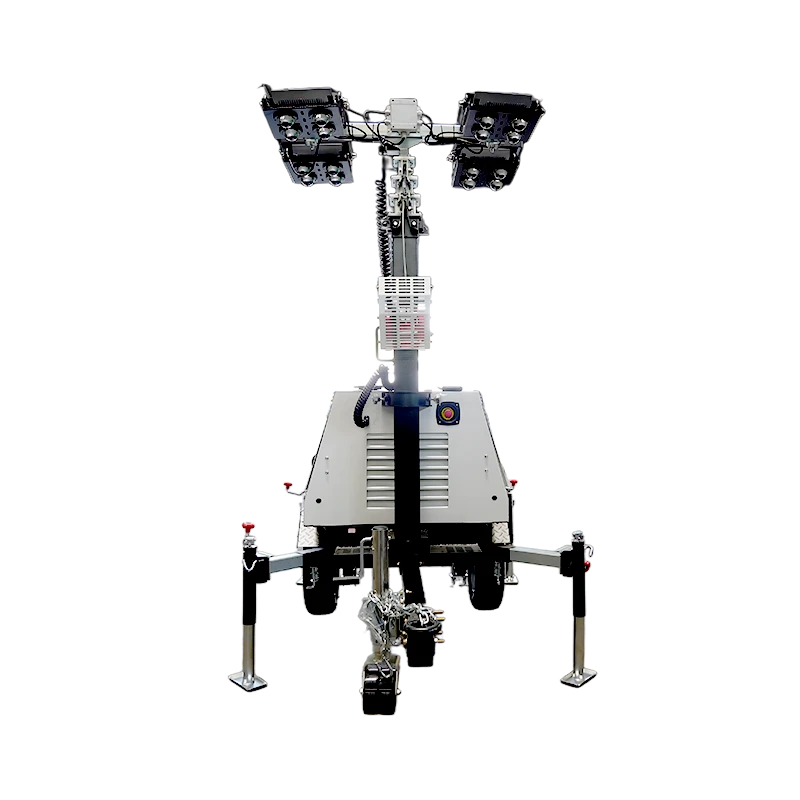
Runtime and Charging Logistics That Determine Battery Light Tower Feasibility
Battery light towers shift the planning burden from fuel storage to electrical logistics. A diesel unit can run as long as someone refuels it. A battery unit can run as long as someone charged it, and that difference catches projects that treat the equipment as a direct one for one replacement.
The first planning checkpoint is the shift duration. Many battery light towers are specified to cover one night shift, but the real load depends on the dimming schedule, the number of LEDs in use, and whether the tower also powers tools or site cameras. If the site uses a flat full brightness setting from dusk to dawn, a battery that looks adequate on a brochure will fall short in winter months. I have reviewed site plans where the same tower model worked on paper and then missed the final stretch because the telematics and security camera load had not been counted.
Charging infrastructure creates the second checkpoint. A battery light tower needs either a grid connection, a generator input, or a solar array with enough daylight reserve. Urban sites usually have access to grid power during the day. Remote sites often do not. In that case, the operator has to bring a generator to the site just to recharge the battery tower, which removes part of the emission benefit. This is not a reason to avoid battery towers. It is a reason to map the charging source before tendering.
The third checkpoint is spare capacity. Battery modules can be swapped in some tower designs, and in others they are fixed. Fixed modules are simpler but less flexible for back to back night shifts. Swappable modules let a project keep one module on charge while another is in service. If the project runs consecutive nights, that difference determines whether you need one tower or two.
If your site runs consecutive shifts or has only a short daytime charging window, confirm the minimum temperature runtime and the recharge time to the operating reserve before you lock the order. Send your shift schedule and site power details to [email protected] and we will check the configuration.
Site Conditions Where Battery Light Towers Fit Best
Battery light towers are not a universal replacement for diesel. They are strongest where silence has a direct contract value or where exhaust is restricted. The clearest fit is an urban project with daytime grid power and overnight noise limits. Battery units also work well in film and event work, where generators are kept outside the perimeter and lighting needs stable color temperature without generator flicker.
Hospital and school adjacent construction is another strong fit. Patients and students do not respond to average noise curves; they respond to the repeated start stop cycle of a diesel tower. A battery tower removes the most intrusive part of that cycle. I have seen a single battery tower replace two diesel units in a small courtyard simply because the light heads could be placed independently without the gas and noise plume.
Underground or enclosed work has a separate driver: air quality. A battery light tower does not compete with ventilation for oxygen and does not add carbon monoxide or nitrogen dioxide inside a parking structure or tunnel. That can reduce the ventilation burden during concrete finishing, cable pulling, and inspection work.
Open rural sites without reliable charging remain the hardest case. If the site has no grid, a solar light tower may be more practical than a battery tower without a solar array, and a solar hydraulic lighting tower may cover longer operations. Tide Power’s lighting tower range includes manual mast, hydraulic, horizontal mast, solar lighting tower, and solar hydraulic lighting tower configurations, so the selection is not limited to diesel or battery storage alone. The right answer follows the charging source and the shift length, not the product label.
Selecting a Battery Light Tower for Continuous Silent Work
Selecting a battery light tower should start with four operating numbers: required lux or coverage area, nighttime run hours, minimum temperature, and daily recharge hours. These numbers are often missing from purchase requests because buyers copy previous diesel tower specifications. That habit creates two problems. It locks the project into a fuel based way of thinking, and it hides the battery capacity decision inside a price comparison where it does not belong.
| Lighting Tower Configuration | Noise Profile | Typical Operating Pattern | Strongest Fit |
|---|---|---|---|
| Battery light tower | Very low, no engine idle | Battery limited, needs a daytime recharge window | Urban, hospital, film, residential and enclosed sites |
| Solar lighting tower | No engine noise | Solar dependent with battery reserve | Remote sites with strong daylight exposure |
| Diesel lighting tower | Engine noise present | Long shift with refueling stops | Mining, large earthworks, emergency response |
| Solar hydraulic lighting tower | Low when in solar mode | Extended operation with hydraulic mast positioning | Long projects with mixed lighting and equipment needs |
After the first screen, go through three checks. Check the light head load with the dimming schedule, not just the maximum output. Confirm the charging source and connector standard available at the site. Then verify the low temperature performance if the project runs through winter nights. Many proposals show cell capacity at room temperature test conditions, which may not match the site.
A battery light tower purchase goes wrong when the charging schedule is treated as an afterthought. It goes well when the configuration is built around the shift, the site power source, and the cold weather margin. If your program involves night work, noise limits, or back to back shifts, email your site hours and charging power details to [email protected] or call +86 591 2806 8999. We can confirm the right light tower configuration and battery reserve before you commit to a purchase order.
Common Questions About Battery Light Towers
How long can a battery light tower run on one charge?
Most standard configurations are sized for one night shift, but the true runtime depends on the LED load, dimming settings, and any accessory draw. A tower operating at reduced light output runs far longer than the same tower at full brightness. Before you order, request the runtime curve at the loads and temperatures your site will actually see, not a single best case figure. That curve will usually reveal the difference between a workable plan and a last stretch gap.
Are battery light towers bright enough for construction work?
The common assumption is that battery light towers are only suitable for small areas or backup lighting. Modern LED battery towers can deliver useful working light for lane closures, excavation edges, assembly areas, and material laydown zones. The brightness is rarely the problem. The limiting factor is how long the tower can sustain that brightness before the battery drops into a lower output mode. If the task requires high lux across a wide area, confirm both the light output and the sustained runtime.
Do battery light towers work in cold weather?
It depends on the battery chemistry and the charging setup. Lithium iron phosphate packs lose usable capacity as temperatures fall below freezing, so a tower that runs a full night shift in mild weather may run significantly less on a cold night. Some designs include heated battery compartments and low temperature charge cutoffs. If your project runs through winter, specify the minimum nighttime temperature and ask the supplier to confirm capacity at that point, not at the standard test condition. Do not leave this to the installation week.
What is the difference between a battery light tower and a solar light tower?
In projects I have reviewed, the real difference is where energy comes from during the shift. A battery light tower stores energy before operation and runs from that reserve. A solar light tower collects energy during daylight and stores it for nighttime use. Solar works best in long sunshine hours with a consistent site location. Battery storage works best when a grid or generator charging source already exists. The two overlap when the site has weak charging access but strong solar exposure. Send your site location, run hours, and available charging source to [email protected], and we can advise which low emission tower will hold up across the full shift.
If you’re interested, check out these related articles:
Tide Power Set to Make Waves at 2024 Middle East Energy Exhibition (MEE)
Tide Power shines at the 136th Canton Fair
Tide Power 2025 Global Sales Annual Meeting & Team Activities Conclude Successfully
The Asian market will make gas power generation one of the fastest growing regions
Tide Power Featured in China Daily: Leading Innovation in Power Solutions
