 EN
EN ZH
ZH FR
FR ES
ES AR
ARSelecting the right light tower is not a spec sheet exercise. It is a site logistics decision that determines whether your crew works safely through the night or loses hours to darkness and avoidable interruptions. Over a decade supporting energy projects across multiple continents has shown me that the most reliable deployments are those aligned with real‑world conditions—terrain, crew size, refueling access, and long‑term support—not just the maximum lumens a unit can produce. This guide walks through five selection factors that matter more than brochure figures.
Define Your Site’s Illumination Requirements
Lighting needs differ sharply by application, and matching light tower output to the actual task prevents both under‑performance and wasted fuel. Construction sites typically require 10–20 lux across active work areas, while detailed inspection or maintenance tasks may need 30–50 lux. Mining operations often demand higher, wider coverage due to equipment size, and event lighting prioritises uniform illumination without shadowing.
Over‑specifying lumens raises fuel consumption and upfront cost without a productivity gain. The table below offers a starting reference point; always confirm with your site layout and any regulatory safety standards.
| Application | Recommended Lux | Typical Mast Height |
|---|---|---|
| General construction | 10–20 lux | 6–9 m |
| Earthmoving / haul roads | 20–50 lux | 8–12 m |
| Inspection & maintenance | 50+ lux | 6–12 m |
| Outdoor events | 10–30 lux | 6–12 m |
Use this framework to set a target illumination area and duration, then select a light tower that can sustain it for the full shift.
Match the Mast Type to Your Terrain
How you raise the lights matters as much as how bright they are. The mast mechanism directly affects setup time, crew safety, and whether the unit actually gets used each shift.
Manual mast systems are straightforward and cost‑effective on flat, firm ground where a two‑person crew can deploy them in minutes. If your site has slopes, soft soil, or frequent relocation, a hydraulic mast cuts setup time dramatically and reduces physical strain. Horizontal mast configurations suit low‑clearance environments such as underpasses, tunnel portals, or indoor staging areas where vertical extension is impossible. Tide Power’s lighting tower portfolio includes manual, hydraulic, and horizontal mast options to cover these distinct site profiles.
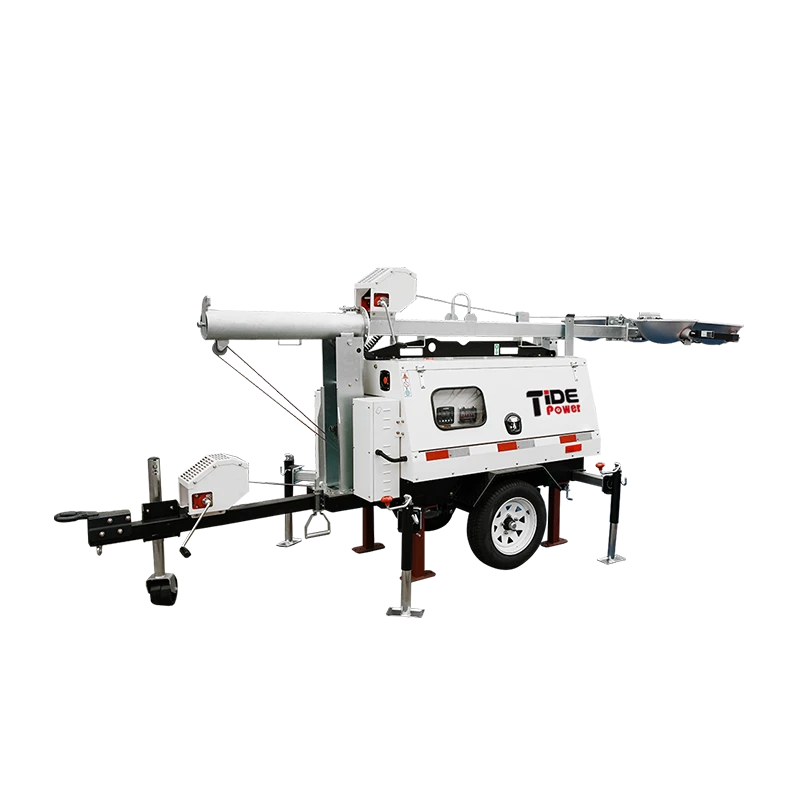
Choosing the wrong mast type for your terrain introduces nightly friction. On one remote pipeline project I advised, a manual mast tower on uneven ground took nearly 20 extra minutes to stabilise each evening—across a six‑month schedule, that cumulative delay erased over 60 hours of productive work time. A hydraulic mast would have eliminated most of that loss.
If your site has uneven terrain or limited crew, selecting the right mast mechanism can save hours of setup each night. Share your terrain profile with us at [email protected] to confirm which mast type fits your operations.
Choose the Right Power Source for Your Light Tower
Runtime and refueling logistics often become the hidden differentiator between a smooth project and a logistics headache. Diesel light towers with built‑in fuel tanks can typically run 60–100 hours before refueling, making them practical for continuous operations where staff can top up during shift handovers. The trade‑off is noise, emissions, and the need to position refueling access close to the unit.
Solar‑powered light towers eliminate fuel runs entirely and allow silent, emission‑free operation—a strong advantage on noise‑sensitive urban job sites or environmentally monitored areas. Modern battery‑backed solar towers deliver reliable 8–12 hours of illumination per charge, with daytime recharging via integrated panels. Tide Power’s Mobile Solar Lighting Tower offers this zero‑fuel profile for projects where diesel logistics are impractical.
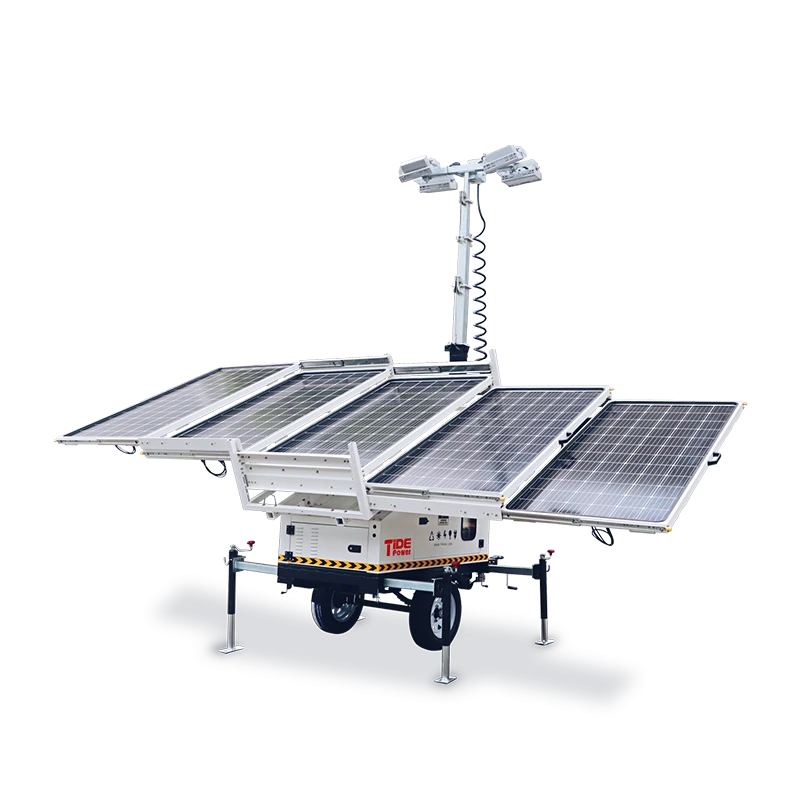
The table below summarises the practical trade‑offs.
| Factor | Diesel Light Tower | Solar Light Tower |
|---|---|---|
| Runtime (per refuel/charge) | 60–100 hours | 8–12 hours |
| Refueling frequency | Weekly or by shift | Self‑recharging (daylight) |
| Noise | Moderate to high | Near silent |
| Site logistics burden | Requires fuel supply chain | Minimal after deployment |
| Maximum sustained intensity | High | Medium to high (LED) |
For large‑scale mining or 24/7 high‑lumen demand, diesel remains the workhorse. For smaller, stationary sites with good sunlight, solar drastically cuts running costs and transport complexity. The decision should be made against your actual shift patterns and fuel access, not a generic preference.
Plan Transport and Setup Around Site Conditions
Beyond mast and power, site‑level factors like ground access, weather, and available towing equipment determine whether a light tower gets deployed efficiently or becomes a burden. Trailer‑mounted units tow easily behind standard vehicles on prepared roads; skid‑base configurations suit spaces where towing is impractical and a crane or forklift handles placement. If your project moves frequently between locations, prioritise a compact trailer design with quick‑release stabilisers.
Wind stability is frequently overlooked. A tower rated for 20‑m/s gusts may be fine on a sheltered construction pad but inadequate on an exposed mine bench. I recall a mining project in West Africa that lost three nights of work because a low‑cost tower collapsed under unexpected winds—underscoring that wind rating and base mass deserve as much scrutiny as lumen output. Confirm the manufacturer’s certified wind resistance for your worst‑case season, and check the IP rating if moisture or dust is a concern.
Remote sites with limited fuel access add another layer: every refueling trip consumes time and vehicle resources. On one long‑duration deployment I observed, diesel logistics added roughly 15% to the tower’s operational overhead over a year. In cases like that, a solar‑hybrid tower or a unit with an oversized tank can meaningfully reduce cost and personnel exposure.
Evaluate Manufacturer Support for Long‑Term Light Tower Projects
A light tower is a mobile asset that will need spare parts, technical advice, and possibly local compliance documentation across its service life. When projects span multiple countries or operate far from capital cities, the manufacturer’s support infrastructure becomes as critical as the tower itself.
Tide Power’s global network, established over more than 15 years, provides direct access to technical engineers, regional spare parts inventory, and compliance‑ready documentation for international projects. Instead of waiting weeks for a replacement hydraulic hose or controller, project teams can receive rapid dispatch, minimising onsite downtime. For tenders that require CE, ISO, or other certifications, a manufacturer that can supply those documents upfront keeps procurement timelines on track.
Before finalising your selection, ask not only “does this unit meet my luminance target?” but also “can I get a replacement mast component in my country within two days?” That answer often separates a cost‑effective deployment from a stranded asset.
Finding a light tower that matches your site’s ground conditions, staffing realities, and long‑term logistics is the key to uninterrupted nighttime operations. Tide Power’s lighting tower range offers multiple mast configurations, solar options, and global after‑sales support to fit your specific deployment. Share your project details with our team—reach us at [email protected] or call +86 591 2806 8999—to get a configuration recommendation built around your site, not a brochure.
Common Questions About Light Tower Deployment
How long can a light tower run without refueling?
Diesel towers with integrated fuel tanks typically deliver 60–100 hours of continuous operation before refueling, depending on engine load and tank size. Solar‑battery towers run 8–12 hours per full charge, recharging during daylight. For multi‑shift projects, plan refueling or battery swap intervals around crew breaks to avoid interruptions.
Is a solar light tower bright enough for a construction site?
Modern LED solar towers can provide adequate illumination for medium‑area construction (10–20 lux). On large‑scale earthmoving or high‑precision inspection tasks where sustained high lumen output is essential, diesel still provides more headroom. The decision should be guided by your area, required lux, and whether daytime sunlight is reliable.
What maintenance is required between projects?
Pre‑deployment checks should include mast hydraulics, engine oil and filter elements, lighting ballast, and solar panel cleaning if applicable. A worn hydraulic hose or corroded mast section left unaddressed can fail on the next job—negating the savings of skipping a service. Tide Power recommends a full system review before every redeployment.
Can I use a light tower in extreme weather?
Most commercial towers are built for outdoor use with defined wind ratings; confirm the certified wind speed for your worst‑case season. In coastal or high‑humidity environments, ask about corrosion‑resistant coatings and sealed electrical enclosures. If your site faces repeated extreme conditions, verify the specific IP protection level with the manufacturer before committing—contact us to confirm the right specification for your environment.
If you’re interested, check out these related articles:
“Inciting?sales?in?leading?the?changing?trend”2022?Tide?Power?Global?Sales?Conference was successfully held
Light Up the Future with Tide Power Lighting Towers
Tide Power’s gas gensets for CHP