 EN
 ZH
 FR
 ES
 AR
A generator’s power rating is not a verdict on build quality. It is a declaration: this much electrical power, at these site conditions, over this load profile, for this many hours. That is why the choice between prime power vs standby power is a question about duty rather than about which machine is better. Two sets with the same number on the nameplate can carry different declared outputs, because one is warranted for continuous variable load and the other for limited emergency running. Without a load profile, the comparison collapses into price, and the thermal margin nobody paid for arrives later as a service bill.
What a Generator Power Rating Actually Declares
A generating set rating answers four questions in one line: how much power, at what power factor, under which ambient conditions, and for how long. Standards such as ISO 8528-1 exist to keep those answers comparable between suppliers by defining rating categories for reciprocating engine driven generating sets [1]. The standard supplies the vocabulary; the numbers inside each category come from the manufacturer.
Power factor is the first place comparisons go wrong. Alternators are usually rated in kVA at a stated power factor, commonly 0.8, so a 500 kVA set corresponds to 400 kW at that factor. A buyer who compares only kVA is comparing apparent power while the load draws real power, and a set quoted at a different power factor can look identical on the nameplate while delivering fewer kilowatts.
The second place is the time basis. A rating that permits unlimited hours and a rating that permits a few hundred hours per year can be printed on the same enclosure, in the same font, for machines that differ in alternator frame, cooling capacity and price. Neither label is dishonest. They answer different questions, and the buyer has to know which question the site is asking.
Ask for the declaration in writing before comparing prices: rated kW and kVA, power factor, rating category, reference ambient and altitude, overload allowance, and any annual hour limit. A quotation that gives only a kVA figure is not yet a specification.
Prime Power vs Standby Power and the Ratings in Between
Four categories cover most procurement decisions, and they describe duty cycles rather than different machines.
Continuous power (COP) describes a set that runs at a steady load for unlimited hours. The load does not swing and no overload is expected. This is the category for base load generation, including combined heat and power plants where the engine runs against a thermal demand as well as an electrical one.
Prime power (PRP) describes a set that runs for unlimited hours against a variable load, with an average that stays below the declared rating and an overload allowance the manufacturer states. This is the working category where the grid is absent, weak or unreliable, and the generator is the main source rather than a fallback.
Industrial capacity in regions where the grid has not kept pace depends on generation that can run as a base source rather than a rescue service. <Powering Africa: The Role of Tide Power in the Local Industrialization Process> covers how on-site power generation connects to industrial development across the region.
Limited-time power (LTP) attaches a declared ceiling to annual running hours, which suits known peaks such as seasonal demand or a planned outage window. Emergency standby power (ESP) covers short blocks of running at a declared load, with no overload allowance, for a limited number of hours per year, and it assumes a reliable grid carries the site most of the time.
| Rating | Load profile | Time basis | Overload allowance | Choose when | Do not choose when |
|---|---|---|---|---|---|
| Continuous (COP) | Steady, non-varying | Unlimited hours | None declared | Base load, CHP, continuous process | The load swings widely or the set is only a fallback |
| Prime (PRP) | Variable, with an average below the rating | Unlimited hours | Declared by the manufacturer | The set is the main source and the grid is absent or unreliable | The site rides through most weeks on grid power |
| Limited-time (LTP) | Variable, peaking | Declared cap on annual hours | Not beyond what is declared | Known seasonal peaks or scheduled outage windows | Duty creeps past the declared annual hours |
| Emergency standby (ESP) | Short blocks, then off | Limited annual hours | None | A reliable grid plus life safety or business continuity needs | The site runs on the set for hours every week |
The category names come from the standard, but the operating ceilings attached to them are the manufacturer’s declaration. One supplier’s prime rating may assume a particular overload allowance and annual hour limit while another’s assumes something different, and both can legitimately print the same label. That is how two quotations end up looking comparable while behaving very differently in year three.
Why the Same Generator Can Carry Four Different Numbers
The engine and alternator do not change when a supplier prints PRP instead of ESP. What changes is the thermal budget behind the number.
At sustained high load, winding temperature, bearing temperature, coolant and oil temperature, exhaust gas temperature and turbocharger speed all sit higher. The declaration states how much of that heat the design is expected to manage, and for how long. A standby declaration assumes the set spends most of its life at ambient temperature and runs hot occasionally. A prime declaration assumes it runs hot as a normal condition, which is a much harder promise to keep.
Delivering that promise takes hardware. To declare a higher continuous output from the same package, the supplier specifies a larger alternator frame, more cooling surface, or an engine with more margin. This is why the prime-rated version of a given kilowatt figure is generally the more expensive machine. It is also why a selling price that looks unusually low for a stated prime rating deserves a second look at the alternator model and cooling package.
Warranty and service intervals follow the same logic. An engine manufacturer’s maintenance schedule is written against a duty assumption, so putting a standby-rated set to work as a daily source moves it outside that assumption. The cost appears as shortened oil intervals, faster wear and, in the worst case, a warranty discussion nobody wants during an outage.
Fuel planning changes too. Continuous duty affects storage capacity, refuelling intervals and fuel quality control, not only consumption.
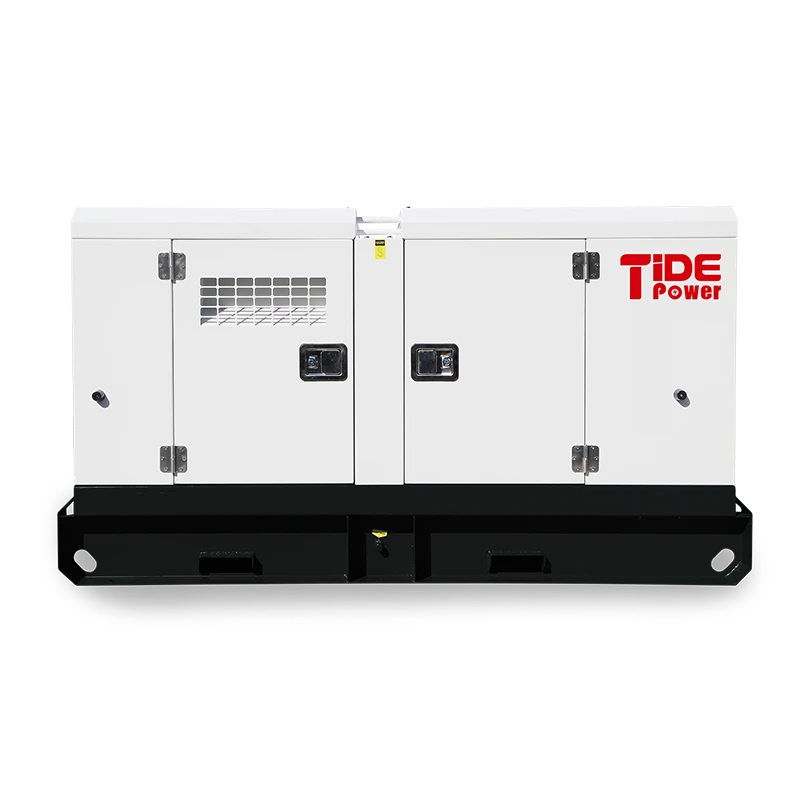
Tide Power lists its P Series silent sets across an 8 kVA to 340 kVA range for both standby and continuous power use, which illustrates the point: the model range does not decide the rating basis. The application does.
Matching the Rating to How the Generator Actually Runs
The rating basis should come from the load profile the site will actually produce, not from the size of the building or the number used on a previous project.
When the grid is the main source
An emergency standby basis fits a site with dependable utility supply and a set that runs during outages, test exercises and short maintenance windows. The engineering checks are transfer time, load acceptance for the largest step the automatic transfer switch will connect, and fuel for the realistic outage duration rather than the average one. The common failure is drift: after a storm or a utility fault, a standby set becomes a multi-day prime source, running outside its declaration at exactly the moment nobody can service it.
Backup duty is easy to declare and harder to sustain, because a standby set only proves itself on the day the grid fails and the load steps arrive together. <Case Study: Tide Power Generators Deliver Reliable Backup Power Across Latin America> covers generator deployment for backup power in that region.
When the grid cannot be relied on
A prime basis fits a site where the generator accumulates thousands of hours and the utility is a supplement at best. Here the average load matters more than the peak, because the average is what the thermal design sees day after day. Fuel logistics become part of the rating decision: tank capacity, delivery intervals, and whether fuel quality can be kept stable across a long wet season. Maintenance should be scheduled by running hours rather than by calendar, since a site at 6,000 hours per year reaches service intervals five or six times faster than a standby installation.
The check is straightforward. Record weekly average kW, the longest continuous high-load block, and whether any 24-hour period pushes the average above the declared ceiling.
When the set carries base load
A continuous basis fits base load generation, including combined heat and power, biogas and landfill gas projects. A steady load lets the engine run near its most efficient point, which improves both fuel consumption and emissions behaviour. Gas quality belongs to the rating question rather than to commissioning: methane content and methane number affect knock limit and available output, so a biogas project quoted at natural gas output will disappoint its owners once the digester stabilises.
Combined heat and power puts the rating question directly against the thermal design, since the engine has to deliver electrical output and useful heat hour after hour. <Tide Power’s gas gensets for CHP> covers gas generating sets applied to combined heat and power.
When a battery shares the work
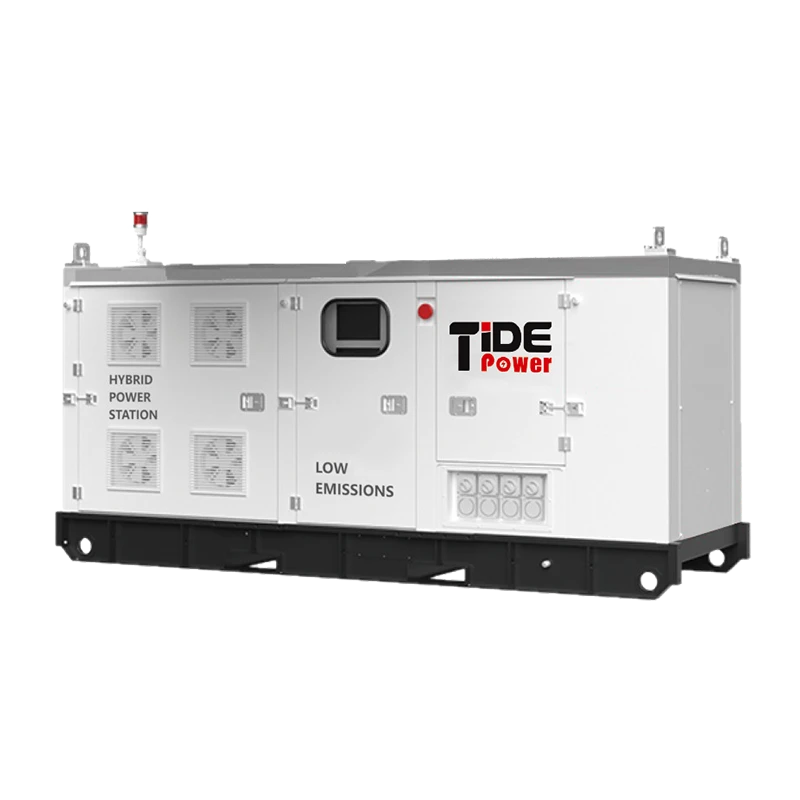
A hybrid arrangement changes which rating matters. The battery absorbs peaks and transients while the generator runs in fewer, higher-load blocks, so the set may accumulate fewer running hours at a higher load factor than a conventional prime installation. That suits a prime declaration better than a large standby set idling at light load, which on a diesel engine leads to incomplete combustion, cylinder glazing and wet stacking. The alternatives are a smaller set, a load bank, or accepting the battery as the better tool for the light-load periods.
Whichever profile applies, the measurement comes first: peak kW, average kW, the largest motor starting step, the number of starts per day, and the longest run above 80% load.
Where the Nameplate Number Shrinks and Why
The declared output is tied to reference conditions, and most sites are not at those conditions.
Air density is the largest single factor. As ambient temperature and altitude rise, each intake stroke draws less oxygen, so the engine’s fuel delivery is limited to keep exhaust temperature, smoke and thermal load within design limits. Engine manufacturers publish derating curves for exactly this reason, and the curve rather than the catalogue headline determines what the set can deliver on a hot afternoon at 1,500 m.
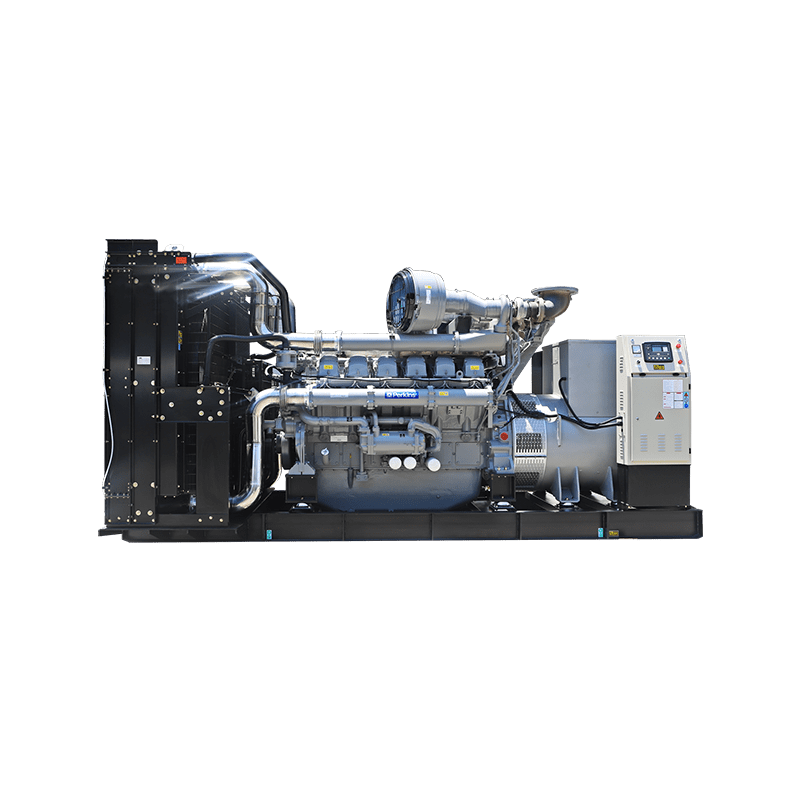
Charge-air cooling performance, humidity and radiator cleanliness all shift the same balance. So does the enclosure. An acoustic canopy adds airflow resistance, which means a silenced set can carry a lower site rating than the same engine on an open frame, even though the nameplate is identical.
The alternator side has its own limits. Insulation class and permitted temperature rise define how much current the windings can carry continuously, and non-linear loads from variable frequency drives, rectifiers and UPS systems add harmonic heating on top of the fundamental current. A site with significant harmonic content may need a larger alternator frame or a declared derating, and voltage distortion limits should be agreed before the set is ordered rather than after the first nuisance trip.
Motor starting is the other routine surprise. A direct-on-line motor draws several times its running current while accelerating, so a single large step can demand more from the alternator than the steady load ever will. Starting method, step sequencing and the alternator’s short-circuit characteristics decide whether the set accepts that step without stalling the process.
Fuel quality completes the list. Gas composition varies by source and season, and diesel cold flow behaviour matters in winter. A rating declared on pipeline-quality gas is not a rating for a digester with fluctuating methane content.
The executable check is to request a site-specific derating calculation, from the declaration’s reference conditions to the site’s maximum ambient, altitude, fuel specification and load type, and to confirm whether the quoted figure already includes it.
What to Request So Two Ratings Are Comparable
Comparability is engineered into a specification, not discovered after the quotations arrive. Fix the basis first: the same rating category, the same reference conditions, the same power factor, the same annual hour assumption and the same fuel specification. Then ask each supplier to apply the site derating to that basis and state the result.
| Document | What it establishes | What it does not establish |
|---|---|---|
| Nameplate or rating label | Which category the manufacturer declares, at which conditions | Your site’s capability, or that the machine was tested at that output |
| Datasheet derating curve | How output falls away from reference temperature and altitude | A guarantee at your site if humidity, fuel or harmonics differ |
| Factory test report | Performance of that unit at the stated test load and conditions | Sustained behaviour at other loads, or with a distorted load profile |
| Fuel consumption curve | Consumption at the stated load points | Annual fuel use without your own duty cycle |
| Warranty statement | The duty basis the manufacturer will stand behind | That the set will reach that age in your application |
| Emissions certificate | The engine family and category tested | That your operating hours are permitted under that category |
These are supplier declarations and test records, not independent verification of site performance. A site acceptance test or a load bank run is a separate step, and on a critical installation it belongs in the purchase scope rather than in the after-sales conversation.
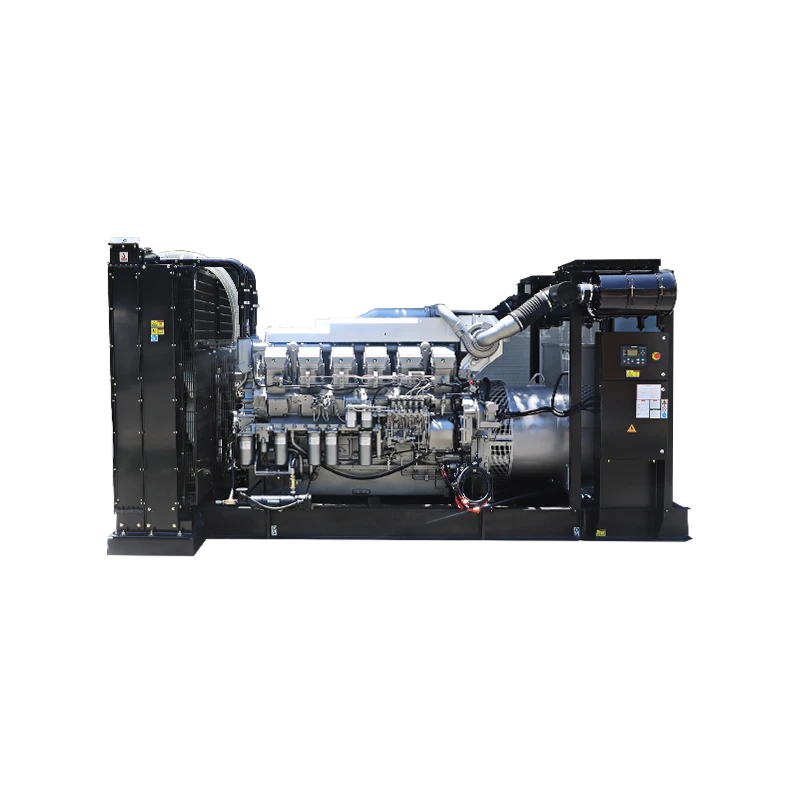
Send the Load Profile Before You Compare Ratings
The fastest way to settle a rating question is to describe the duty rather than the machine. Send the application and whether the grid is present and dependable, the measured peak and average load in kW, the largest motor starting load and its starting method, site altitude and maximum ambient temperature, fuel type and expected quality, required running hours per year and the longest continuous run, the rating basis you intend to specify, voltage, frequency and power factor, the applicable emissions category and permitted hours, and any noise limit with its measurement distance. With those fields, a rating basis can be confirmed against the duty instead of assumed from a kVA figure.
Michael Chen, Tide Power Technology Co., Ltd.
Email: [email protected]
Tel: +86 591 2806 8999
FAQ
Can a standby-rated generator be used for prime power?
Mechanically it will run, and many sites do exactly that during long outages. The question is what the declaration supports. A standby rating assumes limited hours and no overload, with warranty, service intervals and emissions category built around that assumption. Running the set as a daily source puts it outside those terms, raises steady-state temperatures, and shortens the interval between overhauls. If the site needs a main source, specify a prime or continuous rating and size the set to the average load rather than the peak. If an existing standby set must cover an extended outage, keep the load below the standby rating and shorten maintenance intervals accordingly.
Is continuous power the same as prime power?
No. Continuous power assumes a steady load for unlimited hours with no overload allowance. Prime power assumes a variable load for unlimited hours with a declared overload allowance and an average below the rating. The practical difference appears in load swings, because a set on continuous duty should not be asked to absorb motor starting steps that a prime-rated set is declared to handle. Choosing between them comes down to whether the load is flat or moving, and how often it moves.
How much overload does a prime power rating allow?
Only as much as that manufacturer declares. Overload allowances are not uniform across the industry, and a figure remembered from one datasheet should not be applied to another supplier’s set. Ask for the allowance in writing: the percentage, the duration, and how often it may recur within a defined period. If the site’s peak exceeds the declared allowance, the correct answer is a larger set or active load management, not a longer conversation with the circuit breaker.
Why does a generator burn more fuel per kWh at low load?
Specific fuel consumption is usually quoted near the engine’s efficient band, and it rises as load falls, because fixed losses such as cooling, lubrication and parasitic loads are spread over fewer kilowatt hours. A large set running at light load therefore consumes more fuel per unit delivered than a smaller set running near its rating. On variable sites the fixes are to size to the average load, share load between units, or use a battery to lift the generator’s operating point into a healthier band.
Does a higher prime rating mean a better generator?
No. A rating is a declaration about duty, not a grade of quality. A 400 kW prime-rated set and a 400 kW standby-rated set can come from the same production line, with the prime version using a larger alternator or more cooling to earn the wider declaration. A higher declared output from the same physical package usually means less margin, not more engineering. Compare sets within the same category and reference conditions, then look at alternator frame, cooling package and the engine’s declared duty.
References
[1] ISO 8528-1:2018, “Reciprocating internal combustion engine driven alternating current generating sets — Part 1: Application, ratings and performance,” ISO, 2018.
If you’re interested, check out these related articles:
?Join the adventures racing with Tide Power
Tide Power Featured on CCTV’s News Broadcast of the 135th Canton Fair
Unlocking Energy Independence & Savings: Tide Power’s Scalable BESS Solutions for C&I Applications
Empowering Australian Agriculture: Tide Power & Lister Petter Join Forces
?Next Generation of High-Horsepower Generator Box from Tide Power