 EN
 ZH
 FR
 ES
 AR
Top diesel generator suppliers are usually ranked by brand recognition or by price per kVA, and neither tells you who sized the alternator, which protection settings were loaded into the controller, or who answers when the set trips on a site eight hours from the nearest technician. The useful question is narrower: what does a particular supplier control, and what can they document for your unit? The answer decides whether two quotations describe the same machine. This guide covers how to tell a capable supplier from a well-presented one, which evidence to request before prices are compared, and where global sourcing decisions most often fail after the order is placed.
What Makes a Diesel Generator Supplier Worth Considering
A generator set is an assembly before it is a product. Engine, alternator, controller, cooling package, fuel tank, enclosure and protection devices are brought together, tested and shipped as a single unit. The company selling it may build several of those parts, assemble all of them, or resell a finished set. That position decides what the supplier can change without a new approval cycle, what they can prove about your specific unit, and who is accountable when something fails.
Table 1. Supplier types and the limits of what each one shows
| Supplier type | What they typically control | What you cannot conclude from them |
|---|---|---|
| Engine manufacturer or licensed factory | Engine design, rating data, emission certification, parts network | That the alternator, controller and protection settings suit your load profile |
| Genset factory or assembler | Configuration, canopy, controls, factory test, unit documentation | That the engine rating was applied at your ambient and altitude rather than at reference conditions |
| Trading company or broker | Commercial terms and access to factories | That they can produce your unit’s test record or hold a build date |
| Regional distributor | Local stock, commissioning, first-line service | That they can change the specification or shorten a factory lead time |
| Rental or used equipment dealer | Availability and price for short-term or second-hand supply | That remaining life or service history matches the hours shown |
A supplier type tells you what a company can control, not what it did on your order. A factory visit or a large exhibition booth confirms that a company exists and can build something. It does not confirm that the engine serial number on your unit matches the serial on your test report. Those are separate questions, and it is the second one that protects the site.
The right type depends on the order. For a single standby set on a site with a reliable grid and no maintenance team, a distributor holding local stock and offering commissioning is often the lower-risk route. For multi-unit supply, a specified engine model, non-standard voltage, or control integration with existing switchgear, a factory that assembles in house is better placed, because the configuration and the documentation sit in one place.
Orders that involve knock-down supply, where the set ships as a kit and is assembled locally, add another variable. Assembly quality then depends on the local partner as much as on the factory, so the supplier’s assembly instructions, torque and test procedures matter as much as the parts list.
Why the Same kVA Rating Can Describe Two Different Generators
The kVA figure on a quotation is apparent power, and the engine and alternator have to deliver real power at the power factor your load presents. At a power factor of 0.8, a 500 kVA set delivers 400 kW, and the engine, alternator and cooling package must all be rated for that output under your site conditions. Two quotes at the same kVA can therefore differ in engine model, alternator frame size, temperature rise and rating basis.
Table 2. Rating labels buyers meet and what each one changes
| Rating label | Typical use | What to confirm |
|---|---|---|
| Standby or emergency | Backup where the grid carries the base load | The running-hour limit and load factor the rating assumes |
| Prime | Continuous operation with varying load | Whether any overload allowance is quoted, for how long, and how often |
| Continuous or base load | Constant load with no overload allowance | That the engine and alternator are rated at that output rather than derated from a standby figure |
| Critical or data centre duty | Step loads and high reliability targets | The load acceptance per step and the alternator’s capacity to absorb starting kVA |
Site conditions move the available output. Above the ambient temperature and altitude the engine was rated at, output falls, and a supplier should show the derating applied to your numbers rather than repeat the nameplate. Intake and exhaust restriction, radiator fouling and fuel temperature all reduce margin on a hot site, and a set sized exactly at nameplate has none left.
Load profile matters as much as total kVA. Motors starting across the line, uninterruptible power supplies charging after an outage, and step loads in a data hall all demand short bursts far above steady load. An alternator sized only for steady output can overheat during repeated starting, while an engine with limited load acceptance produces a frequency dip that transfers to the load as a voltage disturbance.
Compare at site conditions, not at reference conditions. If a quotation answers a derating question with a nameplate figure, that quote is not yet comparable with one that shows the calculation.
The Evidence to Request Before Comparing Prices
Quotations become comparable when they describe the same object. The fastest way to force that is to state the fields in the request for quotation and to ask for the supporting record with it.
Table 3. Fields that turn a price into a specification
| Field | What to request | Why it matters |
|---|---|---|
| Rating basis | Standby, prime or continuous, with site ambient and altitude stated | A standby rating sold as continuous duty shortens engine life and can void cover under sustained overload |
| Engine identity | Make, model, serial number and emission tier accepted at destination | An unstated engine can change between shipments and makes the spare parts list obsolete |
| Alternator | Make, frame, insulation class and temperature rise at rated load | An undersized frame overheats in high ambient even when kVA matches |
| Test record | Load steps, duration, power factor, instruments used, and who witnessed the test | A no-load run proves the set starts, not that it delivers rated output at your power factor |
| Markings and documents | Nameplate data, control drawings, manual language, certificate of origin | Customs clearance and site commissioning stall when documents do not match the shipment |
| Warranty and spares | Scope, hour limit, exclusions, response time, stocked parts and lead times | A warranty that excludes the failed component, or requires return to the factory, can cost more than the discount it replaced |
A vague enquiry invites a vague reply. Consider the difference between these two lines.
Reject this request line: “Please quote best price for one 500 kVA silent diesel generator.”
Replace it with: “500 kVA standby, site ambient 45 °C, altitude 1,200 m, 400 V 50 Hz, engine make and model stated, alternator make and temperature rise stated, derating for site conditions shown, factory load test at rated load and power factor with serial numbers, emission tier accepted at destination, manuals in English, spare parts list with lead times, warranty scope and response time stated.”
A witnessed load test at rated load and power factor shows that the set delivers its rating under those conditions. It does not show how the set behaves on a large step load, and it says nothing about durability over thousands of hours. Treat the record as evidence for the specific claim it covers, and ask separately about load acceptance and about references for units running comparable duty.
Where evidence is missing, the decision should wait rather than default to the lowest price. A supplier who cannot state the alternator temperature rise or the rating basis has left the buyer comparing commercial terms on two undefined products.
Where Global Sourcing Goes Wrong Between the Quote and the Site
The generator is usually the simplest part of an international order. Delivery, documentation, commissioning and spare parts are where projects lose weeks.
Destination requirements come first. Voltage and frequency, breaker and cable standards, the emission tier the market accepts for that engine category, the language required on labels and manuals, and the customs classification all have to be settled before production, not after the container is loaded. A set built to the wrong market specification is not a discount, it is a second shipment.
Supplier screening usually starts with a directory, a search result or a trade fair. Those sources answer a narrow question.
A directory entry or an exhibition stand confirms that a company exists and shows what it chooses to display, which is a different question from what it controls on a build. <Tide Power Featured on CCTV’s News Broadcast of the 135th Canton Fair> covers one supplier’s appearance at the 135th Canton Fair.
Buying direct from a factory and buying through a local distributor trade different risks. Direct purchase usually lowers the unit price and widens configuration freedom, but commissioning, first-line response and spare parts holding move to the buyer or to a third party the buyer appoints. A distributor costs more and keeps stock and technicians closer to the site. Direct supply fits projects with engineering support on site and a planned maintenance contract; distributor supply fits sites where a failed set stops revenue within hours.
Commissioning is the point where undocumented assumptions surface. Protection settings should be recorded, not left at factory defaults; a load bank test should confirm output at real load rather than at idle; fuel system, exhaust, earthing and transfer switching should each be verified and the results written into the handover file. That file becomes the baseline for every later fault.
How Hybrid and Storage Requirements Change the Supplier Question
Peak-season load is where running hours and fuel cost move fastest, which is why pairing a generator with storage changes the sizing question rather than only the equipment list.
Seasonal peaks reward a system that can shave the top of the load curve instead of running the engine at low load for long periods. <How Industrial Generators and Hybrid Power Systems Solve Summer Energy Challenges> covers how industrial generators and hybrid power systems are combined for summer load peaks.
What the generation side has to control
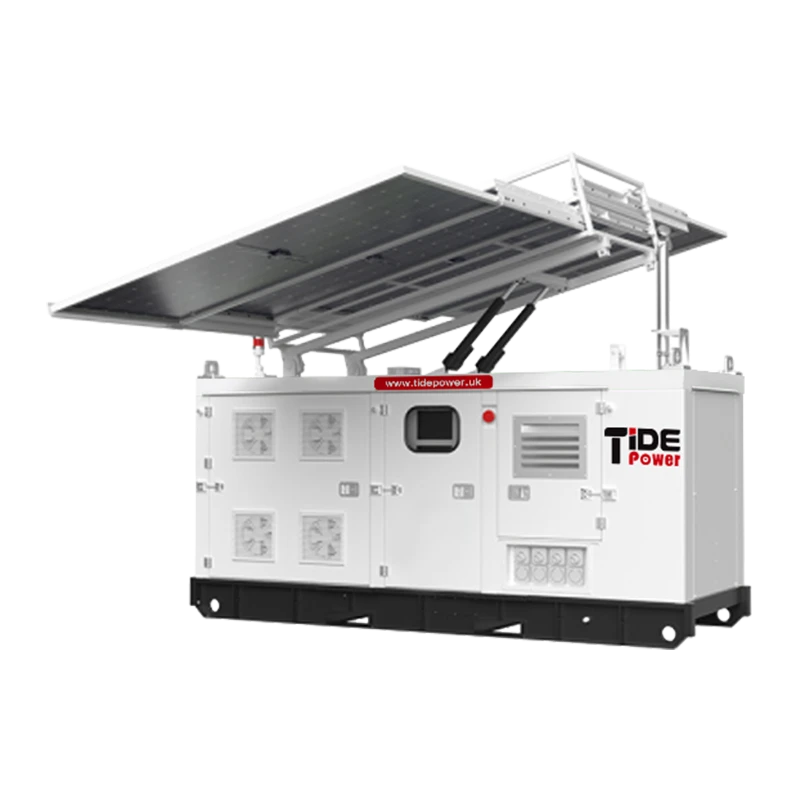
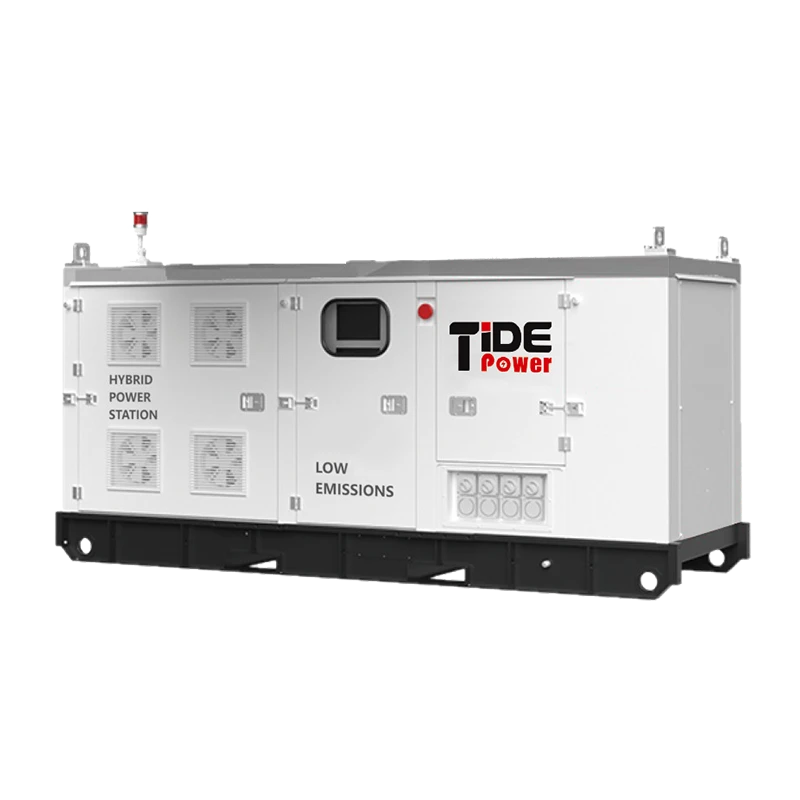
In a hybrid arrangement the generator runs at a steady, efficient output and the battery covers peaks and short outages. That only works when one party owns the logic that decides when the engine starts, how load transfers and what happens when the battery reaches its limits. One example of the hardware side is the all in one hybrid power station range from Tide Power, which combines generation, storage and dispatch control in a single unit across a 10 kVA to 250 kVA band, so the interface between engine and inverter is inside one enclosure rather than split between suppliers.
What the storage side has to document
Storage brings its own specification questions: usable capacity, chemistry, module voltage, cycle life at the depth of discharge you will actually use, and how the battery management system reports state of health. Modular packs and modules let a site start at one capacity and add later, which changes the supplier question from a single purchase to a parts and firmware relationship.
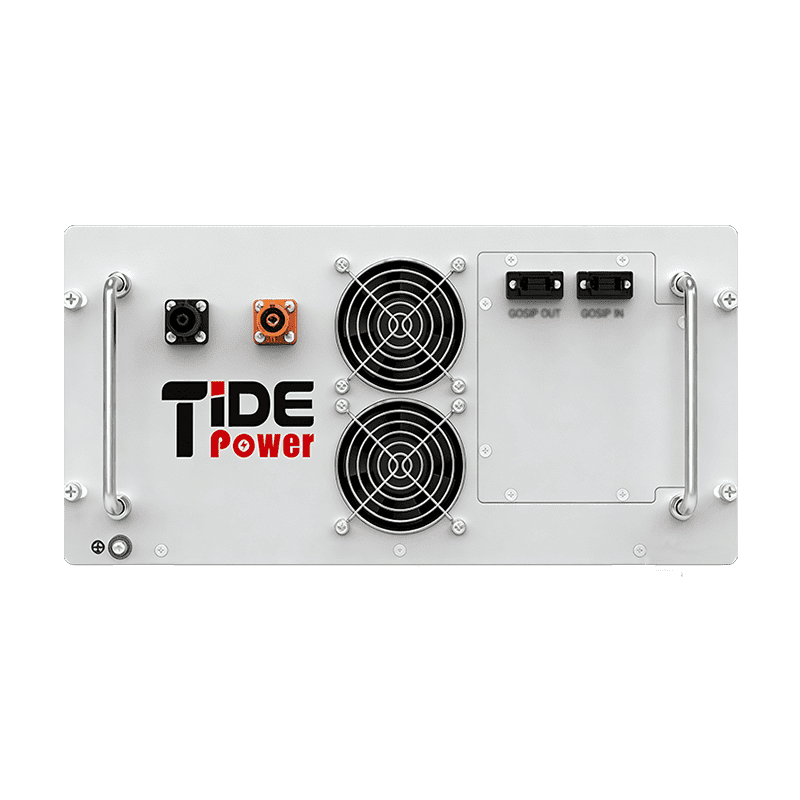
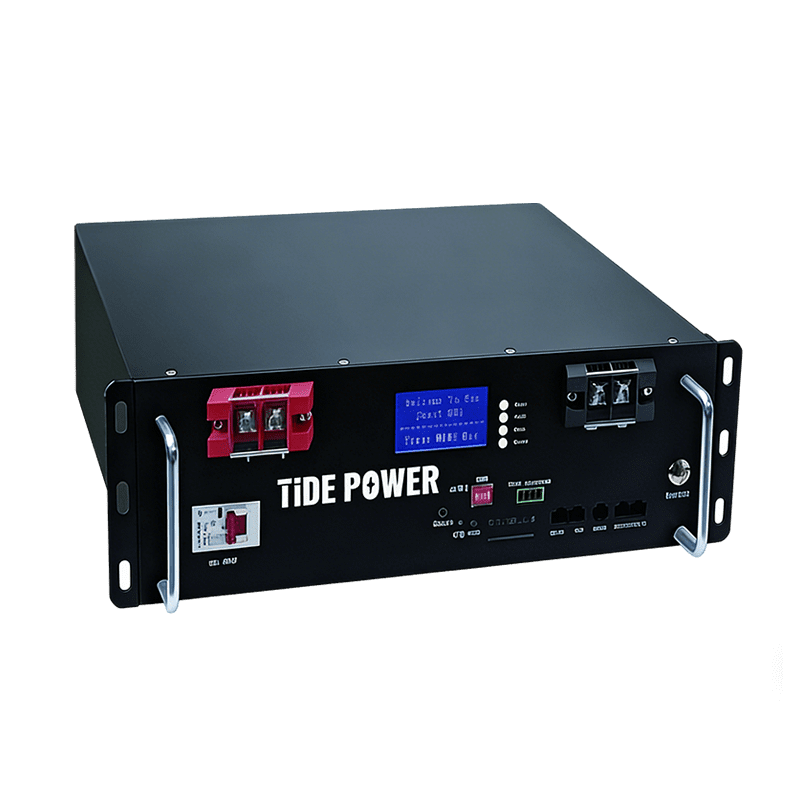
Splitting a hybrid order across two suppliers leaves the interface unowned. The symptom is rarely a clean failure; it is nuisance tripping, engine hunting at low load, or a battery that never reaches the charge state the controller expects. Ask who configures the dispatch logic, who holds the settings, and who is called when the two systems disagree.
Before You Place a Repeat Order or Expand a Fleet
A repeat order usually repeats the first order’s assumptions, and those assumptions age. Before the next shipment or the next unit in a fleet, work through the same checks that would apply to a new supplier.
- Compare the engine and alternator model numbers on the new offer with the ones recorded at commissioning. A model change can make the spare parts list and the control settings obsolete.
- Request the test record for the new serial numbers rather than accepting the previous shipment’s document.
- Confirm the emission tier and documentation set are still accepted at the destination if the market or the engine range has changed.
- Check the warranty start date and running-hour limit against actual site hours, particularly where the set has run above its planned duty.
- For hybrid units, review battery state of health and the dispatch logic, because a degraded pack shifts load back onto the engine and changes fuel consumption.
- Record fuel consumption at the site’s real load for the coming year, so the next sizing decision rests on measured hours rather than the original estimate.
Fleet expansion also changes the service model. Two sets on one site can share spares, but they also double the settings that must be recorded and the maintenance intervals that must be tracked.
Send the Load Profile Before You Request a Quote
Price comparison only becomes meaningful once the specification is fixed, and the specification starts with the load. Put together the load list with running kW and starting kVA for the largest motor, the site ambient temperature and altitude, the duty the set will run (standby, prime or continuous), the destination country and its documentation requirements, and the service arrangement you expect after commissioning. Send those details to [email protected] or call +86 591 2806 8999, and the reply can show the rating basis, the derating applied to your conditions and the documents that ship with each unit, instead of a single kVA figure to compare against a different one.
FAQ
How can I compare two diesel generator quotes when the kVA figures match?
Make both quotes describe the same object before comparing the number. Ask each supplier for the rating basis, engine make and model, alternator make and temperature rise, the derating applied for your ambient and altitude, and the factory test record for the serial number being offered. When one quote cannot state its rating basis, the price gap may simply be a standby rating compared against a prime rating, and the two sets are not the same product. Fix the specification first, then compare commercial terms.
Is it cheaper to buy direct from a factory than from a local distributor?
On unit price, usually yes. On total cost, only under some conditions. Direct purchase works when you can absorb commissioning, first-line response and spare parts holding, or when the contract places those duties with a service provider. A local distributor earns the difference when the site needs fast response, stocked parts, or a technician within the same week. For a single standby set with no maintenance team on site, the distributor route is often lower risk; for multi-unit projects with engineering support, buying from the factory that assembles the set keeps specification and documentation together.
What should a generator warranty cover?
Check the parts and labour scope, the running-hour limit that ends cover, the exclusions such as misapplication, sustained overload, fuel contamination and unauthorised repair, the stated response time, and who performs the work. A warranty that requires return to the factory is a different commercial proposition from one with on-site labour, especially for a remote site. Confirm whether cover starts at shipment, delivery or commissioning, and keep the commissioning record, because claims are assessed against the settings and load conditions recorded at handover.
What documentation should arrive with each unit?
A nameplate whose data matches the order, a factory test record listing the engine and alternator serial numbers, control drawings and the protection settings recorded at commissioning, an operation and maintenance manual in the language the site uses, a spare parts list with lead times, and the warranty document. Missing documents usually surface at customs or at the first breakdown, when the schedule has no slack left to absorb them.
If you’re interested, check out these related articles:
Tide Power Delivers Dual 2000kVA Industrial Generators to a High-Tier Data Center in Southeast Asia
Power on Demand: Reliable and Cost-Effective Diesel Generator & Dewatering Pump Solutions for Construction and Municipal Projects
Tide Power: Your Trusted Source for Heavy-Duty Diesel Pump Solutions