 EN
 ZH
 FR
 ES
 AR
A 10kW diesel generator delivers about 12.5 kVA at a 0.8 power factor, which places it at the small end of the industrial range while still keeping industrial features: three-phase output, a soundproof canopy, and a control panel with real protection. That size class is also where cost questions get messy, because the same nominal output can be built as a standby-only set with a basic controller, or as a prime-rated set with a recognised controller, a large base tank, and a heavily lined enclosure. The headline price tells you very little on its own. What you can compare is the specification behind it, item by item, before anyone quotes you a number.
What 10kW actually means at the terminals
A 10kW rating describes real power. The apparent power the alternator and the cabling must carry is that figure divided by the power factor. At the usual 0.8 power factor, 10kW equals 12.5 kVA, and the current that implies depends on how the set is wired:
- Three-phase 400 V: 12,500 ÷ (1.732 × 400) = about 18 A per phase
- Single-phase 230 V: 12,500 ÷ 230 = about 54 A
That difference decides cable size, breaker rating, and how much motor load the installation can reasonably carry. It is also why a supplier who quotes only in kVA and a buyer who thinks only in kW can agree on a price and still disagree about capability.
The second distinction is the rating basis. Generating set ratings are normally declared against the ISO 8528 set of standards, which separates prime duty from standby duty. A standby rating is declared for limited hours and is not a continuous rating; a prime rating is declared for unlimited hours at variable load. A set advertised on its standby figure looks cheaper per kW, yet it is a different duty, and a buyer comparing it against a prime-rated unit is comparing two products. Frequency matters as well: a 50 Hz set runs its alternator at 1500 rpm and a 60 Hz set at 1800 rpm, which changes weight, noise, and the fuel curve.
What the kW figure alone does not tell you is starting capability, derating at altitude or high ambient temperature, and actual noise at the distance that matters to your site boundary. Those three items are where quotes for nominally identical sets separate.
What decides the price of a 10kW diesel generator
There is no single list price for this size class, because the price is the sum of specified parts. Five groups of decisions move the number, and they are not equally weighted.
| Cost element | What moves the number | What to check in the quote |
|---|---|---|
| Engine and alternator | Engine family and whether the alternator is a named model with stated insulation class and voltage regulation | Model numbers for both, not only the set rating |
| Rating basis | Prime or standby declaration, and the hours allowed at each | Which duty the quoted figure refers to |
| Enclosure and acoustic treatment | Sheet thickness, lining, door seals, exhaust silencing | A noise figure at a stated distance and load, not a “silent” label |
| Fuel tank and autonomy | Tank volume and whether it is base-mounted or separate | Litres, plus hours of autonomy at a stated load |
| Control and protection | Controller model, protection set, remote monitoring, transfer switch | Controller model, alarm list, and whether the transfer switch is included |
| Delivery, duties and commissioning | Incoterm, freight, import duty, site works, commissioning | What stops at the port and what reaches the site |
Engine and alternator tier usually moves the number most at this size, followed by the enclosure. A basic canopy and a lined acoustic canopy can differ substantially in cost, and the lined version is not optional where a boundary noise limit applies. Controller choice is the third lever: a simple panel with limited protection costs less but leaves more decisions to the operator. Logistics can be material rather than incidental, particularly on export orders where the Incoterm decides who pays freight, insurance, and import duty.
There is also a structural point that buyers miss. A 10kW requirement, at 12.5 kVA, sits inside a compact platform rather than a large frame. At Tide Power, the I Series (CKD) platform spans 5 kVA to 650 kVA and the P Series spans 8 kVA to 340 kVA, while the Econic range starts at 16 kVA and runs to 1650 kVA. Buying from a platform that brackets your size avoids paying for a frame, canopy, and fuel tank engineered around a much larger set.
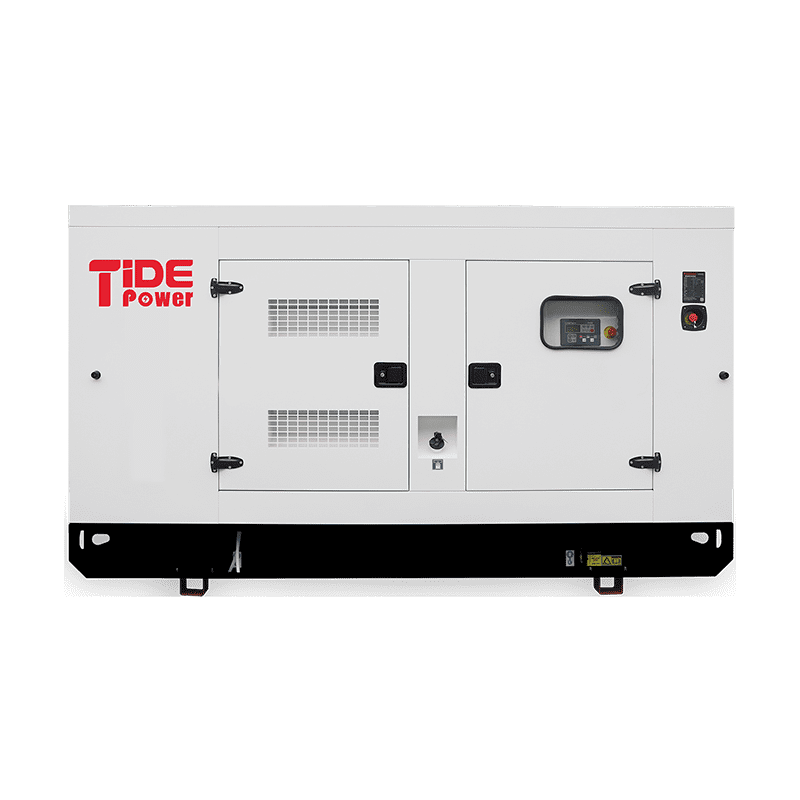
A small set still inherits the frame, canopy, and control conventions of the range it comes from, so the range itself is worth understanding. <New P Series: Reliable and Cost-Effective Choice> covers a cost-focused platform in the compact end of the diesel generator range.
Specifications to confirm before you request a quote
A quote that arrives without the items below will send you back for a second round, and the second round usually produces a different price from the same supplier. Ask for each field in writing and keep the answer with the quote.
| Item | What to request | What it establishes | What it does not establish |
|---|---|---|---|
| Output rating | kW and kVA at a stated power factor, with prime and standby figures | Electrical capacity under the stated duty | That the set will start a large motor direct on line |
| Fuel consumption | Litres per hour at 50%, 75% and 100% load | The shape of the consumption curve | Your annual fuel cost, which depends on load profile and local price |
| Noise | dB(A) at a stated distance and at a stated load | Acoustic performance under those conditions | That the level is acceptable at your boundary with reflecting surfaces nearby |
| Voltage and phase | Voltage, phase count, frequency, and voltage regulation tolerance | What the set delivers and how tightly it holds it | Compatibility with your distribution board, which is a site check |
| Protection and control | Controller model, protection functions, alarm and shutdown list | How the set behaves when a fault appears | That protection settings coordinate with your network |
| Warranty and service | Warranty period, running-hour limit, exclusions, service interval | The commercial terms on offer | The reliability of the unit in your duty cycle |
The noise row deserves a comment. A figure quoted without a distance and a load point cannot be compared with anything, and the same set can be described as quiet on one data sheet and loud on another because the measurement conditions differ. The same applies to fuel: a single litres-per-hour figure at full load is close to useless, since most small sets run well below full load most of the time.
Export orders add one more layer, because documentation and delivery terms travel with the machine.
Export quotes differ as much in what reaches the site as in the price at the top of the page. <Successful delivery of 3 diesel gensets to Tide Power‘s value customer in Saudi Arabia> covers an export delivery of three diesel generator sets to a customer in Saudi Arabia.
How to compare two quotes for the same nominal output
Specification sheets are written to be read quickly and compared slowly. Two quotes for a 10kW set can agree on output, voltage, and frequency and still differ in every item that decides whether the installation works: rating basis, fuel consumption at part load, noise conditions, alternator model, controller functions, tank autonomy, and warranty exclusions.
The practical method is to reject vague inquiries and replace them with measurable ones. A request that reads “10kW silent diesel generator, please send your best price” will return quotes that cannot be compared, because each supplier fills the gaps with its own default. A request that lists the specification returns quotes you can put side by side.
- Reject: “10kW silent diesel generator, best price please.”
- Replace with: “Prime-rated 12.5 kVA at 0.8 power factor, 400/230 V three-phase, 50 Hz, fuel consumption at 50%, 75% and 100% load, noise figure at 7 m at 75% load, alternator model and voltage regulation, base tank volume and autonomy hours, controller model with protection list, warranty period and hour limit, Incoterm and lead time.”
Three checks then do most of the sorting. First, confirm both quotes use the same rating basis; a standby figure compared to a prime figure flatters the cheaper offer. Second, compare fuel consumption at 75% load rather than at 100%, because that is closer to how the set will actually run. Third, read the warranty for its hour limit and exclusions, since a two-year period means little if the hour limit is reached in eight months of daily running.
Service access is the fourth check, and it is the one buyers most often leave until after delivery. A warranty is only as useful as the route that can act on it, which is why distributors and service partners matter as much as the machine.
Warranty terms mean little without a service route that can act on them. <2024 Tide Power Latin America Distributor Training Conference was successfully held> covers a distributor training event held for the Latin America region in 2024.
What the set costs to run in fuel and service
Capital cost is the visible number and rarely the largest one over a decade of operation. Fuel dominates running cost, and it scales with load rather than with the rated output.
The calculation is short. Annual fuel volume equals average load in kW, multiplied by specific fuel consumption in litres per kWh, multiplied by running hours. Take the specific figure from the data sheet at your expected load point rather than at full load. If a set burns 2.6 litres per hour at 75% of its rating and runs 500 hours a year at that point, the annual volume is 1,300 litres; multiply by your local diesel price to get the cost, and repeat the sum at 50% load to see how sensitive the answer is.
That sensitivity is the mechanism worth understanding. A diesel engine consumes a base quantity of fuel just to keep turning, so fuel per kWh rises as load falls. A 10kW set running at 2 kW is delivering 20% of its rating while burning a disproportionate share of its full-load consumption, and the cost per usable kWh can double compared with running near 75%. Sizing to the real load therefore lowers running cost, and it also avoids sustained light-load operation, which is generally discouraged because it affects combustion quality and accumulates deposits in the exhaust and cylinders.
Service cost is more predictable. Oil and filter changes are specified in running hours or calendar time, whichever comes first, and a set that runs 200 hours a year and one that runs 2,000 hours a year follow the same interval rules with very different annual totals. Ask for the interval and the parts list, then multiply by your planned hours. Add one item that is easy to forget: a low-hour standby set still needs an annual service and a load test, because a machine that never runs under load can fail on the day it is needed.
Where a 10kW diesel generator fits and where it does not
This size suits loads that are moderate and steady: a workshop with hand tools and lighting, a farm with pumps and a cold room, a remote telecom repeater, a small office or clinic as standby power, or a construction site office and welfare unit. It also suits sites where the grid is absent and the daily energy need is modest.
It does not suit everything, and the limits matter more than the use cases. Motor starting is the first constraint. An induction motor draws several times its running current while accelerating, and a set’s ability to ride through that is a transient capability question, not a kW question, so the largest motor on the site and its starting method belong in the specification. Direct-on-line starting of a large pump or compressor may push the requirement to a bigger frame, while a soft starter or a star-delta arrangement can keep it within the 10kW class.
The second limit is site condition. Output derates as altitude rises and as ambient temperature climbs, because the engine breathes thinner or hotter air, and manufacturers publish the correction. A set rated 10kW at sea level and 25 °C is not a 10kW set at 2,000 m and 45 °C. The third limit is duty: long hours at high load belong to a prime-rated machine, while short outages belong to a standby-rated one.
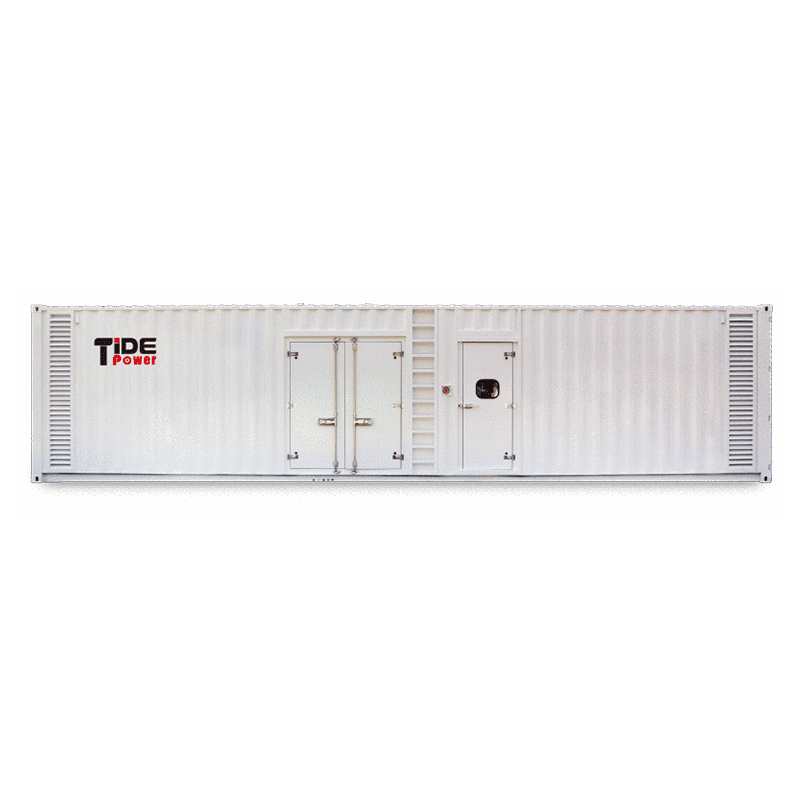
Above this class, the physical and commercial picture changes, and the step from a compact canopy to a container-scale frame is not a linear one.
Where fuel logistics are difficult or the load is steady across the day, a hybrid arrangement can be the better answer, pairing a smaller diesel set with solar and battery storage so the engine runs closer to its efficient band and starts less often.
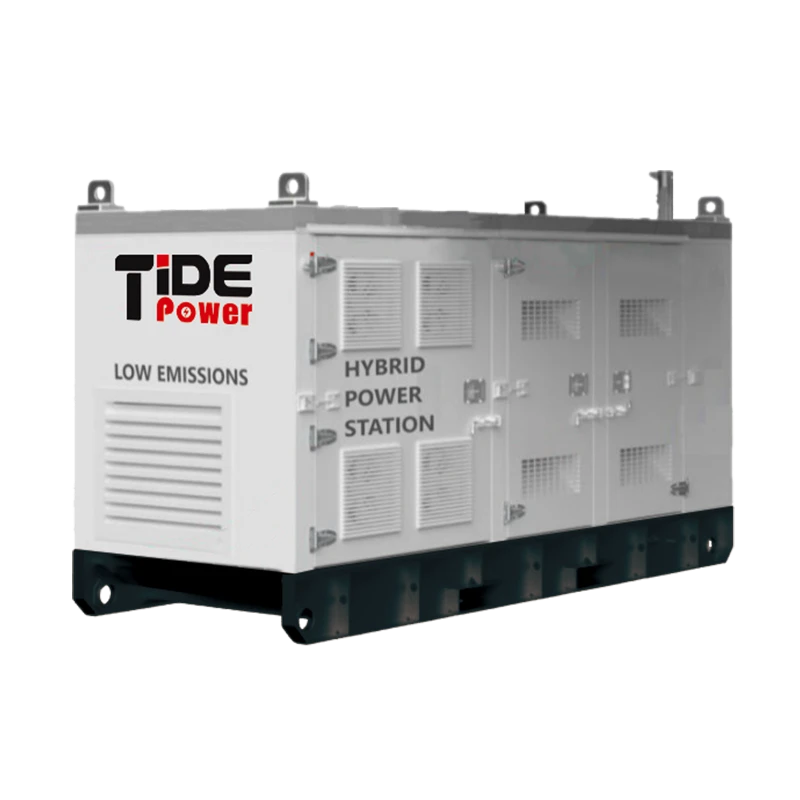
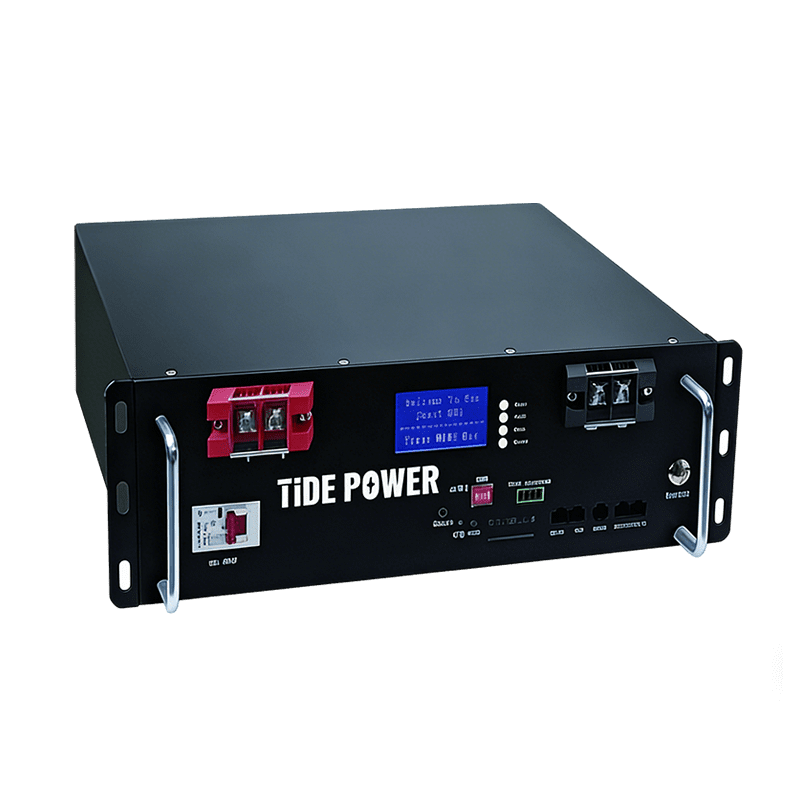
The tradeoff is honest in both directions: a hybrid adds storage, controls, and more items to maintain, and it earns its place where fuel delivery is expensive, where noise or emissions at night matter, or where the load is predictable. A diesel-only set is simpler and cheaper to buy, and it carries the whole load itself.
What to send with your specification request
Send the load list with running and starting figures for each item, the starting method for the largest motor, the required voltage, phase count and frequency, the rating basis you need, the autonomy hours required between refuelling, the noise limit at the nearest boundary and the distance it is measured from, and the site conditions: altitude, maximum ambient temperature, and whether the set will sit indoors or outdoors. With those inputs a supplier can size the set, state the fuel curve and noise figure honestly, and quote the same scope you are comparing.
Email [email protected] or call +86 591 2806 8999 to discuss the specification with Tide Power Technology Co., Ltd.
FAQ
How much does a 10kW diesel generator cost?
There is no single list price at this size, because the price is built from the specification. Five items move it: rating basis (prime or standby), engine and alternator tier, enclosure class and acoustic treatment, controller and transfer switch scope, and delivery terms including freight and import duty. Two suppliers can quote the same nominal output at very different figures because they filled those gaps differently. The useful step is not to hunt for an average price but to send identical specifications to several suppliers and compare the returned quotes item by item.
Is a 10kW diesel generator enough to run a house?
It can be, if the house has no large motor loads or if those loads are managed. Average household demand is usually far below 10kW, but starting current is what decides the answer. A well pump, a large air conditioner, or a workshop compressor can each demand several times its running current for a few seconds, and two starting at once can exceed what a small set will carry. List every motor, note its starting method, and add a soft starter where the margin is tight before concluding the size is sufficient.
How much fuel does a 10kW diesel generator use?
Fuel use scales with load, not with the rated figure, so a single number is misleading. Ask for litres per hour at 50%, 75% and 100% load, then use the point closest to your expected average. Fuel per kWh rises as load falls, because the engine burns a base quantity just to keep running, so a set working at 20% of its rating can cost far more per usable kWh than the same set near 75%. Multiply the data sheet figure by your running hours and local fuel price for an annual estimate.
Should I choose single phase or three phase at this size?
Three phase is usually the better fit for 10kW. At 400 V the current is about 18 A per phase, which keeps cables and breakers modest, and three-phase motors up to a few kW can be started with less disturbance. Single phase at 230 V needs about 54 A for the same power, so cabling and switching are heavier and large single-phase motors are harder to start. Choose single phase when the site has no three-phase distribution and the loads are small, domestic, and mostly resistive.
How often does a 10kW diesel generator need servicing?
Service intervals are set in running hours or calendar time, whichever comes first, and both appear in the manual. A standby set that runs 50 hours a year still needs its annual service and a load test, and a prime-power set running daily reaches the same hour interval far sooner. Life expectancy has no fixed figure, because it follows duty cycle, load factor, fuel quality, and whether faults are caught early. Ask for the interval, the parts list, and the warranty hour limit, and check all three against your planned running hours.
If you’re interested, check out these related articles:
Gathering Momentum for a Shared Future:Tide Power 2025 Global Sales Mid-Year Conference Held
Tide Power’s Hybrid Power Solution Steals the Show at Canton Fair
Powering Africa: The Role of Tide Power in the Local Industrialization Process
Tide Power: Clean Energy, Built to Work
High Altitude Mine Natural Gas Power Generation Project