 EN
EN ZH
ZH FR
FR ES
ES AR
ARMost buyers treat generator service contracts as a box to check during procurement. That approach costs far more than it saves. A generator is a long-term operational asset, and the contract that supports it determines whether you experience three unplanned outages a year or none. The wrong service agreement leaves you with extended downtime, parts delays, and warranty disputes. The right one locks in response times, guarantees parts availability, and ensures that whoever shows up on site actually knows your machine.
Why One-Size-Fits-All Service Contracts Don’t Work
Generator manufacturers and service providers often present standard maintenance packages as though every installation faces the same risks. In practice, a 500 kVA diesel generator running prime power at a remote mine has almost nothing in common with a 60 kVA standby unit sitting behind a hospital. Yet both can end up with the same generic list of scheduled oil changes and filter replacements if no one pushes back on the terms.
A service contract that works matches the generator’s duty cycle, environment, and criticality. A unit operating in high-dust conditions requires more frequent air filtration service than the manufacturer’s baseline schedule. A standby generator that starts only during monthly tests still needs load bank testing to prevent wet stacking and ensure it can carry full load when needed. These are not theoretical distinctions. In the Asia-Pacific region alone, I’ve seen operators run expensive generator sets to failure simply because their service plan never accounted for high humidity accelerating control board corrosion.
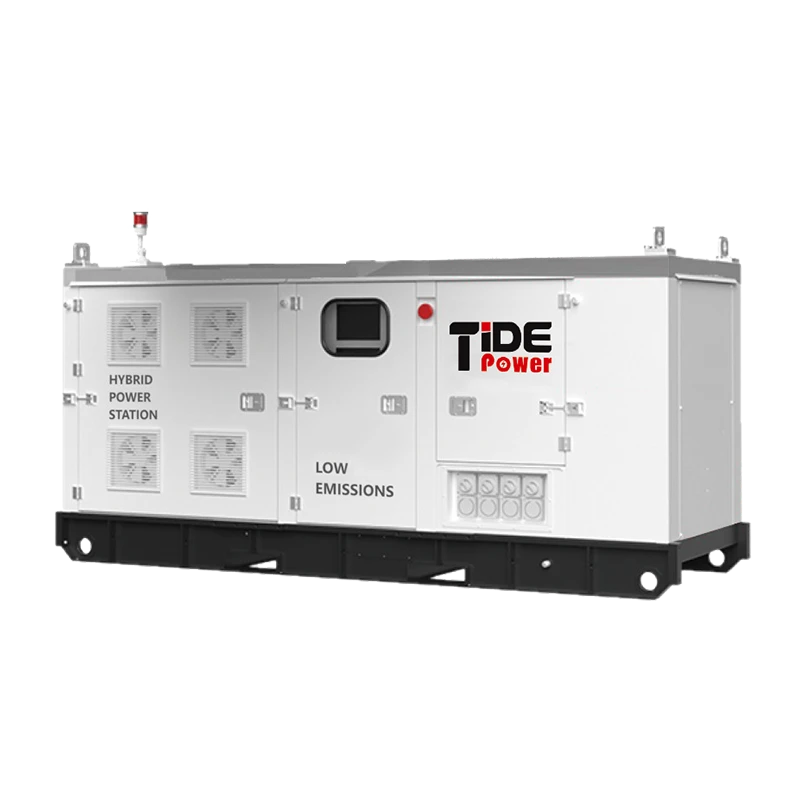
The starting point is to reject any contract that doesn’t reference the specific generator series, its operational hours, and the site conditions where it will run. Even within a single brand’s lineup, a silent-type generator like Tide Power’s Fenova Plus Series—with its compact canopy and external ventilation—has different enclosure maintenance needs than an open-frame unit. A contract that ignores these differences leaves coverage gaps that only become visible during an emergency.
Matching Service Coverage to Your Generator’s Operational Profile
Before signing any service agreement, you need a clear picture of how your generator will actually be used. Most procurement teams stop at “prime power” or “standby,” but the real picture requires more detail. Is the unit running continuously or only during grid outages? Is the load stable or highly variable? What is the consequence of even a 30-minute failure—lost production, data center shutdown, or risk to life safety?
These answers define the minimum acceptable service coverage. A generator running 24/7 in a manufacturing plant should have a contract with bi-weekly on-site inspections, not quarterly visits. A standby unit for a telecom tower in a region with frequent lightning storms needs a contract that covers surge-damaged alternator diodes—components that are often excluded from basic maintenance plans.
Load profile also influences which contract add-ons deliver real value. Generator sets that operate at less than 30% of rated capacity for extended periods, common in backup applications with oversized units, benefit from scheduled load bank testing to burn off unburned fuel and carbon deposits. Without this, you may be paying for a service contract that keeps your generator running but still face a failure when the grid goes down because the engine cannot pick up the full load. Many operators falsely assume the engine is healthy because it starts and idles correctly.
The same logic applies to fuel system maintenance. Diesel generators that sit idle for months need fuel polishing or biocide treatment to prevent microbial growth and tank corrosion. These tasks rarely appear in basic service contracts, but the cost of cleaning a contaminated fuel system after the fact easily exceeds five years of preventive maintenance. When I review contracts for clients, I flag any fuel system clause that only covers filter replacement—that is maintenance, not protection.
To help clarify what coverage different applications demand, the table below summarizes four common operational profiles and the minimum service contract elements that make sense for each.
| Operational Profile | Key Maintenance Demands | Recommended Contract Inclusions |
|---|---|---|
| Continuous prime power (factory, mine) | High-hour wear, heat cycling, frequent filter changes | Weekly inspections, engine overhaul scheduling, 24/7 emergency call-out |
| Standby for critical infrastructure (hospital, data center) | Low-hour reliability, load acceptance test | Monthly testing with load bank, guaranteed 4-hour response, remote monitoring |
| Intermittent backup (commercial, agricultural) | Long idle periods, fuel degradation | Quarterly inspections, fuel system treatment, biocide program if diesel |
| Remote off-grid with renewable hybrid | Battery cycling overlap, start/stop frequency | Hybrid system-specific service, battery SOC monitoring, remote diagnostics |
What “Guaranteed Response Time” Actually Means
Many service contracts headline a four-hour emergency response guarantee. Read the fine print before making that your decision criterion. Response time is often measured from the moment a call is logged, not from the moment the failure occurs. If you cannot reach anyone for 90 minutes because it is 3:00 a.m. and the after-hours number routes to voicemail, the clock hasn’t started yet.
More importantly, arrival on site is not the same as restoration of power. A technician who shows up in four hours but needs another two days to source a replacement alternator rotor has met the letter of the contract while completely missing its purpose. A meaningful performance guarantee should specify not only response time but also the maximum time to restore the unit to operation, or at minimum a guaranteed parts availability window for the specific generator model under contract.
Parts availability is where many service agreements break down in practice. If your generator is a 10-year-old model no longer manufactured in high volumes, a standard contract that promises “genuine parts within 48 hours” is only as good as the supplier’s inventory. In emerging markets especially, I’ve seen 48-hour promises stretch to two weeks because the required PCB controller was sitting in a warehouse on another continent with no pre-arranged logistics.
For operators running less common configurations—such as a 60Hz unit in a 50Hz region, or a generator with a specialized alternator—it pays to verify the service provider’s parts holding for your exact model before signing. Insert a clause that requires the provider to maintain a local or regional stock of critical spares for any generator under a long-term contract. Without it, the guaranteed response time is just a number.
OEM Service vs Independent Providers: Which Delivers Better Long-Term Value?
The debate between manufacturer service programs and independent maintenance providers usually centers on price. But the real cost difference only becomes clear when you compare a five-year total cost of ownership, not the first year’s invoice.
OEM service contracts offer factory-trained technicians, direct access to proprietary diagnostic software, and genuine parts with traceable warranties. For complex generator families with advanced CANbus control systems and emissions after-treatment, this access can cut troubleshooting time from days to hours. An independent technician may be perfectly competent on a mechanically governed diesel engine from the 2000s but completely lost on a modern gas generator set with MWM engine management software.
Independent providers, on the other hand, often compete on labor rates and offer more flexible service schedules. For fleets of standardized generator sets where parts are widely available—such as common Perkins or Cummins-powered units—an independent provider with solid documentation can deliver equivalent uptime at 20–30% lower annual cost.
The deciding factor, in my experience, is whether the generator operates in a remotely monitored network or as a standalone asset. Once you add remote diagnostics and fleet management platforms into the equation, the OEM’s system integration becomes a tangible advantage. Fault codes that trigger automatic case creation and dispatch can reduce mean time to repair by hours. If your operation can absorb the cost of an extra day of downtime without major consequences, independent service is perfectly viable. If it cannot, the OEM premium often justifies itself within the first two unplanned outages.
For generators supplied by manufacturers who offer both in-house and authorized third-party service networks—as Tide Power does through its global distributor program—operators can negotiate a middle ground. The provider’s own technicians handle routine preventive maintenance, while complex warranty claims and major overhauls escalate directly to the manufacturer. This hybrid approach locks in parts authenticity and warranty protection while keeping routine costs manageable.
The Clauses That Define Real Protection
Most contract disputes arise not from what the agreement says, but from what it doesn’t. Five specific areas deserve close scrutiny before signing.
Exclusions for environmental damage. Generator sets installed outdoors or in semi-enclosed shelters face dust, moisture, salt spray, and temperature extremes. Many service contracts exclude damage from environmental ingress unless the housing meets a published IP rating. If your generator enclosure is rated IP23 rather than IP54, confirm whether corrosion-related alternator failures and control panel damage are covered. If not, either upgrade the enclosure or negotiate an environmental rider.
Warranty linkage to service compliance. This is the most dangerous clause in the industry. Some manufacturers void the engine warranty if any non-OEM technician performs work, even routine filter changes. Others require only that service follows the published maintenance schedule using “equivalent quality” parts. Know where your generator’s warranty language sits on that spectrum before you sign an independent service contract and inadvertently cancel your engine warranty in year two.
Renewal price escalation caps. Service contracts that auto-renew at “prevailing market rates” without a cap expose operators to aggressive price increases. A reasonable contract includes a pre-negotiated escalation cap tied to a published cost index—such as the relevant national industrial services index—with a maximum 5% annual increase unless scope changes.
Coverage during extended shutdowns. If your operation has seasonal shutdowns lasting more than 30 days, verify whether the service contract remains active during those periods. Some providers pause coverage and restart only after a paid re-commissioning inspection. This can introduce a gap exactly when your generator is most vulnerable to fuel degradation and battery discharge.
Transferability and termination. If you sell the facility or the generator itself, does the service contract transfer to the new owner? If not, you may be forced to buy out the remaining term. Equally important, the termination clause should specify a reasonable notice period—30 to 90 days—and any early termination penalty should be proportional to the remaining value, not a flat punitive fee.
Common Questions About Generator Service Contracts
What is typically excluded from standard generator service contracts?
Most basic service plans exclude consumable wear items beyond standard filters—things like belts, hoses, batteries, and coolant. They also commonly exclude any damage caused by contaminated fuel, improper installation, or operation outside the specified ambient temperature range. Major component failures such as alternator rewinds, engine overhauls, and control system replacements usually require a separate extended warranty or are handled under the manufacturer’s base warranty if still active. Before signing, get a written list of exclusions, not just inclusions; what is left out often costs more than what is covered.
Does it make financial sense to bundle a service contract with the generator purchase?
Bundling can secure better pricing on the first three to five years of coverage because manufacturers often discount service when packaged with equipment. The trade-off is reduced flexibility. A bundled contract locks you into that provider’s network, which may not be the best fit if your operations expand into regions where that network is weak. If you operate in a single country with a strong local distributor, bundling usually delivers good value. For multi-country deployments, negotiate service separately after the standard one-year warranty so you can match local support to each site’s needs.
How do I verify a service provider’s capability for international generator fleets?
Ask for a list of their active service contracts in your target countries, not just a list of past sales. A provider that has sold 200 generators into a region but currently services only 50 of them has a capacity problem. Also confirm whether they have local parts stock for the exact engine and alternator models in your fleet—warehousing generic spares is not the same as holding model-specific components. For generators with electronic control modules, check if the local technicians have the manufacturer’s diagnostic software licensed and updated. In sensitive sectors like mining or defense, request evidence of security clearances and site access protocols. If a provider’s capabilities vary significantly across your operating countries, consider a master service agreement with the manufacturer for warranty work and use local independent providers for routine maintenance. Share your fleet details and service requirements with a provider who can confirm coverage in every country where you operate—contact our team at [email protected] or +86 591 2806 8999 for a capability verification tailored to your sites.
If you’re interested, check out these related articles:
Energy storage power stations, development direction of clean energy
Tide Power 2024 Management Meeting Successfully Held
Building the Resilient Grids of Tomorrow: Tide Power’s Microgrid and Utility-Scale Energy Storage Solutions