 EN
EN ZH
ZH FR
FR ES
ES AR
ARSelecting the right fuel for a generator set is a decision that reverberates through your project’s budget, maintenance plan, and environmental compliance. Generator set fuel type comparison is often reduced to a simple diesel-versus-gas cost per kilowatt hour, but real-world deployments demand a broader lens. Over ten years coordinating energy projects across continents, I’ve observed that the fuel type you commit to shapes your entire supply chain and operational reliability. This article walks through the key factors that procurement teams and engineers must weigh before locking in a generator set platform, from fuel logistics to future-proofing.
Performance and Application Differences by Fuel Type
Fuel type directly determines how a generator set performs under load and which applications it can serve. Diesel engines rely on compression ignition, delivering high torque and excellent load acceptance. They are the default for mission-critical standby power in hospitals, data centers, and industrial plants where instant response is non-negotiable.
Natural gas engines use spark ignition and run cleaner, but have a lower power density at the same engine displacement. They excel in continuous duty applications where a steady baseload is required, such as manufacturing facilities with pipeline gas access. LPG and biogas offer niche advantages: LPG stores easily in remote sites without pipeline infrastructure, while biogas from landfills or wastewater plants can turn a waste stream into a revenue-generating power source.
A frequent question we encounter:
How does fuel type affect generator set performance?
Diesel generators typically accept 100% rated load in a single step, making them indispensable for sudden blackouts. Gas units, by contrast, often need a more gradual load application. Fuel quality consistency also matters—pipeline natural gas is stable, while biogas composition can vary, requiring careful engine tuning. These performance traits mean fuel choice should be matched not just to the kilowatt rating but to the actual duty cycle and load profile of the site.
Fuel Costs, Efficiency, and Total Ownership
Fuel cost per kilowatt hour is only the starting point. Diesel fuel prices are volatile and linked to crude oil markets, while pipeline natural gas prices tend to be more stable where long-term supply contracts exist. However, total cost of ownership extends far beyond the fuel tank.
Maintenance demands differ starkly. Diesel engines require regular oil changes, fuel filter replacements, and eventual overhaul of fuel injection systems. Gas engines, with cleaner combustion, stretch oil change intervals but demand attention to spark plug life and ignition system health. In our experience supporting telecom and mining projects, the hidden cost often lies in logistics: a remote diesel site may need specialized fuel delivery and on-site storage maintenance, while a gas-powered facility tied to a pipeline eliminates those headaches entirely.
| Fuel Type | Power Density | Fuel Stability | Maintenance Focus | Capital Cost |
|---|---|---|---|---|
| Diesel | High | Market-price | Injection & oil | Lower |
| Natural Gas (Pipeline) | Moderate | Stable | Ignition & plugs | Higher |
| LPG | Moderate | Stable | Tank handling | Medium |
| Biogas | Variable | Depends | Composition tuning | Higher |
| Dual-fuel | Moderate-High | Mixed | Both systems | Medium-High |
Which fuel is cheaper: diesel or natural gas?
It depends on location and load factor. In regions with robust pipeline infrastructure and favorable gas tariffs, natural gas often wins on total cost per megawatt hour over a 10-year lifecycle. In off-grid mining or construction sites where diesel delivery is already established, diesel can be more economical once you account for the capital cost of building gas storage. We always recommend modeling three scenarios: best-case, worst-case fuel price, and a mid-range that includes logistics burden.
If your project involves a remote location or variable fuel supply costs, it is worth building a total cost model that includes delivery and storage before finalizing your bill of materials. Reach out at [email protected] for a comparative analysis tailored to your site conditions.
Fuel Logistics and Supply Chain Reliability
Fuel logistics can override any performance advantage on paper. A natural gas generator connected to a municipal pipeline enjoys practically unlimited runtime, whereas a diesel set relies on physical deliveries and on-site tank capacity.
I recall a project where a mining operation in Southeast Asia selected natural gas sets expecting a pipeline connection. When the pipeline schedule slipped by 18 months, the team had to truck in LNG at three times the projected fuel cost. The diesel alternative, with a bulk storage tank, would have offered more predictable costs during the construction phase. That experience reinforced a simple rule: match fuel type to the reliability of the local supply chain, not just the nominal fuel price.
Diesel requires fire-protected storage and regular fuel polishing to prevent microbial growth. LPG demands pressurized tanks and safety clearances. Pipeline natural gas, while reliable, ties you to a single utility and may be interrupted during natural disasters. For truly critical loads, dual-fuel sets that can switch between diesel and gas offer a hedge against supply disruptions, albeit at a higher upfront cost.
Emissions Regulations and Environmental Compliance
Emissions regulations are tightening globally, and fuel type is the first lever for compliance. The U.S. EPA Tier 4 and EU Stage V standards mandate significant reductions in NOx and particulate matter. Diesel generators require aftertreatment systems like diesel particulate filters (DPF) and selective catalytic reduction (SCR), adding cost and maintenance complexity. Gas engines can often meet these limits without add-on aftertreatment, thanks to inherently cleaner combustion.
Tide Power’s MWM gas generator sets, for example, achieve compliance with EU Stage V while delivering up to 45% electrical efficiency in a combined heat and power configuration. For projects in regulated markets, the decision often comes down to a trade-off between the higher capital cost of a gas set versus the ongoing aftertreatment burden of a diesel unit.
What emissions standards apply to generator fuel types?
Stationary diesel generators above 560 kW in the U.S. must meet Tier 4 final standards, which typically require SCR. In the EU, Medium Combustion Plant Directive (MCPD) requirements are pushing many operators toward gas or biogas. Even in regions with looser rules today, we advise clients to anticipate future tightening—a diesel generator bought now may require expensive retrofits in five years, while a gas set built to current international standards offers a smoother compliance trajectory.
Integrating Fuel Choice with Future Energy Strategies
Fuel choice is not just a snapshot decision; it locks in your energy pathway for a decade or more. As power systems evolve toward lower carbon footprints, generator sets that can integrate with hybrid microgrids and renewable sources offer better long-term value.
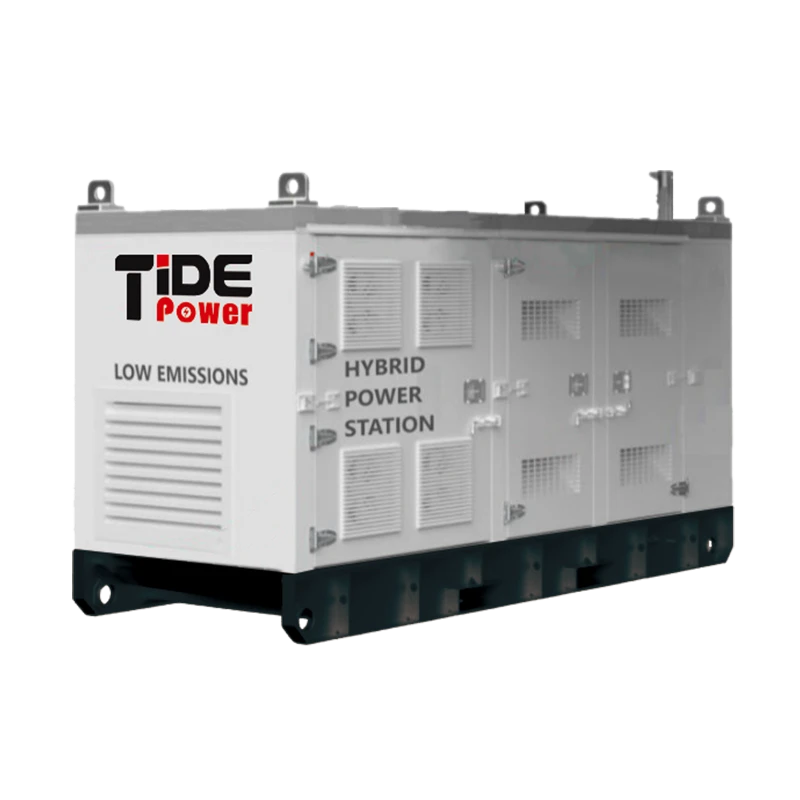
Natural gas engines can already run on blends of biogas or hydrogen in limited percentages, with engine manufacturers actively expanding those capabilities. Diesel engines are more rigid, though dual-fuel conversions exist. Tide Power’s hybrid energy systems combine solar PV, battery storage, and diesel or gas generation into a single microgrid, allowing sites to reduce fuel consumption today while preserving the option to shift to higher renewable penetration later. This kind of modular thinking is essential when the average capital lifecycle of a generator set exceeds 15 years.
Can generator sets be integrated with hybrid systems?
Yes, and increasingly, projects demand it. A hybrid controller manages the interface between the generator, battery storage, and renewable sources. Diesel or gas sets can be dispatched only when needed, slashing fuel costs and emissions. When evaluating fuel type, ask your supplier about compatibility with future hybrid upgrades. A natural gas set with electronic controls typically integrates more smoothly than an older mechanical diesel, but modern electronically controlled diesel units also interface well. The key is to specify communication protocols like Modbus or CANbus from the start.
Practical Steps for Your Generator Set Fuel Decision
Choosing between fuel types means confronting real trade-offs: diesel’s proven reliability and dense energy storage versus gas’s cleaner operation and often more predictable fuel supply. The wrong choice can create years of operational friction, from fuel delivery bottlenecks to unexpected compliance costs.
At Tide Power, we work with energy buyers to match generator set platforms to local fuel realities, pulling from a product line that spans diesel, gas, and hybrid technology. If you are evaluating a new project, share your location, load profile, and fuel access constraints with our team. Send your part numbers and quantity to [email protected] or call +86 591 2806 8999, and we will help you confirm the most resilient fuel platform for your operation.
Frequently Asked Questions About Generator Set Fuel Types
Which fuel type is best for a standby generator?
For short-run, high-reliability standby, diesel remains the strongest candidate. It starts quickly, accepts full load immediately, and requires no external fuel infrastructure beyond a storage tank. In urban areas where noise and emissions are tightly regulated, natural gas standby units are gaining ground, but they still depend on pipeline integrity during emergencies. We typically recommend diesel for hospitals and data centers where every second of blackout matters, and gas for facilities targeting a lower carbon footprint with backup of less critical loads.
How does fuel type affect generator maintenance costs?
Diesel engines require more frequent oil and filter changes due to soot loading, plus periodic fuel system servicing. Gas engines run cleaner, so oil intervals stretch longer, but ignition components like spark plugs add their own replacement costs. The real budget variable is often the fuel itself—diesel fuel polishing and tank cleaning add line items that gas users avoid entirely. Factor these into any maintenance reserve estimate.
Can I switch fuel types on an existing generator set?
Converting a diesel generator to natural gas is technically possible through dual-fuel kits, but it compromises power output and engine life unless the set was designed for dual-fuel from the factory. Building a new gas set around a proven spark-ignited engine almost always yields better reliability. We advise clients to choose the fuel type at the procurement stage rather than planning a later conversion.
What role does fuel availability play in generator set reliability?
Fuel availability is the single biggest reliability risk we see in global projects. A top-tier generator with an interrupted fuel supply is useless. Natural gas pipelines offer uninterrupted supply in theory, but single-point failures during earthquakes or floods have stranded entire facilities. Diesel, with on-site storage, provides energy independence as long as delivery logistics are managed. For critical infrastructure, dual-fuel capability or on-site fuel storage redundancy is worth the investment.
How do I account for emissions regulations when choosing a fuel type?
Start by mapping the strictest regulations that could apply over the next ten years in your jurisdiction. Gas engines generally clear current limits without add-on aftertreatment, while diesel may need DPF and SCR, which require urea supply and maintenance. If your project is in an area with tightening air quality rules, locking in a gas platform now can avoid a forced retrofit later. Share your regulatory requirements with us—our team can confirm which engine platforms carry the necessary compliance documentation for your region. Email [email protected] or call +86 591 2806 8999 to start that conversation.
If you’re interested, check out these related articles:
93 FENOVA Series Soundproof Generator Sets Shipped To East African Banks
?New P Series: Reliable and Cost-Effective Choice
Happy Mother’s Day
Tide Power Shines at WETEX 2025 Dubai, Drawing Major Attention with Smart Hybrid Storage and Efficient Dewatering Solutions
Tide Power Unveils Advanced Hybrid Power Solutions, Redefining Industrial Energy Resilience