 EN
 ZH
 FR
 ES
 AR
A directory of generator wholesalers in the USA gives you names and phone numbers. It does not tell you which of those sellers can deliver a unit that will pass inspection, arrive at the rating you specified, and carry warranty support after commissioning. Those outcomes depend on the channel the seller sits in, the documentation it can produce for a specific serial number, and whether the quoted figure is a prime or standby rating. This guide sets out the checks that turn a long listing into a short one you can quote against.
What a generator wholesaler in the USA actually sells
The word wholesaler covers several different businesses in the US generator market. A stocking distributor buys volume from a genset manufacturer, holds units or canopies in a warehouse, and sells to electrical contractors, dealers and industrial buyers. An importer or consolidator buys overseas and resells into the US, taking responsibility for freight, entry documents and sometimes for conversion work. A broker takes an order and passes it to someone else, holding no stock and often no service capability. All three appear in the same online directories, and the listing rarely says which one you are calling.
What you buy from any of them is a package rather than a box. The package includes a rating basis, a listing status for the assembly, an emission category for the engine, a warranty administrator and a parts channel. The rating basis is the first item to pin down. ISO 8528-1 separates prime power from emergency standby power, and the same machine can be offered at both figures with different operating limits [1]. A quote that says 500 kW without naming the basis has not yet told you what the set will do over a working week.
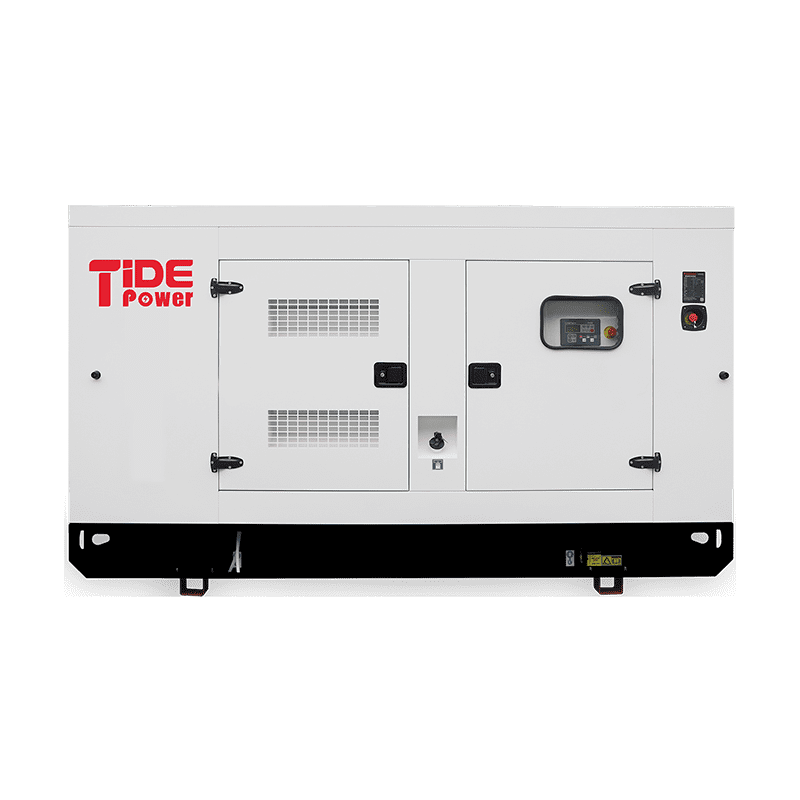
Noise and siting usually narrow the package before price does. A set placed next to a hospital ward, a school building, a hotel or a residential block needs an attenuated canopy, a defined exhaust route and a sound figure measured at a stated distance. Silent ranges are declared across a wide band for that reason. The P Series from Tide Power, for example, runs from 8 kVA to 340 kVA on DCEC, Lister Petter or Perkins engines, with a 2 mm soundproof canopy and an external fuel inlet for refuelling without opening the enclosure.
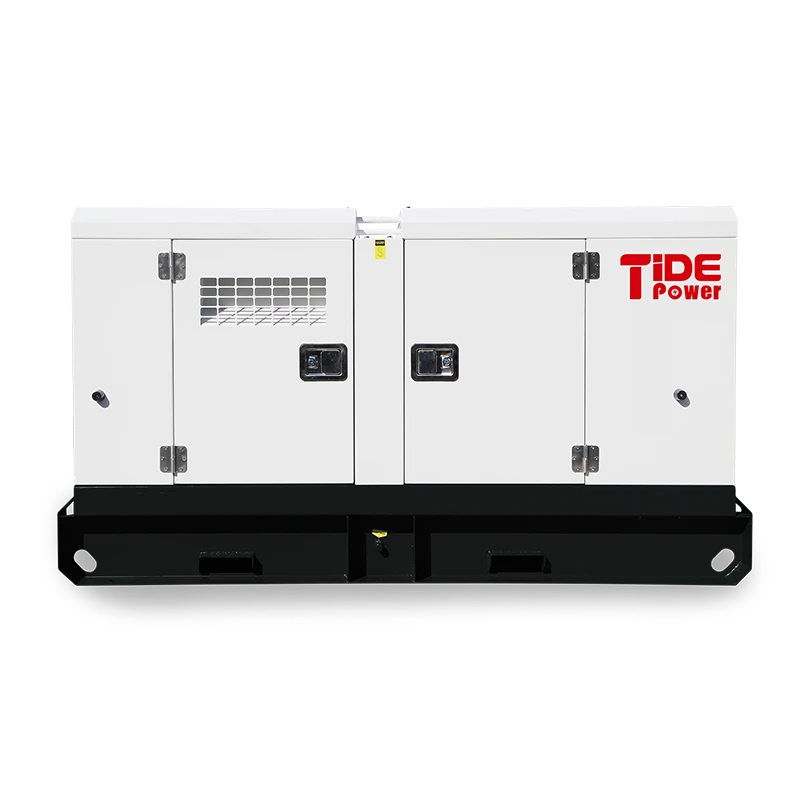
Documentation belongs to the same package. A unit sold into an institutional project normally arrives with a factory test record, a commissioning report, a wiring diagram set and a warranty document that names who performs the work. Ask for those four items before comparing prices, because they decide what happens in year two rather than on delivery day.
Institutional buyers rarely accept a set that arrives without a commissioning record and a named warranty administrator. <Powering Education in Ethiopia: Leading?Diesel Generator Manufacturer?Tide Power Delivers Silent?Power Generator?for Campus> covers a campus supply of silent generator sets.
The supplier types you will find in a US generator directory
Most directories mix six kinds of seller. Sorting them before you call saves time, because each type can do something the others cannot, and each has a predictable weak point.
| Seller type | What it usually holds | Where it helps | Where it falls short |
|---|---|---|---|
| OEM-authorised distributor | Territory agreement, warranty authority, stocked parts | Warranty administration and model selection within one brand | Limited to the brands it represents |
| Independent stocking wholesaler | Mixed-brand inventory, short-notice shipment | Availability across brands and fast delivery | Documentation depth varies unit by unit |
| Importer or consolidator | Overseas supply, freight and entry handling | Cost control on imported sets | Compliance responsibility needs written clarity |
| Rental fleet remarketer | Used units with service history | Lower capital cost and immediate availability | Hours and condition records decide the value |
| Online marketplace or broker | Listings only | Price discovery and a wide search | No stock, no service, no warranty authority |
| Dealer with a service department | Local technicians and test equipment | Commissioning and response time | Narrower product range, higher unit price |
A shortlist drawn from a single row of that table is fragile. Contractors who buy only from authorised distributors get strong warranty cover and narrow brand choice. Buyers who chase the lowest listing price often end up with a broker that cannot name the engine family, let alone produce a certificate for it. The practical approach is to source candidates from at least two rows and compare them on the same specification, which is where the next two sections do the work.
Screening claims before you trust a listing
Every directory entry makes claims. The useful question is what each claim proves for the unit you will actually receive, not for the seller in general.
| Claim or record | What it shows, and under what conditions | What it can support | What not to infer |
|---|---|---|---|
| UL 2200 listing shown for an assembly model | The assembly was evaluated as a stationary engine generator assembly under that listing [2] | The listed model can be offered where a listed assembly is required | That fuel piping, exhaust, cabling or the transfer switch on your site are compliant |
| EPA certificate of conformity naming an engine family and model year | The engine family is certified to the applicable stationary engine standards for that year [3] | Entry and installation eligibility for that engine family | Cover for a different family, a re-powered unit or a later model year |
| OEM authorisation letter | The seller holds a current agreement for a named brand and territory | The warranty route and genuine parts supply | Stock depth, delivery date, or cover for another brand in the same catalogue |
| Factory test report for one serial number | Readings taken at the recorded load steps and conditions | Acceptance of that unit against the agreed test plan | Site output at a different ambient temperature, altitude or fuel |
| Warranty terms document | Covered components, period and named administrator | Who pays for a repair and where it is carried out | That freight, labour, downtime or rental replacement are included |
| ISO 8528-1 rating declaration | The basis on which the kW or kVA figure is stated [1] | Like-for-like comparison between competing quotes | That a standby rating can carry a continuous load |
Each row proves the item it names and nothing wider. A screenshot of a product page says nothing about the serial number that will arrive at your yard, and a brand logo on a website says nothing about authorisation. When a seller cannot produce the record for the specific model you asked about, treat that model as undocumented rather than assume the paperwork exists somewhere.
Compliance checks that decide whether a unit can be installed
Three separate questions decide US acceptance, and sellers sometimes answer only one of them. The first is the assembly: whether the generator set is a listed stationary engine generator assembly under UL 2200 [2]. The second is the engine: a stationary compression ignition engine falls under the emission rules in 40 CFR Part 60 Subpart IIII [3], and stationary reciprocating engines also sit under the national emission standard for hazardous air pollutants in 40 CFR Part 63 Subpart ZZZZ [4]. The third is the installation, covered by the National Electrical Code articles for emergency, legally required and optional standby systems [6], with NFPA 110 setting the system requirements for emergency power supplies [5].
CE marking settles none of these. A set built to European standards can be well made and still be refused by an authority having jurisdiction that expects a listed assembly and a certified engine family, so the compliance route should be agreed before an order is placed rather than after the unit lands. Emergency engines are treated separately from non-emergency engines in the emission rules, and the operating hours attached to that status affect how the set can be used over a year. That distinction is worth confirming in writing when the intended duty includes peak shaving or demand response.
Fuel choice adds a fourth question. Natural gas, biogas and LPG sets carry different gas train requirements, different derating and different service arrangements, so a wholesaler that is fluent in diesel may be reselling gas packages it cannot support. Gas sets built on MWM engines, for instance, are declared from 600 kVA to 4500 kVA, and the fuel specification has to be fixed before the gas train is selected.
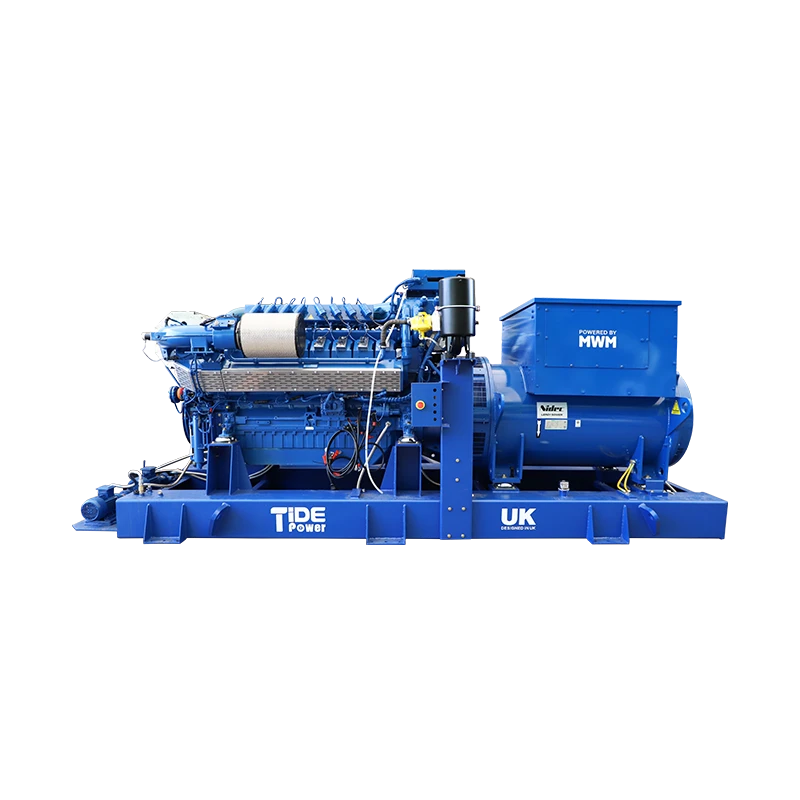
Gas fuelled projects often start with a fuel that is not pipeline natural gas, and the gas train has to match what is actually available on site. <Biogas generation from kitchen waste> covers biogas produced from kitchen waste.
What to send to get quotes you can compare
Two quotes for the same kW figure can differ by a third of the price without either seller being dishonest, because they are priced on different scopes. Send the same six fields to every candidate and the differences become visible.
| Field to send | What to specify | Why it changes the answer |
|---|---|---|
| Load and rating basis | Required kW or kVA, the ISO 8528-1 basis, largest step load and power factor | A frame sizes differently at prime and standby, so the basis decides the model offered |
| Electrical system | Voltage, phase, frequency, and whether the set runs alone or parallels with the utility | Voltage and paralleling change the alternator, breaker and control package |
| Site conditions | Ambient temperature, altitude, enclosure type, fuel storage and exhaust route | Output derates with ambient and altitude, and the enclosure changes the footprint |
| Compliance route | Whether a listed assembly, certified engine family, NFPA 110 class or local code applies | Compliance items get quoted separately when they are not stated up front |
| Scope split | Who supplies the transfer switch, fuel tank, exhaust, cabling, foundation and commissioning | An unclear split produces two quotes that cannot be compared |
| Commercial terms | Delivery point and Incoterms, warranty administrator, spares list, documentation set | Landed cost and after-sales responsibility sit here, not in the unit price |
The common failure is a one-line request. Reject this: “Send your best price on a 500 kW diesel generator.” Replace it with: “500 kW at prime rating to ISO 8528-1, 480Y/277 V, 60 Hz, three phase four wire, site ambient 40 °C at 1,000 m, UL 2200 listed assembly, EPA-certified engine family for the required model year, delivery DAP Houston, commissioning included, two-year spares list attached.” The second request is longer by one paragraph and removes most of the follow-up questions.
Landed cost and warranty tradeoffs between stock and factory order
A unit in stock shortens the schedule and usually costs more per kW than a factory order at the same rating. The trade is not only price. A set built in an earlier model year can carry a different certification position from a current build, and that difference may decide whether it can be installed at all. Ask for the engine family and model year of the actual unit, not of the current catalogue.
| Cost element | What changes it | What to confirm in writing |
|---|---|---|
| Unit price | Rating basis, alternator, control panel, enclosure | The basis and included accessories behind the quoted figure |
| Freight and entry | Incoterms, port of entry, tariff classification, country of origin | Who files entry documents and who pays duty and terminal charges |
| Inland handling | Weight, dimensions, crane or forklift needs at both ends | Delivery point and unloading responsibility |
| Commissioning | Whether the seller sends technicians or uses a local partner | Who attends start-up and signs the commissioning record |
| Warranty | Administrator, labour rate, response time, parts route | Who pays freight and labour, and where repairs happen |
| Spares | Recommended first-year list and lead times | Which parts sit in local stock and which ship from the factory |
Warranty is where cheap quotes usually lose their advantage. Authorised distributors file claims through the manufacturer and are reimbursed, so the buyer deals with one party. An importer may administer warranty itself, which works when it holds parts and technicians. A broker typically passes the claim to whoever supplied it, and that chain is difficult to enforce when a control board fails in the second year. Ask who signs the repair authorisation, and check that the answer is a company that will still be trading when the claim is made.
Beyond generator sets, what else a wholesaler can consolidate
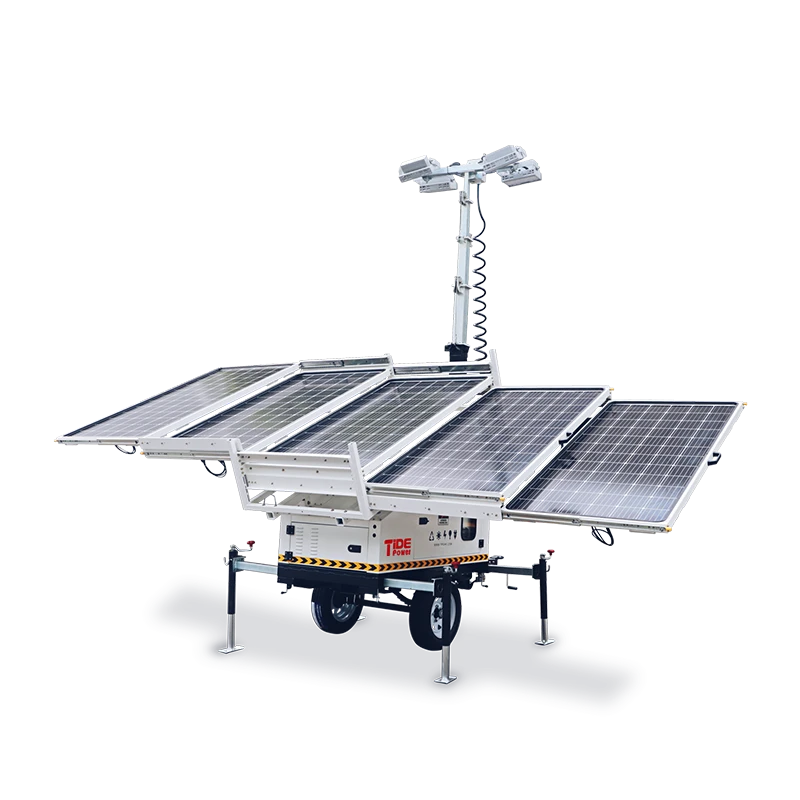
Storage, hybrid packages and site lighting increasingly come through the same channel as generator sets, and a wholesaler that can consolidate them reduces the number of interfaces you have to manage. The reduction is real but it moves responsibility. When one supplier provides the generator, the battery, the solar array and the controls, that supplier owns the single-line diagram and the point of demarcation between systems.
Hybrid packages combine solar, battery storage and a diesel set under one controller, typically with automatic switching between sources. They suit remote sites and installations where fuel logistics cost more than the hardware. Ask for the single-line diagram, the control protocol, the switching time and the conditions under which the diesel set starts.
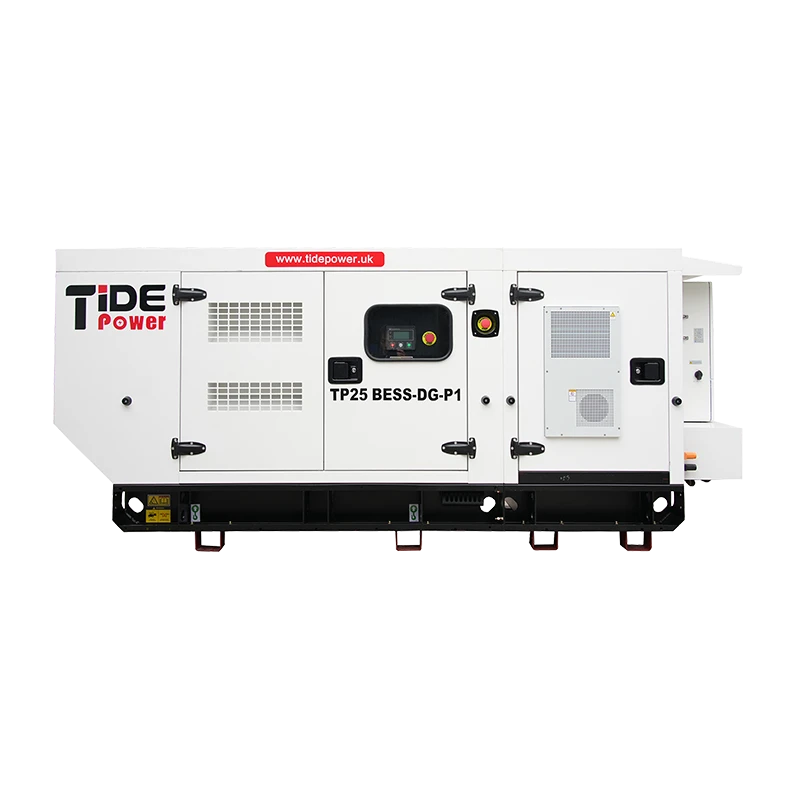
Battery storage is quoted in two numbers that are easy to confuse, the energy capacity in kWh and the power rating in kW, and a package that looks generous on the first may be weak on the second. Fire clearance, ventilation and the listing conditions for the enclosure matter as much as the cell chemistry.
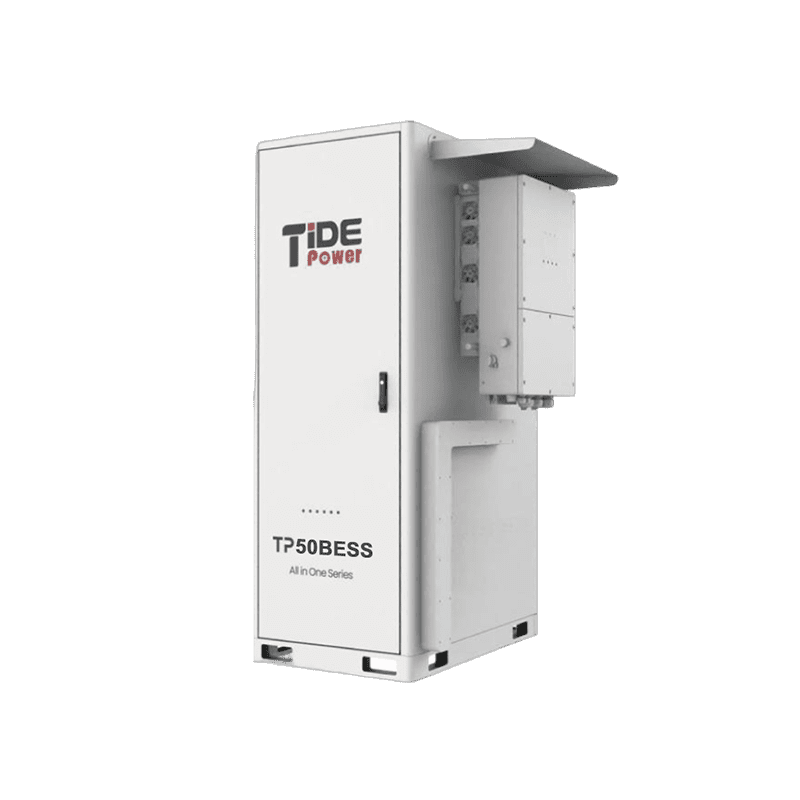
Storage decisions get easier when the charging load is known rather than assumed. <Powering the EV Revolution: Sustainable Charging with BESS & Hybrid Systems> covers sustainable charging with battery storage and hybrid systems.
Mobile lighting towers follow the same logic. Mast type, lamp output, and whether the unit runs on diesel or solar decide both the runtime and the maintenance routine, and a tower bought as an accessory to a generator order still needs a service plan of its own.
Building your shortlist in five steps
- Collect candidates from at least two seller types in the table above, so the shortlist contains both authorised and independent routes.
- Fix the specification before you call. Rating basis, voltage, frequency, site conditions and compliance route should be identical across every request.
- Request the six records from the screening table for one specific model, and note which ones arrive within a working day.
- Verify two of them independently, using the manufacturer distributor locator for authorisation and the listing directory for the assembly.
- Send the identical six-field request to every candidate, then rank on landed cost, documentation completeness and the distance to whoever attends start-up.
Three habits justify dropping a candidate. A seller that will not name the engine family, a quote without a rating basis, and a warranty document without an administrator are all signs that the package is being assembled after the order rather than before it. None of these observations says anything about the quality of the equipment. They describe how much of the risk sits with you once the unit leaves the yard.
Send your load list before you compare prices
If you are still assembling the shortlist, start with the four inputs that decide the configuration rather than with a price request: the load list in kW with the largest step load, the site ambient temperature and altitude, the rating basis the installation needs, and the compliance route the authority having jurisdiction will apply. Tide Power builds silent diesel, gas and hybrid packages against those inputs and returns a configuration with the matching documentation set. Email [email protected] or call +86 591 2806 8999 with the load list and site data, and we will confirm which models fit before you spend time comparing quotes that were never on the same basis.
FAQs
How do I find authorised generator wholesalers in the USA?
Start with the distributor locator published by the engine or genset brands you are willing to accept, then use trade directories to find independent stock. Verify that an authorisation letter names your territory and the product line you want, ask for two references at a similar rating, and confirm the seller takes title to the goods instead of brokering the order. A directory entry is a lead, not evidence.
Can a US wholesaler sell a generator that is not UL listed?
Some sellers do offer unlisted assemblies. Many authorities having jurisdiction and insurers expect a listed assembly for emergency and standby installations, so the requirement should be confirmed before price is discussed. Unlisted equipment can sometimes be accepted where the authority approves an alternative approach, but that is a project decision made with the inspector, not a claim a seller can settle on your behalf.
What is the difference between prime power and standby ratings in a quote?
Prime power is declared for continuous operation under a variable load, while the standby rating is tied to a limited annual running time and outage duty under ISO 8528-1 [1]. The same machine can appear at both figures with different derating and different service intervals. Ask which basis is quoted, and compare every candidate on that same basis before looking at the price.
Do wholesalers handle warranty and spare parts after delivery?
It depends on the channel. An authorised distributor files the claim through the manufacturer and is reimbursed, an importer may administer it in house, and a broker usually passes it back up a chain. Ask for the administrator name, the labour rate, the response time, and the first-year spares list with lead times, then check whether those parts are held locally.
Is an imported generator cheaper once it lands in the US?
Sometimes, but the comparison has to be made on landed cost rather than unit price. Add freight, duty at the applicable tariff classification, entry and terminal charges, inland handling, commissioning and the cost of the warranty route. An imported set is only cheaper if it arrives with a certified engine family and a listed assembly, because the cost of resolving those after arrival usually erases the difference.
References
[1] ISO 8528-1:2018, “Reciprocating internal combustion engine driven alternating current generating sets – Part 1: Application, ratings and performance,” ISO, 2018.
[2] UL 2200, “Standard for Stationary Engine Generator Assemblies,” UL Standards & Engagement.
[3] 40 CFR Part 60, Subpart IIII, “Standards of Performance for Stationary Compression Ignition Internal Combustion Engines,” U.S. Environmental Protection Agency.
[4] 40 CFR Part 63, Subpart ZZZZ, “National Emission Standards for Hazardous Air Pollutants for Stationary Reciprocating Internal Combustion Engines,” U.S. Environmental Protection Agency.
[5] NFPA 110, “Standard for Emergency and Standby Power Systems,” National Fire Protection Association.
[6] NFPA 70, “National Electrical Code,” Articles 700, 701 and 702, National Fire Protection Association.
If you’re interested, check out these related articles:
Powering the EV Revolution: Sustainable Charging with BESS & Hybrid Systems
Light Up the Future with Tide Power Lighting Towers
Join Tide Power at BIG 5 Construct Saudi on stand 4D78