
 EN
 ZH
 FR
 ES
 AR
Search for generator wholesalers in the USA and dozens of directories appear, most of them claiming to be complete. None stays accurate for long. Dealership lines change, rental fleets turn over their stock, importers open and close, and the word wholesale covers businesses that operate in very different ways. A list is a starting point; the shortlist you build from it decides whether the purchase goes well. The work sits in three places: knowing which channel each name belongs to, knowing what the supplier’s evidence actually proves, and asking every candidate the same questions before you compare price.
Why a Complete List of Generator Wholesalers in the USA Ages Quickly
Wholesale has no single legal meaning in the US generator market. A name on a directory can be an authorized distributor holding a brand agreement, an independent supply house that buys across several factories, a rental company selling units off its fleet, a stocking importer working in containers, or a dealer that never holds the unit at all and passes the order to a factory. Each has a different cost base, a different stock position, and a different answer when something fails in the second year of service. A list that files all of them under one heading hides exactly the information a buyer needs.
The list also expires. Dealer agreements are renewed or dropped, product lines move between distributors, and the person who answered your email last year may now work elsewhere. Any published directory records a date and an editorial scope, not a current supply position.
Scope narrows a list faster than any search filter. Write down four things before opening a directory: power band, fuel, electrical standard and duty. A 20 kVA portable set for a jobsite trailer and a 1,000 kVA standby unit for a data hall are sold through different channels, by different people, with different warranty paths. The same is true of a 60 Hz diesel package for a US site and a 50 Hz export unit: they may come from the same factory and never from the same wholesaler.
Four lines on a page will turn a long directory into a dozen candidates you can actually call.
The Wholesale Channels Behind Most US Generator Listings
The channel a supplier belongs to predicts what it can do well and where it will hand the problem back to you.
Authorized distributors and independent supply houses
An authorized distributor carries a brand agreement, registers the factory warranty in its own name, and can pull technical support from the manufacturer when an application question goes beyond the spec sheet. Its limit is its line card: if your rating sits outside the brands it holds, it will either decline or quote a substitute. Enclosed silent sets are the configuration most industrial buyers ask for, and a distributor that stocks them will usually quote from a stock list rather than a factory build.
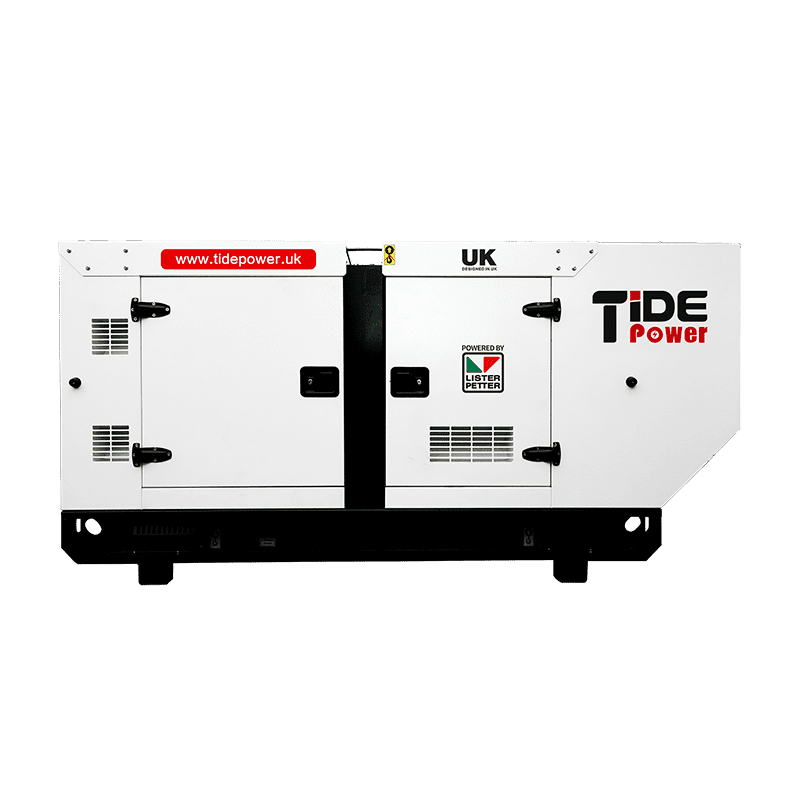
An independent supply house buys across several factories. It often works harder on applications, sources unusual voltages, and can move between brands when a lead time slips. The trade is behind the scenes: warranty administration runs through a third party, stock depth varies by month, and the technical depth of the answer depends on which salesperson picks up the phone.
Rental fleets and trade-in stock
Fleet sales are the largest source of low-hour used units in the US market. The useful evidence is not the hour meter alone but the maintenance file, the oil analysis history, and the reason the unit left the fleet. A set that ran as prime power on a remote site may carry duty history that makes it unsuitable for standby service, and a set that idled for years may need more than a service before it can be trusted. Ask who performed maintenance and what the unit was used for.
Stocking importers and systems integrators
Importers work in container quantities on standard configurations. Their value is price and availability on those configurations; their weak point is documentation and after-sales geography. A systems integrator assembles multi-unit installations with paralleling and controls. It is the right partner for a plant upgrade and the wrong one for a single replacement unit, because you pay for engineering you may not need.
| Channel | What it usually offers | Where it stops |
|---|---|---|
| Authorized distributor | Brand warranty registration, factory technical support, model and option coverage | Only the lines it holds; limited stock in unusual ratings |
| Independent supply house | Mixed brands, application advice, flexible sourcing | Warranty handled by others; stock and expertise vary by branch |
| Rental fleet reseller | Used units with service history and known duty | Remaining life and duty history need independent inspection |
| Stocking importer | Price and availability on standard container configurations | Documentation and after-sales support depend on the importer |
| Systems integrator | Multi-unit paralleling, controls, plant integration | Engineering cost is built into the quote; not a single-unit source |
| Marketplace listing | Reach and visible asking prices | Legal entity, stock position and support are hard to confirm |
The categories overlap. A rental company can also be an authorized dealer, and an importer can run its own service branch. Judge the transaction in front of you: who owns the unit at the moment of sale, who registers the warranty, and who sends a technician when it stops.
What a Supplier Listing Proves and What It Does Not
Screening is not approval. A logo, a badge, or a line on a brand’s locator page tells you something narrow, and the usual mistake is reading it as more than it is.
| Record | Method context | Responsible use | Do not infer |
|---|---|---|---|
| Entry on a brand locator | Published by the brand as part of its authorized network | Confirms an announced channel relationship on the publication date | That the rating you need is in stock or priced |
| Published wholesale price | Self-published catalog figure, usually for a base configuration | A budget starting point for a like-for-like comparison | That the delivered cost includes freight, options and commissioning |
| Certificate image | Certificate shown without its full scope and expiry date | Evidence that a management system was certified for the stated scope | That every unit shipped conforms to your acceptance criteria |
| Reference project summary | Written by the supplier about a completed job | Shows the class of work the supplier reports doing | That your site conditions, voltage or climate are covered |
| Spec sheet with a kW or kVA figure | Manufacturer datasheet, if the rating conditions are printed | Comparison of rating basis when ambient and altitude match | That the figure is a continuous rating or a site-usable output |
| Warehouse or stock photograph | Marketing image used across a product range | Indicates the product line exists | Inventory quantity, location, or delivery date |
None of these records establishes fitness for your site. They establish that a conversation is worth having. For each row, the next step is the underlying document: the certificate scope and expiry, the datasheet page that prints the rating conditions, the warranty terms that name the administrator, the reference contact who can describe the commissioning.
Screening Checks to Run Before You Request Pricing
Six checks remove most unsuitable candidates before a price is quoted. Run them in order, because each answer changes what the next question means.
Entity and authority
- Match the legal entity to the quote. The name on the quotation should correspond to a registration you can look up, and the address should match either the delivery point or the service branch that will attend the unit.
- Get channel status in writing. Ask which product lines the supplier is authorized to sell and whether it registers the manufacturer’s warranty in its own name. Verbal reassurance about being a partner carries no weight when a claim is filed two years later.
Rating and configuration
- Fix the rating basis. Standby and prime ratings are defined at stated ambient and altitude conditions, and a figure without those conditions cannot be compared with another supplier’s figure. State the load profile and the expected running hours per year in the same message.
- Name the configuration elements that move price: voltage, frequency, phase and neutral arrangement, enclosure and acoustic class, fuel storage, controls, and any transfer or paralleling equipment.
Service, warranty and references
- Ask what happens after delivery. Who attends first start, who commissions, where spare parts are held, and how a service request is handled outside business hours all belong in the written offer, not in a phone conversation.
- Request two references in your application sector and speak to the person who operated the equipment, not only the person who signed the purchase order. Ask what failed, how long the repair took, and whether the supplier’s own staff attended.
Project references are only worth the detail behind them, particularly the commissioning and the first failure. <Powering Education in Ethiopia: Leading?Diesel Generator Manufacturer?Tide Power Delivers Silent?Power Generator?for Campus> covers a campus power installation built around silent generator supply.
A supplier that answers all six with documents has earned an RFQ. One that answers with reassurance is not disqualified, but every missing document becomes a condition of the order.
Building a Quote-Ready RFQ for Generator Sets
Quotes diverge because each supplier answers a slightly different question. The RFQ exists to remove that difference, and its most valuable section is the one that defines duty.
| RFQ field | What to request | Why it matters |
|---|---|---|
| Duty and rating basis | Prime or standby rating, load profile, running hours, design ambient and altitude | A standby-rated set run as a prime unit loses warranty support and overheats in the second summer, not the first week |
| Electrical interface | Voltage, frequency, phases, neutral arrangement, breaker type, transfer switch, paralleling needs | A 50 Hz package or a three-wire output cannot be commissioned on a four-wire 60 Hz service without added equipment |
| Fuel and autonomy | Tank capacity, refill interval, containment, siting rules | An undersized day tank stops the set during the outage it was bought for |
| Acoustic and enclosure | Sound level with test method and measurement distance, enclosure rating, site noise limit | A permit condition or a neighbour complaint forces a retrofit that costs more than the original enclosure choice |
| Documentation | Datasheets with rating conditions, test reports, manuals, declarations, packing list | Missing paperwork holds the unit at the port or blocks the electrical inspection |
| Commissioning and warranty | Who attends first start, response arrangement, parts source, warranty administrator | A distant seller that delegates service leaves the site paying travel costs on every claim |
A standby rating assumes limited hours at a defined load and ambient; a prime rating assumes continuous operation at a variable load. Quoting one against the other is the most common reason two prices for the same power figure sit far apart.
Fuel autonomy is the quiet variable in the same comparison. A tank sized for a working day suits a site with a fuel contract; a tank sized for the full outage window suits a remote site with uncertain deliveries.
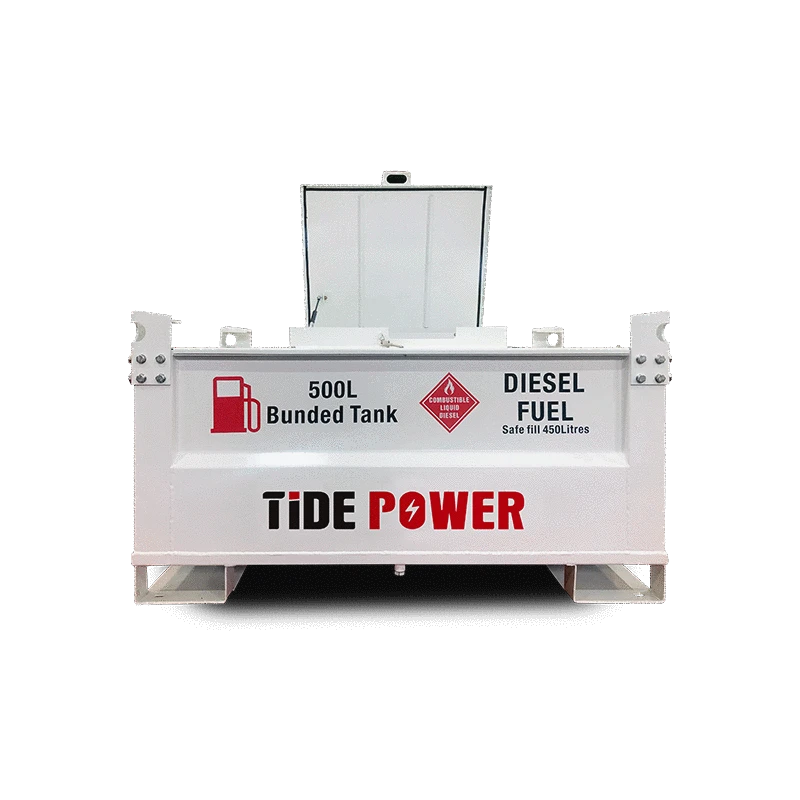
The difference between a vague request and a usable one is visible in a single line:
- Reject this: “Silent diesel generator, 500 kW, best wholesale price, delivery included.”
- Replace it with: “500 kW standby rating at the site design ambient, 480 V, 60 Hz, three phase four wire, sound pressure stated at a measured distance with its test method, tank sized for 24 hours at 75 percent load, commissioning and first start included, warranty administered in the delivery state, documentation list as attached.”
Define the system boundary in the same document. A single set, a paralleled pair, and a generator with battery storage are three different procurements, and a supplier who bids one against the other is answering a question you did not ask.
Storage changes the generator’s job, because part of the load never reaches it. <Navigating Energy Storage: Key Distinctions Between Large-Scale and Small-Scale BESS> covers how scale shifts the storage decision.
How Stock, Factory Build and Import Routes Change the Quote
Three sourcing routes reach US buyers, and they differ in when the money is spent, not only in how much.
| Route | Best when | Main cost or risk |
|---|---|---|
| Domestic distributor stock | One unit, standard configuration, a permit or outage deadline is short | You accept the distributor’s configured options and its margin |
| Factory build to order | Multiple units, unusual voltage or enclosure, the schedule allows for production | Longer lead time plus freight; warranty administration crosses a border |
| Stocking importer or container wholesale | Standard configurations in volume, and you can handle customs and documentation | Import paperwork, certification evidence and after-sales depend on the importer |
| Hybrid or storage-inclusive package | The load profile has peaks, fuel logistics are difficult, run hours must fall | Sizing complexity; a badly sized battery adds cost without reducing generator hours |
Domestic stock buys time and gives up configuration freedom. Factory build buys configuration freedom and gives up time, and it adds a freight leg plus a documentation chain that the buyer usually owns. Import routes compress unit price on standard configurations and push work onto the buyer: entry paperwork, evidence that the unit meets the electrical inspection authority’s expectations, and a warranty that must be administered at a distance.
A build-to-order supplier’s published range is the useful part of its listing, because it shows how far the configuration can move from a stock unit. Tide Power Technology builds the Fenova Plus Series as a silent-type set from 5 kVA to 900 kVA with Lister Petter engines in 50 Hz and 60 Hz versions, which tells a buyer that the platform can be quoted at the rating, voltage and acoustic class the site needs rather than only at a stock configuration. What such a page does not tell you is delivered price, lead time for your rating, or commissioning scope, and those are the questions the RFQ answers.
Storage-inclusive packages change the comparison basis again. When a battery carries the peaks, the generator can be sized smaller and run fewer hours, so the two quotes being compared are no longer the same machine doing the same work. Ask for the run-hour assumption behind each price; if the assumptions differ, the prices are not comparable.
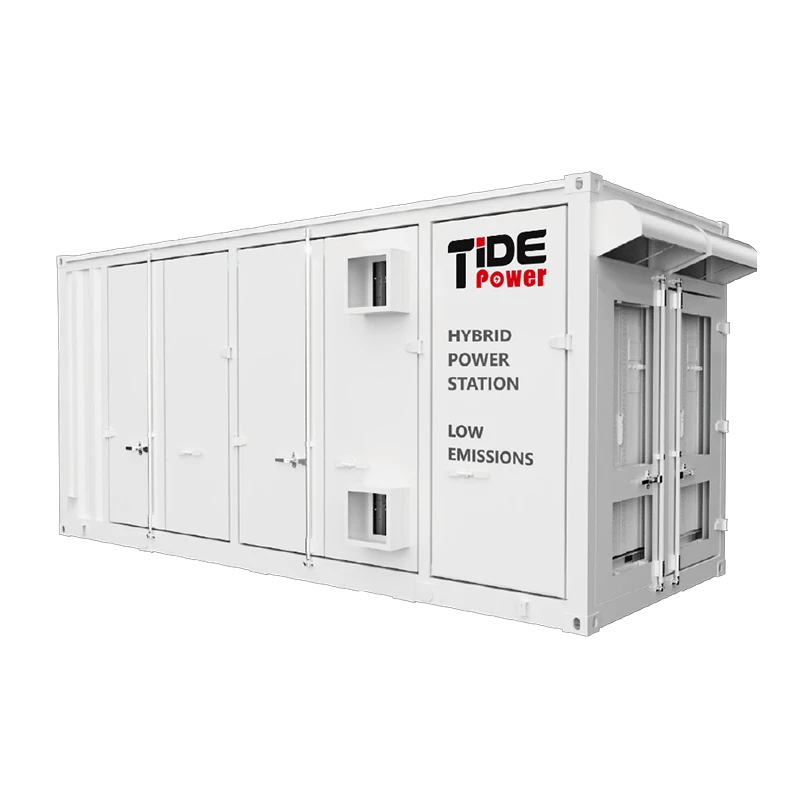
The same logic applies at smaller scale, where an all-in-one package may replace a containerised plant for a site with modest demand and no grid connection.
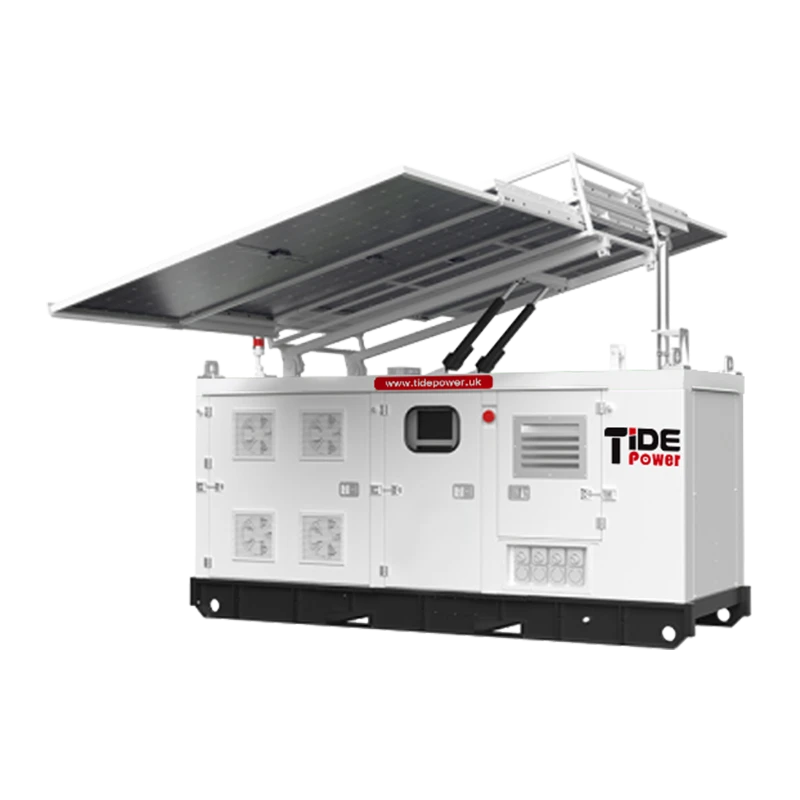
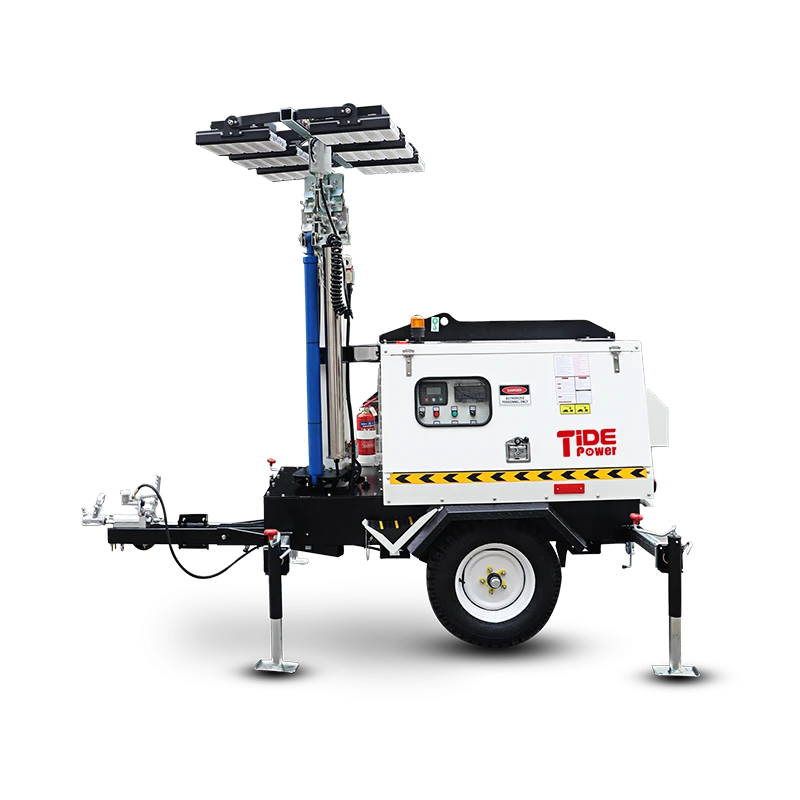
Some suppliers bundle site equipment beyond the generator, particularly for construction clients who need lighting as well as power. That bundling can shorten mobilisation, and it also concentrates the service relationship in one company, which is worth confirming before you sign.
Your Next Step Before Contacting Any Wholesaler
Fix the fields that make answers comparable before you send the first enquiry: duty and rating basis, load profile, voltage and frequency, phase and neutral arrangement, fuel and autonomy requirement, enclosure and acoustic target, site ambient and altitude, documentation requirements, and delivery destination. Tide Power Technology Co., Ltd. reviews those inputs against its silent diesel and hybrid ranges and replies with a configuration and scope rather than a bare price. Email [email protected] or call +86 591 2806 8999.
FAQ
Is there an official list of generator wholesalers in the USA?
No single federal register lists generator wholesalers. Business identity is registered at state level, while supplier directories are published by trade bodies, brands and the wholesalers themselves. Any published list therefore reflects a publication date and an editorial scope. Use it to gather candidate names, then verify each one against state business records, the brand’s own distributor locator, and a direct request for written channel confirmation. A name you cannot trace to a current registration or a brand network is a lead, not a supplier record.
How can I tell whether a wholesaler is authorized to sell a specific generator brand?
Ask for written confirmation of the product lines the supplier is authorized to sell, and whether it registers the factory warranty in its own name. Cross-check the name against the brand’s published distributor locator, then ask who performs warranty repairs and where the parts come from. A supplier that resells through another dealer can still serve you well, but the warranty path is longer, and that difference belongs in your comparison rather than in a surprise during the first breakdown.
Should I buy from a US wholesaler or import directly from a manufacturer?
It depends on volume, configuration and how quickly you need service response. A single standard unit on a tight schedule usually favours domestic stock, because the unit is already through customs and the service relationship is local. Multiple units, an unusual voltage, or a special enclosure usually favour a factory build, where configuration freedom offsets the longer lead time. In both cases, compare delivered cost including freight, duties, commissioning and warranty administration, not the unit price alone.
What should I compare before looking at generator prices?
Compare the scope behind each price first: rating basis with ambient and altitude, electrical interface, enclosure and acoustic class, fuel autonomy, commissioning, warranty administration and the documentation set. Two quotes for the same power figure can differ by a transfer switch, a tank, a commissioning visit or a freight term. Once the scopes match, price becomes a meaningful comparison, and the cheapest offer usually turns out to be the one with the narrowest scope rather than the lowest cost.
How many quotes should I collect?
Three comparable quotes are usually enough to separate a market price from an outlier, provided all three answer the same RFQ. More quotes do not improve the decision if the scopes differ, because you end up comparing configurations rather than suppliers. If a quote arrives with a different rating basis or a missing commissioning scope, send it back for correction before adding another supplier to the list.
If you’re interested, check out these related articles:
Supporting Stable Power Supply for Projects in Egypt
Tide Power & MWM Deepen Partnership in Strategic Meeting on Gas Generator and Power Solutions