 EN
 ZH
 FR
 ES
 AR
A standby diesel generator for a home power outage is sized by two numbers: the load you refuse to lose, and the hours you need to cover. Most purchases go wrong on one of them. A set chosen against a whole-house total that assumes every appliance starts at once ends up oversized and under-used, while a tank chosen for a two-hour test run runs dry in the middle of a three-day event. The workable answer usually sits between a small portable unit and a whole-home system, and it comes from measurements you can take before you talk to any supplier.
What a Standby Diesel Generator Must Cover During a Home Outage
A standby set is fixed in place, wired through an automatic transfer switch, and started by that switch when the utility supply drops. The generator is only half the system. The transfer switch decides which circuits receive power, and its layout explains why two houses with the same generator model can produce completely different results: one keeps the heating, the well pump and the refrigerator running, and the other trips the moment the compressor tries to start.
In code terms, a home backup system of this kind is usually an optional standby system, covered by Article 702 of NFPA 70 [1]. That classification matters, because an optional system can be designed around the loads you choose to support rather than around a legally required load list. The choice belongs to you, and that freedom is exactly where most sizing errors begin.
Which circuits are must-run and which are comfort
Write the list room by room before thinking about kilowatts. Heating or cooling, refrigeration, water supply, medical equipment, communications and lighting form the usual must-run group. An electric range, a hot tub or a large air conditioner can be added, but each one raises the starting surge the generator has to absorb, not merely the running load. Managed coverage, where the transfer switch or a load controller sheds the heaviest circuits while the set runs, often costs less than buying capacity for loads used a few minutes a day.
How long the outage is likely to last
Duration, not peak load, sets the fuel requirement. A set that carries a home for six hours needs a base tank. One that carries it for three days needs a tank, a refuelling plan and a fuel quality routine. Local grid conditions are the starting evidence here, and they vary street by street even inside a single utility’s territory.
Outage planning starts with the local supply rather than with the generator. <Advocating for Stronger Electricity Grids to Meet Rising AI Demands> covers why transmission and distribution capacity are under growing pressure as electricity demand rises.
Diesel, Propane or Battery Backup for a Home Power Outage
Fuel choice is a storage decision before it is an engine decision. Each option below carries a different volume, a different maintenance routine and a different failure mode during the event itself.
| Backup option | What it does well | What it demands | Do not choose it when |
|---|---|---|---|
| Diesel standby set | Dense fuel energy, long runtime from a compact tank, established engine service network | Fuel testing and polishing, compliant tank with containment, periodic exercise | Nobody can maintain the fuel or the set between outages |
| Propane (LPG) standby | Fuel does not degrade in the tank, clean combustion, simple annual service | Large tank footprint, delivery contract, vaporisation limits in cold weather | You need weeks of autonomy without a refill |
| Natural gas standby | No on-site fuel storage, runtime limited only by the supply main | Depends on the gas network, which can fail in the same event | The gas supply is unreliable or not available at the property |
| Battery and inverter backup | Silent, instant transfer, no fuel or exhaust | Covers hours rather than days, limited motor starting capability | The plan includes large motors or outages beyond a few hours |
| Portable gasoline generator | Lowest entry cost, can be moved between properties | Manual connection, refuelling during the event, carbon monoxide risk | The set must start unattended or run for days |
Diesel earns its place where the outage is long and the refuelling chain is uncertain, because a modest tank holds a large amount of energy and the fuel can be stored on site. The trade is upkeep. Diesel deteriorates, absorbs water and supports microbial growth when it sits, so a set that runs twice a year needs a fuel management habit rather than a fuel tank alone.
Sizing a Standby Diesel Generator in Five Steps
- Measure the load instead of estimating it. Read the nameplate on every appliance on the must-run list. Nameplates state watts or amps, and amps multiplied by volts give a rough watt figure for resistive loads, while the datasheet is the better source for anything with a motor.
- Separate running load from starting surge. A motor draws several times its running current in the moments after start, and the generator must supply that surge without dropping voltage far enough to stall the motor or reset electronics. Locked rotor amps from the motor nameplate, or starting kVA from the pump datasheet, are the numbers to collect.
- Decide between whole-home and managed coverage. Whole-home coverage requires a set and transfer equipment sized for everything running at once, surge included. Managed coverage sizes the set for the priority group and sheds the rest, which often delivers a better cost per outage hour.
- Choose the rating basis deliberately. ISO 8528-1 sets out distinct generator rating classes [2]. A standby rating assumes limited hours per year at variable load, so a set sold on its standby figure is not the same machine as one rated for continuous duty at identical kilowatts. Long outages push a standby-rated set toward its design limits.
- Check the site before the price. Altitude, ambient temperature, enclosure ventilation and the space available for the tank all affect what the set can deliver on the hottest afternoon of the year, not on a mild test day.
Reading the Datasheet Before You Compare Prices
Two quotations carrying the same kilowatt figure can describe very different machines. The table below lists what a datasheet line proves and what it does not.
| Record on the datasheet | Context it comes from | What it can support | Do not infer |
|---|---|---|---|
| Listing mark on the assembly [3] | Third-party evaluation of the packaged generator set | The assembly has been assessed against a published safety standard | That the installation, transfer switch or fuel system meets local code |
| Nameplate standby rating in kVA and kW | Manufacturer declaration under defined conditions | Short-duration backup capacity | That the same load can be carried continuously for weeks |
| Sound pressure level in dB(A) at a stated distance | Declared or measured under stated load and distance | A like-for-like comparison at the same distance and load | That the level at your property boundary will match |
| Fuel consumption at a stated load percentage | Declared consumption curve | A runtime estimate for a given tank | That consumption at half load is exactly half |
| Motor starting capability in kVA or locked rotor amps | Declared starting capability | Whether one specific pump or compressor can start | That several large motors can start at the same moment |
| Warranty terms and service scope | Supplier commercial document | What is covered, by whom, and for how long | That the installing dealer and the manufacturer are the same party |
One practical consequence: ask for the sound figure at your boundary distance and the fuel curve at the load you expect, not the headline numbers. A supplier who cannot produce those two lines is quoting from a brochure rather than from a specification.
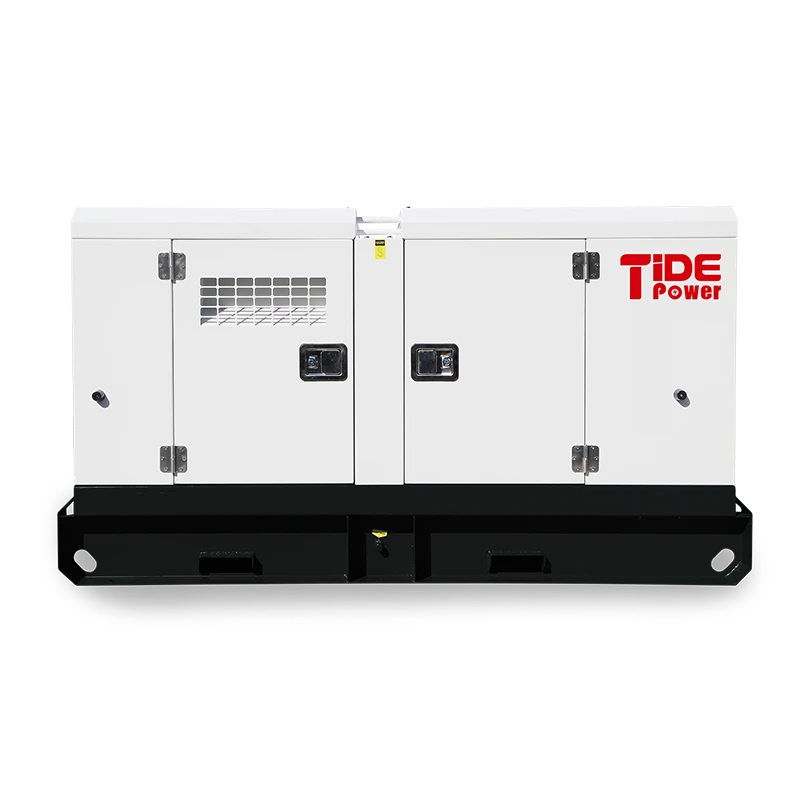
Engine and alternator selection matters most where the set will run for long stretches. An industrial engine family with published service intervals and a parts network in your country is worth more in year five than a lower price in year one. Tide Power builds the Fenova Plus Series around Lister Petter engines in a soundproof canopy, with ratings from 5 kVA to 900 kVA, as one example of how a packaged set combines engine, alternator and enclosure in a single assembly.
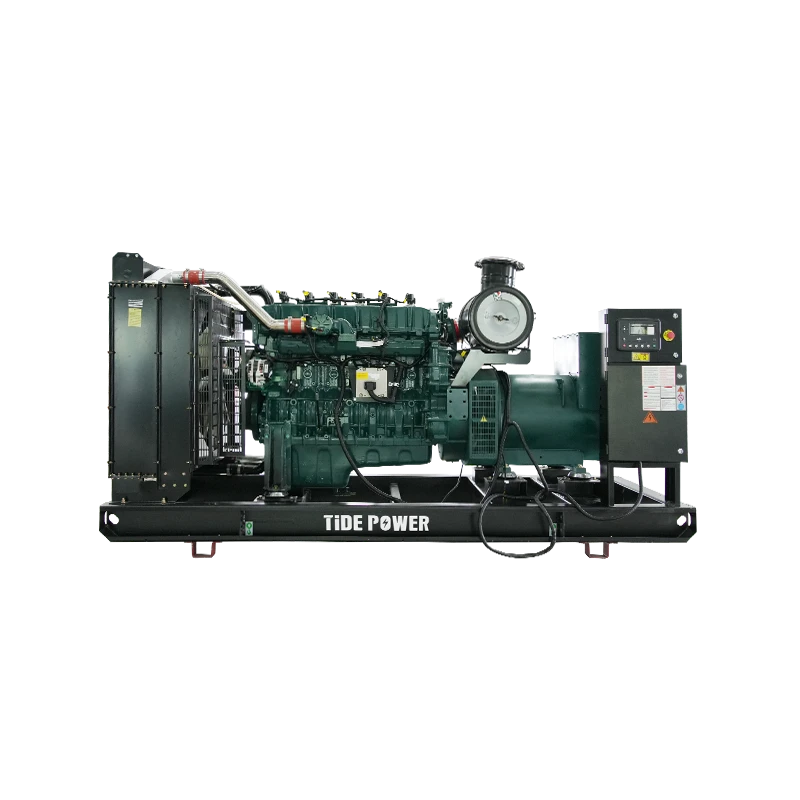
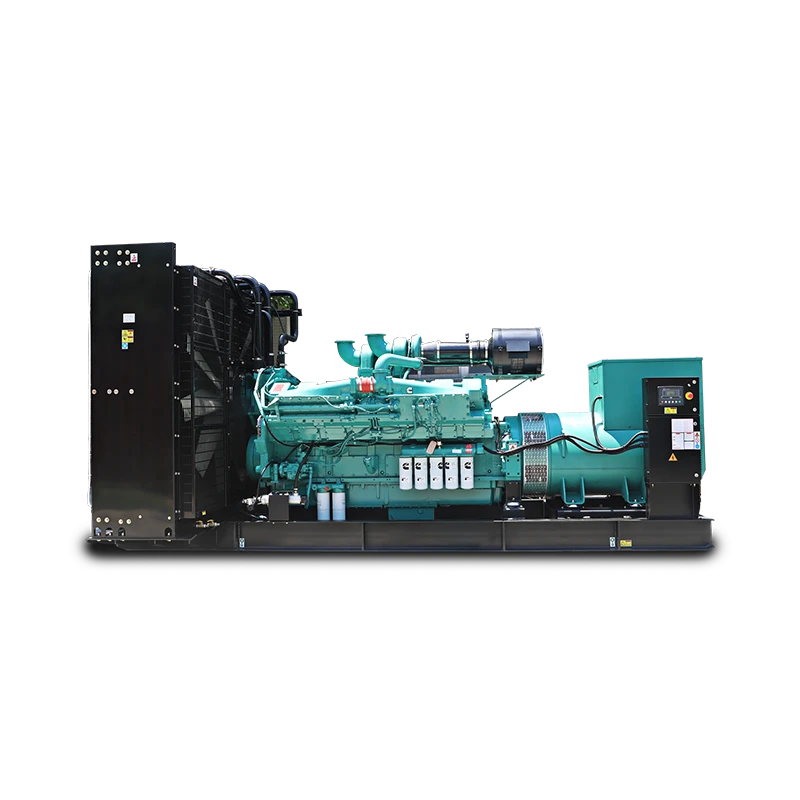
Multi-brand engine options exist on the same enclosure platform, which changes the service network and the spare parts path rather than the electrical principle. Confirm which engine family the quotation actually names before comparing prices.
What to Send a Supplier Before You Request a Price
A price is only comparable when the request behind it is comparable. The fields below change the technical answer rather than the paperwork.
| Field | What to state | Why it changes the quote |
|---|---|---|
| Load profile | Running kW for the must-run list, plus the largest motor’s starting requirement | Sets the rating and the alternator size |
| Rating basis | Standby or prime, with the ISO 8528-1 class named | A standby unit quoted for continuous duty is the wrong machine |
| Autonomy | Hours required at a stated load, and where the tank can go | Tank size and containment follow from the hours |
| Acoustic target | dB(A) limit at the boundary and the distance it is measured at | Determines enclosure grade and siting position |
| Documentation | Listing mark, emission tier, wiring diagrams, factory test record | What a permit reviewer, insurer and electrician will ask for |
| Service scope | Commissioning, exercise visits, fuel testing, response time | Owns most of the ten year cost |
Vague lines reach suppliers every day. Rewriting them costs one minute.
Reject this line: “Quiet diesel generator for a house, best price, deliver next week.”
Replace it with: “Standby-rated set for 12 kW of must-run load plus a 1.5 kW well pump with a five times starting surge, 48 hours of autonomy at half load, 65 dB(A) at the boundary 15 m away, listing and emission documents included, commissioning and one annual service visit.”
Installation, Fuel Storage and Noise Limits
The installation decides whether a correctly sized set actually works. NFPA 37 addresses the installation and use of stationary combustion engines and gas turbines, including exhaust discharge and clearance from combustible construction [4]. In practice that means the exhaust outlet points away from windows, doors and air intakes, the enclosure keeps its service clearances, and the fill and vent points stay reachable by whoever delivers fuel.
Fuel storage is where home projects most often stall. A base tank inside the enclosure saves space, while a separate tank allows a larger volume and easier inspection. Both need secondary containment, a fire-rated arrangement and a fill point a delivery driver can reach without crossing the house. Confirm the stored volume you are permitted before choosing the set, because a restriction on on-site fuel can override the runtime you wanted.
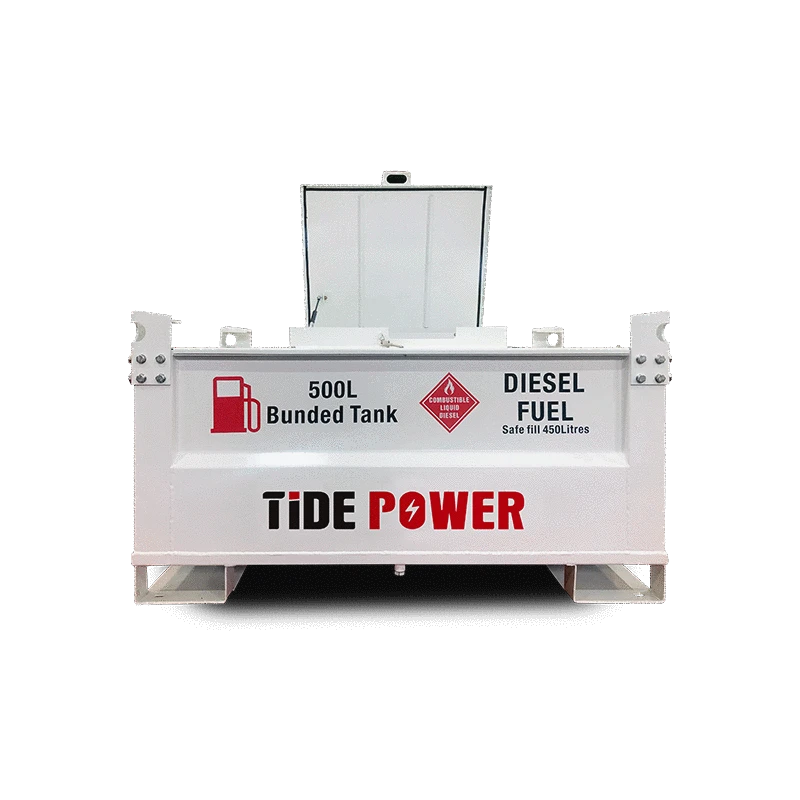
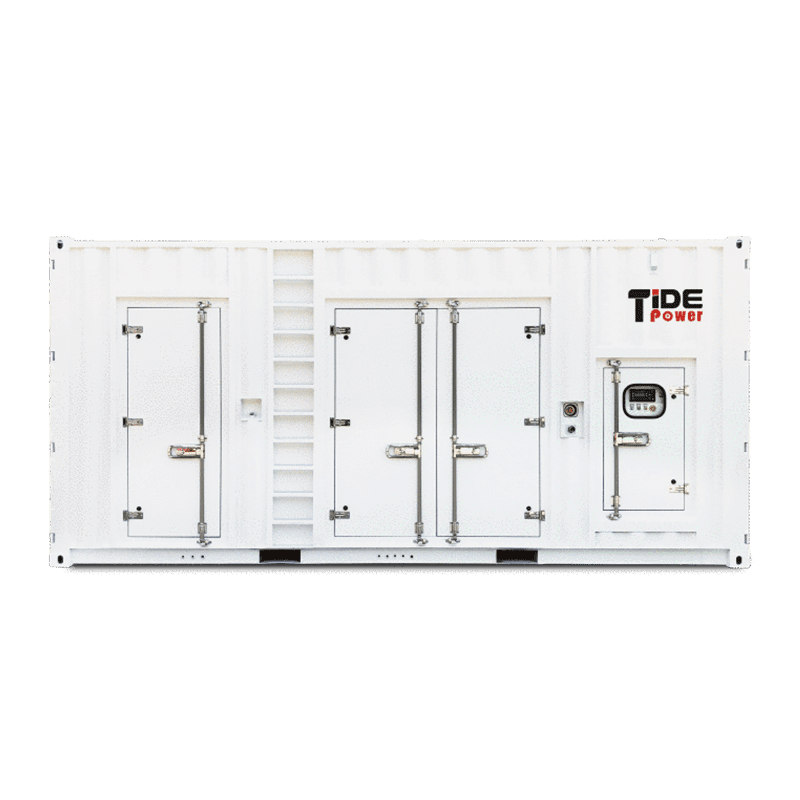
Where space allows, a containerised arrangement puts the set, the tank and the controls into one weatherproof assembly that can be sited away from the house. It suits larger properties where the equipment should stay out of the garden and out of the weather.
Noise is a siting question as much as an enclosure question. A soundproof canopy and a residential-grade silencer reduce the level at the source, while distance and a solid barrier reduce it further at the boundary. Compare quoted figures only at the same distance and load, then check the limit that applies at night in your area, which is usually stricter than the daytime one. The engine’s emission tier under 40 CFR Part 60 Subpart IIII [5] belongs in the same permitting conversation, because the tier states what the engine is certified to and an inspector may ask for the evidence.
Runtime, Fuel and Maintenance Costs Over Ten Years
Runtime is arithmetic once the datasheet is in hand: usable tank volume in litres, multiplied by the fraction you can safely draw, divided by consumption in litres per hour at the load you expect. Use the consumption figure for the load you will actually run rather than the full-load headline, and keep the units consistent. The result tells you whether you are buying a tank or a refuelling contract.
Diesel quality is the quiet cost. Fuel meeting ASTM D975 is the baseline [6], but storage conditions decide how long it stays that way. Water ingress, microbial growth and oxidation all progress while the set sits idle, and a standby set sits idle for most of the year. Annual fuel testing, draining water from the tank sump and polishing when results drift cost far less than a blocked filter on the second night of an outage.
Service cost follows the exercise routine. A monthly run at light load confirms the set starts, the transfer switch operates and the battery holds charge. The annual service covers oil, filters, coolant condition and a load test. Record the readings, because a slow change in fuel consumption or exhaust colour is easier to act on than a sudden failure in bad weather.
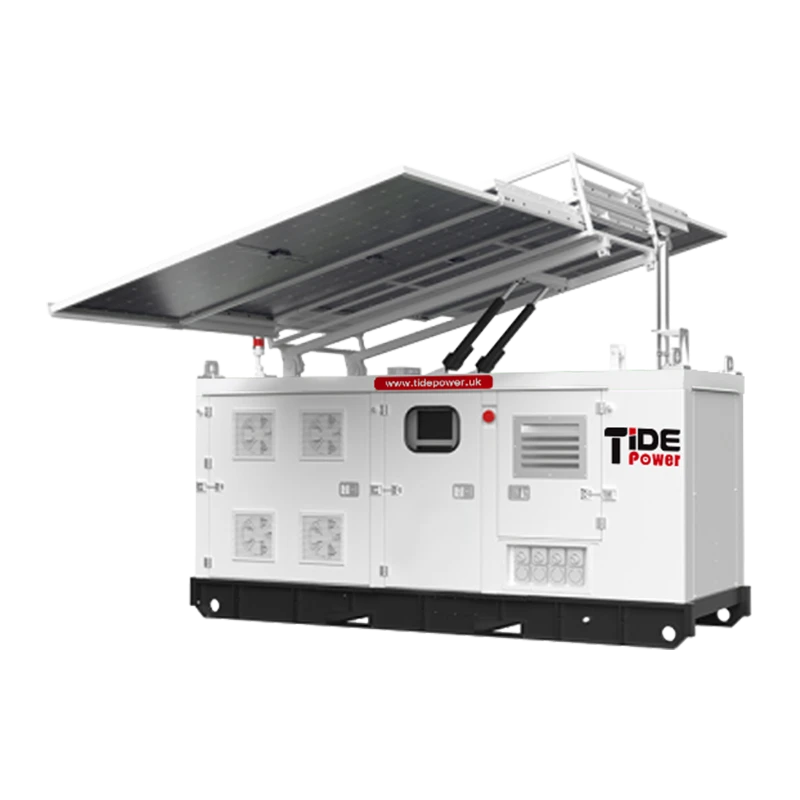
Where outage hours are long but the peak load is modest, a hybrid arrangement can cut generator runtime. A battery and solar input carry the base load, and the set starts only when the battery reaches its lower limit, which reduces fuel burn, noise hours and servicing intervals. The trade is another system to maintain and a higher capital cost.
Send Your Load List Before You Choose a Set
Send the must-run circuit list with nameplate watts, the largest motor’s starting requirement, the hours you want to cover, the space available for the set and the tank, and the noise limit that applies at your boundary. Tide Power Technology Co., Ltd. can turn that into a sizing proposal with a runtime estimate and an installation outline your electrician can review.
Email: [email protected]
Tel: +86 591 2806 8999
A sizing proposal is not a substitute for a site survey, a load test at commissioning, or the approval of your local electrical inspector.
FAQ
How big a standby diesel generator does a house need?
Size from the must-run list: add the running watts of the circuits you will support, then add the starting surge of the largest motor that can start while the others are running. A home that keeps heating, refrigeration, water and lighting usually lands well below a whole-house figure. The rating basis matters as much as the kilowatts, because a standby rating assumes limited annual hours at variable load [2].
Can a standby diesel generator run a whole house?
It can, provided the set and transfer equipment are sized for every load running at once plus the largest starting surge, and provided the fuel supply matches the outage length you expect. Whole-home coverage usually means a larger set, a larger tank footprint and a higher service cost. Managed coverage with load shedding handles most of the same events for less, at the price of some circuits waiting their turn.
How long can a diesel standby generator run during an outage?
Runtime comes from usable tank volume divided by consumption at the actual load, so a 48-hour target is a tank decision as much as an engine decision. Continuous operation also depends on the rating basis: a standby-rated set is intended for limited hours per year, so a multi-day event should be checked against the manufacturer’s duty guidance [2]. Plan refuelling access and fuel testing for anything beyond the tank.
Is a standby diesel generator too noisy for a residential area?
Sound is managed rather than eliminated. A soundproof enclosure, a residential-grade silencer and a position away from bedroom windows and neighbouring boundaries do most of the work. Compare figures only at the same distance and load, and check the local noise limit before fixing the position, since a set that passes a daytime limit can exceed a night-time one.
References
[1] NFPA 70, National Electrical Code, Article 702, “Optional Standby Systems,” National Fire Protection Association, 2023.
[2] ISO 8528-1:2018, “Reciprocating internal combustion engine driven alternating current generating sets, Part 1: Application, ratings and performance,” ISO, 2018.
[3] UL 2200, “Standard for Safety for Stationary Engine Generator Assemblies,” UL Standards & Engagement.
[4] NFPA 37, “Standard for the Installation and Use of Stationary Combustion Engines and Gas Turbines,” National Fire Protection Association, 2021.
[5] U.S. Environmental Protection Agency, “Standards of Performance for Stationary Compression Ignition Internal Combustion Engines,” 40 CFR Part 60, Subpart IIII.
[6] ASTM D975, “Standard Specification for Diesel Fuel Oils,” ASTM International.
If you’re interested, check out these related articles:
Diesel vs. Gas Generators: Which Is Right for Your Industry?
Powering the construction industry with Tide Power