 EN
EN ZH
ZH FR
FR ES
ES AR
ARMatching the wattage sticker on a generator box to your RV’s air conditioner label is the easy part. What most guides skip is the difference between a generator that starts the AC and one that keeps it running through a humid afternoon without tripping, while still charging your battery bank and powering your fridge. Over years of evaluating generator set systems across industrial and remote projects, I’ve seen the same pattern: weekend campers and full-time travelers alike discover that a generator that meets the bare minimum on paper can fall short in the real world—when altitude thins the air, fuel quality drops, or the load cycles in ways a spec sheet never captures. This article walks through the engineering and procurement principles that separate a generator you’ll trust from one that becomes a limit on your travels, giving you a purchasing framework built on power physics, operating environment, and supplier reliability rather than marketing bullet points.
Power Requirements Start with Simultaneous Load, Not Just Starting Watts
An RV generator isn’t powering one device in a lab. It handles a mix of inductive loads (air conditioner, microwave) and resistive loads (lights, heating elements) that behave differently at startup and during steady-state draw. The most common mistake is using only the AC’s starting wattage to size the generator and ignoring what else might be running at the same time.
A typical 13,500 BTU RV air conditioner draws 1,500–1,700 running watts but can require 2,800–3,200 watts to start, depending on the compressor and ambient temperature. Add a microwave (1,000–1,200 watts), a converter charging batteries (300–500 watts), and a residential fridge (400–700 watts), and a setup that looked comfortable on paper at 3,000 watts can trip a breaker the first evening.
The practical rule I’ve applied in off-grid energy system sizing is to list every appliance that could operate simultaneously, take their rated running watts, multiply the largest inductive load by 1.8–2.2 for surge, and add a 15% margin for temperature derating and altitude. At 5,000 feet above sea level, a normally aspirated gasoline generator loses about 3–4% of its rated output per 1,000 feet—meaning a generator rated for 3,000 watts at sea level may only deliver around 2,400 watts at 7,000 feet. That margin is not a luxury; it’s what prevents a campground shutdown at midnight.
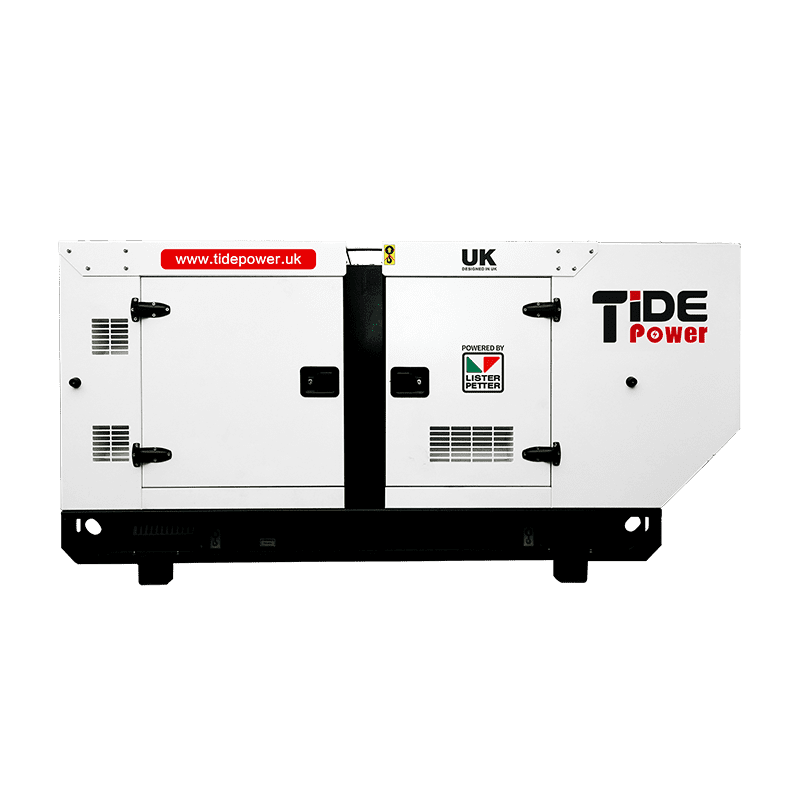
The generator’s running-watt rating should cover the simultaneous load, while the surge rating covers the single largest inductive start. For a 30-amp RV running one AC, a microwave, and lights, a generator rated for 3,000–3,500 running watts with a surge capacity above 4,000 watts is generally sufficient. A 50-amp rig with dual ACs calls for 5,500–7,000 running watts, and at that power level, the differences in engine quality and alternator design become far more significant than the printed wattage number.
Fuel Type Shapes Your Operating Reality More Than You Think
Gasoline, propane, and diesel each impose a different rhythm on your travel, and the decision should follow your use profile, not internet consensus. Gasoline remains the most common fuel for portable RV generators because it’s widely available and the engines are straightforward to maintain. A gasoline generator typically delivers about 10–12% more power density than the same displacement running on propane, so if you’re already right at the edge of your power requirement, switching to propane can put you under. However, gasoline degrades over time, requiring stabilizers for generators that sit for months between trips.
Propane generators eliminate the stale-fuel problem entirely. Their sealed fuel system prevents carburetor gumming, and the fuel itself never expires. The trade-off is lower energy density and the need to carry propane cylinders, which on a long trip means planning stops at refill stations. If your RV already uses propane for cooking and heating, a dual-fuel generator that runs on both gasoline and propane gives you a practical hedge: propane for quiet campground evenings where you don’t want to handle liquid fuel, and gasoline for that extra wattage margin when altitude and heat conspire against you.
Diesel RV generators are less common in North America outside of diesel-powered motorhomes, but they offer significant advantages in fuel efficiency and longevity. In the industrial generator sets I’ve specified, diesel engines routinely outlast their gasoline counterparts by a factor of 2–3 in hours, and the same principle holds at smaller scales. If your RV has a diesel chassis and you can draw from the main tank, a diesel generator integrates cleanly into the coach’s fuel system and keeps you off the gas station circuit entirely. The engine is heavier and the initial cost is higher, but the hourly operating cost and service interval advantage often makes it the better choice for full-timers and heavy users.
| Fuel Type | Power Density | Storage Life | Operating Cost Per Hour (3kW load) | Typical Engine Life (hours) | Best For |
|---|---|---|---|---|---|
| Gasoline | Highest | 3–6 months | Moderate | 2,000–3,000 | Occasional campers, max power from small unit |
| Propane | ~10% less than gasoline | Unlimited | Similar to slightly lower | 2,000–3,000 | Seasonal users, clean-burning, no stale fuel |
| Diesel | Comparable to gasoline | 12 months+ | Lower per kWh | 5,000–8,000 | Full-time RVers, motorhomes with diesel chassis |
If your program involves international travel or remote-area boondocking where fuel availability fluctuates, it is worth confirming local fuel quality and supply logistics before finalizing your generator selection — reach out at [email protected] to discuss environmental and logistical factors that influence fuel system configuration.
Inverter Technology and Acoustic Design Define Livability
A generator that destroys the silence of a mountain sunset has failed its most important job. The technical measurement is decibels at a given distance, but what matters operationally is whether the unit operates quietly enough that you can hold a conversation 10 meters away and the campground neighbor doesn’t feel the vibration through the ground.
Conventional generators run at a fixed RPM (typically 3,600) to produce 60 Hz AC power regardless of load, so they produce full engine noise even when powering only a small charger. Inverter generators vary engine speed to match the load, dropping to idle when demand is low and ramping up only as needed. This reduces fuel consumption and noise dramatically during partial-load operation—which is most of the time in an RV. A quality inverter generator rated at 53–58 dBA at quarter load is a different species of machine from a conventional open-frame unit producing 68–72 dBA at the same distance. That 10–15 dBA difference is perceived as roughly half to one-third the loudness.
The inverter section itself also matters for electrical cleanliness. A good inverter produces a pure sine wave with total harmonic distortion (THD) below 3%, which protects sensitive electronics like laptop chargers, medical devices, and some RV converter boards. Generators with THD above 5% can cause microprocessor resets or component heating over time. If you’re running a CPAP, satellite internet gear, or a high-end entertainment system, specify a generator with <3% THD rather than trying to filter dirty power afterward.
Physical packaging contributes almost as much to real-world noise as the engine itself. Enclosed inverter generators with sound-dampening foam, vibration-isolated engine mounts, and directed exhaust outlets can operate remarkably quietly even when the engine is working hard. In the power generation projects I’ve overseen, the difference between a well-engineered enclosure and a basic canopy is often 5–8 dBA for the same engine, which is the difference between a generator that blends into background campground noise and one that draws complaints.
Reliability Comes from the Supplier, Not Just the Spec Sheet
A generator’s on-paper specifications guarantee nothing if the unit won’t start on a cold morning or the warranty support means long hold times and freight charges you have to pay. When I evaluate generator manufacturers for energy projects, the first thing I look at is the service network and parts availability, not the horsepower rating.
For an RV generator that may travel thousands of miles from its selling dealer, having a broad network of authorized service centers that honor the warranty without charging diagnostic fees is more valuable than an extra 100 watts of output. Some brands with excellent products in North America have almost no presence outside their home market, so a European or Australian traveler who buys on Amazon faces an expensive logistics puzzle if anything fails. Check whether the warranty terms include parts, labor, and freight during the coverage period, and whether the manufacturer maintains a technical support line that actually answers.
Engine brand and generator-end brand both matter. In the industrial generator world, we commonly specify separate engine and alternator brands so each component can be selected for its reliability. Many portable generators use proprietary engines with limited parts support; others are built around well-known engine platforms from Honda, Yamaha, or Kohler where spare parts are available worldwide for decades. For an RV generator you’ll depend on in remote areas, the advantage of a mainstream engine platform outweighs a slight price premium.
The physical build quality is harder to assess from photos, but look for a cast-iron cylinder liner (not aluminum bore), a brushless alternator with copper windings, and an automatic voltage regulation (AVR) system rather than capacitor-excited regulation. These are the same reliability markers we use when qualifying industrial gensets, and they translate directly to the smaller scale of an RV unit.
Purchase Price Is the Smallest Number in the Ownership Equation
A $600 generator that fails in two seasons and leaves you without power in the desert costs far more than a $1,500 generator that starts on the first pull every time. Yet the impulse to buy on price is strong because the immediate savings are visible and the future failures are not.
Calculate the cost over an expected ownership period. A weekend camper using a generator 40 hours per year might get 5–7 years from a quality budget unit before major maintenance, while a full-timer putting 600 hours a year on the same generator may see it reach end of life in 3–4 years. In the latter case, fuel efficiency differences become significant. A generator that consumes 0.25 gallons per hour at half load versus one that burns 0.35 gallons per hour saves roughly $1,200 in fuel over 3,000 hours at current fuel prices—enough to pay for the more efficient machine outright.
The after-sales dimension is the most overlooked cost driver. A generator sold through a retail channel that provides no service support becomes a disposable product. I’ve had conversations with RV fleet operators who standardized on a particular brand not because it was the cheapest, but because the regional distributor stocked parts and could deliver a replacement unit within 24 hours if a repair exceeded 48 hours. For a rental fleet where downtime costs are visible on the balance sheet, that logistics capability has a financial value that exceeds any discount.
If your travel profile involves international borders or multiple climate zones, confirm that the generator you’re considering meets the emissions and safety certifications required in the countries you’ll visit. A unit certified only for EPA compliance cannot legally be imported into EU countries that require CE marking, and vice versa. This certification gap is easy to miss in a buyer’s guide, but it becomes painfully real at a customs inspection. Share your intended travel regions and power requirements at [email protected], and we’ll help you map the regulatory and technical requirements before your purchase.
Common Questions About RV Generators
How do I calculate the generator size I need without an engineering degree?
List every appliance that could run at the same time, not just the biggest. For a single AC, microwave, and charger, start with the running watts of each (e.g., 1,700 + 1,000 + 500 = 3,200 watts). Then add the starting surge of the largest motor—roughly double its running wattage—but note you only need to cover the surge capability, not the continuous rating. A 3,200-watt continuous generator with a surge rating of 4,000 watts will start that combination. Add 15% if you’re camped above 5,000 feet.
Are inverter generators really worth the extra cost for an RV?
The inverter mechanism itself isn’t the full answer; it’s the combination of variable engine speed and clean electrical output that justifies the price. When you’re at a campground with strict quiet hours and 50 feet between sites, a generator that hums at conversation level and draws half the fuel of a constant-speed unit changes your whole experience. For occasional tailgating where noise doesn’t matter, a conventional generator works; for multi-night boondocking, the inverter is worth it.
Can I run my RV air conditioner on a 2,000-watt generator?
A single 13,500 BTU air conditioner can sometimes start on a 2,000-watt inverter generator if the unit includes a soft start capacitor and the generator’s surge rating is at least 3,000 watts for a few seconds. But on a hot day with a battery charger running, the margin evaporates fast. Many RVers find a 2,200–2,500-watt inverter unit is the practical minimum for running one AC reliably without frequent tripping.
Does propane save money compared to gasoline for an RV generator?
Per gallon, propane costs roughly the same or slightly less than gasoline in many regions, but you’ll use about 10% more propane to produce the same kWh output. The real savings show up in maintenance and storage: no carburetor cleaning, no fuel stabilizer, and no stale fuel to dispose of after winter. Over three years of seasonal use, the reduced maintenance and zero fuel-waste translates to lower total ownership cost even if the per-hour fuel cost is close to gasoline.
How much does generator noise actually vary between models, and what’s acceptable at a campground?
At 50% load, typical open-frame generators measure 68–74 dBA at 7 meters, while quality enclosed inverter generators run 53–58 dBA. That 15 dBA spread means the quieter unit produces about one-quarter the perceived loudness. Most US campgrounds enforce a noise limit of 60 dBA at 50 feet, measured at the property line, and many European campsites have lower thresholds. If you’re choosing between two generators and one is 3 dBA quieter, that is noticeable; if it’s 6 dBA quieter, it’s the difference between being asked to turn it off and being ignored entirely. Share your noise sensitivity requirements and we’ll confirm which generator configurations meet your campsite parameters.
If you’re interested, check out these related articles:
Tide Power Unveils Advanced Hybrid Power Solutions, Redefining Industrial Energy Resilience
Tide Power staff conference ends successfully
Knowledge is power: Comprehensive training from Tide Power
Register to visit Tide Powers stand NO.4.B13 at Nigeria Energy