 EN
EN ZH
ZH FR
FR ES
ES AR
ARThe conventional checklist for selecting a gas generator manufacturer — engine brand, power rating, price per kW — will not protect your project from supply chain gaps or service failures. After a decade of working with energy infrastructure procurement across Africa, Southeast Asia, and the Middle East, I have seen too many well-researched purchasing decisions unravel because the evaluation stopped at the spec sheet. Choosing a gas generator manufacturer is a strategic decision that determines your operational resilience for the next 15–20 years. The right partner aligns engineering capability, manufacturing consistency, and global support with the specific demands of your application.
Gas Generator Requirements Go Beyond Technical Specs
When I review initial RFQs from procurement teams, the pattern is consistent: they focus on power output, voltage, frequency, and fuel type. These parameters are the price of entry, not a differentiator. A 500-kW natural gas generator set from any established manufacturer will meet the same ISO 8528 performance class. What separates a reliable long-term asset from a recurring headache is how the manufacturer handles the specifications you do not list explicitly: transient response under block loading, altitude derating accuracy, and integration with your site’s existing switchgear logic.
I recall a hospital project in East Africa where the genset met every datasheet requirement yet tripped repeatedly during weekly load tests. The issue was not the engine or alternator; it was the controller firmware’s reaction to a minor phase imbalance the site had not flagged in the initial survey. A manufacturer with deep application engineering support would have caught this during the pre-delivery FAT. This is the difference between a transactional supplier and an engineering partner.
| Evaluation Layer | What to Examine | Common Oversight |
|---|---|---|
| Core Performance | ISO 8528 class, power factor, voltage regulation | Transient response under real-world load steps |
| Site Integration | Communication protocols, protection relay coordination | Controller compatibility with existing SCADA |
| Fuel Quality | Methane number tolerance, supply pressure range | Impact of local gas composition on knock margin |
| Environmental Profile | Ambient temperature ceiling, altitude, humidity class | Enclosure cooling adequacy for installation location |
Engine Brand and Configuration Are Only the Starting Point
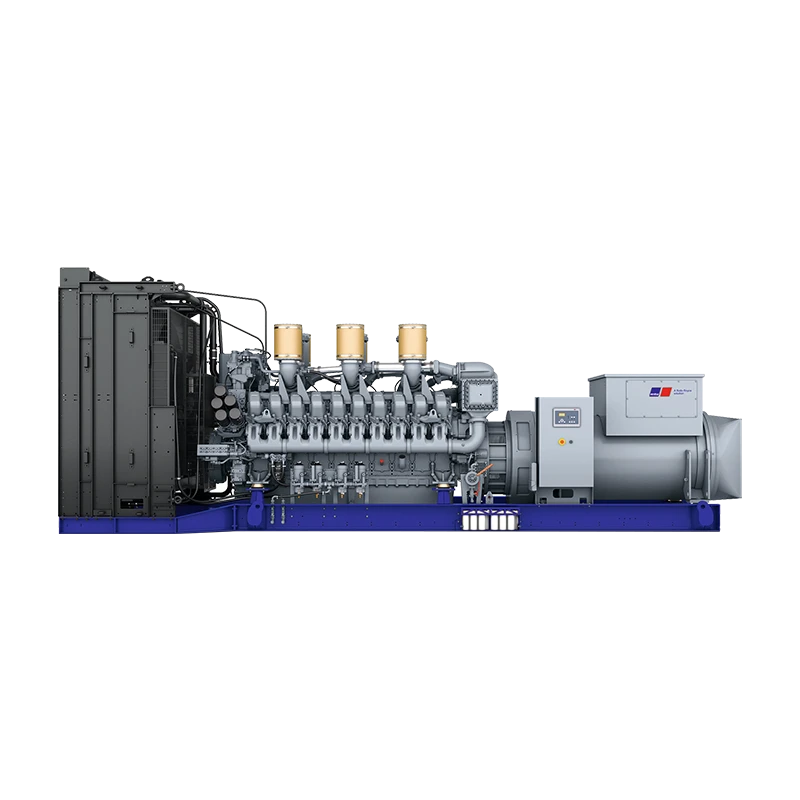
It is common to see RFP documents that specify “Cummins, MWM, or equivalent” as if those three words guarantee a homogeneous outcome. In reality, each engine platform is designed around a different combustion philosophy, and the manufacturer’s packaging quality determines whether that design intent reaches your meter. An MWM gas engine integrated by a manufacturer with 20 years of cogeneration experience will perform differently from the same engine assembled in a low-cost facility with no testing beyond a factory load bank.
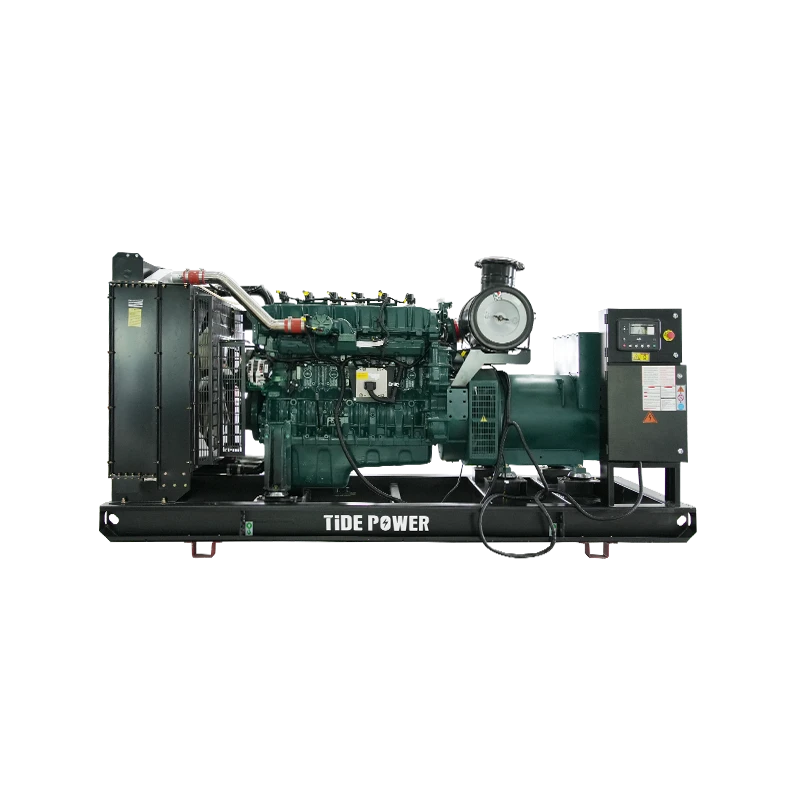
Engine configuration details that directly affect operational costs are often overlooked at selection. Combustion air filtration, cooler sizing for high ambient, and the level of factory-verified protection settings all influence maintenance intervals and unscheduled downtime. I advise procurement managers to request the manufacturer’s FAT protocol for the exact engine-alternator-controller combination they are buying, not a generic corporate document. A short or incomplete FAT means the integration risk transfers to your site.
Supply Chain Stability Determines Long-Term Generator Value
A gas generator set is not a one-time purchase; it is a dependency on a continuous flow of parts, consumables, and technical updates for its entire service life. I measure a manufacturer’s reliability not by their delivery promise but by the depth of their parts inventory and the responsiveness of their logistics team during abnormal events. During the global supply chain disruptions of 2022, manufacturers that relied entirely on just-in-time engine deliveries from third-party suppliers faced 16–20 week delays on major components. Those with buffer stock, in-house assembly capacity, and pre-qualified alternative suppliers kept their customers running.
When evaluating a manufacturer, look past the glossy brochure of global “service centers” and ask for the actual parts fill rate for your region over the previous 12 months. Also, verify whether critical components like gas regulators, ignition modules, and controller PCBs are regional stock items or always shipped from the parent factory. A manufacturer that publishes a transparent after-sales performance dashboard — even if the numbers are not perfect — is more trustworthy than one that avoids the question.
Factory Audit and Certification Verification Are Essential
I always recommend a physical or virtual factory audit before finalizing a gas generator manufacturer. The machine tools, test cells, and assembly line organization tell you more about quality consistency than any marketing material. On one factory visit, I noticed that the manufacturer’s engine test stands logged only steady-state data, omitting transient load pickup and voltage dip recordings. That single gap meant the customer would be the first to see how the genset behaved under step loads — an unacceptable transfer of commissioning risk.
Beyond certifications like ISO 9001 and CE, verify that the manufacturer’s scope of certification actually covers gas generator set assembly, not just engine distribution. The certificate’s annex page matters more than the logo on the cover. Also, check if the manufacturer holds any application-specific approvals relevant to your project — such as ATEX compliance for gas environments or grid code certifications for utility interconnection. These approvals are not interchangeable, and discovering their absence during site commissioning leads to expensive retrofits.
After-Sales Support Shapes the Real Total Cost of Ownership
The purchase price of a gas generator set often represents less than 30% of its lifecycle cost. Fuel, maintenance, and unplanned downtime account for the rest. A manufacturer’s after-sales structure directly controls the largest portion of your long-term expenditure, yet it receives surprisingly little attention compared to the initial capital negotiation.
Look for specific, enforceable commitments in the service agreement: guaranteed response time for emergency calls (not just “as soon as possible”), availability of remote monitoring diagnostics, and escalation paths that reach engineering leadership, not a generic call center. I have helped clients recover from situations where a gas engine’s warranty support was technically valid but practically unreachable because the regional service partner had no trained gas engine technicians. The manufacturer’s training investment in their local support network is a leading indicator of whether your warranty holds real value or exists only on paper.
If your operation involves continuous process loads — in pharmaceutical manufacturing, data centers, or gas compression — the cost of a single unplanned shutdown can far exceed any upfront savings from choosing a marginal supplier. Factor that risk into your total cost of ownership calculation, not just the price per kW.
Common Selection Mistakes That Lead to Downtime and Extra Costs
I see the same missteps repeated across different industries and continents. The most damaging is specifying a generator set strictly by prime power rating without reserving overload capacity for motor starting or transient loads. Gas engines, in particular, have a narrower overload envelope than diesel, so a 500-kW continuous-rated gas genset may only handle a 10% overload for one hour. If your site has large motor loads that start simultaneously, that margin can disappear quickly.
Another costly pattern is agreeing to delivery terms that do not include site commissioning and load bank testing by the manufacturer. I have watched contractors accept a genset at port and then spend weeks troubleshooting installation issues that the manufacturer’s commissioning engineer would have resolved in days. The few thousand dollars saved on commissioning become tens of thousands in project delay and liquidated damages.
Finally, failing to align fuel quality guarantees with the manufacturer’s published knock margin requirements. Pipeline natural gas composition varies by region and season, and a gas engine tuned to a narrow methane number window will either derate or alarm constantly as the fuel changes. Ensure the combustion control system is configured — and tested — for your actual gas analysis, not an idealized lab composition.
Common Questions About Choosing a Gas Generator Manufacturer
How do I verify a manufacturer’s claimed performance data without a factory visit?
Request a copy of the specific FAT report for the same model and configuration you are buying, run within the last six months. The report should show voltage and frequency response under step load, steady-state deviation, and recovery time. Compare these values against ISO 8528 class G2 or G3 limits. If the manufacturer cannot produce a recent FAT report for your exact configuration, that is a red flag. Remote video witnessing during final testing is an acceptable alternative that I have arranged for multiple international projects.
Should I choose a manufacturer that uses a well-known engine brand or a proprietary engine?
A reputable brand like MWM, Lister Petter, or Cummins provides proven performance and global parts availability, which is critical for long-term asset support. Proprietary engines can offer cost advantages but expose you to parts obsolescence risk if the manufacturer stops production. In my experience, standardizing on an established engine platform — integrated by a manufacturer with deep application engineering — is the safest path unless your fleet size justifies the investment in a captive engine program with guaranteed parts availability.
What is the most common after-sales gap that procurement teams overlook?
The mismatch between the warranty document and the regional support capability. A manufacturer may offer an impressive warranty period, but if the nearest trained gas engine technician is a flight away, the warranty’s practical value diminishes sharply. Before signing, ask for the contact details of the specific service partner who will respond to your generator’s emergency calls, and verify their gas engine training certifications. If the manufacturer cannot name the technician who will show up to your site, reconsider the SLA.
How do I assess a manufacturer’s ability to handle future expansion or retrofit needs?
Evaluate the control system architecture, not just the engine. A generator set with an open-protocol controller that supports remote monitoring, load sharing, and parallel operation allows you to add capacity later without replacing controls. Ask for the communication interface list and confirm it is compatible with your existing site energy management system. Manufacturers who lock you into proprietary monitoring platforms can increase integration costs significantly when your needs evolve.
What questions should I ask about a manufacturer’s parts inventory for emergency spares?
Request the stock-on-hand report for the top 20 consumable and critical spare parts for your generator model in the region closest to your project. Look for items like gas regulators, ignition modules, controller fuses, and oil filters. If the majority of these are listed as “factory order” with lead times exceeding four weeks, you are planning for downtime, not uptime. Share your operational schedule and location with the team at Tide Power Technology — we can help you benchmark spare parts availability and confirm that your selected specification aligns with regional support infrastructure, at [email protected] or +86 591 2806 8999.
If you’re interested, check out these related articles:
Welcome to Tide Power booth N2.263 at bauma CHINA 2024
Tide Power & MWM Deepen Partnership in Strategic Meeting on Gas Generator and Power Solutions