
 EN
EN ZH
ZH FR
FR ES
ES AR
ARIndustrial generator manufacturers are easy to find and difficult to qualify. A directory gives you names; it rarely tells you which supplier can hold a voltage tolerance under step load, document a factory test, or ship a compliant package into your target market. In more than ten years of positioning generator set programs for international energy buyers, I have learned that the shortest path to a reliable shortlist is evidence, not brand familiarity. A manufacturer either produces an OEM authorization, a consistent derating method, and a complete factory test record, or the evaluation stalls before pricing should even be discussed.
What Separates Strong Industrial Generator Manufacturers From a Brochure?
A polished brochure tells you the machine exists. It does not tell you how the manufacturer behaves when a 250 kVA unit fails a transient response test on a Friday afternoon. Strong industrial generator manufacturers distinguish themselves in three places: the documentation trail, the supply chain, and the factory floor. I look first at whether the sales team can produce complete nameplate data, engine approval letters, alternator data sheets, and controller settings without asking engineering. When documentation is slow at the quotation stage, it is usually slower after the order.
Which Evidence Should You Demand Before Shortlisting a Manufacturer?
Before you compare prices, request five verification items from every industrial generator manufacturer on the list. A supplier that treats these documents as internal information is telling you what the post-order experience will be.
| Verification area | Document to request | Red flag |
| Engine partnership | Current OEM authorization letter | Expired letter or no direct relationship |
| Alternator performance | Published efficiency and reactance data | Refusal to name the alternator brand |
| Factory testing | Routine load bank test procedure | Test report with no recorded load steps |
| Compliance | ISO or CE records for the model range | Certificates that omit the model range |
| After-sales stocking | Spare parts inventory list for your region | Local service described only as a promise |
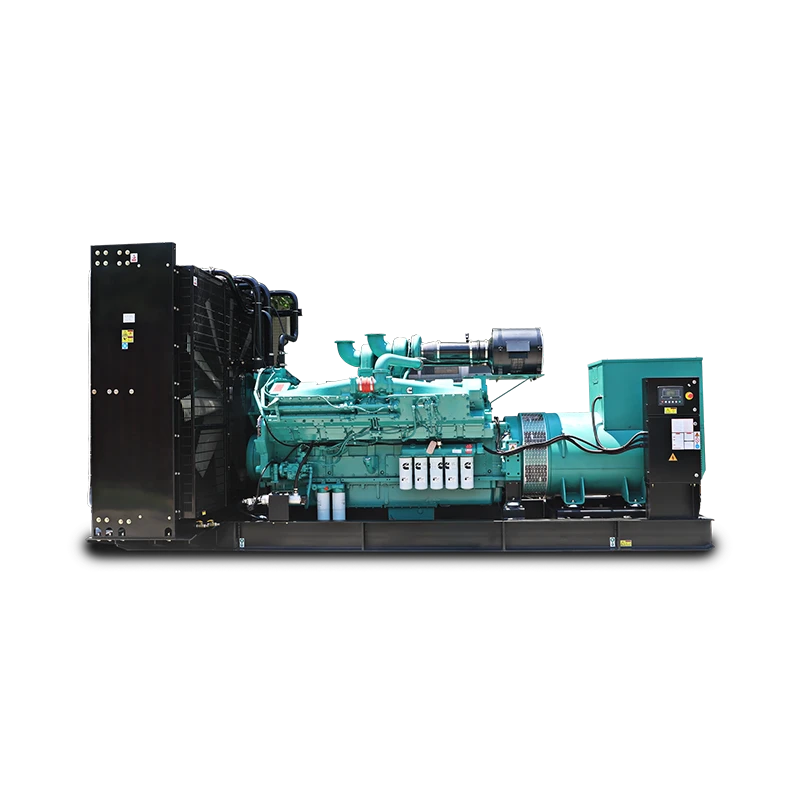
The engine authorization is the first document I read because it tells me whether the manufacturer can access long-lead parts directly. A manufacturer with a live OEM relationship can escalate a warranty claim through the engine builder. A broker cannot.
How Do Engine Partnerships and Factory Checks Shape Generator Set Quality?
Engine partner choices shape long-lead delivery, emissions compliance, and local service. A manufacturer that offers Perkins for one site, Cummins for another, and a cost-focused option for rental markets is usually matching the machine to the application. The table below shows how one product family segments power ranges and engine choices.
| Series | Power Range | Engine Options | Typical Site Fit |
| Fenova Plus Series | 5 kVA to 900 kVA | Lister Petter | Telecom stations, agriculture, small industry |
| Hemera Series | 5 kVA to 650 kVA | DCEC, Perkins, SME | Hospitals, data centers, commercial buildings |
| Econic Series | 16 kVA to 1650 kVA | Cummins, Perkins, DEUTZ, Baudouin, in-house option | Construction, factories, temporary power |
| Panda Series | Customized | Cummins, Lister Petter, Perkins, YTO, Yangdong | Urban buildings, offices, hospitals, outdoor backup |
| P Series | 8 kVA to 340 kVA | DCEC, Lister Petter, Perkins | Residential, telecom, commercial facilities |
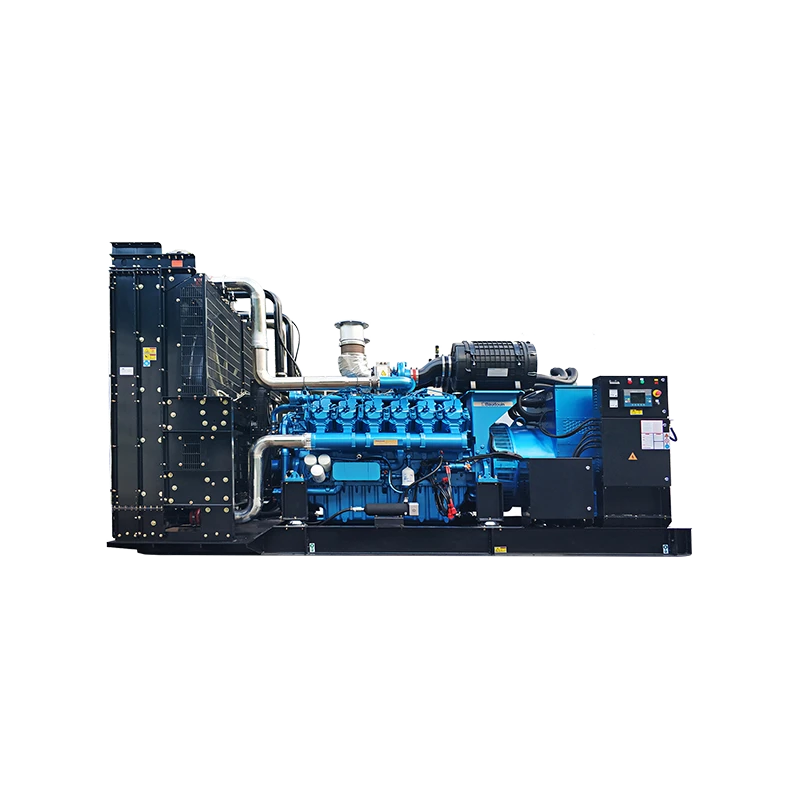
An OEM authorization should be current, serial-number specific, and tied to the country of use. If the letter is expired or covers a different engine family, treat it as a marketing document, not an engineering approval.
Why Does an OEM Authorization Matter?
The authorization changes who answers a hard failure. A manufacturer with a signed engine OEM agreement can request an engineering review from the engine builder when a unit underperforms in the field. Without that channel, troubleshooting may stop at the distributor level. I have watched projects lose weeks because the supplier could not produce the right serial-number linkage between engine, alternator, and factory test report.
What Should You Check After the Factory Audit?
Ask for the actual test record, not the blank procedure. The record should show load steps, voltage recovery, and frequency recovery at each step. A clean test report with no recorded deviations can mean testing was skipped; it rarely means a generator set is perfect. If your project includes high ambient temperatures or altitude derating, confirm the rating conditions before finalizing the equipment list. Send your site altitude and maximum ambient temperature to [email protected] and ask for a derating table.
How Do You Shortlist Industrial Generator Manufacturers Faster for a Specific Project?
A directory becomes useful only after you replace the broad category with your site conditions. The faster sequence looks like this:
- Lock the site conditions: altitude, ambient temperature, fuel type, required kVA, and step load.
- Request a compliance document pack before pricing.
- Verify the engine authorization and alternator brand.
- Request a factory test report from a recent project, not a blank form.
- Shortlist two or three manufacturers and compare documentation speed, not just prices.
In reviewing responses from international energy projects, I see a consistent split. Manufacturers with strong documentation teams answer the technical questions first; those without them send a price and a brochure. The difference appears later as commissioning delays and unresolved site questions. That pattern is more useful than any directory ranking because it predicts how the supplier will behave after the order.
Why Is a Specification-First Inquiry Better Than a General Quote Request?
Most shortlists stall because the buyer asks for a price before defining the operating conditions. That moves the conversation to discounts instead of derating, compliance, and lead time. If you are evaluating industrial generator manufacturers for a project that cannot tolerate late documentation, send the load profile, site altitude, required kVA, fuel type, and target delivery window to [email protected] or call +86 591 2806 8999. Ask for a technical proposal with the compliance document pack attached, not a price list.
What Questions Still Come Up When Evaluating Industrial Generator Manufacturers?
Does a larger manufacturer list mean better equipment?
No. A longer directory usually means more names, not better verification. The real test is whether the manufacturer can match the machine to your operating conditions before quoting. I would rather see a shorter list where each supplier has a current OEM authorization and a documented factory test procedure. That evidence predicts fewer surprises than a brand name alone.
Should you always choose the manufacturer with the widest power range?
Incorrect. A wide range helps only when the manufacturer engineers each series for a specific site profile. Some of the most focused suppliers build a narrower range and keep the documentation tighter. What matters is whether the series that matches your kVA requirement has the right enclosure, cooling path, and engine option for your location, not whether the catalog spans from 5 kVA to 1,650 kVA.
How much should lead time influence the shortlist?
It depends on whether the project is driven by construction penalties or operational continuity. For a temporary site with a hard handover date, lead time and local assembly capability may outweigh engine brand preference. For a standby installation with scheduled commissioning, documentation quality and parts access should carry more weight. Ask for a confirmed delivery window tied to the exact configuration, not a generic production estimate.
Can one manufacturer still handle multiple fuel types?
In project evaluations I have been part of, the more useful signal is whether the manufacturer treats gas and diesel as separate programs rather than one line item. A gas generator set requires different combustion management, emissions documentation, and service planning. The right inquiry asks for a fuel-specific reference project and the matching test procedure. Share your required kVA, engine preference, and target delivery window and we will confirm which series fits the specification.
If you’re interested, check out these related articles:
Light Up the Future with Tide Power Lighting Towers
Happy Mother’s Day