 EN
EN ZH
ZH FR
FR ES
ES AR
ARIn over a decade of working across international energy markets, I have observed that the world’s most successful procurement teams do not simply scan a list of top diesel generator manufacturers and pick the most familiar name. They look beyond the brand and scrutinize the manufacturing philosophy, global service infrastructure, and component-level transparency. This approach separates a supplier that can perform under a humid coastal data center load from one that merely ships a nameplate. For procurement managers and consulting engineers, the reliability of standby or prime power often hinges on a few overlooked selection factors, which this article will address.
What Makes a Generator Manufacturer a True Global Supplier
A large export volume or a widely recognized logo is not enough to earn the trust of a power generation buyer handling infrastructure projects across multiple continents. I have spoken with consultants in the Middle East whose projects required units that would operate reliably in 50‑degree ambient temperatures, and with West African partners who needed service support that did not rely on flying technicians from a single regional hub. From these conversations, I have come to see that global readiness is built on three pillars.
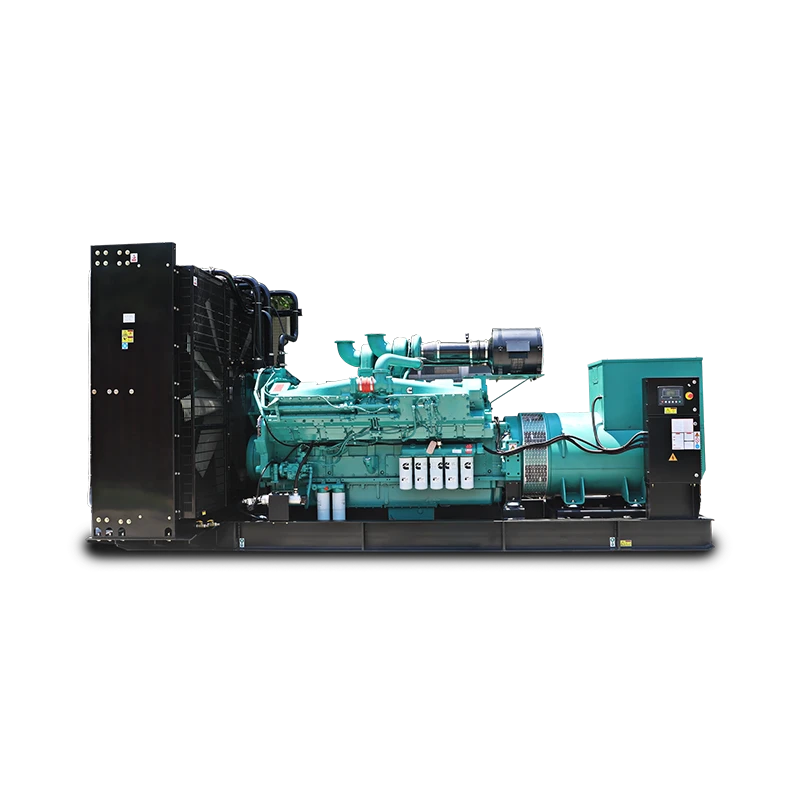
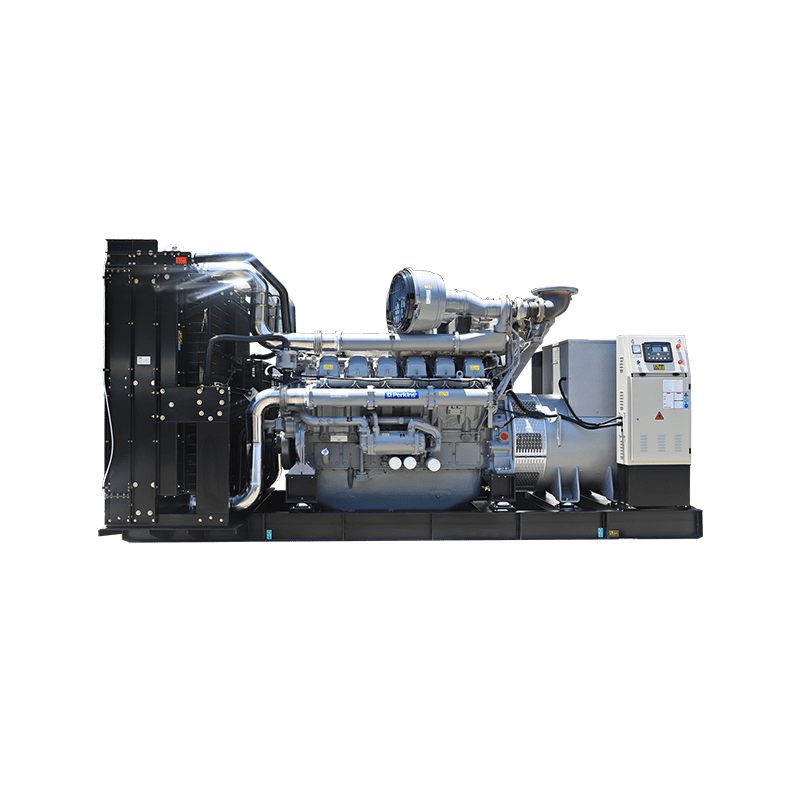
First, the manufacturer must demonstrate genuine multi‑brand engine integration capability. A factory that solely runs one bulk engine contract offers a narrow solution. The more agile setup pairs alternators and engines according to a project’s fuel quality, altitude, and duty cycle, rather than forcing a stock configuration. Tide Power’s Fenova Plus series illustrates this: a single generator platform can be engineered with engines from Lister Petter, Perkins, Cummins, Doosan, or Deutz depending on the site’s operating profile. This modularity is what allows an energy solution provider to meet emission standards in one country and fuel‑efficiency targets in another without redesigning the canopy from scratch.
Second, in‑house validation infrastructure counts more than brochure data. Before a generator leaves the factory, it should complete full‑load testing and protection‑class verification, not just a brief functional check. A manufacturer that is CE and ISO 14001 certified, and that publishes the test protocol for its containerized or canopy‑enclosed sets, gives the buyer a verifiable baseline. When Tide Power engineers a sound‑attenuated diesel generator for a hospital in a noise‑sensitive area, the decibel data comes from a controlled test cell, not a computer simulation.
Third, global after‑sales readiness separates a transactional exporter from a long‑term partner. The ability to stock genuine parts in regional hubs, support local commissioning teams, and respond to warranty claims without excessive administrative friction is what keeps a 900 kVA standby generator from becoming a stranded asset. In my experience, a procurement manager who asks “show me your Middle East commissioning schedule for last year” will get a more honest picture of the supplier’s capabilities than by reading the warranty certificate alone.
Key Features That Prevent Downtime in Critical Applications
A diesel generator is often purchased as insurance against grid failure, and the cost of downtime in a data center or an intensive care unit is not measured in dollars per hour but in lost trust and regulatory risk. Achieving near‑zero downtime depends on design choices that are buried inside the enclosure. I want to highlight three that I have seen trip up projects that chose purely on price‑per‑kW.
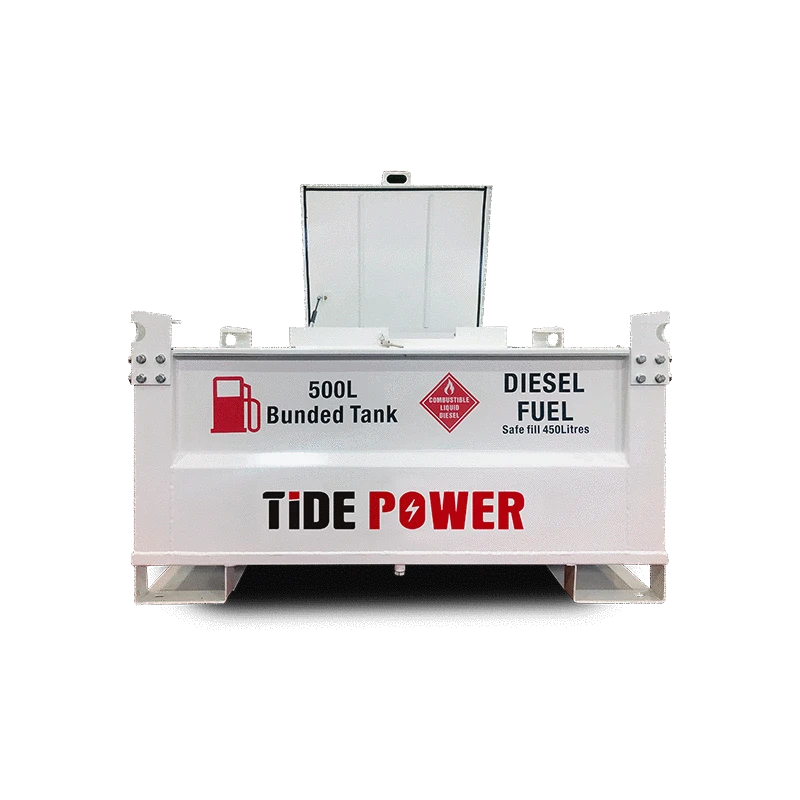
The fuel system design dictates how long the generator can run before refueling and how resistant it is to condensation. An oversized integrated base tank with a built‑in bund and external fill point reduces the risk of spillage during refueling and keeps fuel cooler in high‑ambient conditions. For large installations, a double‑walled independent fuel tank certified to AS1940 or AS1692 provides an extra layer of compliance and safety. I recall a mining operation in Latin America where the commissioning engineer flagged the fuel containment on a low‑bid generator; the resulting retrofit wiped out any initial price advantage.
Equally important is the alternator excitation system. A self‑excited alternator may be adequate for simple resistive loads, but any site with substantial motor‑starting loads, such as a factory or a water treatment plant, benefits from an auxiliary‑wound or permanent magnet excitation system that delivers higher short‑circuit capability and quicker voltage recovery. A reputable diesel generator manufacturer will match the excitation method to the load profile rather than fitting a one‑size‑fits‑all solution.
The third feature often overlooked is the cooling system redundancy. A single‑circuit jacket water cooler is standard, but when a generator is deployed in a desert with airborne sand or in an area with hard water, a remote radiator or a secondary cooling loop can prevent derating and extend service intervals. If your project has persistent cooling challenges from dust or poor water quality, it is worth confirming the radiator specification with the manufacturer early in the procurement cycle — a simple email with your site temperature and water analysis to [email protected] can prevent a specification mismatch that is expensive to correct on site.
How to Evaluate a Manufacturer Before Visiting the Factory
International travel is not always possible during the shortlisting stage, yet a capable procurement team can still produce a shortlist of top diesel generator manufacturers through document-based due diligence. I have structured many such evaluations and suggest the following three‑step approach as a starting point.
Gather the production engineering credentials first. Request the ISO 9001 certificate and confirm that the scope includes design, manufacturing, and testing — an assembly‑only certificate does not provide the same confidence. Then ask for the test cell capacity: a factory that can test generators at full rated load up to the highest kVA they offer, not just on a reduced kW test bed, is demonstrating the capability to catch assembly issues before dispatch. The manufacturer’s internal rejection rate and corrective action report template give you a window into how they handle non‑conformance, even if the actual figures are sensitive.
Second, examine the bill of materials for a recent comparable project. A transparent manufacturer will disclose engine, alternator, controller, and circuit breaker brands without asking for an NDA. Seeing a Deep Sea or ComAp controller alongside a Leroy‑Somer alternator and a genuine OEM engine (not a licensed copy) provides immediate clarity on the value chain. Tide Power’s Hemera series, for example, combines DCEC, Perkins, or SME engines with high‑quality alternators and publishes the component matrix — a practice I wish more companies adopted.
Third, validate the after‑sales structure, not the promises. Request the training syllabus for commissioning engineers, the location of the nearest spare parts warehouse to the project site, and the escalation path for warranty claims above $10,000. A manufacturer that operates a distributor‑installer network with a clear flow chart and named contacts, rather than routing everything through an anonymous “international sales department,” is far easier to work with when a generator has a failed AVR at 2 a.m.
Manufacturing Ecosystems That Produce the Most Durable Generators
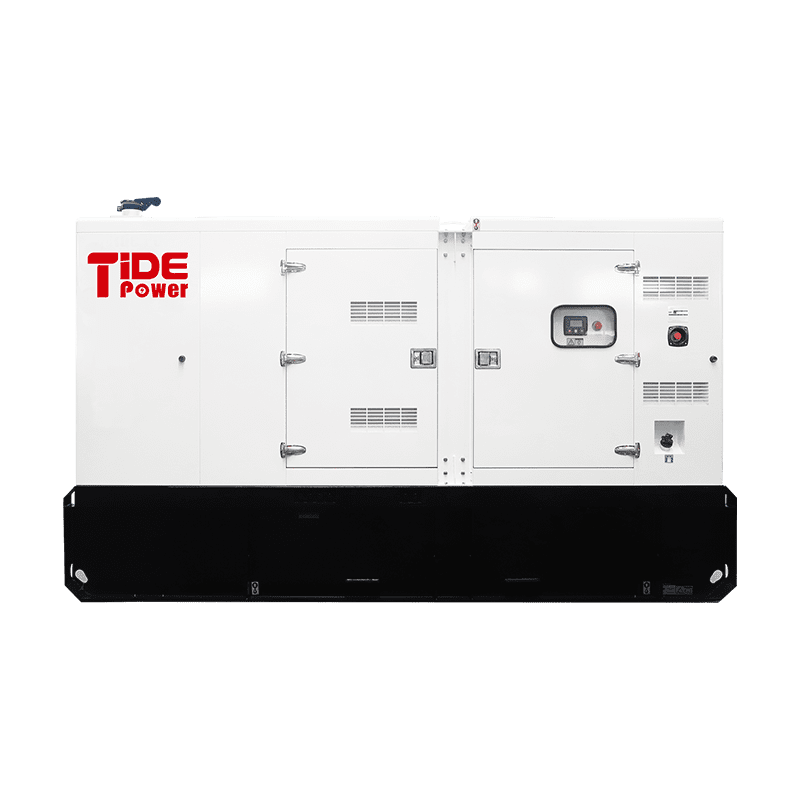
After visiting manufacturing facilities in Asia, Europe, and the Middle East, I have noticed a pattern: the generators that accumulate 20,000 hours of operation with the lowest total cost of ownership come from ecosystems that tightly integrate sheet metal fabrication, painting, and assembly under one roof, and that subject every major component to incoming quality control. When a factory builds its own sound‑attenuated canopy from 2 mm thick steel, as Tide Power does for its silent diesel generator ranges, the durability is baked into the enclosure rather than added as an afterthought. The paint adhesion, the seam sealing, and the vibration dampening are all controlled by the same quality team that tests the finished generator.
This integrated model also supports customization without long lead times. A project requiring a particular shade of white for a United Nations base, or a chimney rain cover for outdoor tropical deployment, can be accommodated when the engineering, metalwork, and assembly teams sit in the same meeting. The alternative — sourcing enclosures from a third party and then bolting on the generator set — introduces tolerance mismatches and supply delays that erode the manufacturer’s reliability. When I review a manufacturer’s capability, I pay more attention to how they build the enclosure than to the paint color they offer.
Integration also extends to control systems. A truly durable generator does not just survive a continuous 24‑hour run; it protects itself through intelligent monitoring. Manufacturers that embed remote monitoring and alarms for low oil pressure, high coolant temperature, or overload into their standard offering enable the on‑site team to prevent damage before it occurs. This proactive capability reduces the mean time to repair and turns the generator from a passive backup box into an active asset within the facility’s energy management system.
Questions Procurement Teams Ask About Diesel Generator Suppliers
Do larger manufacturers always provide more reliable generators?
Not necessarily. While scale often brings process maturity, a mid‑sized manufacturer that focuses on a limited range of generator sets, invests in test cell infrastructure, and uses genuine OEM engines can match or exceed the reliability of a large conglomerate. I have seen cases where a smaller manufacturer delivered a 500 kVA standby set that achieved commissioning on the first attempt, while a bulk supplier needed two site visits and a replacement controller. The deciding factor is not the number of employees but the stringency of the manufacturer’s pre‑delivery inspection protocol. Before shortlisting, ask for a sample factory acceptance test report and see how many parameters are actually recorded; a thorough report with temperature, frequency, and voltage stability data is a strong positive signal.
What is the biggest mistake when choosing a diesel generator manufacturer?
Choosing solely on initial capital cost without factoring in site‑specific derating, duty cycle, and after‑sales infrastructure. I have reviewed RFPs where the technical specification was detailed, but the evaluation weighted price at 80% and post‑warranty support only at 5%. A generator that operates at a higher fuel consumption because it is running closer to its maximum rated output, or one that requires a proprietary service tool only available through a single distributor, will quickly erode the procurement savings. The more prudent approach is to engage the manufacturer early, share the load profile and site conditions, and request a life‑cycle cost estimate that includes fuel consumption, preventive maintenance parts, and expected major overhaul intervals.
How can a buyer verify that a manufacturer actually supports the engines they list?
The simplest method is to request the engine manufacturer’s current authorized distributor or OEM partner certificate for the specific rating band, not just a generic dealership agreement. For example, a company that is an authorized OEM partner for MWM gas engines — as Tide Power is — will have passed engineering audits and parts‑chain inspections that a reseller without OEM authorization cannot match. Additionally, ask for a recent engine warranty claim example (anonymized) and note how quickly the manufacturer processed it and whether they had the replacement unit or part in regional stock. If your program uses a specific engine model such as the Lister Petter Jupiter series, it is worth confirming current OEM authorization and regional support directly — share your engine requirements and timeline at +86 591 2806 8999 to verify stock and support availability before finalizing your supplier list.
What certifications should a global diesel generator supplier hold?
At minimum, ISO 9001 for quality management, ISO 14001 for environmental management, and CE marking for units destined for European or standards‑aligned markets. For fuel systems in Australia, AS1940 or AS1692 compliance on tanks and bunds becomes essential. In the offshore or marine sector, additional certifications such as DNV or ABS may be needed. Beyond the certificates, confirm that the certification body is accredited and that the scope explicitly covers the generator sets you intend to purchase. A company that also holds ISO 45001 for occupational health and safety demonstrates that its factory processes meet international best practices for worker protection, which correlates with consistent assembly quality. Share your specific location requirements and we will confirm which certifications are mandatory for your tender package.
What is the difference between a prime‑rated and a standby‑rated diesel generator manufacturer?
The rating itself is determined by the generator’s operating limits, but a manufacturer’s engineering philosophy determines whether their sets are genuinely capable of sustained prime power or merely labeled as such. A prime‑rated generator must run continuously under variable load with a 10% overload capability for short periods. A manufacturer that designs with a robust cooling system, a generous alternator temperature rise margin, and a heavy‑duty air filtration system will deliver a set that meets prime expectations in real‑world conditions. A standby‑rated set, by contrast, is designed for short runs with a lower average load factor. When comparing quotes, ensure the manufacturer explicitly states the rating definitions they apply and confirm that the engine and alternator have been tested at the claimed rating, not extrapolated from a lower kW benchmark. If your project requires a prime power continuous duty cycle in a remote location, confirm the durability guarantees with the manufacturer before ordering.
If you’re interested, check out these related articles:
How to Choose the Right Water Pump? A Professional Buyer’s Guide
How to waterproof diesel gensets in spring and summer when there is a lot of rain?
Precautions for using winter generator sets