 EN
EN ZH
ZH FR
FR ES
ES AR
ARThe decision to invest in a solar container unit requires more than a quick scan of the specification sheet and the per-kilowatt price. In over ten years advising international energy projects, I’ve seen procurement teams get burned by focusing on upfront cost alone, only to face logistical nightmares or performance shortfalls when the unit hits a remote site. Solar container unit procurement that integrates lifecycle costing, deployment logistics, and system integration—beyond the headline specs—produces the most reliable off-grid power outcomes because the real world rarely matches the datasheet.
What Critical Specifications Define a Solar Container Unit
A solar container unit’s real-world value starts with its core technical architecture. Power capacity, measured in kilowatts (kW) or kilovolt-amperes (kVA), immediately signals whether the unit can handle your site’s peak load. But capacity alone is a hollow number without understanding the battery chemistry behind it. The industry has largely standardized on lithium iron phosphate (LFP) for containerized energy storage because of its thermal stability and 6,000‑plus cycle life at 80% depth of discharge. Next, the solar array capacity—often quoted in peak kilowatts (kWp)—determines recharge speed under your site’s specific irradiance profile. Don’t overlook the inverter’s continuous rating; undersizing the inverter creates a bottleneck that leaves generation potential stranded.
Other specifications that separate a dependable unit from an optimistic prototype include the enclosure rating (minimum IP54 for outdoor deployment, higher in coastal or desert environments), integrated MPPT charge controllers for efficient photovoltaic harvesting, and the container’s physical dimensions. Standard 20‑ft ISO frames simplify sea freight, but weight and center of gravity matter when the destination is a mountaintop telecom site with limited crane access.
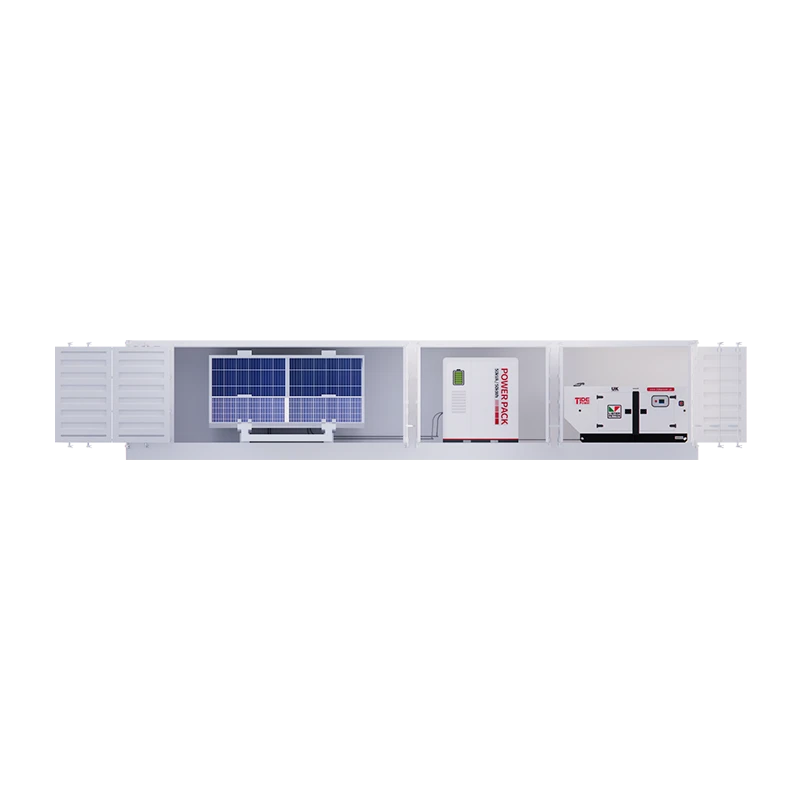
One of the clearest mistakes I see in spec evaluation is treating each component in isolation. In projects Tide Power has consulted on, the deciding factor often turned out to be the system’s thermal management design—whether active cooling can maintain battery temperature below 35°C when the container sits under direct tropical sun for 12 hours a day. That parameter rarely appears on a glossy brochure but directly governs both performance and warranty validity.
How Is Pricing Structured for Solar Container Units
Pricing for a solar container unit is never a single line item. Buyers typically encounter a base kW rate that covers the core power electronics and battery rack, but the final commercial offer reflects several additive layers. The chart below summarizes the key cost components you should expect in a quotation.
| Cost Component | Typical Share of Total | What It Covers |
|---|---|---|
| Battery system (LFP cells, BMS) | 35–45% | Energy storage core, thermal management, battery management system |
| Solar array and mounting | 15–20% | PV modules, panel mounting structure, DC cabling |
| Power conversion (inverter, charge controllers) | 10–15% | Bidirectional inverter, MPPT controllers, AC/DC distribution |
| Container enclosure and integration | 10–15% | ISO-rated enclosure, fire suppression, wiring, assembly labor |
| Logistics, commissioning, documentation | 10–20% | Sea/land freight, export documentation, site commissioning, training |
The wide range in logistics reflects the destination’s remoteness and the complexity of local import regulations. A unit headed for a mining site in West Africa will carry a very different landed cost than one deployed to a European solar farm, even with identical hardware.
Two procurement pitfalls stand out. First, some suppliers quote a stripped base price and then charge separately for certifications (CE, IEC, DNV) that other vendors include by default. Second, the bill of materials may list “5.12 kWh modules” but fail to specify whether the battery management system (BMS) supports parallel communication for scalable expansion. Both omissions convert a seemingly low price into a costly retrofit later.
If your project involves scaling the installation over multiple phases, the per‑kW price today matters less than the architecture’s ability to grow without replacing the central control system. That is the kind of downstream cost a spec sheet price rarely reveals, but your inquiry should ask for it explicitly.
Why Total Cost of Ownership Matters More Than the Price Tag
The purchase price of a solar container unit represents roughly 40% of its total cost of ownership over a 15‑year service life. The remaining 60% comes from preventive maintenance, battery end‑of‑life replacement (typically around year 12 for LFP in high‑cycle applications), and logistics for any mid‑life redeployment. When a project developer only compares the upfront capital cost of competing bids, they are effectively ignoring the larger half of the financial equation.
Levelized cost of energy (LCOE) provides a fairer comparison benchmark. A unit priced 15% higher at purchase but equipped with a modular battery rack design that allows partial replacement without full system shutdown will almost certainly show a lower LCOE after the first battery refresh cycle. From my own project reviews across mining and telecom operations, sites that built their financial model around initial capital expenditure alone ran into an average budget overrun of 20–30% within the first eight years, often because replacement parts could only be sourced from a single overseas vendor at premium freight rates.
Operational cost stacks also include site‑specific factors. A container with high‑efficiency MPPT controllers will harvest 3–5% more energy daily from the same solar array, compounding into tens of thousands of kilowatt‑hours over a decade. Likewise, remote monitoring capability reduces the need for quarterly physical inspections, cutting travel costs that can exceed $2,000 per site visit in remote regions. These are not theoreticals—they are the line items that differentiate a strategic procurement from a transactional one.
How to Navigate International Procurement and Logistics
Shipping a solar container unit across a continent or an ocean involves documentation that some first‑time buyers underestimate. At a minimum, the supplier should provide a packing list with HS code classification that matches the importing country’s tariff schedule, a certificate of origin for preferential duty treatment where applicable, and the declaration of conformity to local electrical safety standards. Missing any of these documents can delay customs clearance by weeks—and in port demurrage charges of $200–$500 per day, that delay quickly erases any pricing advantage negotiated earlier.
The container’s physical condition upon arrival deserves equal attention. We recommend specifying a pre‑shipment inspection protocol that includes a full functional test with load bank verification, a thermal imaging scan to confirm no hot spots exist in the electrical connections, and a tilt‑test certificate if the unit will travel over mountainous terrain on a flatbed truck. A laminated inspection checklist fixed inside the container door can also help the receiving team verify that no connections loosened during transit.
For destinations that lack local solar service infrastructure, the procurement plan must include either a commissioning engineer on‑site for the first week of operation or a comprehensive remote commissioning package with video guidance. In my experience supporting remote microgrid deployments, the single greatest risk to a solar container unit’s first‑year performance is an installation team that has never worked with a containerized DC‑coupled system before. The supplier’s willingness to provide phone‑based troubleshooting in the local language during commissioning often makes the difference between a unit that runs at 100% from day one and one that sits idle for a month while emails bounce between time zones.
What to Look for in a Solar Container Unit Supplier
Evaluating a supplier goes beyond checking the spec sheet and the price quote. The most revealing indicator is how the supplier handles the “what if” questions. What happens if a battery module fails in year two in a country where lithium battery ground shipping requires a Class 9 dangerous goods declaration? Can the supplier provide a turn‑key replacement kit with the necessary transport documentation pre‑certified? If the answer is a vague “we’ll support you,” the operational risk is yours to carry.
Integration track record also separates a genuine energy solution partner from a component assembler. A solar container unit rarely operates in isolation. The typical off‑grid site already has a diesel generator, and the solar unit must seamlessly synchronize its inverter output to avoid frequency clashes. Ask prospective suppliers how many hybrid installations they have completed where the solar container unit was retrofitted to an existing diesel‑only mini‑grid. A supplier who can walk you through the exact communication protocol (CAN bus, Modbus RS485, or Ethernet) between the inverters and the generator controller is one who has genuinely done this before.
Global after‑sales capability matters more than the location of the manufacturing plant. A supplier with distributor‑trained technicians in three or four target regions cuts the mean time to repair from weeks to days. In our evaluation of energy solution providers for multinational industrial clients, we weigh the depth of the regional partner network as heavily as the technical specifications. The best solar container unit is the one that keeps running, but a close second is the one that gets fixed before the site team orders a diesel top‑up.
Common Questions About Solar Container Units
What is the typical lifespan of a solar container unit
The core structure and enclosure are designed for a 20–25 year service life matching standard shipping container durability. The LFP battery bank, however, reaches its economic end of life at around 12–15 years when cycled daily, or at a residual capacity of 70% of its nameplate rating. Inverter electronics and charge controllers may require mid‑life replacement after roughly 10–12 years. A well‑maintained unit can serve reliably through one battery replacement cycle without major structural refurbishment.
Can a solar container unit be integrated with an existing diesel generator
Yes, and this is one of the fastest‑growing deployment models. A properly configured hybrid inverter with generator synchronization capability allows the solar unit to parallel with a diesel gen‑set, prioritizing solar power and calling on the generator only when load exceeds what the battery can support. This integration can reduce diesel runtime by 40–70% depending on the load profile and solar resource. The critical requirement is that the inverter supports generator‑compatible frequency and voltage droop settings—a feature not all budget inverters include.
What certifications matter most for international shipping of a solar container unit
For regulatory compliance, look for IEC 62619 or UL 1973 certification for the LFP battery system, and CE marking for the complete container assembly. ISO 6346 certification confirms the container meets CSC (Container Safety Convention) standards for ocean transport. For mining and oil & gas deployments, DNV 2.7‑1 or IECEx certification for hazardous areas may be mandatory. Always confirm which certifications are included in the base price and which require additional testing fees.
How long does it take to manufacture and deliver a solar container unit
Typical manufacturing lead times for a standard‑specification unit run 12–16 weeks from order acceptance, including component procurement, assembly, bench testing, and burn‑in. Sea freight adds 4–8 weeks depending on the route and port congestion. For projects with tight deadlines, some suppliers maintain pre‑configured stock units that can be customized and shipped in 8–10 weeks. Rush orders below 6 weeks usually carry a premium and may limit customization options.
What after‑sales support model works best for remote international sites
The most effective model combines remote monitoring via embedded IoT gateway with a regional technical partner capable of site visits within 48 hours. A satellite‑based monitoring add‑on ensures connectivity even where cellular networks are absent. We advise buyers to negotiate a Service Level Agreement that specifies response time in business hours, spare parts availability from a regional hub, and a clear escalation path to factory engineering support. If your program will operate across multiple time zones or in regions with limited infrastructure, choose a supplier whose after‑sales documentation comes in the local language. Share your specific project location and power profile with our team at [email protected] or +86 591 2806 8999 to confirm the appropriate support package before procurement.
If you’re interested, check out these related articles:
Energizing Remote Operations: Hybrid Power Solutions for Off-Grid Success
Tide Power Z Series: Portable Dewatering Pump with Lister Petter Engine
Diesel vs. Gas Generators: Which Is Right for Your Industry?