 EN
EN ZH
ZH FR
FR ES
ES AR
AREnvironmental factors for outdoor power systems determine whether a generator set meets its published rating, holds up over time, or becomes a recurring site problem. Temperature, humidity, dust, salt, altitude, and site access all act on the equipment before the first load is applied. In our work with Tide Power projects across multiple continents, we treat these conditions as specification inputs rather than operating footnotes. A well matched enclosure and cooling package keeps a project on schedule; an overlooked environmental detail shortens service life and increases total cost.
Environmental Factors for Outdoor Power Systems Set the Reliability Baseline
Many procurement teams compare kVA, engine brand, and price before they review the actual site. That order is understandable, but it misses the reason some outdoor units remain reliable while similar units fail early. The same generator family can perform differently on a coastal site with salt air and a dry high-altitude plateau. The equipment does not change; the environment does.
The table below shows how common site conditions act on outdoor power systems and what design features respond to them.
| Environmental Factor | Effect on Outdoor Equipment | Key Design Response |
| High ambient temperature | Derating, shorter insulation life, harder starting | Ventilation, high-temperature alternator ratings |
| Humidity and rain | Moisture ingress, corrosion, electrical faults | Sealed enclosures, rain covers, proper drainage |
| Dust and particulates | Air filter clogging, cooling restriction | Heavy-duty air filtration, scheduled cleaning |
| Salt-laden air | Enclosure and connector corrosion | Corrosion-resistant coatings, sealed electrical components |
| High altitude | Reduced oxygen density, lower power output | Engine derating review, larger kW reserve |
This is why Tide Power treats enclosure design as part of the power system specification, not as an afterthought.
Temperature and Humidity Change How a Generator Set Is Rated
High ambient temperature reduces air density and cooling capacity. A set selected at sea level and 25 degrees Celsius will not deliver the same usable output at a site that regularly reaches 42 degrees. Engine manufacturers publish derating curves for this reason, and those curves need to be applied before a unit is ordered, not after it arrives on site.
Humidity adds a second layer. Warm, humid air accelerates insulation aging and promotes condensation inside panels when temperatures drop at night. This creates two failure paths: electrical tracking across moist surfaces and corrosion inside connectors that are not sealed for the location. In hot, humid regions, a compact silent generator set with active thermal management is useful, but it still needs clearance around intake and exhaust points.
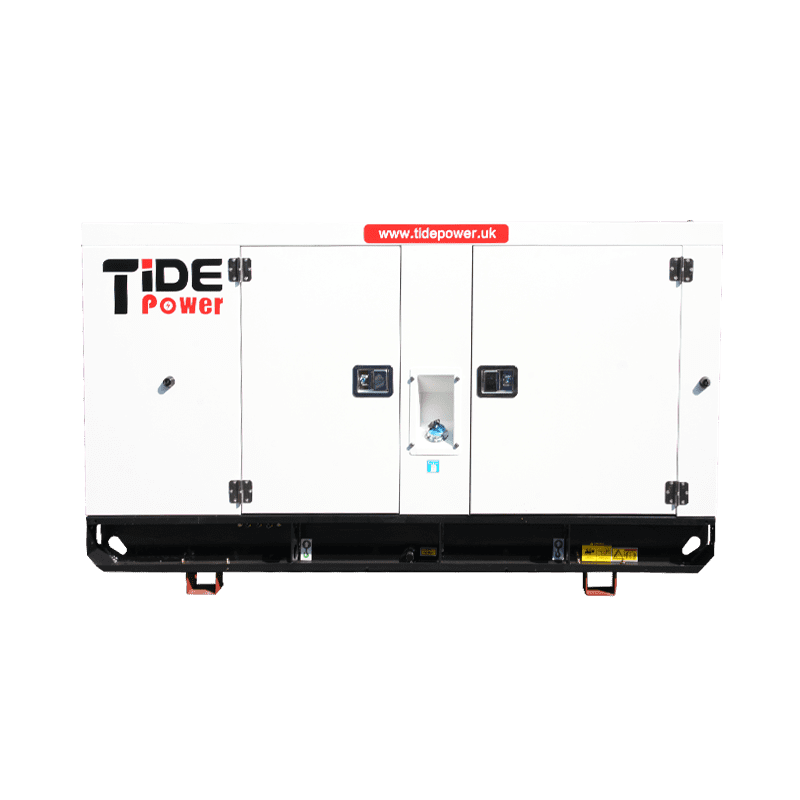
We have worked on urban and rural installations where recirculation was the real problem. The canopy was correct, but the unit sat too close to a wall or another cabinet. Hot exhaust air returned to the inlet, raising internal temperature beyond the rated condition. Before adding kW, check whether the site gives the package room to breathe.
Dust, Salt, and Rain Drive Enclosure and Filtration Choices
Dust is cumulative. It builds on filters, blocks fins, and reduces air movement long before a generator set shuts down. A unit in a quarry, reinforcement yard, or unpaved industrial area may run normally for weeks and then lose power gradually. Operations teams often respond by cleaning more often, but the better fix is starting with the right filtration and enclosure for the expected particle load.
Salt changes the priority. Corrosion moves from filters to steel surfaces, hinges, terminal strips, and electrical connections. A 2 mm soundproof canopy with an external fuel inlet and a chimney rain cover limits direct rain exposure, but coastal air still moves through ventilation openings. The answer is a combination of corrosion-resistant finishes, sealed connectors, and a freshwater rinse schedule for exposed surfaces.
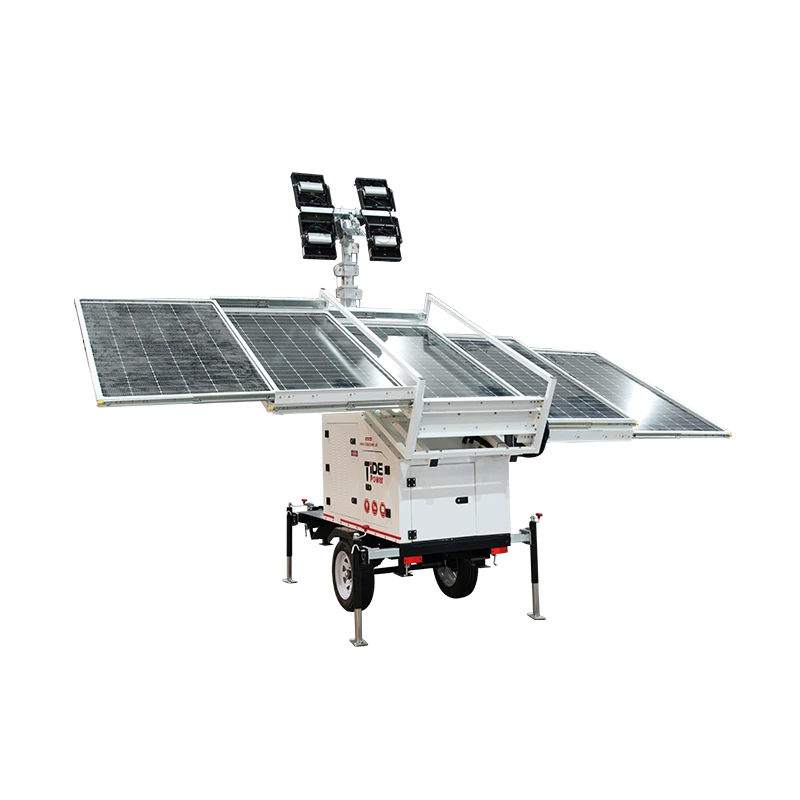
Outdoor lighting towers and solar hybrid units follow the same logic. Dirt on panels, salt on pivots, and water in connectors reduce output and increase maintenance. If your site has salt exposure or fine dust, it is worth confirming the enclosure coating, filter type, and sealing details before the bill of materials is fixed. Email site conditions and photos to [email protected].
Altitude and Site Access Shape Sizing and Deployment
Altitude reduces air density. A generator set produces less power at 2,000 metres above sea level than at sea level, and alternator heat rejection changes as well. If the initial sizing had a generous margin, the correction may be small. If the site load was already close to the nameplate rating, altitude can make the difference between a comfortable start and repeated overload alarms.
Site access matters differently. Outdoor power systems often go where roads are narrow, cranes are limited, or final placement is far from unloading points. Modular and compact configurations keep delivery practical when a complete enclosure cannot be moved in one piece. Units with forklift sockets, liftable canopies, and separation between heavy components reduce the time and equipment needed for positioning.
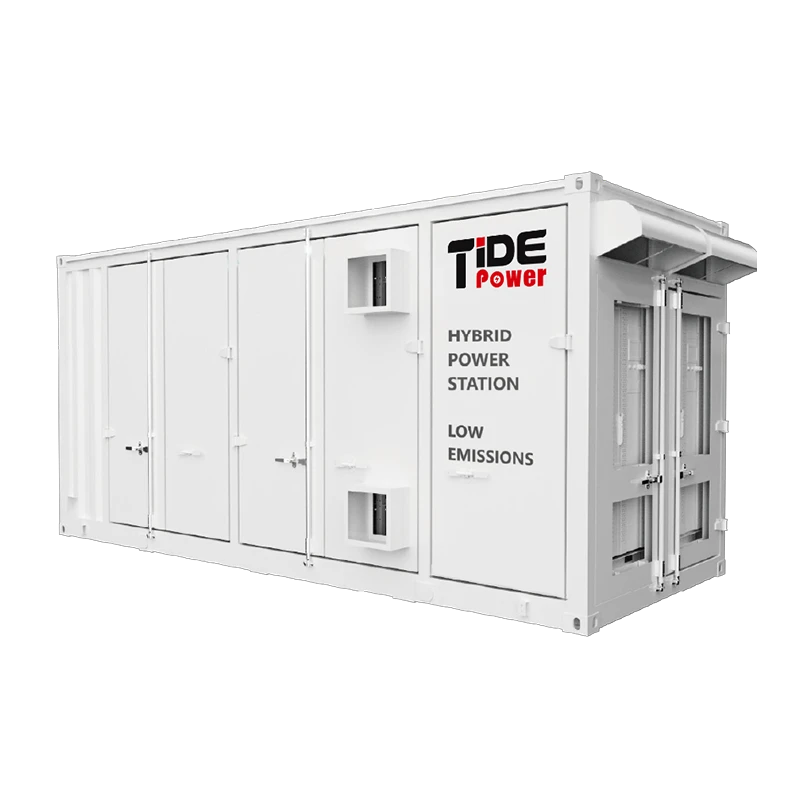
We have seen otherwise sound schedules fall apart because the environmental review handled temperature and salt but ignored removal routes and lifting clearance. Deployment constraints should sit in the same early review as derating. A unit that cannot be moved into place safely is no easier to commission than one that was undersized.
Environmental Requirements Should Be Confirmed Before Finalizing Any Outdoor Power System
Outdoor power projects rarely fail on ratings alone. They fail when temperature, humidity, dust, salt, altitude, and access are treated as site details rather than specification inputs. The practical next step is to convert those conditions into equipment choices: enclosure type, air filtration, cooling margin, and transport configuration.
Send the site elevation, peak ambient temperature, humidity profile, and required kVA to [email protected] or call +86 591 2806 8999. Our team will confirm the right outdoor power system and the enclosure details that keep it reliable.
Procurement Teams Ask These Questions About Environmental Factors for Outdoor Systems
What is the most overlooked environmental factor in outdoor power system selection?
Dust is the factor we see underweighted most often because its effect is cumulative rather than immediate. A generator set may run for weeks without issue, then gradually lose power as air filters and cooling passages clog. In high-dust areas, selecting a unit with heavy-duty filtration and a maintenance schedule is more economically important than adding extra kVA. If your site is near unpaved roads, agriculture, or construction activity, confirm the filter type and cleaning interval before ordering.
Can a silent diesel generator run in a coastal environment?
Many buyers assume a silent canopy by itself makes a generator corrosion proof. It does not. The enclosure reduces noise and covers direct rain, but salt-laden air still enters through cooling vents and condenses on electrical terminals and steel surfaces. Coastal installations need corrosion-resistant coating, proper sealing, and regular rinsing of external surfaces. Confirm these protections with the supplier instead of relying on the canopy alone.
Does altitude affect generator set sizing or only engine performance?
It depends on how close the initial sizing was to the site load. For locations above roughly 1,000 metres, lower air density reduces engine output and changes alternator cooling. If the generator was sized with little reserve, altitude derating can make it undersized. If the unit has significant margin, the correction may be manageable. The practical step is to submit site elevation and maximum ambient temperature to confirm the required rating before procurement.
Why do outdoor lighting towers and solar hybrid units fail early if environmental factors are ignored?
In projects we have worked on, early failures tend to concentrate in connections and hinges rather than the primary generator or lighting components. Rain, dust, and sun act on seals, cables, latches, and pivots long before the main system wears out. A solar lighting tower that receives regular panel cleaning and connector checks usually outlasts one treated as a plug-and-play device. Share your site location and expected run hours, and we will confirm which environmental protections matter most for your outdoor power system.
If you’re interested, check out these related articles:
Unlocking Energy Independence & Savings: Tide Power’s Scalable BESS Solutions for C&I Applications
Tide Power Invites You to Expo Eléctrica International 2025 – Visit Us at Booth No.1833
Tide Power Technical Training Conference in South East Asia
Tide Power’s 2025 Annual Review and 2026 Work Plan Conference was successfully held