 EN
EN ZH
ZH FR
FR ES
ES AR
ARMobile vs stationary energy storage decisions are usually framed as a chemistry and cost-per-kilowatt-hour conversation. The more useful framing for an industrial project is relocation risk. A fixed battery room can outlast the site plan, while a transportable battery cabinet can move with the work face or follow a new contract. I have reviewed energy storage proposals across remote mining, telecom, and agricultural applications, and the projects that avoid rework are the ones that answer one question early: will this asset stay in place for its entire service life? This comparison focuses on that operational reality rather than only nameplate specifications.
What Separates Mobile vs Stationary Energy Storage Systems?
The structural difference is not the battery chemistry; it is the balance of plant. A mobile energy storage unit arrives as an integrated package: batteries, power conversion, thermal management, and controls inside a transport-rated enclosure. A stationary energy storage system is assembled around a fixed battery room or pad-mounted cabinets with permanent grid connections, fire suppression, and weatherproofing designed for one location.
This difference shows up in site preparation. Mobile systems can operate from a compacted gravel pad or container chassis with cable ramps. Stationary systems usually require concrete foundations, fixed cable trenches, and often a fire-rated enclosure or separate room. On difficult terrain, those civil costs can exceed the battery module cost.
| Decision factor | Mobile energy storage | Stationary energy storage |
|---|---|---|
| Deployment | Pre-commissioned and transportable | Built for a permanent location |
| Site preparation | Gravel pad or container base | Concrete foundation and fixed cable containment |
| Relocation | Skid, trailer, or container moves with the project | Requires decommissioning and a new build |
| Capacity range | Modular up to container scale | Designed for multi-MWh fixed use |
| Long-term cost driver | Transport distance and unit count | Civil construction, permitting, and fixed integration |
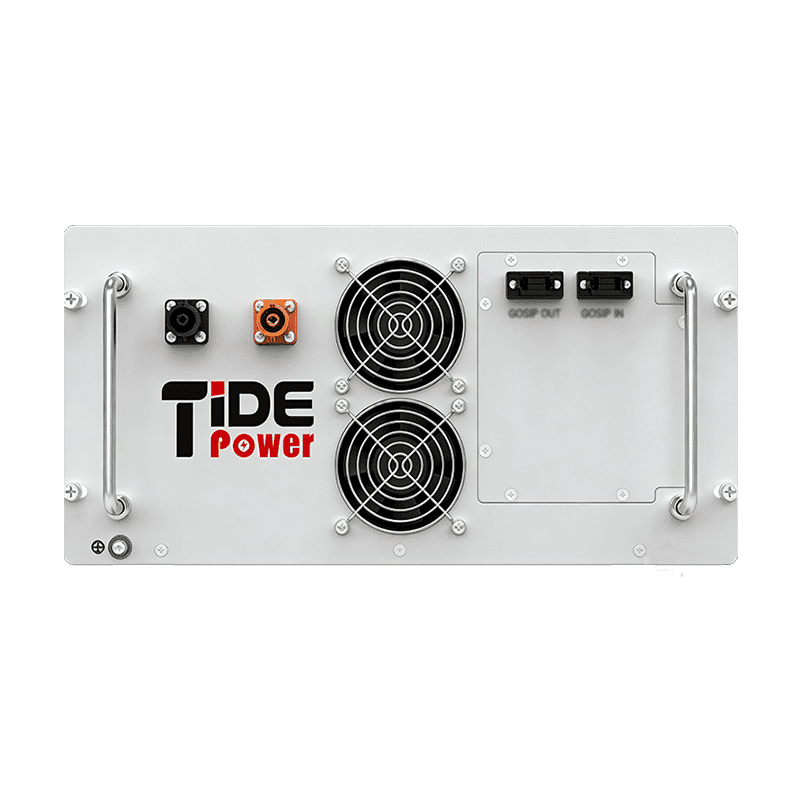
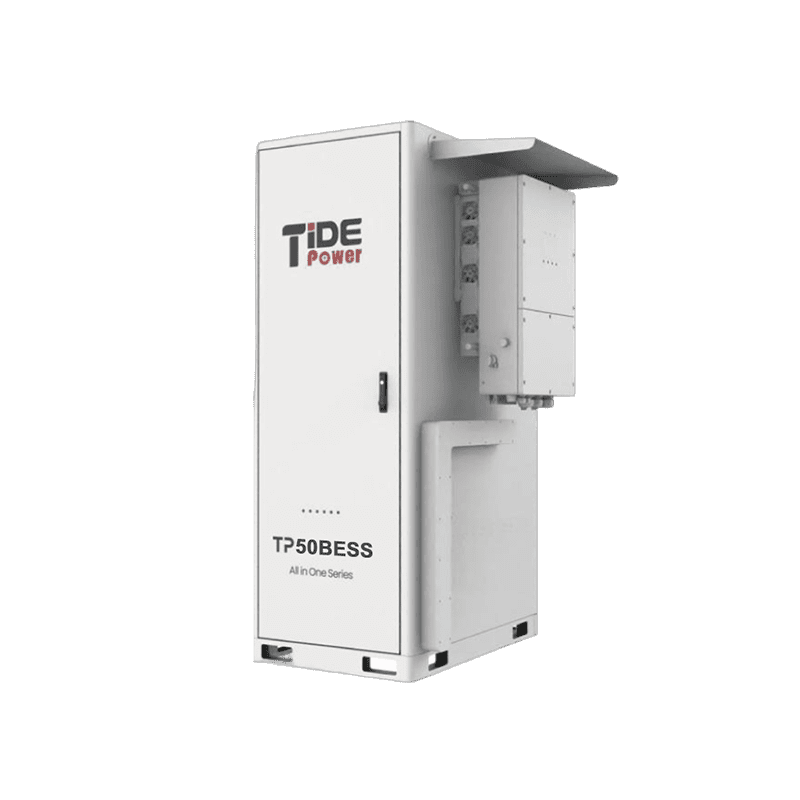
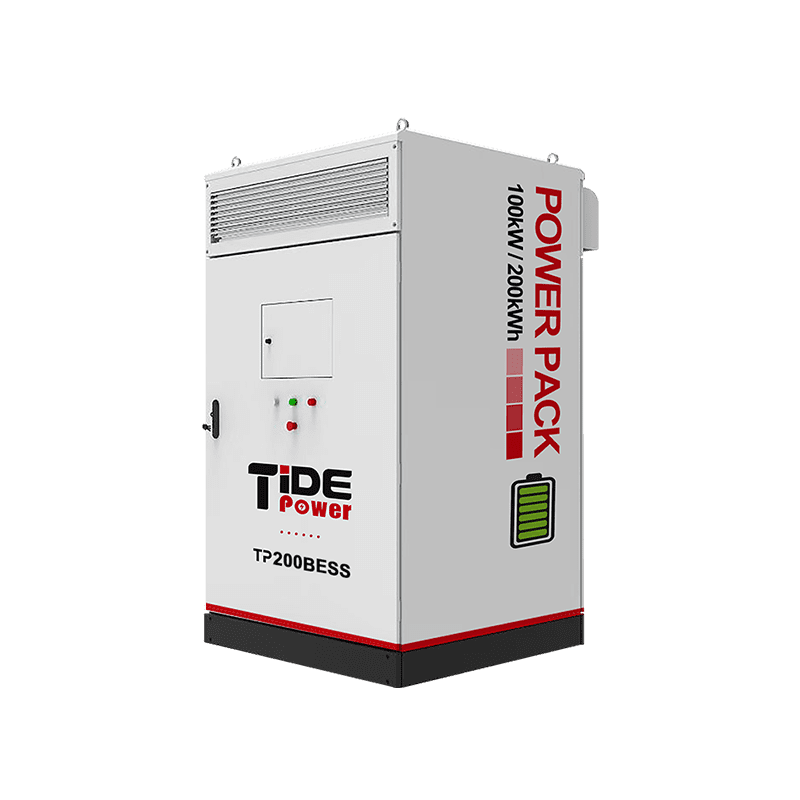
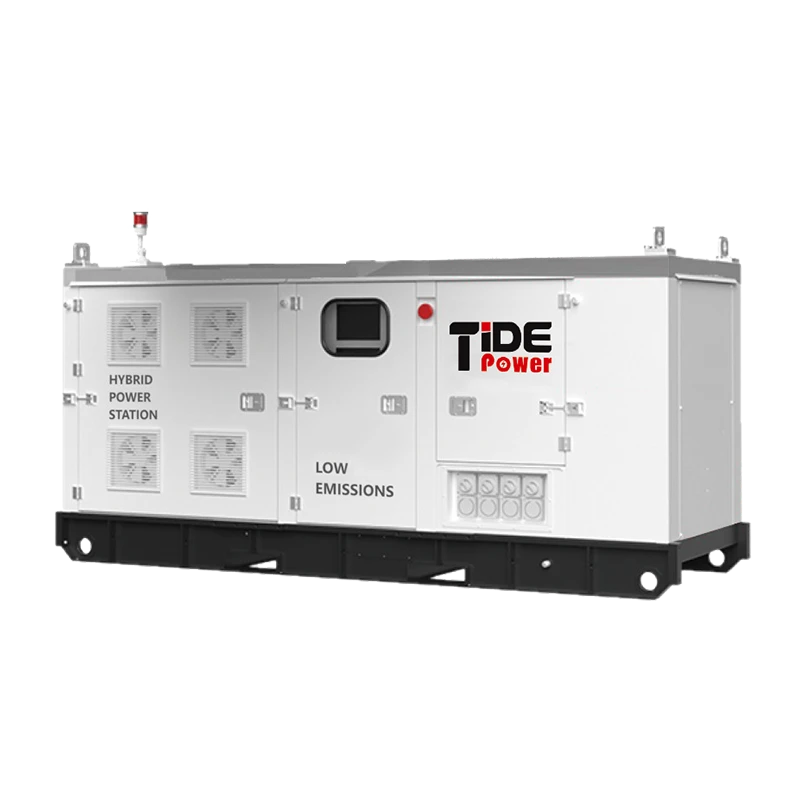
Tide Power builds transportable storage from 5.12 kWh LFP battery packs into 50 kWh, 100 kWh, 200 kWh, and 261 kWh cabinets, and pairs them with generator sets through hybrid power units from 10 kVA to 250 kVA. The transport-rated enclosure keeps the balance of plant integrated, which is the main operational difference from a fixed battery room.
When Does Mobile Energy Storage Outperform a Fixed Installation?
Mobile storage earns its premium when the site plan is uncertain or the asset must serve more than one location. In mining and tunneling, a mobile battery cabinet can follow the active face as the operation moves, avoiding the costly cycle of disconnecting, transporting, and recommissioning a fixed installation. Construction contractors use mobile units to power loads during phased works, then shift the same asset to the next contract.
The advantage is most visible in project economics. A stationary system is not just the battery hardware; it is the embedded civil investment that cannot be reused. When a project relocates, a mobile unit preserves most of its value and avoids a second foundation, new permits, or new integration work.
If your project involves more than one site phase, a planned relocation within 24 months, or an uncertain grid connection date, it is worth confirming the enclosure rating, lifting points, and transport limits before finalizing the specification. Send your site profile and relocation plan to [email protected] and we will check the appropriate mobile configuration against your duty cycle.
In proposals I have evaluated for off-grid telecom and rural electrification, the deciding factor has often been a phased rollout. A mobile storage unit serves the first cluster, moves to the second as demand grows, and the developer postpones permanent civil investment until the site load is proven. That sequencing flexibility is difficult to achieve with a poured-pad stationary battery room.
When Should You Choose Stationary Energy Storage Instead?
Stationary storage remains the stronger choice when the load profile is stable, the site is owned or leased long term, and the required capacity pushes beyond what a containerized unit can realistically deliver in a single move. Large manufacturing plants, grid-tied industrial microgrids, and data center applications fit this profile because the batteries never need to leave the facility.
The economic logic follows from steady use. A fixed system can be sized for exact daily cycling and integrated directly into the switchgear and energy management system. The higher initial civil work is absorbed over a long operating life, and the result is a lower cost per cycle when the system runs at high utilisation.
Safety and capacity are also stronger with stationary architecture. The installation can be engineered with dedicated fire-rated rooms, fixed gas detection, and permanent cooling connections. Mobile units have integrated safety, but their transport constraints impose practical limits on enclosure size and auxiliary system redundancy.
Which Specification Differences Matter Most in Mobile vs Stationary Energy Storage?
The technical parameters that change the final decision are not always the ones listed first in a data sheet. Three areas deserve more attention in a mobile vs stationary energy storage evaluation: capacity and scalability, deployment time, and total cost structure.
Power Capacity and Scalability
Mobile systems are constrained by transport dimensions and weight, but the constraint is now more flexible than many buyers expect. A modular LFP storage cabinet can begin at 5.12 kWh and scale through parallel cabinets to 50 kWh, 100 kWh, 200 kWh, or 261 kWh. For higher power, a hybrid unit in the 10 kVA to 250 kVA range combines battery storage with solar and diesel generation without a fixed battery room.
Stationary storage scales further because it is not limited by road transport. A permanent installation can be designed as a larger battery hall with multiple racks, higher DC bus ratings, and dedicated HVAC. The scalability advantage is real for grid-scale and heavy industrial loads, but it only matters if the site can absorb that capacity long enough to justify the fixed investment.
Deployment Time and Site Readiness
A mobile unit can be delivered, placed, and connected within days after site access is confirmed. The main tasks are lifting, grounding, and interconnection. A stationary system adds concrete foundation work, cable trenching, fire system installation, and permit sign-off. The delay difference is measured in weeks, not in battery delivery time.
Total Cost Structure Over the Asset Life
The purchase price comparison is incomplete because the two architectures move cost into different phases. Mobile storage carries transport, handling, and redeployment costs. Stationary storage carries civil construction, permanent integration, and permitting costs. If the project moves once during its service life, the mobile option often avoids the stranded civil investment that a stationary system would leave behind.
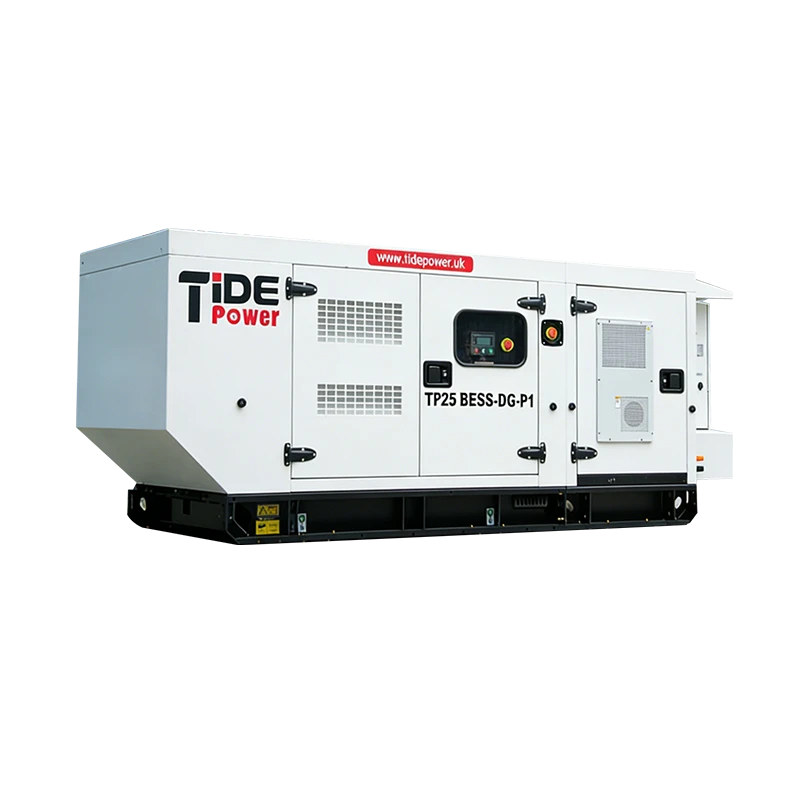
Tide Power storage covers both paths: TP-50BESS and TP-200BESS serve as transportable LFP storage, while TP-50P through TP-250P deliver generator-plus-storage hybrid power with millisecond-level switching between solar, battery, and diesel sources.
How Do You Finalize a Mobile vs Stationary Energy Storage Decision?
The hardest part of this decision is not comparing battery chemistry; it is reconciling a project plan that may change with an investment that is hard to move. A mobile storage cabinet gives you options. A stationary battery room gives you scale and long-term stability. The correct choice follows from how many times the asset will move, how quickly it must be online, and how stable the site load will be.
Tide Power has addressed both paths with modular LFP battery storage and hybrid power units, but the right specification still depends on your operating constraints. Send your site description, daily load pattern, capacity need, and relocation expectation to [email protected], or call +86 591 2806 8999, and we will return a written storage architecture recommendation with a fit-for-purpose specification sheet.
What Do Buyers Ask About Mobile vs Stationary Energy Storage?
Can a mobile storage unit be used as a permanent installation?
A mobile unit can serve as a permanent installation, but that does not always make it the best fit. The integrated enclosure already includes the batteries, power conversion, thermal management, and controls, so a fixed pad and permanent wiring are enough to operate it for years. The main limitation is capacity scaling. If the site eventually requires more storage than the original cabinet can parallel, an expanded stationary battery room may be more cost effective. For many small and mid-size plants, a permanent pad-mounted mobile cabinet works well and retains the option to relocate later.
Which option costs less over the full asset life?
The common assumption is that stationary storage is always cheaper over the long term. That holds only when the system runs at high utilisation in one place for many years. When relocation, phased construction, or uncertain occupancy enter the picture, the civil investment in a fixed battery room can become a stranded cost. A mobile unit may have a higher packaging cost upfront, but it avoids repeating foundations, permitting, and integration work. The lower life cycle cost belongs to the option that matches the site plan, not to the architecture with the lowest listed cell price.
How long does deployment take for each approach?
It depends on site access, voltage level, and whether the unit must integrate with existing switchgear. A transportable storage cabinet can be placed and connected within days once the pad and cables are ready. A stationary system adds concrete curing time, fire system installation, and commissioning checks that commonly extend the schedule by several weeks. If the project has a fixed energisation date, this difference matters more than the battery delivery lead time. Confirm the civil and interconnection path before comparing vendor lead times.
Which system performs better in remote or harsh environments?
In remote projects I have reviewed, mobile systems often handle harsh conditions well because they ship as pre-tested, weather-protected packages. Their enclosures are designed for transport, so dust, humidity, and temperature swings are managed before arrival. A stationary system can be engineered for the same environment, but it depends on local construction quality and contractor performance. For rapid deployment to sites with limited local labour or harsh weather, the mobile approach reduces on-site assembly risk. Share your load profile, site conditions, and relocation plan with [email protected] and we will confirm which architecture makes the strongest long-term case.
If you’re interested, check out these related articles:
Happy Mother’s Day
Cheers for the completion of the first phase of the Gas Project in Africa
Silent Power, Smart Future: Tide Power Launches the Panda Series Generator
Celebrate the arrival of the“Mid Autumn Festival and National Day” in Tide Power