 EN
 ZH
 FR
 ES
 AR
Wholesale hybrid energy procurement is now a systems-integration purchase, not a commodity generator purchase. A buyer is specifying how solar generation, battery storage, power conversion, controls and dispatchable generation will operate together under real site constraints—temperature, altitude, load step, fuel supply and grid-code requirements. A single weak definition in the RFQ can turn an apparently low quote into high operational cost. This guide sets out six checkpoints: component specification, supplier qualification, commercial structure, compliance, total cost of ownership and verification.
Component Specification: What the RFQ Must Define
The first test of a wholesale hybrid energy system quote is whether the supplier can map your load profile to a defined architecture. If the RFQ asks only for a price per kilowatt, the buyer absorbs the technical risk later. A strong RFQ separates mandatory performance from optional configuration.
| RFQ field | What the buyer should specify |
|---|---|
| System architecture | All-in-one, split, AC-coupled or DC-coupled topology |
| Rated output | kVA/kW, voltage, frequency, phase configuration and ambient derating |
| Solar interface | PV input kWp, MPPT voltage range and DC/AC ratio |
| Storage | Usable kWh, battery chemistry, C-rate, cycle life, depth of discharge and degradation warranty |
| Changeover | Seamless switching time in milliseconds, tested at full load |
| Genset/grid interface | Auto-start logic, load sharing, grid-code mode and fuel interface |
| Control and monitoring | EMS functions, remote access, protocols, alarm routing and data retention |
| Enclosure and logistics | Container or trailer type, IP rating, noise level, lifting points and transport certification |
| Compliance | IEC, UL, ISO, CE and destination grid-code requirements |
| Service | FAT/SAT scope, commissioning, response SLA, spare parts and warranty terms |
This level of detail matters because hybrid energy systems are not standardized products. Two systems with the same nameplate output may differ substantially in usable storage, switching behavior and control capability.
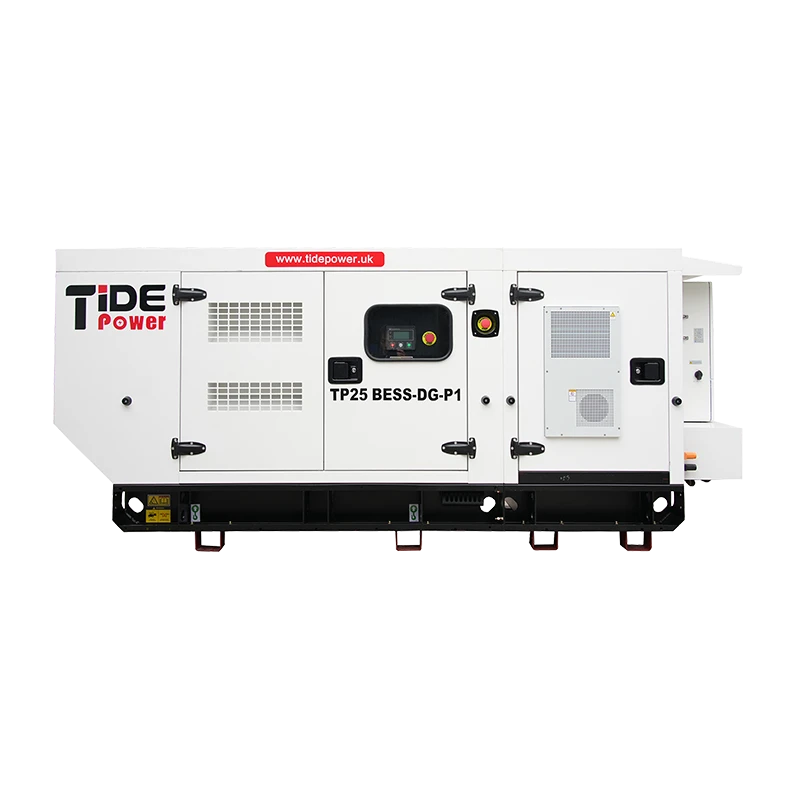
As a product-data benchmark, a representative hybrid power system may cover 10 kVA to 250 kVA in all-in-one or split configurations, using 5.12 kWh LFP battery packs, 16.1 kWh LFP battery modules and TP-series storage units, with hybrid power units such as the TP-25P, TP-60P, TP-125P and TP-250P. These values are useful for comparing supplier datasheets, not for substituting detailed site engineering.
Seamless switching should be defined at the RFQ level. For critical loads, if the system cannot transfer faster than the load’s ride-through capability, the customer pays for the control gap later. Ask for tested changeover time under full load, not a nominal marketing number.
Hybrid systems serving data centres and other critical facilities should be validated under real load conditions. <Tide Power Shines at Data Centre World Asia with Green Hybrid Energy Solutions Empowering Future Digital Infrastructure> covers a hybrid energy deployment in a critical-load setting.
Sourcing Models and Supplier Qualification
Wholesale buyers typically choose among OEMs, system integrators, EPC contractors or regional distributors. The sourcing model should follow the buyer’s internal engineering capacity. If the buyer has limited commissioning capability, a turnkey integrator with local service resources may reduce downstream risk more than a low factory price.
Supplier qualification should not be reduced to a certificate check. Request a factory audit report, a reference list with similar load profiles, and a documented quality control process for battery modules, inverters and control cabinets. Ask how the supplier handles firmware versioning, spare-part continuity and remote fault diagnosis after commissioning.
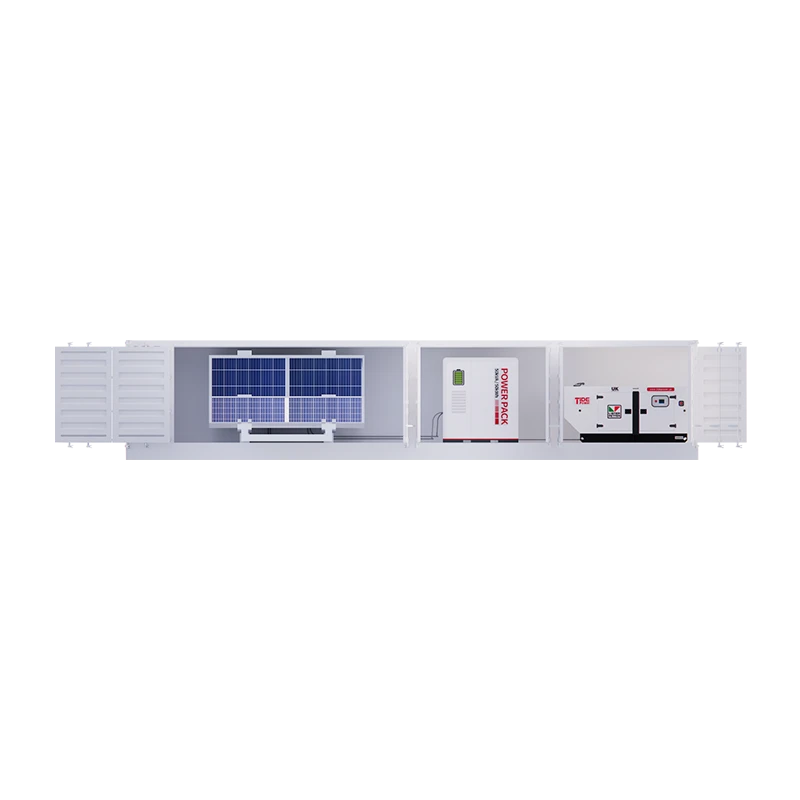
Containerized or trailer-based designs simplify logistics but add structural, thermal and transport constraints. Buyers should ask for transport certification, lifting points and derating at high ambient temperatures before accepting a container quote.
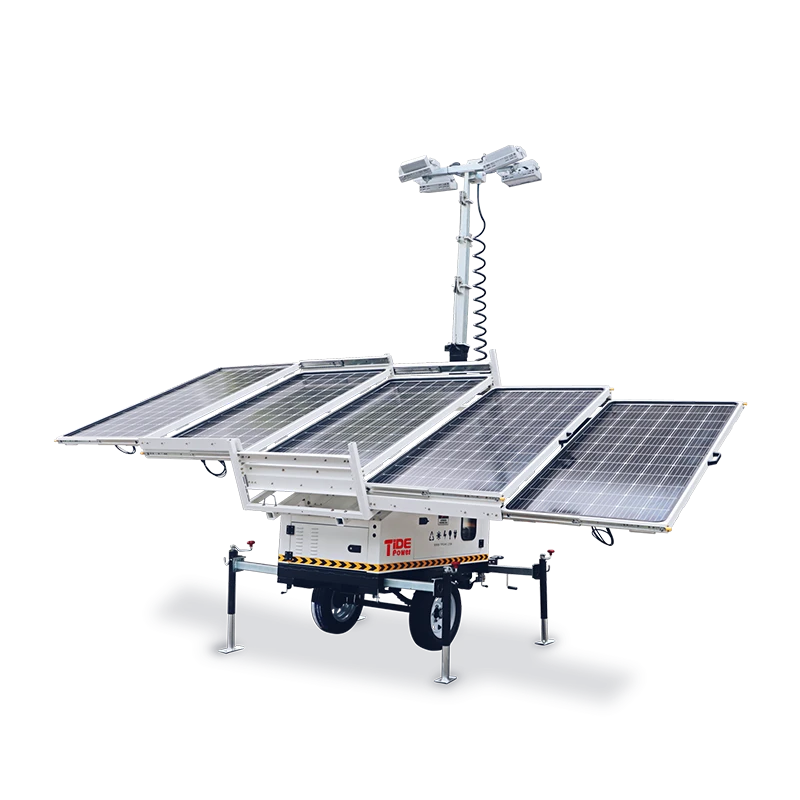
Mobile solar and storage platforms are changing how temporary and remote sites are powered. <A New Era of Mobile Power: Tide Power Unveils Game-Changing Foldable Solar Container> covers a folding solar container approach for rapid deployment.
A supplier that cannot provide a complete document set before shipment usually cannot support the system after shipment. At minimum, require single-line diagrams, protection coordination settings, commissioning procedures and a signed performance test protocol.
Commercial and Contract Terms
Wholesale hybrid energy contracts should separate product cost from performance risk. Price per kVA is only meaningful when the contract also defines usable capacity, fuel consumption or renewable fraction, commissioning milestones and destination acceptance criteria.
Key commercial clauses include Incoterms, payment schedule tied to FAT and SAT, performance security, warranty scope and defect response time. Acceptance should be measured at the destination under realistic operating conditions, not only at the factory. If the system includes battery storage, the warranty should state minimum retained capacity at defined cycle counts and operating conditions.
Request a spare-parts list with lead times for critical components such as power modules, BMS boards, controllers and breakers. A hybrid energy system is an operational asset, and unsupported electronics can make the entire microgrid unavailable.
If you are consolidating these terms into an RFQ, send the draft to [email protected] for a technical review before release.
Compliance and Safety Verification
Compliance requirements depend on the destination market, but buyers should specify a clear certification path at RFQ stage. For lithium battery modules, IEC 62619 is a common international safety reference [1]. For complete energy storage systems in North America, UL 9540 is often required [2]. Grid-interactive inverters should follow IEEE 1547 or the local grid code enforced by the utility [3]. Generator set performance is commonly specified under ISO 8528 [4].
Do not accept a certificate list without knowing which standard covers which component. A compliant inverter does not make the assembled system compliant. Ask for test reports, certification scope and the name of the certification body.
Documentation should also include fire and thermal safety provisions, earth-fault protection, arc-flash labeling and emergency shutdown procedures. For cross-border projects, specify the voltage and frequency tolerances expected by the local utility, not a generic “CE certified” statement.
Total Cost of Ownership and Performance Verification
A wholesale purchasing decision should be evaluated on total cost of ownership, not upfront price. The model should include fuel or grid energy cost, maintenance, battery replacement or augmentation, remote monitoring fees and site service travel. Storage cost trends have favored lithium iron phosphate in stationary applications, but buyers should still test the supplier’s degradation assumptions against an independent operating profile [5].
Performance verification should be built into the contract. Require a FAT protocol that tests rated output, usable capacity, changeover time and protection response. After delivery, the SAT should repeat those tests at the destination site with the actual load or a defined load bank.
Include all auxiliary loads that the hybrid system must serve—controls, thermal management, site lighting and communications—because these alter depth of discharge and system sizing.
Where the buyer has no historical operating data, request a short pilot or a detailed simulation with the actual solar resource, load profile and fuel cost. A credible supplier will provide the assumptions behind every efficiency and savings claim.
Plan Your Hybrid Energy Procurement Basis
Consolidate your load data, site conditions, destination grid codes and acceptance criteria into one RFQ package. For technical comparison support, a product-specific configuration check or a wholesale quotation request, contact Tide Power Technology Co., Ltd. at [email protected] or +86 591 2806 8999.
Frequently Asked Questions
What is the minimum information needed for a wholesale hybrid RFQ?
Include the site location, ambient temperature range, altitude, daily load profile, peak load, required autonomy, grid availability, fuel supply and any critical-load switching requirement. Without these, suppliers can only offer assumptions rather than a configured system.
Is LFP the only battery chemistry buyers should specify?
LFP is widely specified for stationary storage because of its thermal stability and cycle life, but the buyer should specify performance outcomes rather than a chemistry name alone. Define usable capacity, C-rate, cycle life, depth of discharge and degradation warranty, and let the supplier justify the selected chemistry.
Which certifications matter most for cross-border procurement?
The relevant standards depend on the destination market. Common references include IEC 62619 for battery modules, UL 9540 for complete energy storage systems, IEEE 1547 for grid-interactive inverters and ISO 8528 for generator set performance. Local grid codes and fire safety requirements may impose additional conditions.
What is a realistic lead time for containerized hybrid systems?
Lead time depends on battery module supply, inverter configuration, container fabrication and testing scope. Buyers should ask for a milestone schedule from engineering approval to FAT and destination SAT, and separate product lead time from shipping and customs clearance.
How can buyers verify performance claims before shipment?
Require a factory acceptance test covering rated output, usable capacity, changeover time, protection response and communication functions. Then repeat critical tests at the destination under a defined SAT protocol. Performance claims without test procedures are not enforceable.
References
International Electrotechnical Commission, “IEC 62619:2022 — Secondary cells and batteries containing alkaline or other non-acid electrolytes — Safety requirements for secondary lithium cells and batteries for use in industrial applications,” 2022.
UL, “ANSI/CAN/UL 9540:2023 — Energy Storage Systems and Equipment,” 2023.
IEEE, “IEEE Std 1547-2018 — Standard for Interconnection and Interoperability of Distributed Energy Resources with Associated Electric Power Systems Interfaces,” 2018.
International Organization for Standardization, “ISO 8528-1:2018 — Reciprocating internal combustion engine driven alternating current generating sets — Part 1: Application, ratings and performance,” 2018.
International Renewable Energy Agency, “Electricity storage and renewables: Costs and markets to 2030,” 2017.
If you’re interested, check out these related articles:
How to Choose a Generator at Tide Power
Powering Education in Ethiopia: Leading?Diesel Generator Manufacturer?Tide Power Delivers Silent?Power Generator?for Campus
Beyond Generation: Tide Power’s Integrated Energy Solutions & Tailored Service
Tide Power 2024 Global Sales Meeting Successfully Held
Tide Power Launches B Series Dry Suction Sewage Pumps: No Priming, No Clogs, No Downtime