 EN
EN ZH
ZH FR
FR ES
ES AR
ARNight work does not stop because the sun sets. On a construction cut, a mine access road, or an emergency response site, the lighting tower determines how much safe work happens between dusk and dawn. Reliable light towers are less about raw brightness and more about whether the mast raises cleanly, the power source keeps the lamps running, and the enclosure survives weather and transport. In our work across energy and industrial projects, the units that earn repeat orders are the ones site teams can deploy without hesitation.
Mast Design and Mobility in Reliable Light Towers
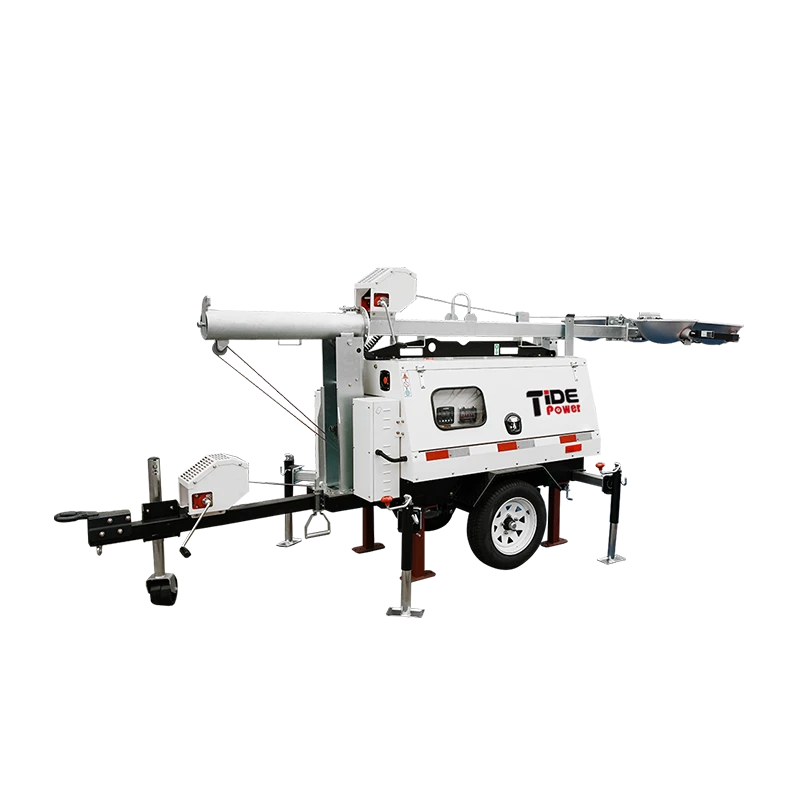
Setup time is the first reliability test. A tower that takes two workers and extra tools to raise will slow the shift even before the lamps switch on. Manual mast towers keep the mechanism simple and are often a practical choice for shorter jobs where the crew changes locations frequently. Hydraulic mast towers reduce physical effort and speed up repositioning, which matters on long linear sites such as road cuts or mining haul roads. Horizontal mast towers offer a lower transport profile and can be easier to move under clearance restrictions or between tight staging areas. Tide Power’s lighting tower range covers manual, hydraulic, horizontal, solar, and solar hydraulic configurations, so the mast choice should follow the site workflow rather than a generic feature list.
| Tower Configuration | Best Fit | Main Advantage | Setup Consideration |
|---|---|---|---|
| Manual Mast | Short duration jobs with frequent moves | Simple mechanism and lower cost | Requires manual cranking each relocation |
| Hydraulic Mast | Mining roads and large perimeters | Faster raising and less crew fatigue | Powered lift needs periodic hydraulic checks |
| Horizontal Mast | Low clearance areas and tight staging | Lower transport profile | Lamp positioning may need adjustment |
| Solar Lighting Tower | Urban or emission restricted sites | Silent operation and no fuel logistics | Battery runtime depends on solar gain |
| Solar Hydraulic Tower | Remote long duration projects | Renewable power with powered deployment | Higher upfront cost and more components |
Light Output and Coverage Requirements for Site Safety
Brightness alone does not make a site safe. The distribution matters as much as the peak output. A narrow beam can leave shadows at the edges of a trench, while a wide flood pattern can create glare for equipment operators. For material staging, wide perimeter coverage is usually more useful than extreme intensity. For drilling, hoisting, or loading areas, directional light needs to reach the work face without blinding the operator cabin. Ask for coverage diagrams instead of a single lumen claim. The tower should deliver even illumination across the active work zone, not just a bright circle directly under the mast. If the site has shifting work areas, a configuration with adjustable lamp heads or a rotating mast will save repositioning time.
Power Source Choices Across Diesel, Solar, and Hybrid
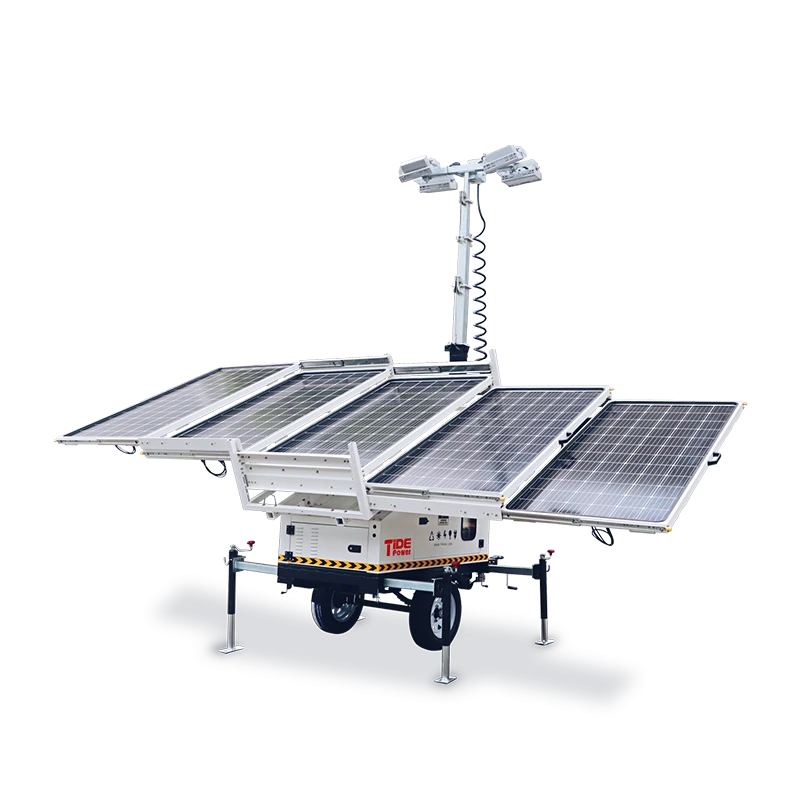
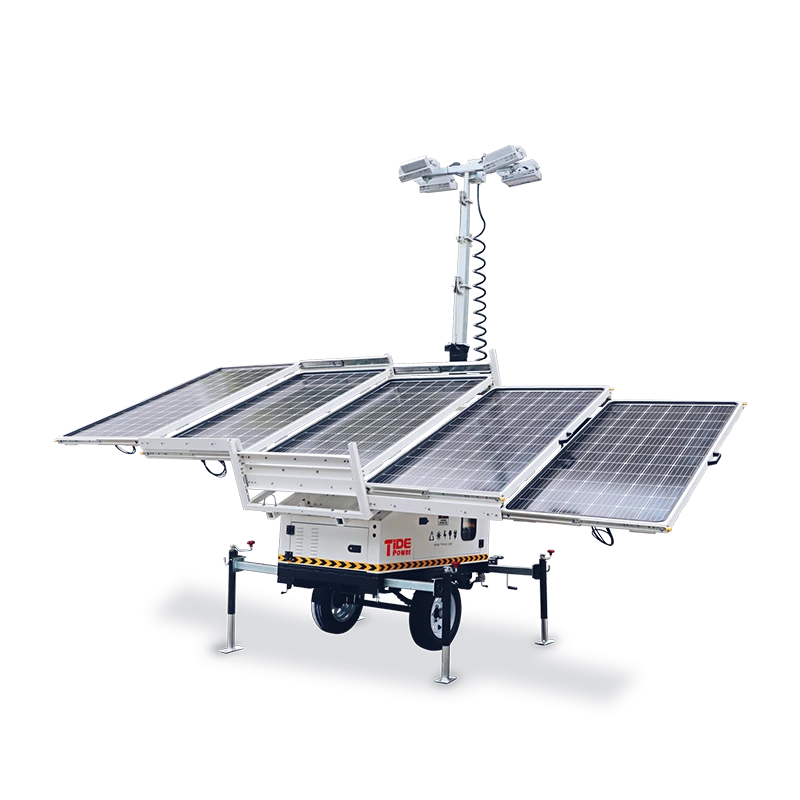
A diesel light tower remains the default for round the clock operations because refueling is straightforward and runtime is predictable. The tradeoff is noise, fuel delivery, and emissions compliance near urban or enclosed areas. Solar lighting towers work best on sites that need silent operation or cannot accept fuel storage. They remove fuel logistics and reduce daily maintenance, but their output depends on solar gain and battery state. Hybrid configurations pair solar and battery storage with a small generator, which cuts fuel use while keeping power available on overcast days or long winter shifts. For remote mine access or disaster response, we often see hybrid systems chosen because they reduce the number of fuel trips, not because solar replaces diesel entirely.
If your site has a fixed shift schedule or emission restriction, it is worth confirming battery duration and generator backup sizing before you commit. Reach us at [email protected] with your runtime hours.
Weather Protection and Enclosure Durability in Reliable Light Towers
Most light towers do not fail because the LED module stops working. They fail because moisture reaches the control wiring, corrosion weakens the mast locking points, or road vibration loosens the fasteners. We have watched units arrive on site and fail commissioning because the lamp fixture could not keep out heavy rain. Enclosure quality is therefore a long term reliability issue, not a finish detail. Look for sealed electrical compartments, rust resistant mast sections, and a canopy design that protects lifted components during transport. If the tower will run in coastal, high humidity, or high wind sites, ask for the corrosion treatment and wind rating before ordering. A unit that survives its first storm season is the one that stays on the active fleet.
Maintenance Access and Long Term Operating Cost
Purchase price is a poor predictor of lifetime cost. A tower with sealed panels or awkward cable routing may require more service hours for simple inspections. The lower cost unit can end up more expensive if replacing a controller or ballast means removing the entire enclosure. Reliable light towers make the wear items reachable: lamp heads, hinges, cables, lift points, and battery terminals. For diesel and hybrid units, fuel and coolant access should be possible without removing body panels. We also look at whether the supplier can deliver spare lamp modules and mast parts quickly, because a light tower stranded on a remote site is a schedule problem as much as a repair problem. Maintenance access may not appear in a headline specification, but it shows up directly in operating cost and availability.
Specifying Reliable Light Towers Without Guesswork
The spec sheets start to look alike after a while, and buyers are often left comparing mast height, lamp count, and engine brand without knowing which detail will cause a site failure. The more useful approach is to match the tower to the site’s actual constraints: setup time, light coverage, available fuel, weather exposure, and service access. Tide Power supplies manual, hydraulic, horizontal, solar, and solar hydraulic lighting towers for construction, mining, and emergency response projects. Send your site dimensions, shift hours, fuel or emission limits, and tower type preferences to [email protected] or call +86 591 2806 8999. We will confirm the configurations that fit your operating pattern instead of sending a generic list.
Common Questions About Reliable Light Towers
What is the difference between manual and hydraulic mast light towers?
A hydraulic mast uses powered lift to raise and lower the mast, while a manual mast depends on hand cranking or a simple mechanical winch. The hydraulic option is faster and reduces worker fatigue when towers move often. Manual masts have fewer powered components, which can make them simpler to maintain on short duration jobs. For long sites where the tower follows the crew each night, hydraulic operation often pays for itself in saved setup time. For a fixed point with occasional repositioning, a manual mast remains a practical, lower cost choice.
Can solar lighting towers replace diesel towers on construction sites?
They can, but only within specific conditions. Solar lighting towers are not a direct one for one replacement for continuously running diesel units. They suit sites with daylight charging time, moderate night run hours, and no tolerance for noise or fuel storage. In winter or heavily overcast locations, the battery may not recover enough before the next shift. For those projects, a solar hydraulic tower paired with a small generator is often more reliable than solar alone. The decision depends on daily lighting hours and available solar exposure, not just the lamp wattage.
How much does weather protection affect long term reliability?
It depends on where the tower operates, but weather protection matters more than lamp brightness in most outdoor fleets. In coastal or high humidity areas, moisture ingress into the electrical compartment is one of the fastest ways to take a tower out of service. In hot, dusty regions, dust can clog cooling paths and reduce battery life. Wind exposure also loads the mast and its locking mechanism. Buyers should ask about sealed cable entries, corrosion treatment, and wind rating before comparing lamp specifications. A tower that handles the most extreme season on your site will usually be the most reliable choice.
What should I confirm before ordering a light tower?
In energy and industrial projects I have covered, the most useful details to confirm are the number of work zones, shift duration, fuel or emission limits, transport clearances, and whether the site can accept noise from a diesel unit. These factors determine mast type, lamp configuration, power source, and enclosure grade more accurately than a headline wattage or mast height. Also ask about spare parts availability for lamp heads and mast components. If your project has a defined runtime or fuel restriction, share those requirements and we will confirm available tower configurations and lead time.
If you’re interested, check out these related articles:
Tide Power Generator & Lighting Towers Shine at Saudi ELENEX 2025
How Industrial Generators and Hybrid Power Systems Solve Summer Energy Challenges