 EN
 ZH
 FR
 ES
 AR
A standby generator for home backup power is sized by the loads you intend to keep running and by the current those loads draw when they start, not by the total capacity printed on the electrical panel. That distinction decides the rating, the transfer switch, the fuel arrangement and where the set can sit on the property. A unit that carries a defined circuit list through a multi-day outage is a different purchase from one that promises whole-home coverage and then trips on the first compressor start. The decisions below follow the order a homeowner meets them: what the system must cover, how to size it, which fuel to use, how it connects, where it sits, and what keeps it starting years later.
What a standby generator adds beyond a portable unit
A portable generator and a permanently installed standby set can share an engine and an alternator and still solve different problems. The portable unit needs someone to move it, connect it and keep it fuelled. The standby set starts on its own when the supply fails, because a transfer switch detects the loss and signals the engine to start. That automatic start matters most in the outages that arrive while the house is empty or the roads are closed.
Three arrangements cover most homes, and the last column is the part buyers tend to skip.
| Option | How it comes online | Loads it can carry | Constraint to accept | Not the right fit when |
|---|---|---|---|---|
| Portable generator with a manual connection | Someone connects it to an inlet or interlock and starts it | Selected appliances through cords, or selected circuits through an inlet | Fuel handling, weather protection and manual operation | Nobody is home when the outage starts, or the outage outlasts the fuel store |
| Permanently installed standby generator with an automatic transfer switch | Automatic start shortly after supply loss | Circuits wired to the switch, from a critical-load panel up to the whole service | A fixed fuel supply, a compliant pad and clearances, and an annual service routine | The site has no compliant location, or fuel cannot be fixed on site |
| Battery backup or hybrid system | Instant transfer with no startup delay and no fuel burn | Circuits its inverter and battery can carry, plus generator-fed circuits in a hybrid | Battery capacity, temperature control and recharge energy after each event | Outages routinely run for days and no generator or solar recharge is available |
A transfer switch is not an accessory bolted on at the end of the job. It defines what the house can actually run, and it is the component an electrician must size against the service. NFPA 70 treats these installations as optional standby systems under Article 702, which separates them from legally required standby systems serving life safety functions [1]. The classification matters for the paperwork: an optional standby system still needs a permit, an inspection, and a transfer arrangement that cannot feed back into the utility supply.
Ask for the switch rating in writing before signing: amperage, number of poles, whether the neutral is switched, and the short-circuit withstand rating. Those four items decide whether the switch can be installed on your service at all.
Sizing a standby generator around starting current
Sizing starts with a load list, not with a kW figure. Write down every circuit you want to keep: refrigeration, heating or cooling, well pump, sump pump, lighting, network equipment, medical equipment, and anything with a motor. Then separate running load from starting load. A motor at standstill draws locked rotor current, often several times its running current, for the fraction of a second it takes to accelerate. The generator must ride through that inrush, and the transfer switch or load controller must keep other large loads from adding to it at the same moment.
The starting apparent power of a single motor comes from its nameplate, not from a rule of thumb. For a single-phase motor, starting kVA equals locked rotor amps multiplied by voltage and divided by 1,000. For a three-phase motor, the same calculation includes the square root of three: starting kVA = (LRA × V × 1.732) / 1,000. Use the LRA printed on the unit; if the plate is missing, ask the equipment supplier for it rather than estimating.
The second half of sizing is the rating basis. ISO 8528-1 defines separate continuous, prime, limited-time and emergency standby ratings, and an emergency standby rating is defined for the duration of a utility outage within an annual hour limit, not for continuous supply [2]. Two offers can quote the same kW figure against different categories, so the first comparison question is which category the number belongs to. Ask whether the figure is kW or kVA and at what power factor, and ask for the site conditions behind it. Output falls at high altitude and high ambient temperature, and the manufacturer’s derating curve shows by how much for a given site.
Scaling a generator system for one house and scaling it for a building complex both begin with the same two inputs, the load list and the site conditions. <Case Study: Scalable Generator Systems for Every Urban Power Challenge> covers how generator systems are scaled across different urban power requirements.
A rating describes a package: engine, alternator, cooling group and controller together. A larger engine alone does not raise the rating, which is why two sets built on the same engine model can carry different nameplate figures once the alternator and cooling system change.
The table below is the specification set worth requesting before any comparison. The last column is what keeps a datasheet from being read as a promise.
| Field to request | What the value must state | What it lets you decide | What it does not prove |
|---|---|---|---|
| Power rating and basis | Continuous kW or kVA, the ISO 8528-1 category, and the site conditions applying to it | Comparison of two offers on the same basis | That the set sustains the whole house indefinitely |
| Motor starting capability | Starting kVA accepted at a stated voltage dip, or the largest locked rotor current it will take | Whether the largest motor can start on generator power | That every motor on the panel can start simultaneously |
| Sound level | dB(A) at a stated distance and test condition | Enclosure comparison and siting distance | That a neighbour’s window will measure that level |
| Fuel consumption | Litres or cubic metres per hour at stated load points | Tank size and refuelling interval | That consumption stays flat across the load range |
| Transfer switch rating | Amps, poles, neutral arrangement and short-circuit withstand | Whether the switch matches the service and the load | That it suits circuits it was not rated for |
| Documentation | Test report, wiring diagram, commissioning checklist and warranty terms | What can be verified at handover | That the installation is approved by the authority having jurisdiction |
A vague request produces a vague quote. Reject “10 kW silent diesel generator with automatic transfer switch” as a specification, because it fixes no rating basis, no starting capability and no site condition. Replace it with a request that names the ISO 8528-1 category and site conditions, the starting kVA accepted at your largest motor’s locked rotor current, the sound level in dB(A) at a stated distance, fuel consumption at three load points, the transfer switch rating with poles and short-circuit withstand, and a commissioning checklist with handover test results.
Diesel, natural gas or LPG for a home standby set
Fuel decides more than running cost. It decides whether the set can run for days without attention, what must be installed on site before delivery, and which maintenance tasks enter the annual routine.
| Fuel | What has to be in place | Runtime and storage planning | Constraint to accept |
|---|---|---|---|
| Diesel | A storage tank sized for the planned outage, with filling access and containment where required | Runtime is usable volume divided by hourly consumption at the expected load | Fuel ages in storage and needs water control, filtration and periodic turnover |
| Natural gas | A dedicated line sized for the engine’s demand at the pressure available on site | Runtime is limited by the supply, not by an on-site tank | Capacity depends on supply pressure and gas composition, and the line must be sized for the engine rather than a household appliance |
| LPG (propane) | A tank and vapour system sized for the engine’s demand at the lowest expected outdoor temperature | Runtime is tank volume against consumption, and vaporisation rate can limit draw before the tank empties | Vaporisation falls in cold weather, so tank size, burial and insulation all affect winter capability |
Diesel sets carry the most energy per litre and the longest interval between refuelling for a given tank, which suits multi-day outages. The cost is fuel care. Water ingress, microbial growth and long storage degrade diesel, so water separation, filtration and a turnover plan belong in the purchase rather than the afterthought list. Diesel engines also prefer a working load band: days of running at a few percent of rating keep exhaust temperature low and encourage deposit build-up, which is one reason a realistic load estimate matters more than a large safety margin.
Fuel choice, load profile and refuelling interval are usually decided together, and the same trade-offs appear at household scale and at industrial scale. <Diesel vs. Gas Generators: Which Is Right for Your Industry?> compares diesel and gas generator options by application.
Natural gas removes the tank and refuelling question entirely, as long as the supply survives the event. The trade is dependence on a network that can be shut off during a regional emergency, plus a line that must be sized for engine demand rather than appliance demand. Propane sits between the two: on-site storage without diesel’s ageing problem, but a vaporisation rate that drops with temperature, so cold-climate sizing looks at tank surface area and temperature, not only litres.
Emission requirements also differ between spark-ignition and compression-ignition engines and between engine size classes, and they change from market to market. Confirm that the model offered holds the approvals that apply where it will be installed, and ask for the document that shows it.
Matching the transfer switch to the circuits you keep
Automatic transfer compared with a manual switch
An automatic transfer switch monitors the incoming supply, starts the set and transfers load with nobody present. A manual switch costs less and gives the owner control over when the house transfers, but it needs someone at home, which is the wrong requirement for an outage that starts at night. Where the set exists to protect refrigeration, heating and medical equipment, the automatic arrangement is the reason the system exists.
Where load management changes the answer
Load management lets a smaller set serve a longer circuit list by preventing non-essential loads from running on generator power, or by locking out large loads while a motor starts. A shedding controller can drop an electric vehicle charger, a second air conditioner or a hot tub as total demand approaches the set rating, then restore it when headroom returns. That is a legitimate way to reduce cost, provided the shed list is written down and the household understands which circuits will be unavailable during an outage.
Three items settle the arrangement. List the circuits the switch will serve and confirm the amperage covers them. Confirm whether the neutral is switched or solid, because the answer must match the generator and the switch together, and a mismatch creates a grounding problem an inspector will catch. Ask the utility what it requires before work begins, since many utilities want a visible, lockable disconnect and an approved transfer arrangement before reconnecting a service.
Ask for the transfer sequence in writing as well. The controller should start the engine, allow voltage and frequency to stabilise, and only then close the transfer. A sequence that transfers load onto a set still accelerating shortens the life of both.
Siting, exhaust and noise at the property line
Placement rules come from three sources that do not always agree: the manufacturer’s clearance diagram, the codes that apply locally, and the noise expectations of the neighbours. The first two decide whether the installation is legal. The third decides whether it stays comfortable to live with.
Clearances exist for a reason. Exhaust must discharge away from windows, doors, fresh-air intakes and any opening into the building, and manufacturer instructions and carbon monoxide guidance rule out installing a set inside a garage, basement or other enclosed space that can collect exhaust gas. Manufacturer diagrams give minimum distances to combustible walls, walls with openings and adjacent structures, plus the space needed to open service panels. A unit boxed in against a fence runs hot and is harder to maintain.
Sound from a point source drops by about 6 dB(A) each time the distance doubles, so a set rated at a given level at seven metres is roughly 12 dB(A) lower at twenty-eight metres, assuming open ground and no reflecting surfaces. Reflected sound, a hard fence and a nearby building face can all raise the level at a neighbour’s window. The practical sequence is to measure existing background at the property line, compare it with the published figure corrected for distance, and read the local ordinance for night-time limits before choosing a location.
Record three things during the site visit: background level at the property line, distance from the proposed pad to the nearest opening in any neighbouring building, and the location of the service and meter. Those three records answer most of what a planning authority will ask.
Runtime, fuel storage and the checks that keep it starting
How to size the fuel tank
Tank size follows from the outage you are planning for, not from the tank that fits the pad. Multiply hourly consumption at the expected load by the hours you want to cover, add a reserve, and compare the result with usable capacity rather than nominal capacity, since the pickup sits above the tank floor and the set should not be run dry. A system designed for three days without refuelling needs a different tank from one designed for eight hours.
What a no-load exercise run does and does not prove
A weekly or monthly exercise proves that the starting battery holds charge, the controller starts the engine, and voltage and frequency come up. It does not prove that the set carries load, that the transfer completes under load, or that the cooling system handles a hot afternoon at rated output. A loaded test, by load bank or by running the house circuits for a measured interval, closes that gap.
The service routine should be written against hours and calendar intervals, whichever comes first, and should name the parts that fail in service: filters, belts, starting battery, coolant and the charger that keeps that battery ready. In cold climates a block heater protects starting, and in humid climates corrosion protection on the control cabinet matters more. For diesel, add water removal from the tank, filter changes after any contamination event, and a turnover plan so fuel does not sit for years.
Keep a log with date, run duration, load during the run, voltage and frequency readings, coolant temperature, oil pressure, fuel added and any fault code. That log is what a technician needs to diagnose a fault, and it is also the evidence that the maintenance happened.
When a battery hybrid is a better fit than a generator alone
A house that loses power for twenty minutes, six times a year, is buying a different problem from a house that loses it for three days after a storm. In the first case a battery system transfers instantly, runs silently and burns no fuel, and the generator mostly waits. In the second case a generator with a fuel store remains the practical answer, because stored energy is finite and the outage may outlast it.
A hybrid system combines the two. Solar or another charge source feeds a battery, the battery carries the load through short interruptions, and the generator starts when battery state of charge falls below a threshold. Because the generator then runs at a healthier average load instead of idling through a long low-load stretch, the arrangement also reduces the light-load operation that diesel sets tolerate poorly.
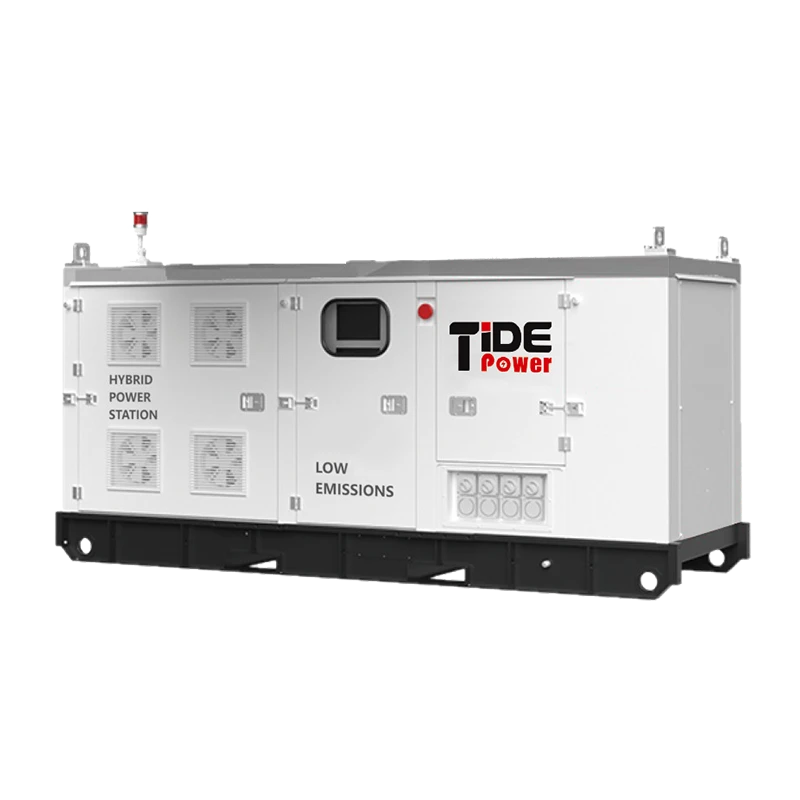
Tide Power builds this arrangement as a hybrid power system integrating solar, lithium iron phosphate storage and a diesel generator under one controller, in all-in-one and split configurations spanning 10 kVA to 250 kVA, with millisecond-level switching between sources and support for unmanned operation. In a home context the useful part is the control logic: the generator is sized to average load plus recharge, not to every load the house can switch on at once.
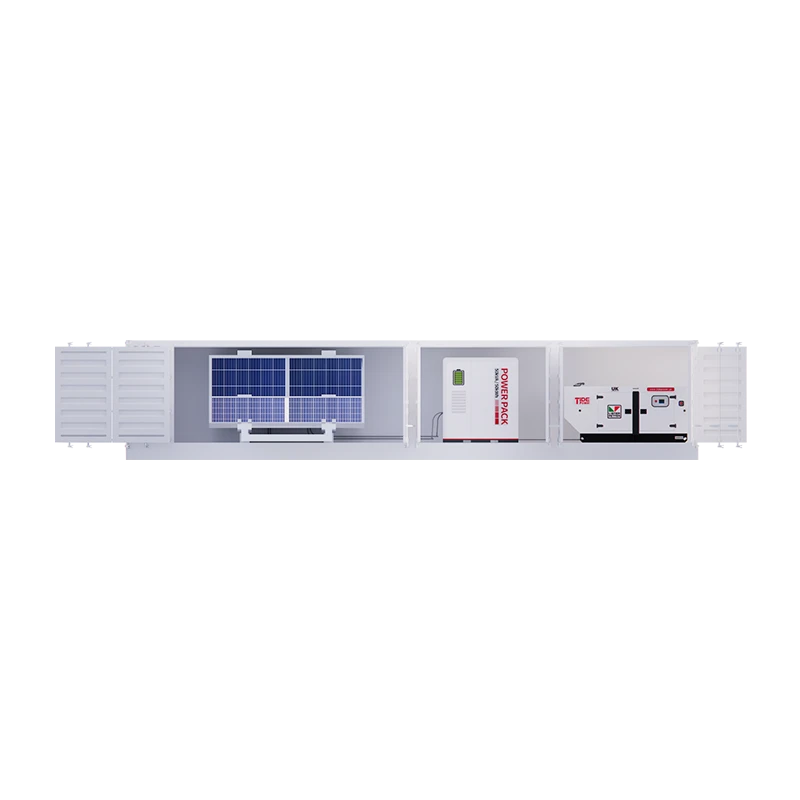
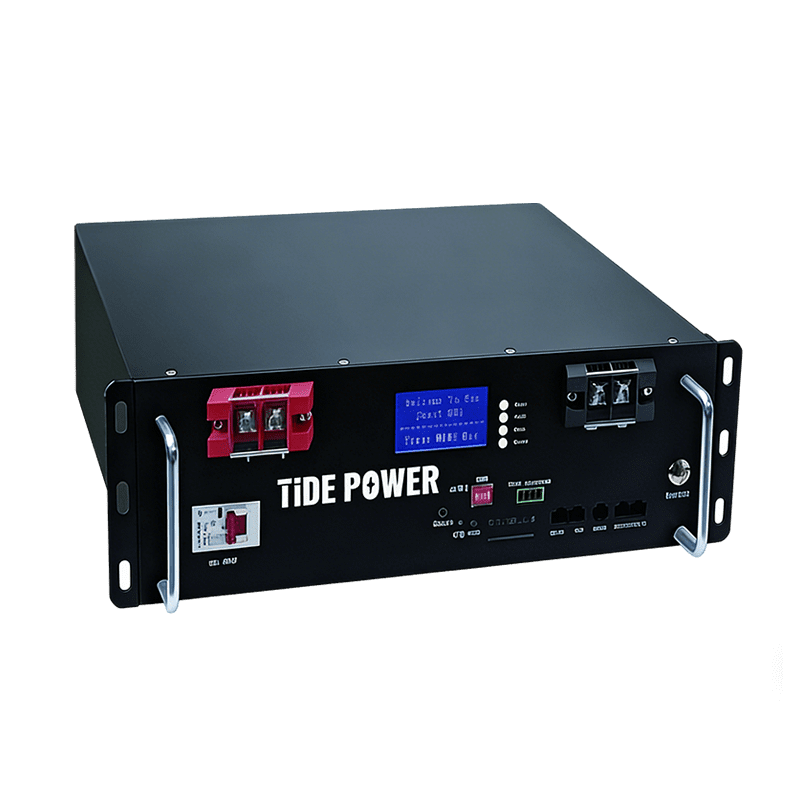
The trade-offs are real. Battery capacity costs money per kWh and delivers less of it in cold weather, cycle life limits how often the battery can carry the house, the inverter adds its own losses, and a control fault can leave a homeowner facing a system state they do not understand. A hybrid also has more parts to service than a generator alone. It earns its place when outages are frequent and short, when quiet operation matters, or when the generator would otherwise spend most of its running hours far below rating.
Profile the outages before choosing: how often they occur, how long they last, and which loads must run through them. A frequency and duration record from the past two years is more useful than any general recommendation.
Send your load list before you compare generator quotes
A quote compared against a load list is a decision. A quote compared against another quote is only a price. Send the circuits you want to keep and their running load, the locked rotor current or starting kVA of the largest motor, the supply voltage and phase, the fuel available on site, the transfer switch arrangement, the noise limit at the property line, and the outage length you are planning for. With those fields, a proposal can be checked on the same basis as every other offer instead of on a headline kW figure.
Contact Tide Power Technology Co., Ltd. at [email protected] or +86 591 2806 8999.
FAQ
How many kW does a house need for standby power?
It follows from the load list, not from the size of the house. Add the running load of every circuit you want to keep, then check the starting current of the largest motor and add the remaining running load to it. The answer is the higher of those two figures, with margin for loads that may start together. Backing up selected circuits lowers the number because fewer loads can start at the same moment, while whole-home coverage requires the set to accept the full starting duty of the service. A supplier can size the unit only after that list exists.
Can a standby generator start a central air conditioner?
It can if the set’s motor starting capability covers the compressor’s locked rotor current and the controller sequences other loads away while it starts. The LRA on the outdoor unit nameplate is the number that decides this, and it is the figure to send with any enquiry. Soft-start kits reduce starting current on many compressors and change the answer, so ask the equipment supplier whether one is approved for your model.
How long will it run on a full tank?
Divide usable fuel by hourly consumption at the load you expect. Usable capacity is lower than nominal capacity, and consumption rises with load, so the honest answer is a range between light and heavy load rather than a single number. If the planned outage length exceeds the resulting runtime, the tank or the refuelling plan has to change before the set is ordered.
Do I need a permit and an inspection?
Typically yes for the electrical connection, and often for the installation itself. Optional standby systems covered by Article 702 of NFPA 70 are still inspected, and the authority having jurisdiction decides what it wants to see. Noise ordinances, setback rules and utility interconnection requirements may apply as well. Ask the local authority and the utility before the pad is poured, because moving a set afterwards is expensive.
Is a battery system better than a generator for short outages?
For outages measured in minutes or a few hours, a battery transfers instantly, makes no noise and needs no fuel, which suits frequent short interruptions. For outages that run for days, stored energy runs out and a generator with a fuel supply keeps going. A hybrid covers both, using the battery for short events and the generator for long ones and for recharging.
References
[1] NFPA 70, National Electrical Code, Article 702, National Fire Protection Association, 2023.
[2] ISO 8528-1:2018, Reciprocating internal combustion engine driven alternating current generating sets. Part 1: Application, ratings and performance, International Organization for Standardization, 2018.
If you’re interested, check out these related articles:
Advocating for Stronger Electricity Grids to Meet Rising AI Demands
Cheers for the completion of the first phase of the Gas Project in Africa
Entering the China Production Base of Tide Power