 EN
 ZH
 FR
 ES
 AR
A generator set is a packaged power plant: an engine, an alternator, a controller and the support systems that keep them running, assembled on one base and supplied as a single product [1]. The definition is short, but the number printed on the nameplate is where most comparisons go wrong. Two sets with the same kVA can deliver different real power, tolerate different load steps and carry very different duty limits, because the declared rating, the site conditions and the way the set was tested all shape what the machine can actually do. This guide covers the parts, the ratings and the datasheet checks that keep a comparison honest.
What a Generator Set Includes Beyond the Engine
ISO 8528-1 treats a generating set as a reciprocating internal combustion engine driving an alternator, together with the control, protection and auxiliary equipment needed for the two to work as one product [1]. That framing matters during selection, because the engine and the alternator are only two of the items that decide whether the set starts, accepts a step load and stays inside its limits on a hot afternoon.
| Component | Job in the package | What it decides during selection |
|---|---|---|
| Prime mover | Converts fuel into shaft torque | Fuel availability, load pickup, emissions route |
| Alternator | Converts rotation into single or three-phase voltage | kVA ceiling, voltage, fault current contribution |
| Controller and protection | Starts, meters, alarms and trips the set | Unattended operation, remote monitoring, failure behaviour |
| Fuel system and tank | Stores and delivers usable fuel | Runtime between refills, bunding, site fuel rules |
| Cooling and ventilation | Rejects engine and alternator heat | Usable rating in hot climates, canopy layout |
| Enclosure and base frame | Controls noise, weather ingress and lifting | Noise limit, placement, transport and lifting data |
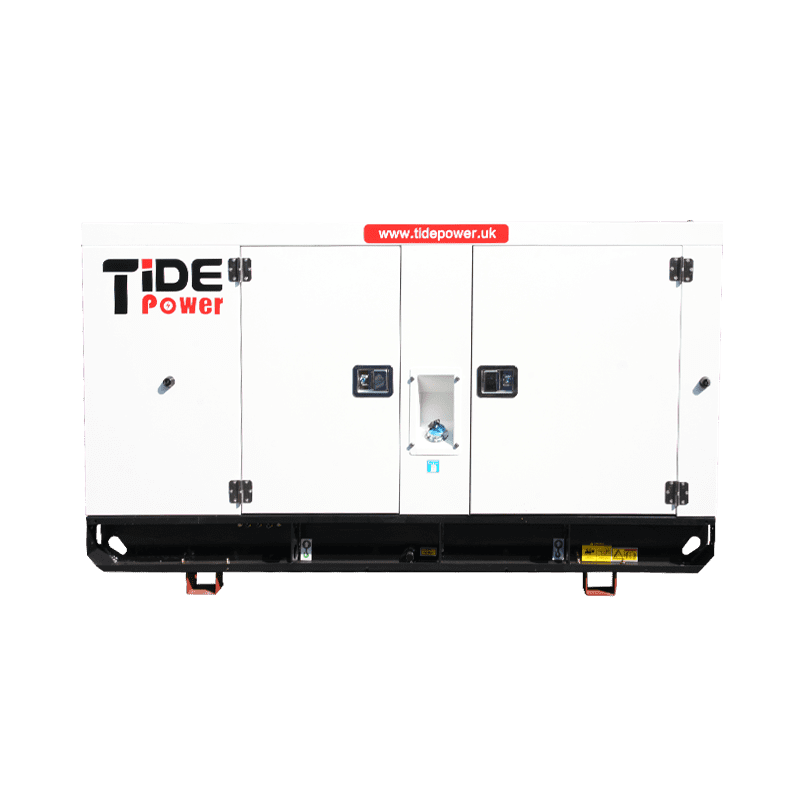
The enclosure is often the part buyers notice last and live with longest. A soundproof canopy with a thick steel skin and a defined ventilation path reduces noise, but it also restricts airflow, so the same set may be declared at a lower rating inside the canopy than on an open skid. Ask for the noise figure with its measurement distance and load condition, and ask which rating applies with the canopy fitted rather than the bare engine rating.
How the Engine and Alternator Turn Fuel Into Usable Power
The set works as a chain of conversions. The engine releases fuel energy through a four-stroke cycle and the governor meters fuel to hold the requested speed. The alternator’s rotor field induces voltage in the stator. Frequency follows mechanical speed and pole count, f = N × P / 120, where N is rpm and P is the number of poles. A four-pole set runs at 1500 rpm for 50 Hz and 1800 rpm for 60 Hz, which is why one engine model appears with different frequency ratings in different markets.
Voltage is held by the automatic voltage regulator, which adjusts field excitation as load changes. A load step produces a dip and a recovery, and the size and duration of that dip depend on engine torque reserve and alternator reactance. ISO 8528-5 groups this behaviour into performance classes G1 to G4, ranging from general-purpose use to applications where voltage and frequency deviation must stay tight [2]. Two sets of identical kVA can sit in different classes, so the class is a useful line on any comparison sheet.
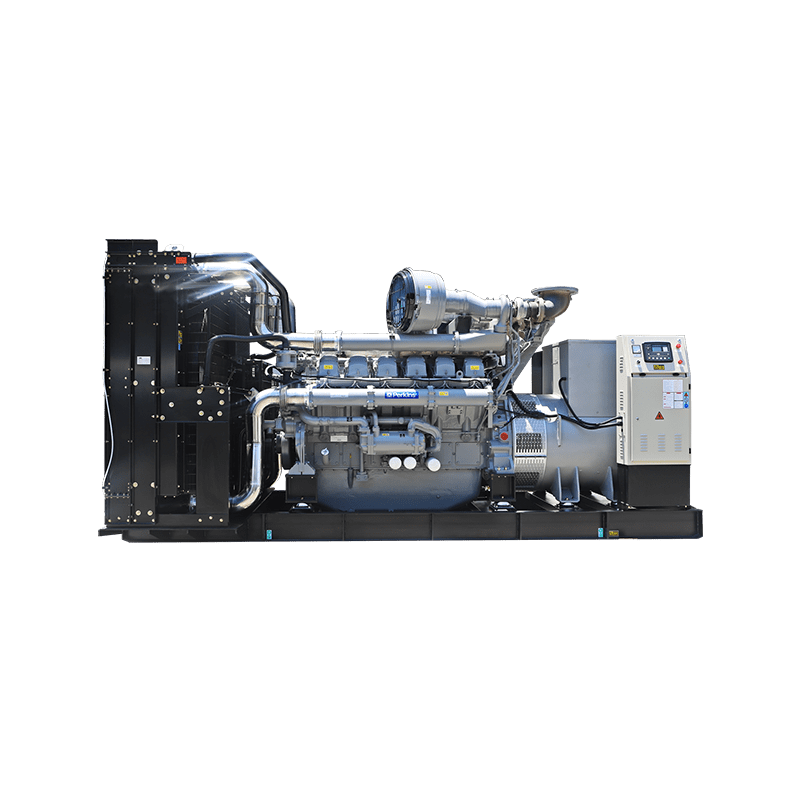
Engine declarations follow ISO 3046-1, which sets out how power, fuel consumption and lubricating oil consumption are declared and corrected to reference conditions [3]. A rating quoted without its ambient temperature and altitude is therefore incomplete rather than wrong.
Engine supply arrangements shape what a project can source and support over its service life. <Tide Power and Caterpillar Successfully Signed 2024 MWM Engine Purchase Intent Agreement> covers the supply agreement behind MWM engine sets.
What Prime, Standby and Continuous Ratings Actually Mean
Ratings are where two datasheets with the same kVA stop being comparable. ISO 8528-1 defines several declared ratings, and each describes a different duty pattern rather than a different machine [1].
| Declared rating | Intended duty | Overload allowance | What it does not tell you |
|---|---|---|---|
| COP | Continuous supply at a constant load | None | Whether the set accepts your load steps |
| PRP | Variable load, typically grid backup | 10% for 1 hour in every 12 hours | Fuel use and service life under your profile |
| LTP | Limited hours per year at peak demand | None | Suitability for continuous duty |
| ESP | Emergency standby, no utility parallel | None | That the load is picked up within your required time |
Emergency systems add a second layer of requirements. NFPA 110 classifies equipment by level, type and class, which ties the set to the time it must carry the load and the time it has to start [4]. Design guidance for commercial and industrial standby systems, such as IEEE Std 446, treats the set as one element in a system that also includes transfer switching, distribution and load prioritisation [5].
A declared rating is a statement about the set under defined conditions, not a promise about your load profile. Two checks follow. First, compare the load steps the set must recover from, not only the total kW. Second, confirm whether the rating is stated at your site ambient temperature and altitude, because cooling and combustion both change with air density.
Why the Same kVA Can Deliver Different Real Power
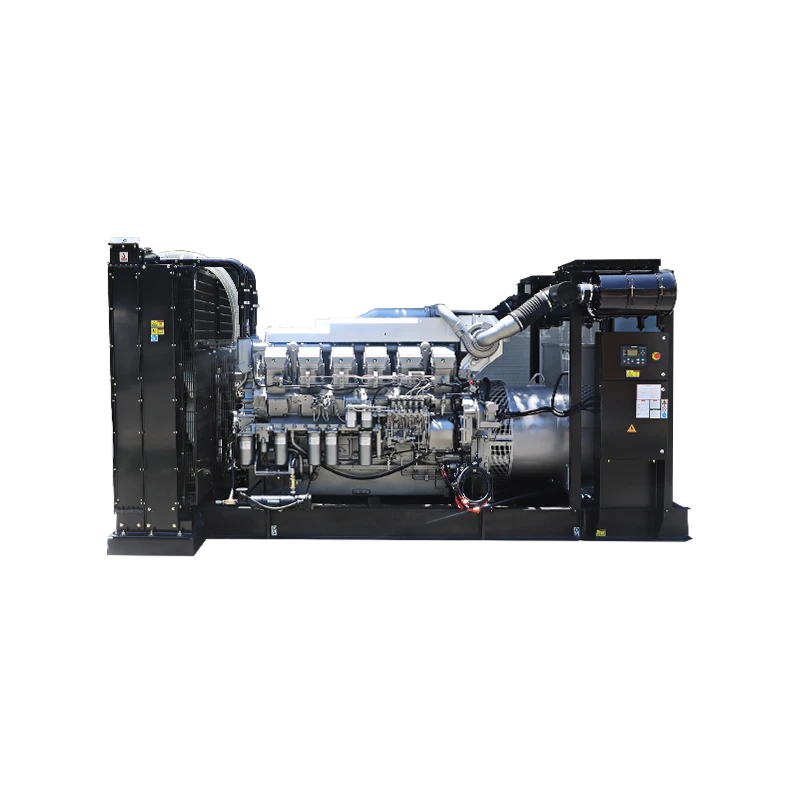
The engine and the alternator set different limits. Alternator heating limits apparent power in kVA, engine torque limits real power in kW, and power factor ties the two together, kW = kVA × power factor. Industrial alternators are commonly rated at 0.8 power factor, so a 100 kVA set typically declares 80 kW. At a lower load power factor the same kW demands more kVA, and the set can reach its alternator limit before its engine limit.
Nonlinear loads shift the balance again. Rectifiers, variable speed drives, chargers and LED banks draw current in short pulses, which raises alternator heating for the same kW and can distort the voltage waveform. A datasheet that states a nonlinear load capability, or a derating for harmonic current, is easier to compare than one that lists only a resistive rating.
Site conditions reduce the declaration further. Engine power is corrected for ambient temperature, barometric pressure and humidity under ISO 3046-1 [3], while alternator cooling depends on airflow through the enclosure. At altitude, air density falls and combustion air mass falls with it, so the set that carried a block of load at sea level may not pick it up on a mountain site. Single-phase and three-phase configurations also change the usable output, because the same frame is reconnected rather than rebuilt.
What to Check on a Generator Set Datasheet
A practical comparison walks the same list for every supplier:
- Rating basis, whether COP, PRP, LTP or ESP, with the standard cited.
- Reference conditions, including ambient temperature, altitude and humidity.
- Power factor, together with the kW figure that follows from it.
- Voltage, frequency, phase and the permitted steady-state deviation.
- Load acceptance, stated as the largest step the set will take and recover from.
- Fuel consumption at named load points, corrected to reference conditions.
- Noise in dB(A) at a stated distance, stated load share, open or enclosed.
- Emissions approval, with the certificate and the market it applies to.
- Protection, control, remote monitoring and the transfer arrangement.
- Documentation, including the factory test record, wiring diagram and service schedule.
Vague wording is the usual reason two offers cannot be compared. The table below converts common buyer phrases into requests a supplier can answer precisely.
| Buyer phrase | What it usually hides | Request instead |
|---|---|---|
| Silent generator | Noise depends on distance and load | dB(A) at a stated distance and load, canopy fitted |
| Prime rated 100 kVA | Rating basis and conditions missing | Rating class, ambient, altitude, overload allowance |
| Standby backup | No start time or autonomy specified | Start and transfer time, fuel autonomy, NFPA 110 level and class |
| Heavy duty | Undefined duty expectation | Load profile, hours per year, declared rating |
| Low fuel consumption | The load point is unstated | Consumption at 50%, 75% and 100% load |
| Containerised | Enclosure performance unstated | Ingress protection, ambient rating, lifting and transport data |
Choosing Between Diesel, Gas and Hybrid Generator Sets
Diesel sets dominate standby work because compression ignition picks up load quickly and the fuel stores well. Gas sets suit continuous duty where pipeline gas, biogas or LPG is available, and the range extends from small spark-ignition units to multi-megawatt engines; MWM gas generator sets cover 600 kVA to 4500 kVA. Emission rules shape the choice as well. Non-road engines sold in the EU fall under Regulation (EU) 2016/1628, known as Stage V [6], while the corresponding US programme sets Tier 4 limits for nonroad compression-ignition engines under 40 CFR Part 1039 [7]. An approval held in one market does not automatically transfer to another, so the certificate and the destination market should be checked together.
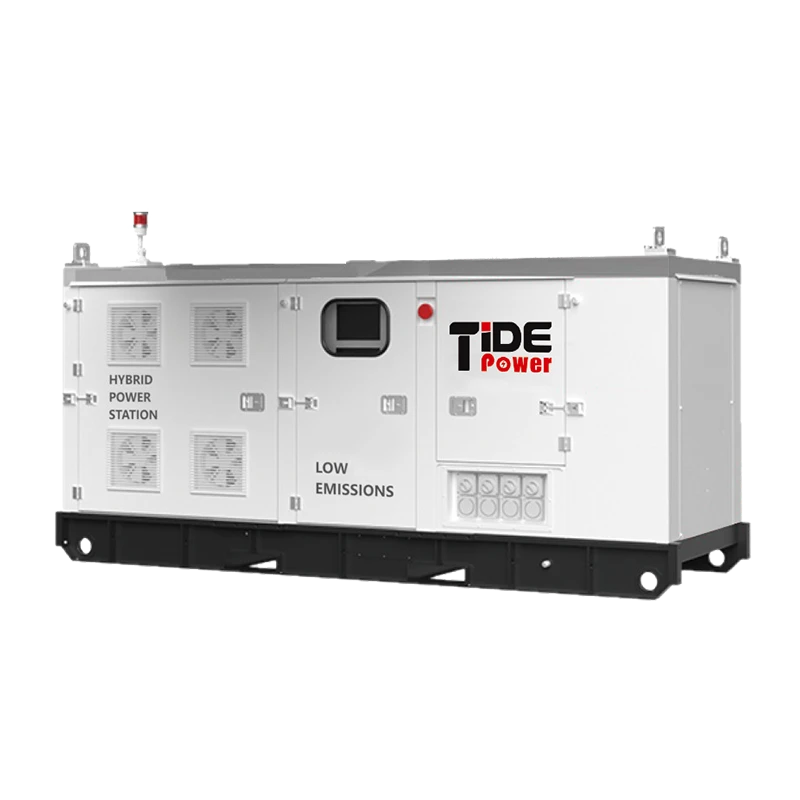
Hybrid configurations suit sites where the load varies and fuel logistics are expensive. An all-in-one unit such as the TP-60P combines a small generator set, photovoltaic input and battery storage in one enclosure, with the battery absorbing load steps so the engine can run at a steadier, more efficient point. The engine then covers energy, not every transient.
Peak-season demand is where generator and storage sizing decisions show up first. <How Industrial Generators and Hybrid Power Systems Solve Summer Energy Challenges> covers how the two are combined when summer load and heat arrive together.
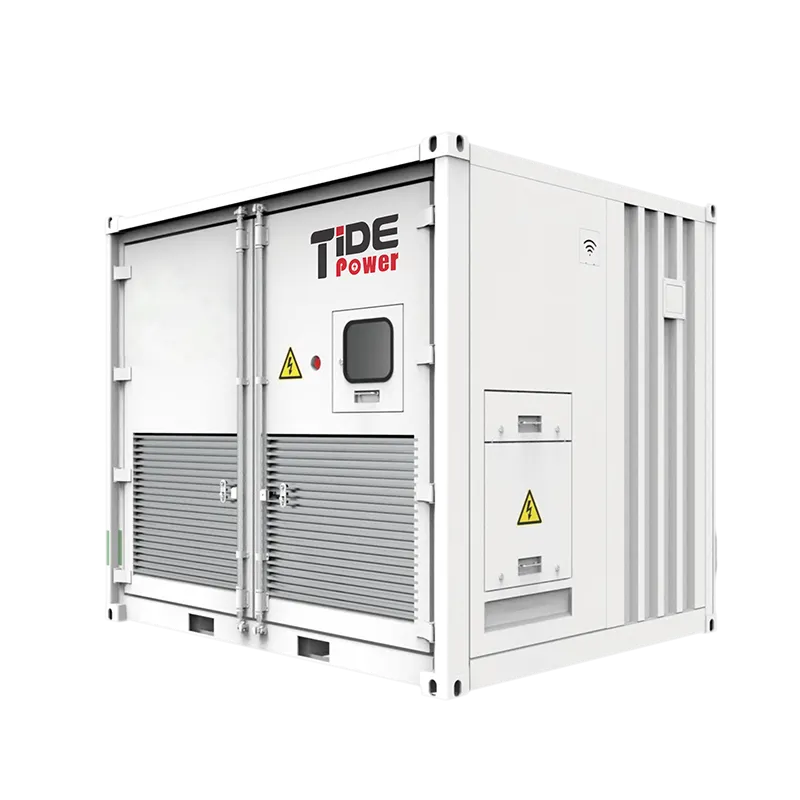
Battery storage changes the sizing logic rather than merely adding a component. A storage block such as the TP-261BESS lets the set run at a preferred output while the battery supplies the peaks, and it can carry the load briefly during generator start or transfer. That reduces run hours and fuel burn on lightly loaded sites, at the cost of an extra asset to maintain, a defined ambient envelope and a control system that must coordinate both sources.
Storage is moving from an add-on to a planning assumption in new capacity. <Energy storage power stations, development direction of clean energy> covers how storage stations are positioned within clean energy planning.
Send the Load Profile Before You Compare Prices
Most price differences disappear once two quotations describe the same duty. Send the rating class you need, either prime, standby or continuous; the largest load step in kW and its duration; the site ambient temperature and altitude; voltage, frequency and phase; the fuel you can supply; the noise limit at the nearest boundary; the emissions market the set must be certified for; and the hours per year you expect. With those fields a supplier can propose a configuration instead of a headline kVA.
Tide Power Technology Co., Ltd. reviews those inputs against the engine, alternator and enclosure options available for the project. Email [email protected] or call +86 591 2806 8999 to start the review, and include the load list with the largest motor starting current if one exists.
FAQ
What is the difference between a generator and a generator set?
In everyday use the two terms overlap. Strictly, the generator is the alternator, the component that produces electrical output, while the generator set is the complete package of engine, alternator, controller, cooling, fuel system and enclosure. When a quotation refers to a 100 kVA generator, it usually describes the complete set, but the rating basis, whether prime or standby, still needs confirming before prices can be compared.
How do I size a generator set for a building?
Start with the load list and the largest step the set must accept, not the total kVA alone. Add the starting current of the largest motor, the share of nonlinear load, the site ambient temperature and altitude, and the autonomy you need between refuelling. A set that carries the steady load but cannot recover from the largest step will still trip, so load acceptance belongs in the sizing calculation alongside the total.
Can a generator set run continuously?
Only when it carries a rating that permits it. COP covers continuous supply at a constant load, while PRP covers variable load with a limited overload allowance, and ESP is intended for emergency duty without overload capability. Running an emergency-rated set as a prime power unit shortens component life and can affect warranty terms, so the declared rating should match the hours and load pattern you actually plan.
What does kVA mean on a generator set nameplate?
kVA is apparent power, the combination of usable real power and the reactive power the load draws. Real power follows kW = kVA × power factor, so a 100 kVA set at 0.8 power factor delivers about 80 kW. Alternator heating limits the kVA figure while the engine limits the kW figure, which is why both numbers and the stated power factor belong on a comparison sheet.
References
[1] ISO 8528-1:2018, “Reciprocating internal combustion engine driven alternating current generating sets, Part 1: Application, ratings and performance,” ISO, 2018.
[2] ISO 8528-5:2013, “Reciprocating internal combustion engine driven alternating current generating sets, Part 5: Generating sets,” ISO, 2013.
[3] ISO 3046-1:2002, “Reciprocating internal combustion engines, Performance, Part 1: Declarations of power, fuel and lubricating oil consumptions, and test methods,” ISO, 2002.
[4] NFPA 110, “Standard for Emergency and Standby Power Systems,” National Fire Protection Association, 2022.
[5] IEEE Std 446-1995, “IEEE Recommended Practice for Emergency and Standby Power Systems for Industrial and Commercial Applications,” IEEE, 1995.
[6] Regulation (EU) 2016/1628 on emission limits and type-approval for non-road mobile machinery engines, European Union, 2016.
[7] U.S. Environmental Protection Agency, “Control of Emissions from New and In-Use Nonroad Compression-Ignition Engines,” Title 40 CFR Part 1039, U.S. Government Publishing Office.
If you’re interested, check out these related articles:
HCNG helps to clean up electricity
Building the Resilient Grids of Tomorrow: Tide Power’s Microgrid and Utility-Scale Energy Storage Solutions