
 EN
EN ZH
ZH FR
FR ES
ES AR
ARSelecting a diesel generator for business operations is less about picking a well-known brand and more about aligning power output, engineering reliability, and long-term serviceability with the real conditions your facility faces. In over ten years of working with energy projects across Asia, Africa, and the Americas, I have seen companies overpay for oversized sets that never exceed 40% load, and I have seen others lose entire production days because a budget generator lacked local service support in a critical region. What matters is matching the generator set to your current load, your growth timeline, and the regulatory environment you operate in now and will operate in three years from now. This article lays out the five factors that decide whether a diesel generator becomes a dependable asset or a recurring headache.
What Power Requirements Does Your Business Actually Have
The starting point is not a catalog rating. It is an accurate load profile built from your actual equipment. We work with many clients who initially request a 500 kVA set based on a rough estimate of their total connected load, only to discover after a detailed audit that their steady-state load rarely exceeds 250 kVA. An oversized diesel generator runs at low load, which leads to wet stacking, increased fuel consumption per kWh, and premature engine wear.
Start by breaking your load into three categories: essential circuits that must never lose power, production equipment that can tolerate a brief interruption, and non-critical loads that can be shed. For a manufacturing facility, essential might include CNC machines, cooling pumps, and control systems. For a data center, it is every rack. Once you have the list, record starting kVA and running kW for each motor-driven piece because induction motors can draw six times their running current during startup. Add 20% margin to your peak demand for future expansion, but do not over-pad. A generator that runs regularly at 50% to 80% of its prime rating delivers better fuel efficiency and longer service intervals than one idling at 30%.
When you have the total running kW, decide between a prime power or standby rating. Prime-rated sets are built for continuous operation as the primary power source. Standby-rated sets are for emergency backup and should not be used for more than 200 hours per year in most applications. Misapplying a standby generator as a prime unit voids warranties and shortens engine life. If your business operates in a region with frequent grid outages, size for prime rating even if you have some grid access.
Which Specifications Determine Long-Term Generator Performance
A diesel generator is more than its engine block. The specifications that separate a trouble-free decade of operation from constant service calls are often the ones buyers skip over when focused on price per kVA.
The alternator’s insulation class and winding pitch matter just as much as the engine. For business applications that involve non-linear loads — VFDs, UPS systems, rectifiers — you need an alternator with at least Class H insulation and a winding pitch of 2/3 to handle harmonic heating. A lower-grade alternator will work initially, but insulation breakdown from harmonic distortion shows up two or three years in, usually during a critical runtime.
Voltage regulation is another under-examined detail. Look for a digital automatic voltage regulator with under-frequency protection and a regulation of ±1% or better. Sensitive electronics in servers and lab equipment will trip on voltage swings that mechanical AVRs allow.
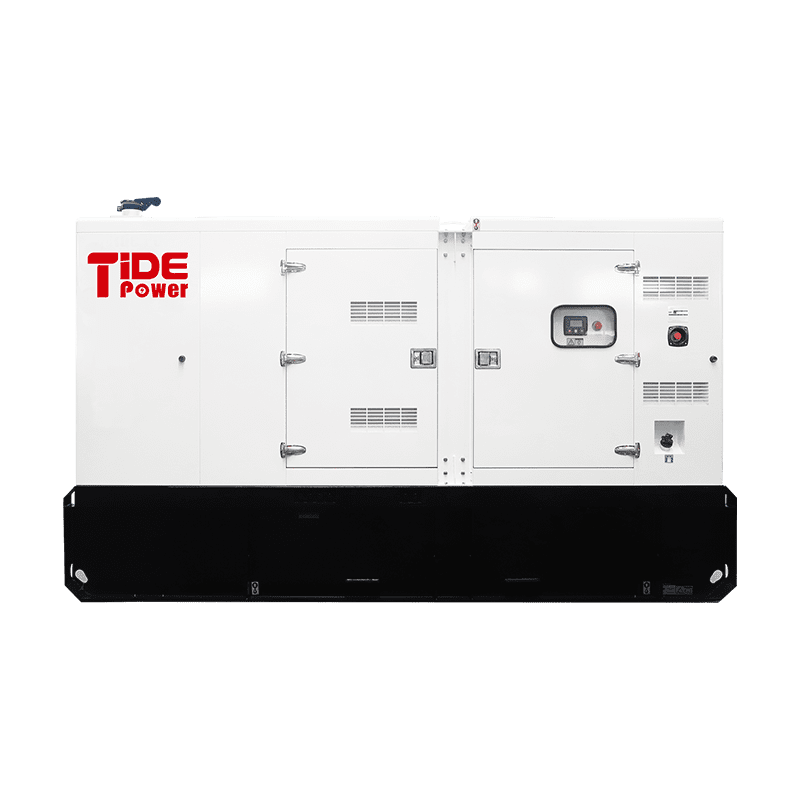
Noise level also determines where the generator can be sited. A silent-type enclosure rated at 65 dBA at 7 meters might suit an urban office building, but a semi-open set at 85 dBA may be acceptable for a mining camp far from residential areas. The Fenova Plus Series from Tide Power, for instance, achieves low-noise operation through a soundproof canopy built on a thick-gauge steel frame with integrated acoustic insulation and internal airflow ducting that avoids hot spots inside the enclosure. Getting the noise figure right before installation avoids the cost of retrofitting barriers or relocating the set later.
A single Markdown table helps compare critical specification thresholds for different business environments:
| Business Environment | Voltage Regulation | Enclosure Noise Level | Recommended Alternator Class |
|---|---|---|---|
| Data center / hospital | ≤ ±0.5% | ≤ 65 dBA | Class H, 2/3 pitch |
| Light industrial / factory | ≤ ±1% | ≤ 75 dBA | Class H |
| Construction site | ≤ ±2.5% | ≤ 85 dBA | Class F |
| Remote off-grid installation | ≤ ±1.5% | ≤ 80 dBA | Class H |
Engine and Alternator: The Two Decisions That Stay With You
The engine and alternator combination defines generator lifespan, rebuild intervals, and parts availability across your operational footprint. For business buyers, the engine brand is not a branding exercise. It is a logistics decision.
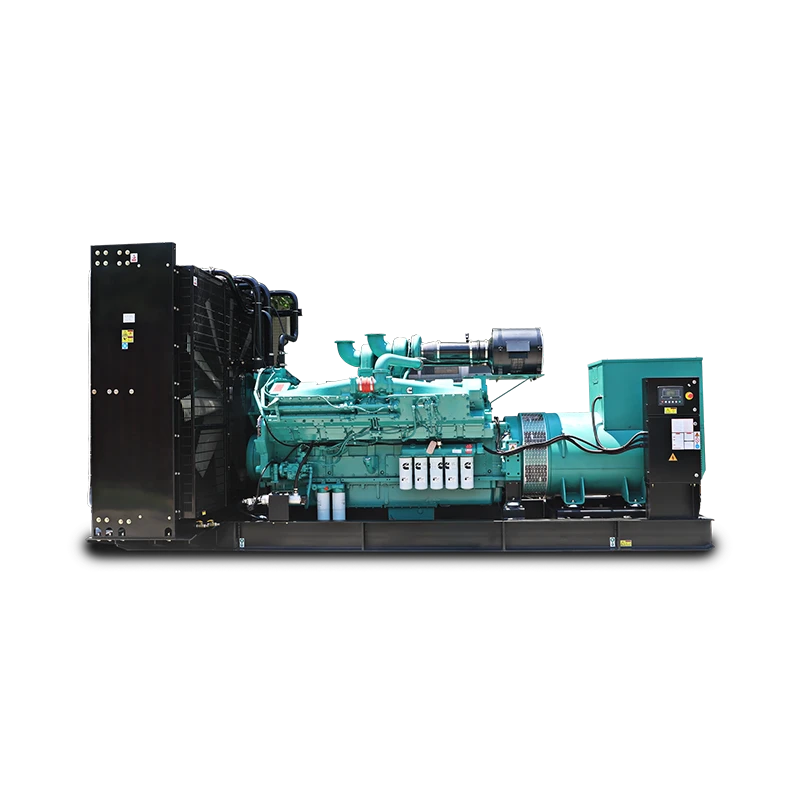
In international markets, we see three tiers: European-designed engines such as Perkins and Lister Petter offering established global dealer networks and parts distribution; American engines such as Cummins with broad Tier 3 and Tier 4 emission compliance documentation; and cost-optimized platforms offering strong value for regions where emission compliance is less stringent and local service infrastructure is in place. Tide Power’s Econic Series supports multiple engine brands — Perkins, Cummins, DEUTZ, Baudouin — all from one supplier, which simplifies parts sourcing when you deploy generators across different regions under a single procurement contract.
The alternator choice follows the engine. For standard 50/60 Hz applications, a self-excited alternator from Stamford or Leroy Somer provides reliable performance. If your load has high inrush currents, choose a permanent magnet excitation system to sustain short-circuit current. In international projects, verify that the alternator carries CE marking and accepts the local voltage and frequency standard — not all 60 Hz sets are readily field-convertible to 50 Hz and vice versa.
If your business plans to expand across multiple countries, the engine and alternator pairing you select now determines whether you can standardize maintenance training and spare parts inventory. I have seen facility managers forced to stock three different filter types because they sourced generators from different suppliers over five years. A unified platform like Tide Power’s I Series, which lets you select the engine and alternator from a pre-engineered modular system, reduces inventory complexity and technician training overhead.
Fuel Efficiency and Total Cost of Ownership Beyond the Invoice
Focusing on generator purchase price alone misses the 80% of lifetime cost that comes from fuel, maintenance, and unplanned downtime. A diesel generator that consumes 0.25 L/kWh instead of 0.28 L/kWh saves roughly 3,000 liters of fuel over 10,000 operating hours per 100 kW of load. At typical bulk diesel prices, that alone can exceed the price difference between a fuel-efficient engine and a basic one.
But fuel efficiency figures on a datasheet assume steady-state load at optimal temperature. Real efficiency depends on how well the cooling system maintains the combustion chamber temperature and whether the fuel injection system adjusts to varying loads. Electronically governed common-rail engines maintain efficiency across a wider load band than mechanical governors. That matters when your load fluctuates — a situation far more common in industrial plants than in backup-only scenarios.
Maintenance costs also scale with engine design. Engines with four valves per cylinder and wet cylinder liners allow in-chassis rebuilds, saving thousands compared to engines that require removal for major service. The Fenova Plus Series uses wet liners and accessible service points to reduce downtime during scheduled maintenance. In remote locations, this serviceability directly affects uptime.
Factor in the fuel tank runtime as well. A set with an integrated 8-hour fuel tank requires more frequent refueling during extended outages than one with a 24-hour tank. For standby applications, this may be irrelevant. For prime power, it determines how often you dispatch a fuel truck. Tide Power’s Econic Series includes a super-large fuel tank option combined with external fuel filling inlets, enabling refueling without opening the enclosure — a detail that reduces contamination risk and speeds turnaround.
At current pricing, a well-maintained diesel generator operating at 60–75% load delivers a cost per kWh that beats small-scale gas reciprocating engines in many regions. But that advantage only holds if the generator is correctly sized and maintained. I recommend building a simple TCO spreadsheet that includes fuel cost escalation, scheduled maintenance kits, and projected major overhaul at 15,000 or 20,000 hours. Suppliers who provide this data upfront are worth more than those offering a discount on the base unit.
Global Support, Compliance, and Scaling Your Energy Investment
A generator that works faultlessly in a temperate climate can fail compliance checks when shipped to a country with different emissions standards, voltage tolerances, or safety codes. Business generators crossing borders need CE, ISO 8528, and often additional certifications such as AS 1940 for fuel storage or local grid interconnection requirements. Tide Power’s Hemera Series, for example, carries CE and ISO compliance documentation with full traceability, which reduces the time and cost of site acceptance testing.
After compliance is confirmed, the next filter is service. A supplier’s ability to place replacement parts in your region within 48 hours is more important than a multi-decade warranty that requires you to ship a failed component back to the factory. Look for a company with stocked regional hubs or partnerships with local service providers. Tide Power operates a multinational service network supporting generator sets in over 80 countries, with remote monitoring options that allow technicians to diagnose issues before dispatching a service crew.
If your business has an active expansion plan — say, a new factory in Southeast Asia next year and a warehouse in Latin America the year after — then standardizing on a single generator supplier with multi-brand engine options and containerized configurations simplifies procurement. A containerized diesel generator solution shipped as a turnkey package eliminates on-site assembly variables and can be redeployed as projects shift locations. For mining operators and offshore platforms, this modularity replaces months of civil engineering with a ready-to-commission power station.
Before signing any contract, request a reference site with similar operating hours and environmental conditions to yours. A supplier that cannot provide a contact in your region with a comparable installation is revealing a gap in their support infrastructure. That gap will become your problem when the generator needs a major component at hour 12,000.
At Tide Power, we often tell clients that the generator decision is really a partnership decision. The hardware can be tested before shipment. The service commitment is proven only after. We recommend phasing your first order with a pilot unit, executing a full installation and commissioning cycle, and evaluating response time on any snags before scaling to the full fleet. This approach adds a few weeks to the timeline but eliminates the risk of standardizing on equipment that lacks local support when it matters most.
If your business requires power in locations with complex emissions and grid codes, contact our team at [email protected] or call +86 591 2806 8999 to discuss your project requirements and receive a configuration recommendation matched to your deployment countries.
Common Questions About Diesel Generators for Business Use
What size diesel generator is right for a small manufacturing facility?
A small manufacturing plant with typical CNC machines, air compressors, and lighting typically requires 100 kW to 300 kW of prime power, depending on the number of motor starts and whether VFDs are used. The only reliable method is to perform a load analysis that measures actual inrush current and running demand over a full production cycle, then add 20% margin for voltage dip tolerance and future equipment additions. Ordering a generator without this analysis almost always leads to oversizing and poor fuel economy or undersizing and nuisance tripping.
Do I need a silent-type enclosure for an industrial generator?
Silent enclosures add cost and weight but are required for urban or semi-urban sites with noise ordinances. A standard enclosure rated at 75 dBA at 7 meters may be acceptable for a factory on an industrial estate, but a hospital or data center near residential zones typically needs 65 dBA or lower. If your facility is in a remote mining area with no noise restrictions, an open skid-mounted set may be adequate and easier to service. Verify your local environmental permit requirements before selecting the enclosure type.
Which engine brand delivers the best long-term value?
There is no single best brand for every application. Perkins and Cummins engines offer strong global parts networks and emission certification packages suitable for North American and European markets. Lister Petter engines, as used in Tide Power’s Fenova Plus Series, provide durable long-stroke designs well suited for continuous prime power in harsh environments. The best engine brand for your business is the one with the strongest service presence in the region where the generator will operate and with proven documentation of meeting local emission requirements.
How often should a business diesel generator be serviced?
Routine service intervals for industrial diesel generators typically fall between 250 and 500 running hours, depending on the engine design and operating conditions. High-quality engines with centrifugal oil filters and coolant conditioners can often extend intervals to 500 hours. Beyond the oil and filter schedule, a major service including valve adjustment, injector testing, and coolant replacement is usually required at 2,000 to 4,000 hours. In our project experience, generators that operate continuously at 60–80% load with scheduled fluid analysis maintain coolant and oil life longer than those that sit idle for months, because moisture and acid buildup accelerate degradation during downtime.
Can I standardize on one generator model across multiple sites in different countries?
Standardization is achievable and often cost-effective if you work with a supplier that can configure the same platform to different voltage and frequency standards. A modular generator series that offers 50 Hz and 60 Hz winding options on the same alternator frame, combined with engine variants that meet Tier 3 or Tier 4 standards as needed, allows you to maintain common service procedures and parts inventory across countries. Share your deployment countries and power requirements with our team at [email protected], and we will confirm feasibility and provide a standardized configuration that meets each country’s grid and emission requirements.
If you’re interested, check out these related articles:
?Thank You for Joining Us at Electric & Power Indonesia 2024
Successful 2024 Half-Year Global Sales Meeting for Tide Power