 EN
EN ZH
ZH FR
FR ES
ES AR
ARThe types of gas generators available today go far beyond the textbook natural gas versus biogas split. For procurement engineers and project developers working across international markets, the decision hinges on how well a generator’s fuel compatibility, engine design, and the manufacturer’s support footprint align with real operating conditions. This guide cuts through generic classifications to focus on the procurement factors that determine long-term performance—emission compliance across regions, real-world efficiency, and the strength of your supplier’s global service infrastructure.
Main Gas Generator Types and Their Industrial Applications
Gas generators fall into two broad technology groups: reciprocating engine generators and gas turbine generators. Within each, fuel type—natural gas, biogas, LPG, landfill gas—further defines the application range. Most distributed power projects under 5 MW use reciprocating engines because of their fast start-up, good part-load efficiency, and fuel flexibility. Gas turbines dominate large central power plants and cogeneration facilities where economies of scale justify the higher upfront investment.
The table below maps the most relevant categories to industrial use.
| Gas Generator Configuration | Fuel | Typical Power Range | Key Applications | Tide Power Series Example |
|---|---|---|---|---|
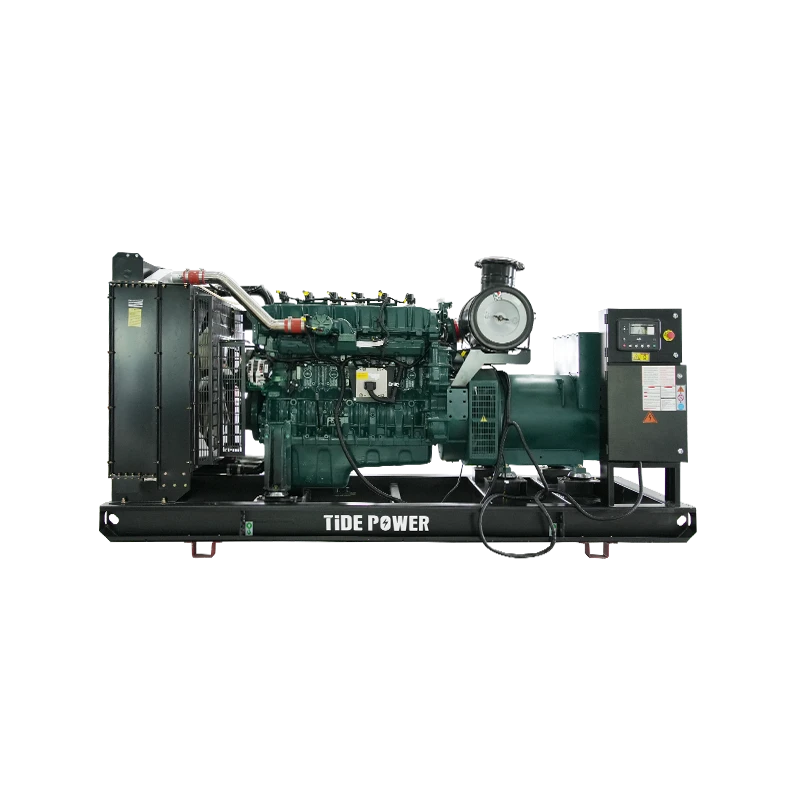
| Small to mid-range reciprocating engine | Natural gas, biogas, LPG | 22–500 kW | Commercial buildings, hospitals, farms, hotels | Lister Petter Gas Generator Set |
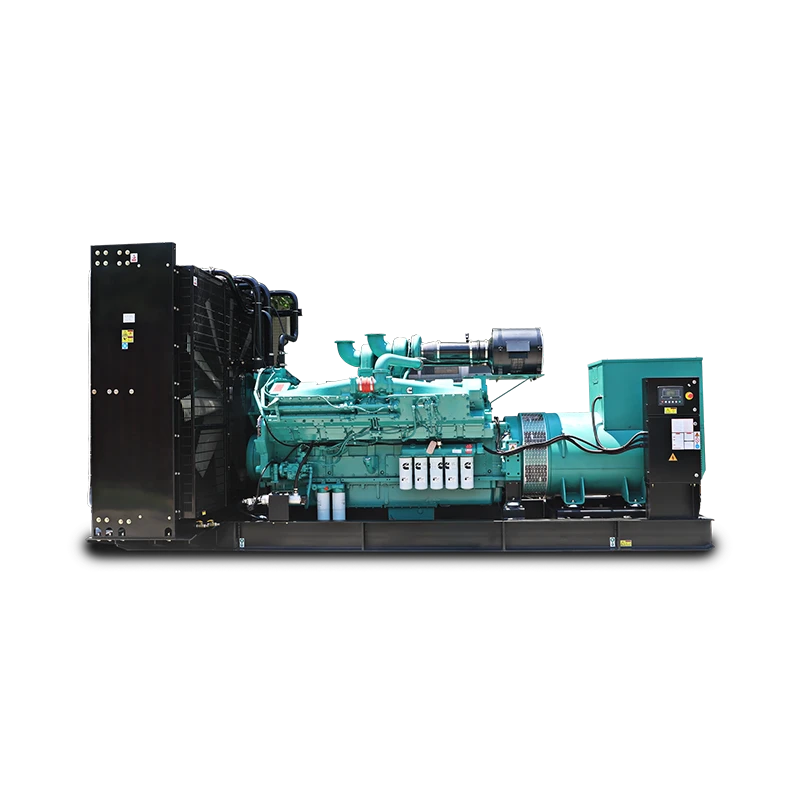
| Large reciprocating engine | Natural gas, biogas | 600–4,500 kVA | Industrial plants, wastewater treatment, landfills, renewable energy projects | MWM Gas Generator Set |
| Gas turbine generator | Natural gas | >1 MW | Grid-scale power, cogeneration, large industrial complexes | — (MWM partnership covers high-output gas genset solutions) |
Fuel Options for Gas Generators: Natural Gas, Biogas, and LPG
Fuel availability shapes project feasibility as much as the generator hardware. Natural gas delivers the most stable supply chain in regions with mature pipeline infrastructure, and its high hydrogen-to-carbon ratio means lower CO₂ per kWh. Biogas, sourced from agricultural waste, landfills, or wastewater treatment, turns a disposal problem into a revenue stream. LPG works well for off-grid or islanded systems where liquid fuel storage is simpler than pipeline connection, though its per-unit energy cost is usually higher.
The emission profile differs sharply across fuels. Natural gas burns cleaner than diesel, but raw biogas often contains hydrogen sulfide that must be scrubbed to avoid engine corrosion. LPG produces negligible particulate matter but still emits NOx that needs after-treatment in tightly regulated markets. From a procurement standpoint, the fuel decision should lock in early: it dictates engine configuration, emissions control equipment, and long-term operating costs.
How do emission standards affect fuel selection?
Regulatory frameworks vary by region, and they often drive fuel choice more than theoretical efficiency. The European Union’s Medium Combustion Plant Directive, for instance, sets strict NOx and SO₂ limits that effectively rule out high-sulfur fuels unless exhaust after-treatment is added. In the United States, EPA Tier ratings and state-level air quality rules can push project developers toward natural gas or cleaned biogas with lean-burn engine technology. A generator that meets Euro VI or EPA Tier 2 today may still require upgrades if regulations tighten during its 15–20 year service life. Procurement teams should request emission compliance documentation for each target installation country before committing to a specific engine configuration.
Reciprocating Engines vs. Gas Turbines: Which Technology Fits Your Project
Reciprocating engines, like the Lister Petter Jupiter series and MWM gas engines, cover a broad band from tens of kilowatts to several megawatts. Their strength is operational flexibility: they start quickly, tolerate frequent load swings, and maintain high efficiency at partial load. For a textile factory or hospital where power demand fluctuates through the day, a multi-unit reciprocating engine plant offers reliability and staged capacity.
Gas turbines compress the economics into a different scale. Above roughly 5 MW, their capital cost per kilowatt drops, and the exhaust heat can feed a steam turbine or process heating loop—pushing total system efficiency beyond 80 percent in combined cycle. That makes them attractive for large chemical plants, district heating schemes, and utility-scale generation. However, turbines are less forgiving at low loads and need high-pressure gas supply, making them less suitable for remote or variable-demand sites.
If your project involves multiple sites across different countries, verifying that your generator supplier can provide consistent service coverage in each region becomes critical before finalizing procurement. Our team at Tide Power can help assess the technology fit across your full project map—reach us at [email protected].
Four Procurement Factors That Determine Long-Term Generator Performance
When I advise on international energy tenders, I see four factors that separate a generator that runs smoothly for two decades from one that becomes a maintenance burden.
First, emission compliance documentation. A datasheet that says “EPA compliant” is not enough. The supplier should be able to provide type-approval certificates and test reports matching the exact engine model and the installation country’s current regulations. Second, real-world fuel consumption. Lab-rated efficiency curves assume ideal fuel quality and ambient conditions. A 5% gap between brochure figures and field data can compound into hundreds of thousands of dollars across a 15-year asset lifecycle. Third, maintenance accessibility. The Lister Petter gas engines Tide Power supplies are designed with long service intervals and straightforward access panels, but even the best design needs a local service partner. Fourth, after-sales infrastructure. International projects often span countries where the OEM cannot station its own engineers. The supplier’s ability to mobilize trained technicians, stock critical spare parts regionally, and offer remote monitoring makes a material difference to uptime.
Partnering with the Right Gas Generator Supplier
Choosing a gas generator partner means choosing a supply chain that extends well beyond the initial delivery. At Tide Power Technology, we structure our gas generator programs around three principles: OEM-level technical backing, global project experience, and regionally anchored support.
As an authorized OEM partner of MWM and a long-term Lister Petter engine integrator, we configure each generator set to the client’s fuel availability, emission zone, and operating profile. Our engineering teams handle everything from site-specific customization to factory acceptance testing. Post-delivery, our network of regional distributors and service partners keeps the generator operating within specification, whether the installation is in Southeast Asia, Africa, or South America.
Every energy project has a specific timeline, budget, and regulatory envelope. Send your project requirements and target regions to [email protected], or call +86 591 2806 8999, and we will deliver a tailored gas generator proposal backed by our global engineering and after-sales infrastructure.
Common Questions About Gas Generator Procurement
Which gas generator fuel delivers the lowest total cost of ownership?
It depends on local fuel price stability and infrastructure. Where natural gas pipelines exist, gas grid connection usually wins on per-kWh cost and supply reliability. Biogas projects often yield the strongest long-term return because the fuel is effectively free once the digester system is capitalised, but they require careful gas treatment and consistent feedstock supply. LPG sits between the two—higher delivered cost but unmatched for remote, off-grid sites. Evaluate the fuel supply chain alongside the generator specification; no amount of engine efficiency can compensate for erratic fuel delivery.
Do gas generators require more maintenance than diesel units?
Reciprocating gas engines have spark ignition systems and sometimes more sensitive valve trains, so they demand attention to spark plug condition and gas quality. However, modern lean-burn engines, such as the Lister Petter Jupiter platform, achieve maintenance intervals comparable to well-maintained diesel gensets. The real difference comes down to fuel quality management—dirty biogas with unscrubbed hydrogen sulfide will accelerate wear regardless of the engine brand. A properly treated gas supply brings maintenance parity.
How can I confirm that a gas generator meets the emission rules in my project country?
Ask the supplier for emission test reports from an accredited laboratory that reference the engine model and build specification you intend to purchase. Compliance statements without test data leave procurement teams exposed if regulators conduct field audits. At Tide Power, we bundle emission documentation with every shipped unit and can provide additional conformity declarations when projects cross into new regulatory jurisdictions.
What is a realistic delivery timeline for a custom gas generator set?
Base-model units with standard configuration can ship in 8–12 weeks. Custom builds involving unique voltage/frequency requirements, special emission packages, or containerized integration typically add 4–8 weeks. The most frequent delay we see across the industry is not manufacturing lead time but late-stage specification changes from the project side. Locking the technical scope early and confirming site readiness keeps delivery on track.
What support does Tide Power offer for multi-country gas generator rollouts?
We structure international programs with a primary technical hub and regionally distributed spare parts inventory. Our authorized service partners handle local commissioning and preventive maintenance, while our global engineering team provides remote oversight and troubleshooting. The goal is to give project owners a single point of coordination without losing local response speed. Share your project locations and generation targets—we will confirm configuration availability and deployment support in your specific regions.
If you’re interested, check out these related articles:
Tide Power Generator & Lighting Towers Shine at Saudi ELENEX 2025
Tide Power & MWM Deepen Partnership in Strategic Meeting on Gas Generator and Power Solutions