 EN
EN ZH
ZH FR
FR ES
ES AR
ARMini excavator digging depth determines how far below ground level the bucket can reach—affecting trenching, foundation prep, and utility installation. Matching machine capability to your actual project scope prevents both budget waste on excess capacity and job delays from insufficient reach. This article connects depth specifications to real site performance, examines how arm design and model size interact with digging depth, and compares Tide Power’s mini excavator lineup so you can match a machine to your work requirements without guesswork.
Digging Depth Specifications Explained
The maximum dig depth listed on a spec sheet is a measurement taken under ideal conditions: the machine sits on level ground, the arm fully extends vertically, and the bucket edge reaches its lowest point. In practice, ground slope, undercarriage stability, and the type of bucket attached all shift that figure. For instance, a standard grading bucket may reduce effective depth slightly compared to a narrow trenching bucket because the cutting edge geometry changes how far the stick can travel before the bucket heel contacts the wall.
Most compact excavators in the 1‑to‑2‑ton class deliver maximum dig depths between 1,500 mm and 2,600 mm. The Tide Power TD15, with an operating weight of 1.5 tons, reaches a maximum dig depth of approximately 2,400 mm—enough for residential utility trenches and shallow footings. The larger TD20 extends that to roughly 2,700 mm without jumping into a heavier size class. These figures assume the standard arm configuration; a long‑arm option can push deeper but trades away some lifting force, a point we cover later.
How deep can a 1‑ton mini excavator dig?
A typical 1‑ton mini excavator, including Tide Power’s TD10, achieves a maximum dig depth around 1,800 mm to 2,000 mm. This suits shallow irrigation lines, small landscaping ponds, and light service trenching where the spoil can be piled close to the trench. If you regularly need to reach below 2 m, moving up to a 1.5‑ton model prevents you from working at the machine’s limit on every bucket pass.
Matching Digging Depth to Application
Depth requirements ultimately come from the task width and depth of the excavation, plus the clearance you need for shoring or slope‑back. Utility trenching for electrical conduit typically falls between 600 mm and 1,200 mm below grade—well within the range of any mini excavator. Sewer and water lines, however, often require 1,500 mm to 2,500 mm of cover in cold climates to prevent freezing, which is where models like the TD15 and TD20 become necessary.
Foundation work is more demanding. Even a small residential extension can need a trench depth of 1,800 mm to 2,400 mm for footings, plus additional clearance for compaction equipment. Soil type plays a role here: digging in loose sand allows slightly deeper reach because bucket fill is easier and sidewall friction is lower, while dense clay can cut effective depth by 50 mm to 100 mm due to the extra breakout force required and the suction effect on the bucket. If your soil report shows heavy clay, consider selecting a model that offers at least 300 mm buffer beyond your specification depth so you are not working at full extension every cycle.
What digging depth do I need for utility trenching?
Utility trenching for typical electrical and communication lines sits between 600 mm and 1,000 mm, well within the capability of a 1‑ton model. However, if your work involves combined utility corridors—gas, water, power—where the trench must accommodate multiple services with separation layers, the total depth can push past 1,500 mm. In that case, the Tide Power TD15 or TD20 avoids running the machine at hard limits and provides the bucket curl force to maintain production through a full shift.
Impact of Arm Configuration on Digging Depth
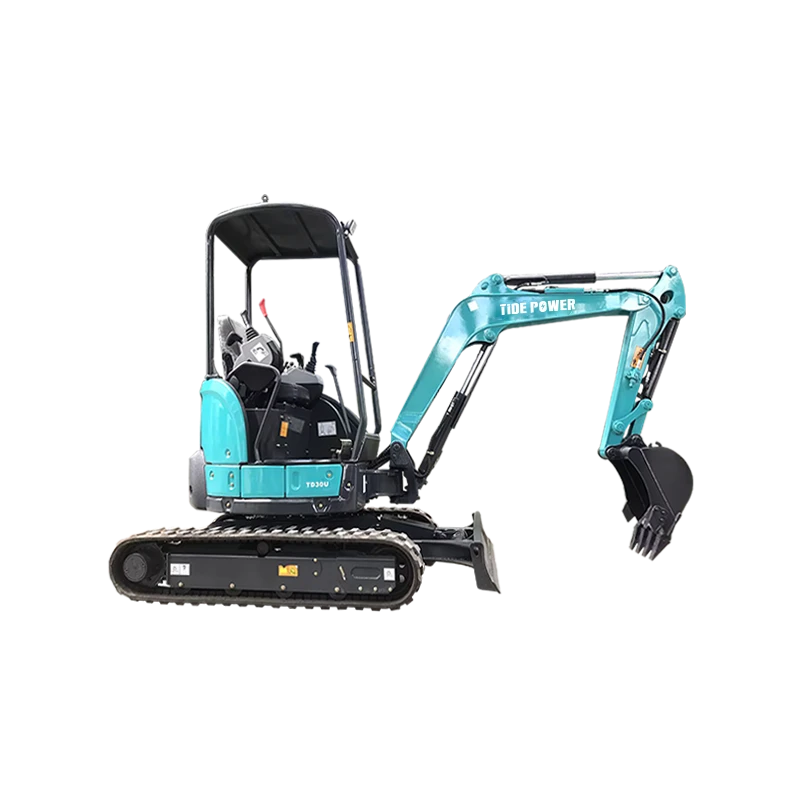
Digging depth is not a single fixed number; it depends heavily on arm and boom geometry. The standard arm on most mini excavators balances depth with lifting capacity and swing radius. A long‑arm option typically adds 200 mm to 400 mm of reach and depth but reduces bucket breakout force by 10% to 15%. For a 2‑ton machine, the long‑arm configuration may achieve 2,900 mm dig depth instead of 2,600 mm, yet the operator will feel the loss when prying out rocks or pulling dense clay from the trench bottom.
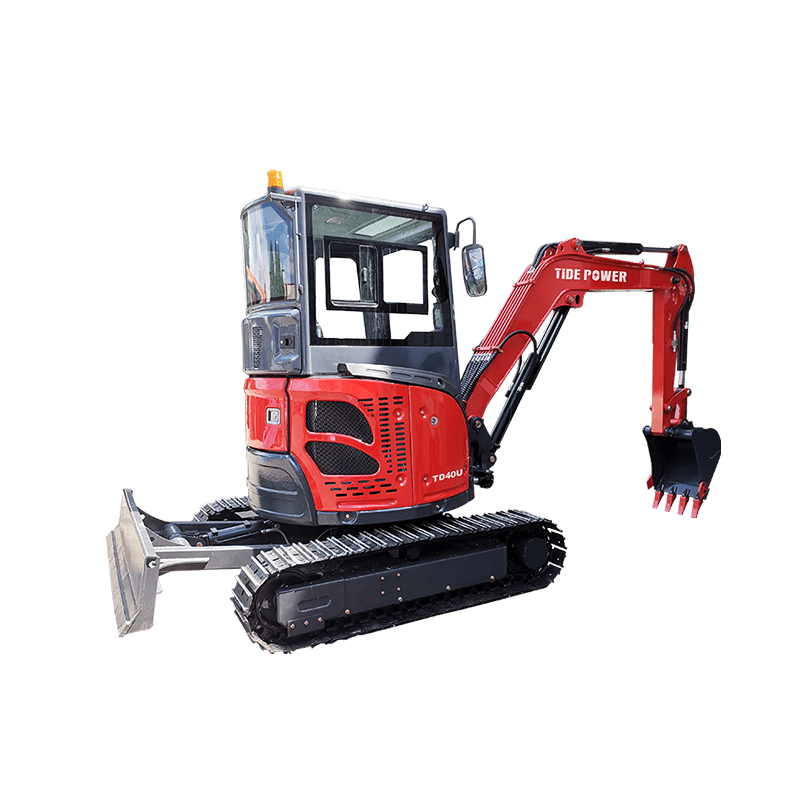
Zero tail‑swing models, designed for work along walls and in tight urban spaces, often sacrifice a small amount of depth because the counterweight and swing radius constraints force a slightly different boom pivot position. The Tide Power TD25U and TD30U deliver zero tail swing without cutting corner radii advantage, yet they maintain digging depth comparable to their conventional counterparts: the TD25U reaches approximately 2,550 mm, and the TD30U pushes to 2,800 mm. That makes them viable for downtown utility upgrades where depth cannot be compromised just to fit the machine into the lane closure.
Does zero tail swing reduce digging depth?
Not necessarily, but it can shift the trade‑off toward slightly reduced lifting capacity at full extension. In Tide Power’s zero tail‑swing models, the boom geometry is engineered to preserve depth while keeping the counterweight within the track width. The effect on depth is negligible (less than 50 mm) compared with a standard tail-swing model of the same weight class. The bigger consideration is lift‑over‑side capacity, which drops because the counterweight moment arm is shorter—plan your lifting tasks accordingly.
Tide Power Mini Excavator Depth Capability Comparison
The table below shows the maximum dig depth for each Tide Power mini excavator, all using the standard arm configuration. These are measured values from factory test conditions on level ground.
| Model | Operating Weight | Max Dig Depth (standard arm) | Tail Configuration |
|---|---|---|---|
| TD10 | 1.0 t | 1,900 mm | Swing |
| TD12 | 1.2 t | 2,100 mm | Swing |
| TD15 | 1.5 t | 2,400 mm | Swing |
| TD18 | 1.8 t | 2,550 mm | Swing |
| TD20 | 2.0 t | 2,700 mm | Swing |
| TD25U | 2.5 t | 2,550 mm | Zero tail |
| TD30U | 3.0 t | 2,800 mm | Zero tail |
| TD40U | 4.0 t | 3,100 mm | Zero tail |
Note that the zero‑tail models TD25U and TD30U achieve dig depths comparable to the conventional TD18 and TD20 respectively, proving that tight‑space operation does not necessarily limit depth performance.
Other Specifications Affecting Digging Performance
Digging depth alone does not guarantee efficient trenching. Digging force at the bucket and arm cylinders determines how fast you can cut through tough soil and whether you can maintain depth without stalling. For example, the TD30U supplies a bucket digging force of approximately 18 kN, enough to penetrate heavily compacted aggregate sub‑base while holding a flat trench bottom.
Dumping height and reach are equally important. If the excavated material needs to be loaded directly into a dump truck with a side height of 2.5 m, the machine must clear that height with a loaded bucket. The TD20 with standard arm offers a dump height around 2,900 mm, allowing generous clearance; a long‑arm version lifts that to over 3,200 mm but again at the cost of reduced breakout force. Always check the combined reach‑and‑dump curve rather than isolated depth numbers when setting up a loading process.
How does digging depth affect machine stability?
Depth increases the overturning moment, particularly when the arm is fully extended downward with a full bucket near the edge of the trench. The undercarriage width and counterweight must counteract that load. Zero‑tail‑swing machines, with counterweights that cannot overhang, rely more on undercarriage width and careful operator technique. For trenches deeper than 2.5 m, always position the machine parallel to the trench edge and avoid working across the tracks to keep the lifting geometry within safe limits.
Procurement Decision Checklist
Selecting a mini excavator based on digging depth should start with the deepest task you anticipate, not the average. If 80% of your work needs 1,800 mm and one project demands 2,400 mm, spec for the latter—renting a second machine for one task costs more than matching the fleet from the start. That said, do not blindly chase maximum depth at the expense of daily operating weight and transport width; a 4‑ton machine may dig deeper but could require a low‑loader that your small pickup cannot pull.
Factor in arm options early. Many Tide Power models including the TD20 and TD30U support a long‑arm variant available from the factory. If you work in open fields, the extra depth and reach improve productivity without the space constraints found in urban sites.
Beyond the excavator itself, your site may require reliable power for lighting, pumps, or ancillary equipment. Tide Power’s diesel generator sets have been deployed alongside mini excavators on remote construction projects from Southeast Asia to West Africa, ensuring that machine downtime never comes from a lack of electricity. 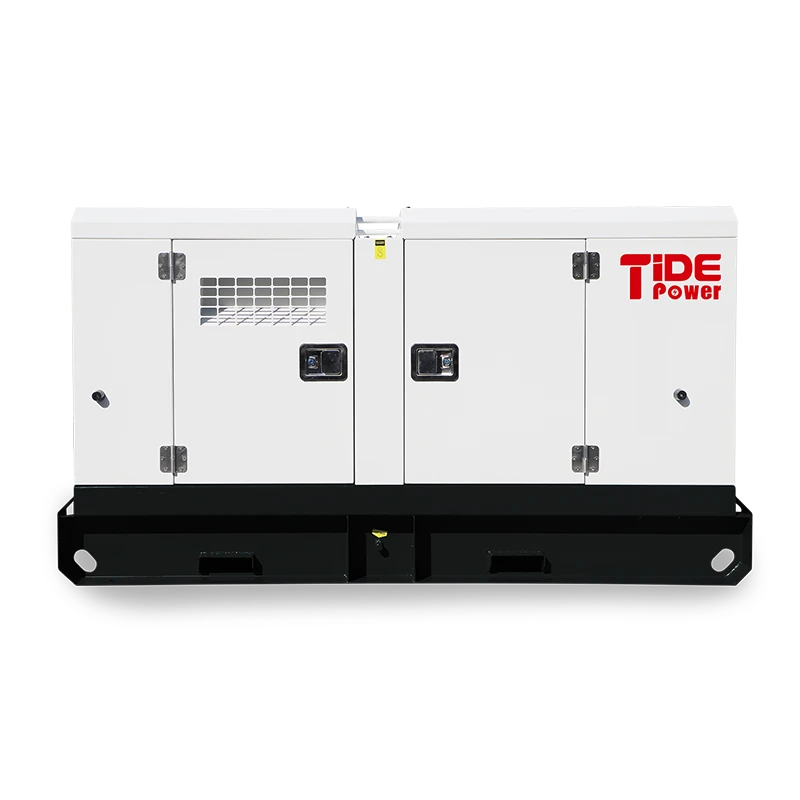
To match a machine to your specific depth and application requirements, contact our team at [email protected] or call +86 591 2806 8999 with your project brief. We provide side‑by‑side model comparisons and help you select factory‑installed configurations including long‑arm options, bucket packages, and undercarriage choices.
Common Questions About Mini Excavator Digging Depth
What is the difference between maximum dig depth and effective digging depth?
Maximum dig depth is measured vertically from ground level to the bucket tooth at full arm extension. Effective depth, the depth you can realistically work at without repositioning, is typically 200 mm to 300 mm shallower because you need room to curl the bucket and clear the trench wall. When planning, use the manufacturer’s recommended digging range, not the absolute maximum, to avoid constant machine repositioning.
Can I increase digging depth by changing the bucket?
A longer‑lipped bucket or a specially shaped trenching bucket can let the teeth contact the soil a few centimeters deeper, but it does not change the machine’s geometric reach limit. The only way to materially increase depth is through a long‑arm retrofit or by selecting a model with a factory long‑arm option. Changing the bucket primarily affects breakout force and material retention, not the envelope of the linkage.
Is a zero‑tail‑swing excavator less stable at full depth?
Zero‑tail‑swing machines place the entire counterweight swing arc within the track width, which shortens the effective counterweight moment arm. At maximum depth, the overturning moment is marginally higher than a conventional model of equal weight; operators should keep the load close to the machine and avoid side‑digging at full reach. In Tide Power’s zero‑tail models, the undercarriage design compensates, keeping stability within safe working limits for typical trench depths up to 2.8 m.
What depth do I need for a basement dig-out under an existing structure?
Basement digs inside existing buildings require headroom clearance and often shallow‑reach machines with minimal tail swing. A sub‑2‑ton model like the TD15 or TD18 can work through a 1,200 mm doorway and dig to 2.4 m, enough for underpinning operations. If the dig depth exceeds 3 m, a 4‑ton machine with a long‑arm may be needed but will demand more overhead height and access width—verify all dimensions before mobilizing.
How do I confirm depth requirements for a municipal contract?
Municipal tender documents often specify minimum dig depth and trench bottom flatness standards, not just the pipe cover depth. Compare those specs directly with the machine’s maximum dig depth and subtract at least 200 mm for bucket manoeuvring. If the spec includes a layer of gravel bedding below the pipe, add that thickness to your required depth. Share your project drawings with our applications team—we can match the documented depths to a specific Tide Power model and arm configuration.
If you’re interested, check out these related articles:
Knowledge is power: Comprehensive training from Tide Power
Light Up the Night, Sustainably: The Solar Hydraulic Lighting Tower Revolution