 EN
EN ZH
ZH FR
FR ES
ES AR
ARThe promise of a hybrid energy system is straightforward enough—solar panels charge batteries during the day, a diesel generator fills the gaps, and remote sites get uninterrupted power without a utility connection. What makes the difference between a proof-of-concept and a system that actually survives five years of dust, temperature swings, and zero on-site maintenance is rarely the technology itself. It is the upfront decisions around component integration, supplier capability, and how the system reaches the site in the first place. This article focuses on those practical, procurement-level realities that project developers encounter long before commissioning.
Why Hybrid Outperforms Single-Source Power at Remote Sites
A single diesel generator may seem simpler on paper, but the operational math changes quickly when you factor in fuel resupply to locations accessible only by seasonal roads. A standalone solar array, meanwhile, leaves no margin for a week of cloud cover. The hybrid approach—pairing renewable generation with battery storage and a backup genset—creates a power curve that matches how remote loads actually behave, not how they look in a design spreadsheet.
Three factors drive the shift toward hybrid configurations on off-grid projects. First, fuel logistics: every liter of diesel that must be trucked, barged, or flown to a site multiplies its true cost far beyond the pump price. A well-sized solar and storage subsystem can cut generator run time by 60% to 80% on many projects, reducing both fuel cost and engine wear. Second, maintenance windows shorten when the generator only cycles a few hours per day instead of running continuously. Third, the integration of an intelligent controller—a feature that Tide Power builds into its hybrid power systems as standard—enables unattended operation with millisecond-level switching between sources, so critical loads never see an interruption even when the generator starts cold.
The trade-off is upfront complexity, and that is where most procurement mistakes happen. The components exist; the question is whether they were engineered to work together before they arrived on site.
Components That Make a Hybrid System Reliable
A remote hybrid power system is not a collection of catalog items bolted together on a concrete pad. It is a pre-integrated energy chain where each element affects the performance envelope of the others. Four subsystems define the architecture.
First, the renewable input. Monocrystalline solar panels remain the most proven option for remote installations because of their energy density and mature supply chain. Bifacial panels can add yield when ground albedo is high, but on dusty sites the gain often evaporates without regular cleaning. The array DC output feeds directly into the energy storage subsystem.
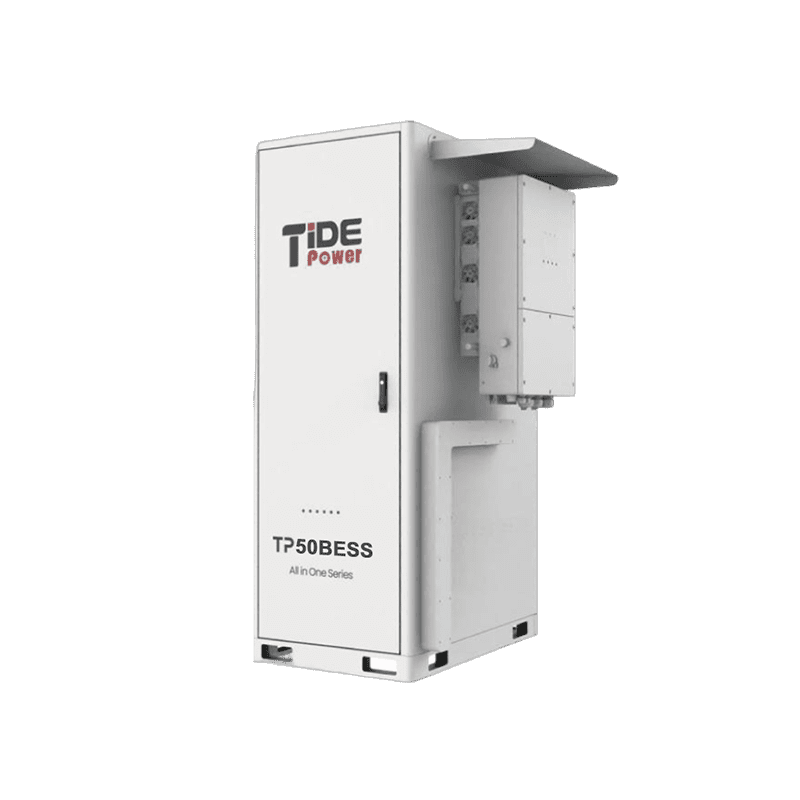
Second, the battery bank. Lithium iron phosphate (LFP) chemistry dominates current remote-energy tenders for good reason: thermal stability, cycle life that routinely exceeds 4,000 cycles at 80% depth of discharge, and tolerance of partial state-of-charge operation without rapid degradation. Tide Power’s hybrid program uses modular LFP packs—the TP-50BESS unit, for example, provides 50 kWh of usable capacity in a standalone rack configuration—which lets project teams scale storage capacity after initial deployment without replacing the core system.
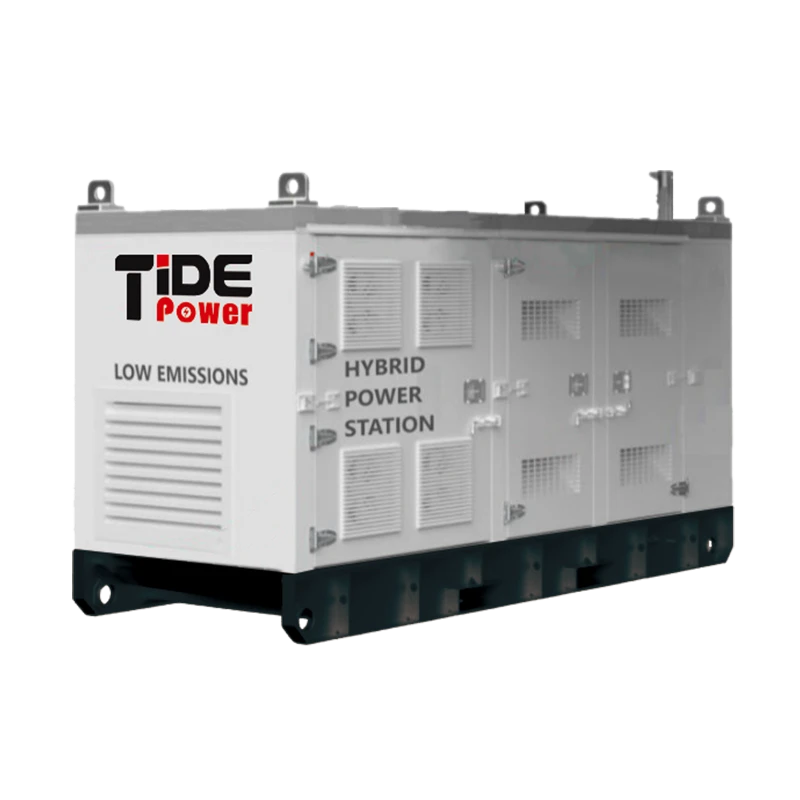
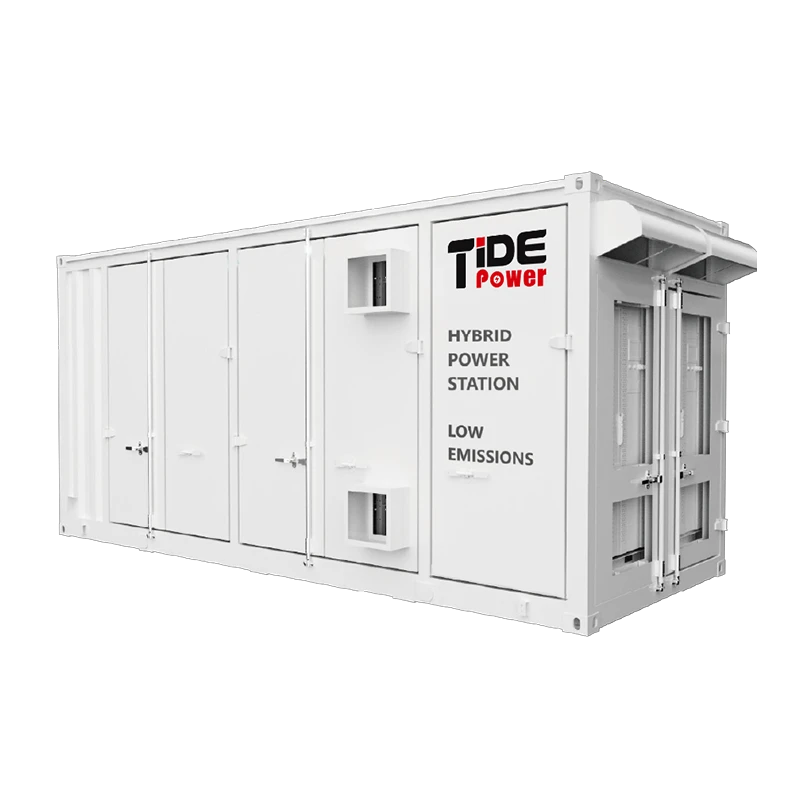
Third, the backup genset. The generator is no longer the primary workhorse; it is a reliability anchor. That changes the specification logic. Instead of sizing the genset for peak daytime load, you size it for the worst-case battery-charging scenario plus essential overnight loads. A unit in the 25 to 60 kVA range covers a wide band of remote telecom and community microgrid applications. Tide Power’s TP-25P and TP-60P hybrid power stations integrate the genset, power electronics, and controller into a single weatherproof enclosure designed for forklift handling and containerized shipping—a detail that matters more than most spec sheets admit.
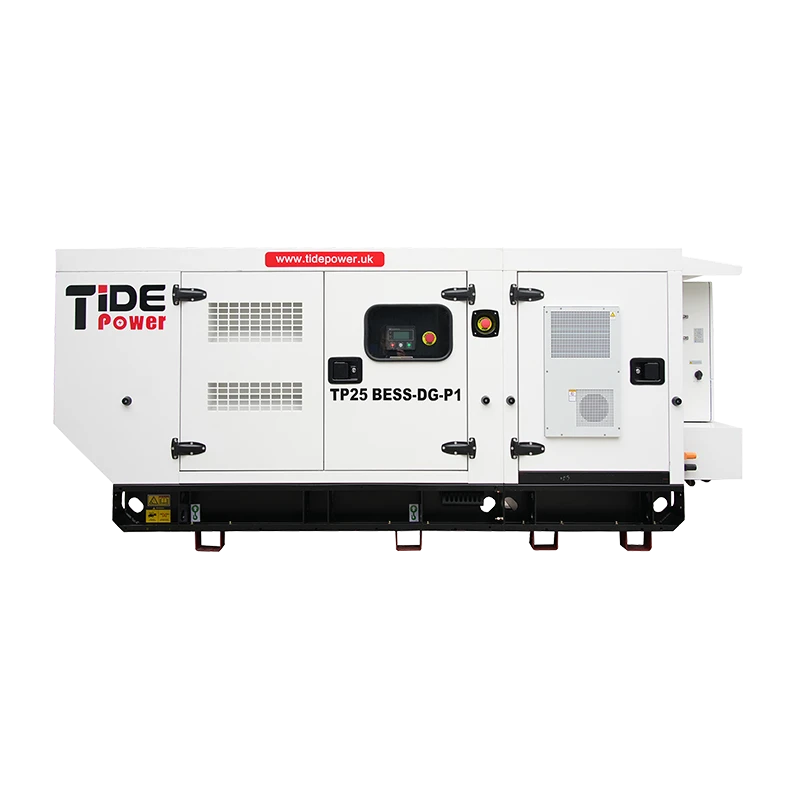
Fourth, the power management controller. This is the component that either makes the system invisible to the end user or generates endless service calls. The controller must handle state-of-charge triggers, generator start/stop sequencing, load priority shedding, and grid-forming voltage control without human intervention. In Tide Power’s architecture, the controller delivers seamless switching in under 20 milliseconds, which means even sensitive telecom rectifiers or medical cold-chain compressors ride through source transitions without a power-quality event.
A comparison of two typical remote-site configurations illustrates how component choices shape total system behavior.
| System Configuration | Solar Capacity | Battery Storage | Backup Genset | Ideal For |
|---|---|---|---|---|
| Light telecom site | 5–10 kWp | 25–50 kWh LFP | 15–25 kVA diesel | Single-sector base stations, monitoring outposts |
| Medium community microgrid | 30–60 kWp | 100–200 kWh LFP | 50–125 kVA diesel | Rural health clinics, small processing plants, multi-family loads |
Sizing a Hybrid System for Your Remote Project
Load profiling for a remote hybrid system needs to be done differently than for a grid-connected backup system. You are not sizing for the worst-case outage duration; you are sizing for year-round energy balance across seasonal variations in solar irradiance and load patterns that may not match the data from a one-week site survey.
The starting point is a 24-hour load curve sampled at hourly resolution, ideally across both dry and wet seasons. From that, you derive three numbers: peak power demand, total daily energy consumption, and the duration of the highest consecutive load block. These three drive the inverter rating, battery capacity, and genset sizing respectively. One underappreciated factor is that remote sites often have a lower coincidence factor than urban facilities because equipment tends to cycle at different times rather than all starting at once. Overestimating the coincidence factor can push the inverter and genset ratings unnecessarily high, adding capital cost and reducing part-load efficiency.
If your project involves a site where the load profile is expected to change significantly within the first two years—for instance, adding a new processing shed or upgrading telecom equipment—it is worth confirming the system’s scalability path before finalizing your BOM. A modular architecture that allows parallel connection of additional power units without replacing the central controller can save substantial downstream cost. Reach out at [email protected] with your phased load forecast and the team can map the expansion path against the available hybrid power unit range.
Battery sizing is the variable that carries the largest sensitivity. An undersized battery forces excessive generator cycling, which destroys the fuel-saving logic. An oversized battery adds capital that sits idle most of the year. The economic optimum usually sits at two to three days of autonomy—meaning the battery can cover 48 to 72 hours of load without any solar input, at the end of which the generator takes over. That autonomy target, combined with the daily energy figure and the allowable depth of discharge, fixes the required usable kilowatt-hours.
What to Look for in a Hybrid Energy System Supplier
Most hybrid system failures that I have seen over the past decade of working with international energy projects trace back to supplier selection, not component quality. The individual solar panel, battery cell, or engine may meet its data sheet; the problem is that nobody took responsibility for how they behave as an integrated system under real site conditions.
Three supplier capabilities separate project-ready providers from kit assemblers. First, pre-delivery integration testing. The supplier should commission the full system—panels, batteries, genset, and controller—on a test bench before it is packed for shipment. A test report with measured switchover times, state-of-charge control accuracy, and load-step response tells you more than any catalog. Tide Power operates a smart manufacturing base where every hybrid power station runs through a full integration test cycle prior to dispatch, with results documented per unit.
Second, logistics and export documentation experience. Hybrid systems contain multiple tariff classifications—solar panels, batteries (Class 9 dangerous goods), and diesel engines all fall under different customs codes and handling rules. A supplier that has shipped containerized energy systems to Africa, Southeast Asia, and South America understands the paperwork and packing requirements that avoid demurrage charges and port delays. When every day of delay is a day the remote site runs on a rental generator, that expertise has a direct project cost.
Third, after-sales support infrastructure. The supplier should be able to provide remote diagnostics—reading controller data over satellite or cellular backhaul—and to ship replacement power modules on short notice. A modular system architecture helps here: if a TP-50BESS battery module reports a cell imbalance, a replacement module can be dispatched while the remainder of the storage bank continues operating at reduced capacity.
From Shipping to Startup: Deployment Best Practices
The physical movement of a hybrid energy system to a remote site is not a minor chapter in the project plan, and treating it as one is a reliable way to turn a three-month deployment into a nine-month headache.
Containerization is the standard approach for systems above roughly 15 kVA, and for good reason. A 20-foot or 40-foot containerized hybrid unit—such as Tide Power’s TP-125P or TP-250P housed in an ISO container frame—can be sealed at the factory, transported by road, rail, and sea without intermediate handling of internal components, and set on a prepared foundation at the destination as a single lift. The container itself becomes the equipment shelter, already wired and climate-managed.
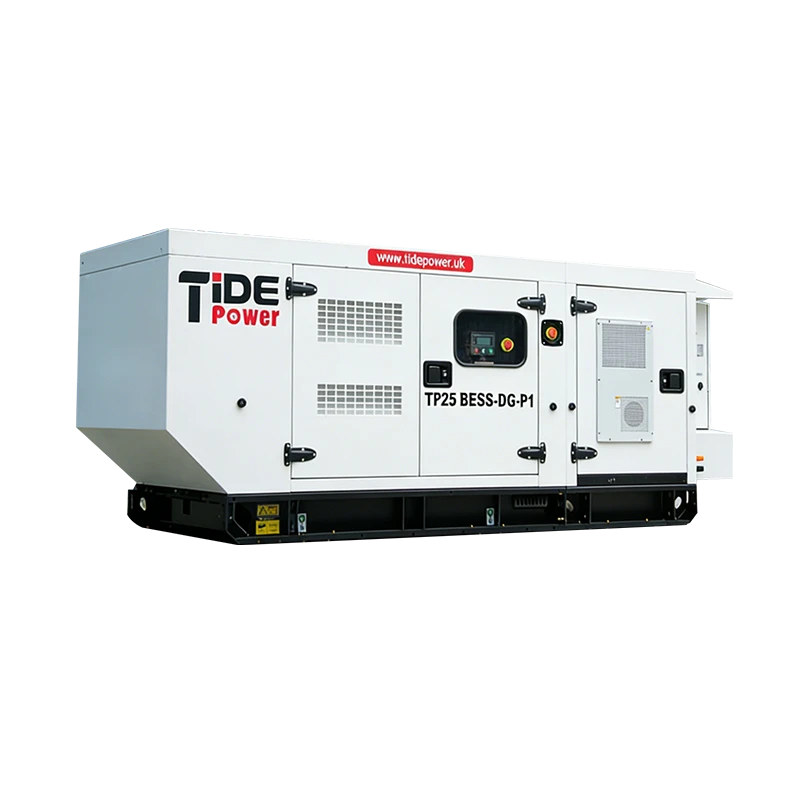
For smaller systems, all-in-one weatherproof enclosures with forklift pockets and lifting eyes provide a similar plug-and-play logic without requiring a full container flatrack. The principle is the same: minimize site assembly, which is where most wiring errors and weather-exposure damage occur.
Site preparation requirements are humble but non-negotiable. A compacted gravel pad with adequate drainage, a security fence, and a clear approach for the delivery truck are usually sufficient. The grounding system deserves more attention than it often receives; poor earthing in rocky or sandy soil can cause controller faults that look like equipment defects but are entirely a site issue. A driven ground rod with a measured resistance below 10 ohms, verified before energizing, prevents weeks of troubleshooting.
Commissioning on site should follow a scripted checklist that includes no-load tests, step-load tests, battery charge/discharge cycles, and a full autonomy simulation where the solar input is disconnected and the system is run on battery and generator for at least four hours. This stress test catches issues that a 15-minute walkthrough misses.
Procurement Questions That Shape the Total Cost of Ownership
A fair number of project budgets look solid on the tender spreadsheet and start leaking cost the moment the system leaves the factory gate. Three procurement decisions, in particular, have a habit of compounding quietly.
Fuel consumption as a spec line item is meaningless without the load profile it was tested against. A generator that burns 2.5 liters per hour at 75% load in a factory test bay may burn considerably more when cycling at 30% load on a remote site with a battery bank calling for partial-state recharge. Ask the supplier for a fuel curve across the 25% to 100% load range, not just a single-point rating.
Warranty terms for hybrid systems need to address the integrated system, not just the individual components. If the controller causes the battery to over-discharge and the battery warranty excludes damage from external equipment, you have a gap that neither the battery supplier nor the controller supplier will own. A single-source system warranty, where one entity stands behind the entire power chain, closes that gap. Confirm the warranty structure before signing, not after the first fault.
Spare parts strategy for remote deployments should account for the lead time to the site. A critical spares kit—controller boards, fuses, an injector set—kept at the site from day one costs a fraction of the production downtime it prevents. Include the spares kit as a contract line item in the initial purchase order rather than treating it as a future afterthought.
Questions Project Developers Ask About Hybrid Energy Systems
How much does a hybrid energy system for a remote telecom site cost?
A small-scale system capable of supporting a single-sector BTS with 2–3 kW average load, including solar array, 25–50 kWh battery storage, and a backup diesel generator, typically lands in a range that depends more on shipping distance and import duties than on the hardware bill itself. The equipment cost for a pre-integrated unit of that size often falls between USD 25,000 and USD 60,000 ex-works, but logistics, customs brokerage, and site preparation commonly add 30% to 50% on top. The best way to tighten the estimate is to share your project location and load data with the supplier early, so freight class, dangerous-goods handling, and local compliance requirements are factored in from the start.
Can a hybrid system operate fully unattended?
Yes, and for most remote sites this is the default operating mode. The controller manages solar charging, battery state-of-charge thresholds, and genset start/stop cycles without human input. Remote monitoring over satellite or GSM allows the operations center to view system status, acknowledge alarms, and adjust parameters from anywhere with connectivity. What still requires a site visit is mechanical maintenance—oil changes, air filter cleaning, panel washing in dusty conditions—but those visits can be scheduled every three to six months rather than weekly.
What is the lifespan difference between a containerized and an open-frame system?
The electronics inside both enclosures are often identical; the difference is environmental protection. A containerized system with integrated climate control—insulated walls, ventilation fans, and optionally air conditioning—protects batteries and power electronics from temperature extremes that accelerate aging. In desert or high-humidity coastal locations, the containerized approach can add three to five years of usable life to the battery bank compared to an unconditioned structure. The upfront premium for the container often pays back entirely through deferred battery replacement.
How do you ensure the system is sized correctly before ordering?
The supplier should run a simulation based on your year-round load data and site solar resource, typically using a tool that models hourly energy balance across all four seasons. This simulation output shows expected generator run hours, battery state-of-charge excursions, and any periods where load exceeds generation—which is when you either add more panels or accept that the genset will cover the deficit. A supplier that cannot produce an hourly simulation report before contract signing is guessing, not engineering.
What happens if a battery module fails in the field?
In a modular LFP architecture, a single failed module does not take the entire storage bank offline. The battery management system isolates the faulty module and continues operating at a reduced total capacity. The site operator can then coordinate a warranty replacement shipment without interrupting power to the load. If your project has a tight uptime requirement and the site is more than a week from a spare-parts hub, it is worth confirming the module-level isolation capability and the supplier’s replacement lead time before ordering. Share your site accessibility constraints with [email protected] and the team can map the recommended spares package accordingly.
If you’re interested, check out these related articles:
Tide Power Showcases Innovative Hybrid Energy Solution at The Smarter E Europe 2025
Generator Maintenance for Extreme Environments: Combating Heavy Sand and Dust
Powering Africa: The Role of Tide Power in the Local Industrialization Process
2024 Tide Power Latin America Distributor Training Conference was successfully held