
 EN
EN ZH
ZH FR
FR ES
ES AR
ARSelecting an industrial diesel generator is not simply a comparison of kilowatt ratings. In global procurement, the features that determine long-term reliability and total cost of ownership often go unnoticed until a unit fails under load. From our experience supporting energy projects across multiple continents, the most critical features are those that match the generator to the actual site environment, comply with local regulations, and are backed by a responsive supply chain. This guide examines the key features to evaluate when sourcing industrial diesel generators, with a practical focus on what matters after the purchase order.
Matching Power Output to Your Operational Needs
Before examining components in detail, the first step is to define the electrical load profile accurately. Industrial sites rarely operate at a steady draw, and a generator sized only for peak consumption will burn unnecessary fuel during off-peak hours while a unit sized too small will trip under inrush currents. The decision between prime power (continuous operation as the main source) and standby backup changes the entire selection criteria, from engine duty cycle to fuel storage requirements.
A practical approach is to list all connected loads, motor starting sequences, and any future expansion plans. Then evaluate the generator’s load acceptance capability, particularly for applications with large motors such as mining conveyors or water pumps. A generator with a robust automatic voltage regulator (AVR) and appropriate alternator oversizing will handle transient loads without voltage dip.
| Application | Typical Power Range | Priority Feature |
|---|---|---|
| Data center / hospital | 500 kW – 2 MW | Fast transient response, redundancy |
| Mining operation | 1 MW – 3 MW | Dust protection, high ambient rating |
| Construction site | 50 kW – 500 kW | Portability, fuel efficiency |
| Telecom / remote station | 10 kW – 100 kW | Low fuel consumption, remote monitoring |
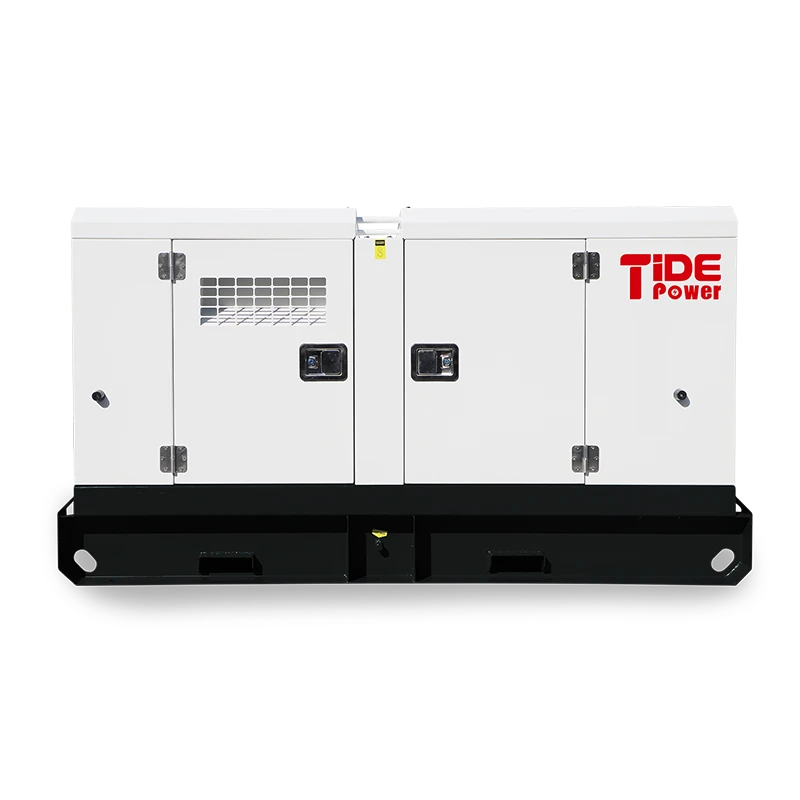
Manufacturers structure their product families around these application segments. For example, Tide Power’s Fenova Plus series spans 5 kVA to 900 kVA, designed for continuous duty in agriculture and telecom, while the Econic series reaches up to 1650 kVA for heavy industrial sites. Matching the generator architecture to the load profile avoids over-investment while keeping operational flexibility.
Engine and Alternator: The Heart of Generator Performance
The engine brand and alternator pairing define the generator’s service life, fuel economy, and parts availability. In procurement, an important decision is whether to standardize on a single engine family across a fleet to simplify maintenance or to select the best performer for each site.
Engine manufacturers such as Cummins, Perkins, Lister Petter, and MTU have established global service networks, and the choice often comes down to local support. An engine from a recognized brand with a local distributor will reduce mean time to repair. The alternator is equally important. Brands like Leroy Somer and Stamford are widely used for their voltage stability and brushless design, and the alternator’s insulation class and temperature rise rating directly affect reliability in hot environments.
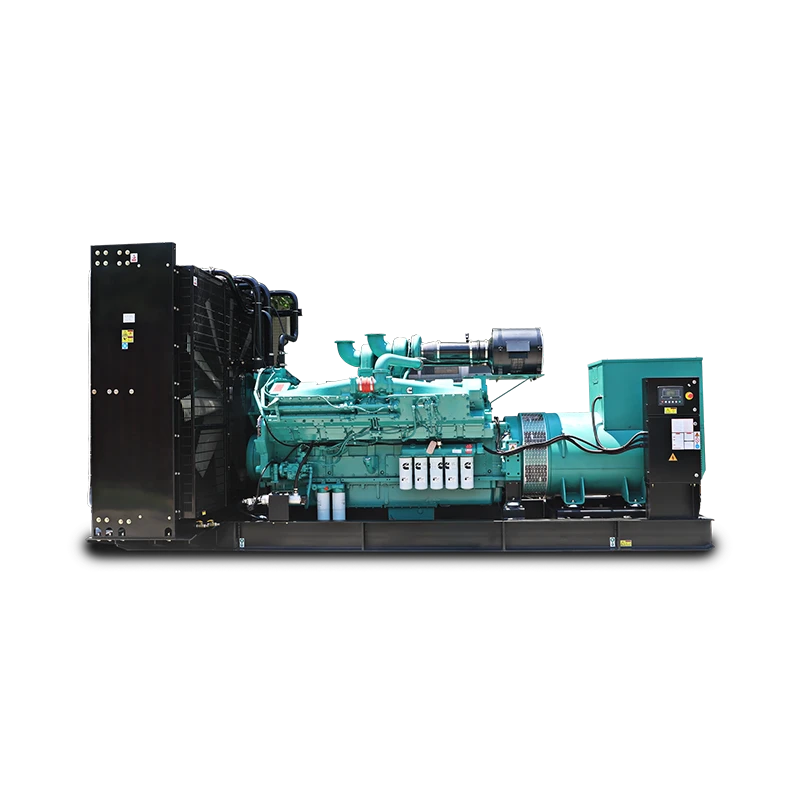
From a procurement standpoint, verifying that the generator set manufacturer is an authorized OEM partner for the engine brand adds a layer of quality assurance. It means the engine is supplied through official channels, the final assembly follows the engine maker’s guidelines, and warranty claims are handled without dispute. In our work with international clients, we have seen projects where a cheaper non-authorized integrator led to warranty voids that cost far more than the initial savings.
Beyond the brand name, examine the governor type (electronic is standard today for precise frequency control) and the AVR specification. For sensitive electronics loads, look for an alternator with a short-circuit capability that supports coordination with downstream protective devices.
Enclosure Design and Site-Specific Durability
The physical enclosure is often treated as an afterthought, but in practice it determines how well the generator survives the installation environment and complies with local noise and safety regulations.
A soundproof canopy rated for outdoor use must do more than reduce noise. The canopy material thickness (a 2 mm steel enclosure is common in mid-range units), the quality of the acoustic insulation, and the ventilation design all affect thermal performance and long-term corrosion resistance. Generators installed near residential areas or in urban basements need a verified noise level, typically below 75 dBA at 7 meters for a silent set. Look for a standard test report, not a catalog claim.
Containerized generators, built into ISO shipping containers, offer a different set of features: built-in fuel tanks, weatherproof cable entries, and easier transport. Open type generators are typically installed inside a dedicated powerhouse and cost less upfront, but they require separate ventilation and exhaust systems. The decision between open and enclosed should be based on the actual site infrastructure, not just price.
 Site-specific details matter. A generator destined for a coastal mining site in West Africa faces salt spray and high humidity, so a canopy with a proper paint specification (C5-M marine grade) and sealed electrical enclosures will outlast a standard finish by years. A unit for a Middle East data center must sustain full load at 50°C ambient without derating. These are features that appear in the detailed specification sheet, not in a product brochure headline.
Compliance, Efficiency, and Smart Control Systems
International procurement adds a layer of regulatory requirements that directly affect the generator’s feature set. CE marking, ISO 8528 compliance for generator sets, and sometimes local standards like AS1940 for fuel storage in Australia, determine whether a generator can be legally installed and insured.
Emission compliance has also become a practical feature. In regions requiring EPA or EU Stage V standards, the generator must include an engine with the correct after-treatment system, and the control panel must log emission-related data. Even where regulations are not enforced today, purchasing a compliant unit future-proofs the investment.
The control system is the interface between the generator and the site. A modern digital controller, such as those from Deep Sea or ComAp, provides remote monitoring over Ethernet or cellular networks, automatic start/stop logic, and fuel level tracking. For critical applications, a controller that supports multi-unit parallel operation allows capacity expansion without replacing existing assets.
Fuel efficiency features include electronic governing that adjusts fuel injection based on real-time load, and auto-idle functions that ramp down during low-load periods. These are not always included in base configurations, so the procurement specification should list them explicitly if operational cost is a primary concern.
If your project involves a remote installation with limited access, it is worth confirming remote monitoring compatibility and spare parts logistics before finalizing the generator specification. Contact us at [email protected] to review your site’s connectivity and support requirements.
Beyond the Spec Sheet: After-Sales Support and Global Logistics
The most dependable engine and alternator combination becomes a liability without a support structure behind it. In global procurement, after-sales features are as important as engine specifications, yet they rarely appear on a comparison spreadsheet.
Warranty terms vary widely between manufacturers. A standard 12-month warranty may cover only major components, while a comprehensive 24-month warranty with extended coverage on the alternator and control system indicates the manufacturer’s confidence. Service contract options, including scheduled maintenance visits and remote diagnostics, reduce the operational burden on site teams.
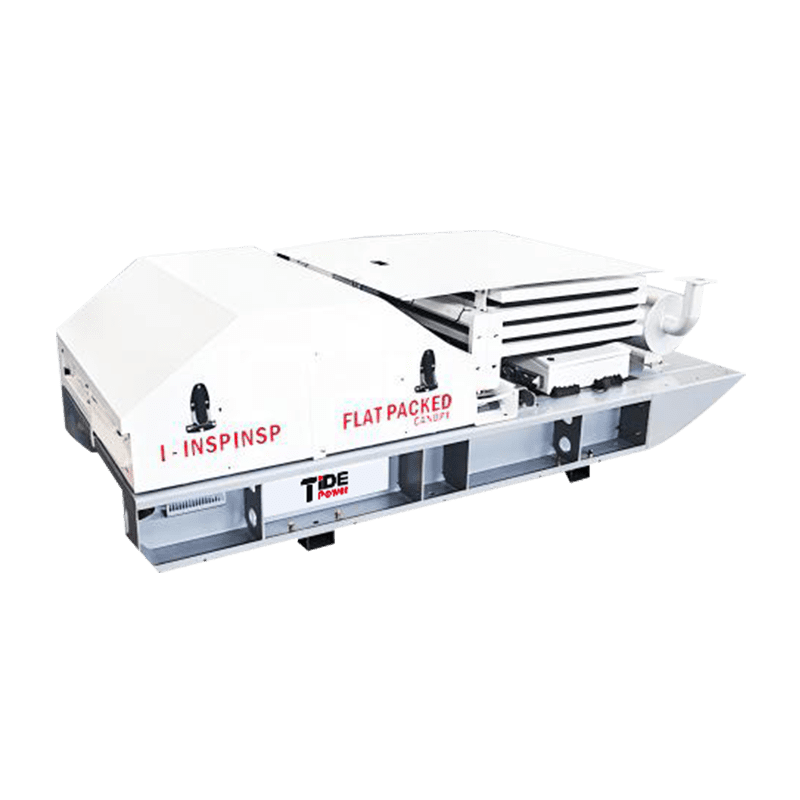
Spare parts availability is the single most common cause of extended downtime in international projects. A generator set built with globally available engine parts will have a shorter supply chain than one using a niche regional brand. Modular enclosure designs, such as CKD (completely knocked down) platforms, allow spare parts to be stocked in compact kits and assembled on site, which is particularly useful for projects in Africa or Southeast Asia where full container deliveries are expensive.
In our experience, procurement managers who involve the after-sales team during the selection phase, rather than after delivery, consistently achieve higher uptime in the first two years of operation. The feature to look for here is not a part number but the supplier’s demonstrated ability to respond across time zones, with local language support, and with a documented escalation process.
When you are ready to evaluate specific generator configurations, share your load profile, site conditions, and deployment timeline at [email protected] or call +86 591 2806 8999. We will work through the feature priorities with you, from engine selection to the after-sales service plan tailored to your installation region.
Questions Procurement Teams Ask About Industrial Generator Features
Do I need a silent or open type generator?
A silent generator set has a soundproof canopy that reduces noise typically to 65–75 dBA at 7 meters, making it suitable for urban hospitals, residential backup, or sites where noise ordinances apply. An open type generator is installed inside a dedicated powerhouse, which costs less upfront but requires separate ventilation, exhaust ducting, and fire-rated walls. If you already have a plant room with adequate airflow, an open set saves capital. If you are setting up a temporary site or lack building infrastructure, a silent or containerized unit ships as a self-contained package. The feature to compare is total installed cost, not just generator price.
What is more important: engine brand or alternator brand?
Both are critical, but for different reasons. The engine determines fuel consumption, service intervals, and parts availability. The alternator affects voltage stability, motor starting ability, and long-term electrical reliability. For a standby generator that runs only during outages, alternator performance matters because the unit must provide clean power instantly. For a prime power unit running continuously, engine durability and fuel efficiency take priority. In procurement, look for a paired combination where the engine and alternator are both from recognized manufacturers with local service support rather than focusing on one component in isolation.
How do I ensure spare parts will be available in a remote location?
Spare parts availability depends on the manufacturer’s distribution network and the engine family selected. Engines from brands with established global dealer networks—Cummins, Perkins, Lister Petter—offer shorter lead times for filters, belts, and injectors in most regions. Additionally, request a recommended spare parts list for the first two years of operation and verify lead times for critical components like the controller and AVR. Some suppliers offer consignment stock arrangements where parts are pre-positioned at the site. In remote mining or island deployments, this approach prevents the 8- to 12-week lead times that occur when parts are ordered reactively. Share your site details and we can confirm parts coverage and lead times for your region.
What certifications should an industrial generator carry?
At a minimum, the generator set should be CE marked and built to ISO 8528 (the international standard for reciprocating internal combustion engine-driven generating sets). For regions with local regulations, additional certifications like AS1940 (Australia fuel storage) or UL listing (North America) may be required. The control panel should meet the relevant EMC directive. If the generator is deployed in a hospital or data center, the manufacturer should provide a test report confirming step load performance and voltage regulation under site conditions. Procurement teams should request the actual certificates during the tender phase, not accept a vague “complies with international standards” statement.
What warranty package should I expect for an industrial generator?
Standard warranty for an industrial diesel generator is typically 12 months or 1,000 operating hours, whichever comes first, covering major components such as the engine block, alternator, and control system. Higher-tier packages extend this to 24 months and include coverage for attachments like the radiator cooling system, fuel transfer pump, and soundproof enclosure. The critical feature to examine is how warranty claims are processed internationally. A manufacturer with authorized service partners in your region can dispatch a technician and ship parts under warranty without requiring you to return the component. Always confirm that the warranty terms explicitly cover the country of installation before signing the procurement contract.
If you’re interested, check out these related articles:
A resounding success at the Tide Power 2024 Annual Gala Dinner
“Inciting?sales?in?leading?the?changing?trend”2022?Tide?Power?Global?Sales?Conference was successfully held