 EN
EN ZH
ZH FR
FR ES
ES AR
ARFor commercial facility managers comparing battery backup vs generator backup, the decision involves far more than upfront price tags. It demands a clear understanding of total cost of ownership, runtime requirements, fuel logistics, and long-term reliability. Having advised global energy infrastructure projects for over ten years, I’ve observed that while battery systems offer clean and quiet operation, diesel generator sets consistently deliver the most cost-effective and dependable backup power for extended outages. This guide breaks down each critical factor to help you make an informed procurement decision specifically for commercial and industrial applications.
How Do Battery and Generator Backup Systems Differ?
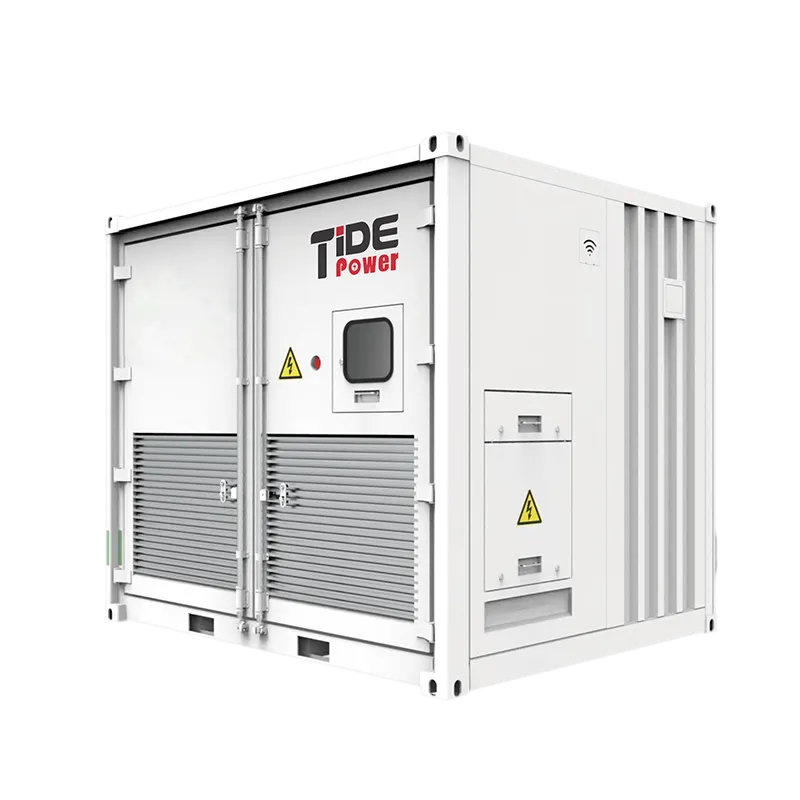
Battery backup systems store electrical energy chemically, typically in lithium-ion cells, and discharge it through an inverter when grid power fails. They provide millisecond-level response and operate silently with zero on-site emissions. However, their energy capacity, measured in kilowatt-hours (kWh), directly limits runtime unless the system is oversized or paired with solar generation.
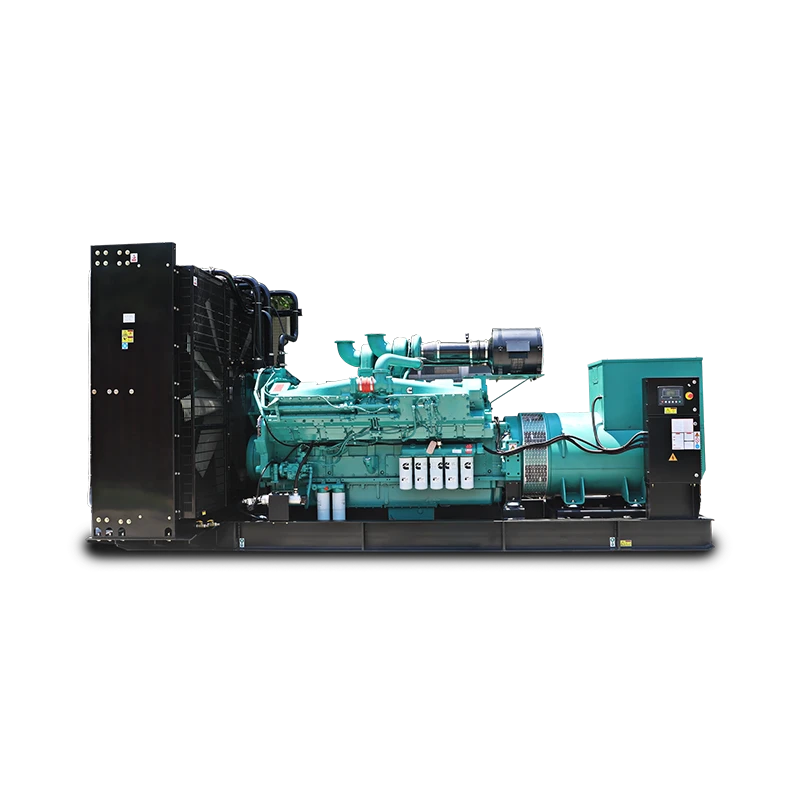
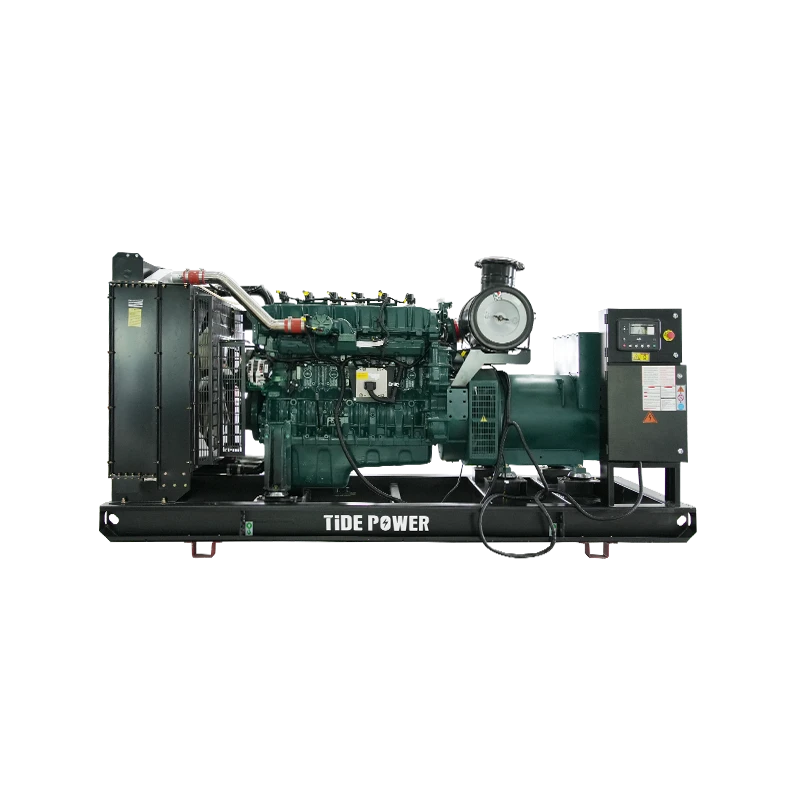
A generator set (genset) converts fuel such as diesel, natural gas, or propane into mechanical power that drives an alternator to produce electricity. The runtime is dependent on fuel supply; as long as fuel is available, the generator runs. Modern diesel generators, like Tide Power’s Fenova Plus Series powered by Lister Petter engines (5 to 900 kVA), can operate continuously for days with proper fuel logistics.
| Feature | Battery Backup | Generator Backup |
|---|---|---|
| Response Time | Milliseconds | 10 to 30 seconds |
| Runtime | Limited by capacity (hours) | Unlimited with refueling |
| Maintenance | Low (battery health monitoring) | Regular servicing (engine, filters) |
| Noise Level | Silent | Moderate to loud (sound-attenuated options) |
| Typical Lifespan | 10 to 15 years (degradation) | 20+ years (with maintenance) |
For commercial loads above 50 kW requiring more than a few hours of backup, a diesel generator’s scalability and fuel endurance make it the more practical choice.
What Are the Total Cost of Ownership Considerations?
When evaluating battery backup vs generator backup, the initial capital outlay often tells only part of the story. A full lifecycle cost analysis must account for the following components over a typical 10 to 15 year horizon:
Capital cost: A lithium-ion battery energy storage system (BESS) such as Tide Power’s TP-261BESS (261 kWh LFP) has a higher upfront cost per kWh of usable backup compared to a comparably rated diesel genset like the Econic Series (16 to 1650 kVA). For example, a 100 kW standby diesel generator may cost 40% to 60% less than a battery system with equivalent 4-hour runtime.
Fuel vs. electricity cost: Generators require diesel or gas, subject to market price fluctuations. Batteries recharge from the grid or solar, offering lower variable cost per discharge, but achieving long-duration backup significantly increases battery size and cost.
Maintenance: Diesel generators need periodic oil changes, filter replacements, and annual load tests, averaging 1% to 2% of capital cost per year. Battery systems have lower maintenance but may require inverter servicing and eventual battery replacement after 3,000 to 5,000 cycles.
Installation: A generator requires a concrete pad, fuel storage tank, and exhaust routing. A battery system needs indoor space or a climate-controlled enclosure. Both require an automatic transfer switch, but batteries may require more complex site electrical upgrades.
A simplified cost comparison over 15 years for a 100 kW backup system with 8-hour runtime shows the generator delivers a lower total cost of ownership, even when accounting for fuel and maintenance. As a general rule, if runtime requirements exceed 4 to 6 hours, generator economics improve substantially.
If your facility’s financial team is evaluating both options, it is worth confirming the lifecycle cost assumptions with a detailed load profile. Our engineering team can provide a custom cost projection at [email protected]. Often our initial estimates find that customers overlook fuel storage compliance or battery augmentation for future expansion.
How Do Reliability and Runtime Requirements Influence the Decision?
Reliability in backup power is not just about mean time between failures; it is about predictable performance when the grid is down. In this aspect, a well-maintained diesel generator offers an advantage.
I’ve consulted on projects in regions with frequent, prolonged outages where fuel supply chains were tested. In one Southeast Asian manufacturing plant, a 500 kVA generator operated for 72 continuous hours without incident, supported by a pre-arranged fuel delivery contract. A battery-only system sized for the same load would have required multiple Megawatt-hours of storage, prohibitively expensive and logistically complex.
Generators are especially dependable because their output is independent of battery degradation. A Lister Petter-powered generator, for example, can maintain 80% load factor indefinitely if serviced according to schedule. Batteries, while highly reliable in the short term, experience capacity fade over time, meaning a 100 kWh system after five years may only deliver 80 kWh, reducing effective runtime.
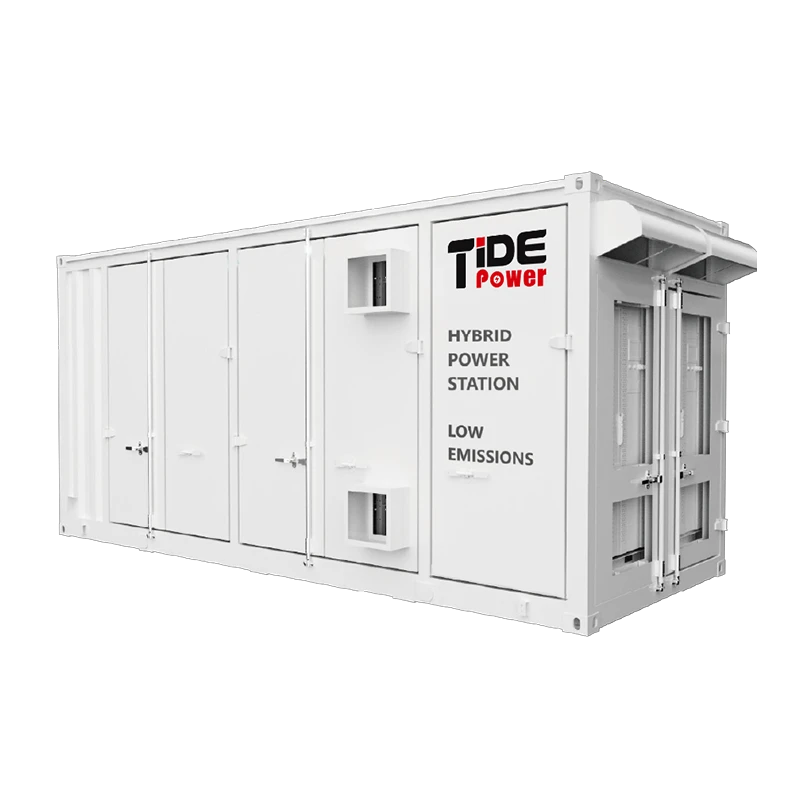
For facilities with critical processes that cannot tolerate even a 10-second interruption, a battery system with UPS capability can bridge the gap until the generator starts and takes over the load. Many commercial installations today adopt a hybrid approach: a modest battery bank handles the first minutes and peak load transients, while a diesel generator covers extended outage duration. Tide Power’s Hybrid Power System (10 to 250 kVA) integrates solar, storage, and diesel generation into a unified microgrid, enabling seamless switching and optimized fuel use.
What Compliance and Environmental Factors Should You Evaluate?
Environmental regulations increasingly impact backup power decisions. Diesel generators emit CO2, NOx, and particulates, and local authorities may impose limits on runtime for testing, require emission permits, or mandate low-sulfur fuel. EPA Tier 4 final standards in the U.S., for instance, set strict limits on non-road diesel engines above 37 kW.
Battery systems produce zero on-site emissions and minimal noise, making them attractive for urban areas with strict zoning. However, the manufacturing and disposal of lithium-ion cells carry environmental costs that are often overlooked in simple emissions comparisons.
Noise is another factor. A diesel generator without an acoustic enclosure can exceed 85 dBA, which may violate community noise ordinances. Sound-attenuated designs, like the Hemera Series (CE, ISO compliant), reduce noise to 65 to 75 dBA, acceptable for most commercial sites. Battery systems operate silently, a clear advantage in residential-proximate or hospital settings.
For facilities handling sensitive loads, emission compliance can be met with natural gas generators. Gas generators like Tide Power’s MWM series (600 to 4,500 kVA) meet ISO 14001 and offer lower CO2 emissions compared to diesel, while still providing extended runtime on pipeline gas or biogas.
When evaluating compliance, consider the full lifecycle: diesel may require emission monitoring and permits, while batteries may demand fire suppression systems and hazardous waste protocols for end-of-life disposal.
How Can You Select the Right Backup Solution and Supplier?
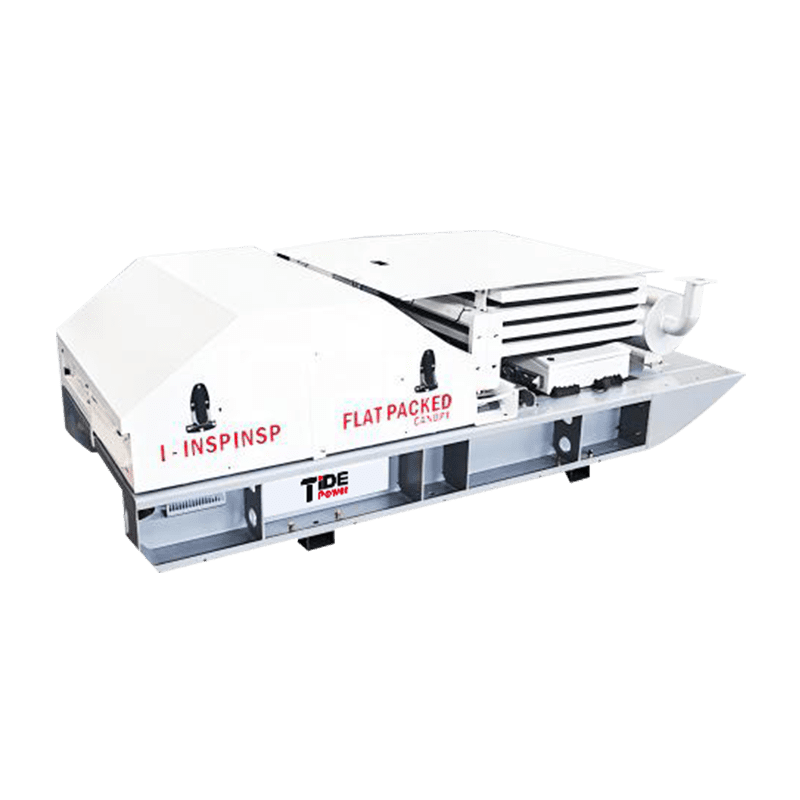 The decision between battery backup and generator backup must be anchored in your facility’s specific operational profile. Here is a step-by-step approach I recommend to clients:
- Quantify your critical load: Identify the essential circuits and total kW/kVA that must remain powered during an outage.
- Define required runtime: Determine the maximum outage duration your site must withstand based on historical data or worst-case scenarios.
- Evaluate site constraints: Assess space availability, fuel storage regulations, noise limits, and emission requirements.
- Develop a lifecycle cost model: Include capital, fuel/electricity, maintenance, and replacement over 10 to 15 years.
- Review scalability: Consider future growth; it is cheaper to oversize a generator initially than to add capacity later, whereas batteries can be modularly expanded.
- Select a supplier with integration capability: A supplier that offers both generation, storage, and hybrid systems can provide unbiased recommendations and integrated control solutions. Tide Power Technology’s product range covers silent diesel generators, gas generators, BESS, and hybrid microgrids, allowing a single source for design, supply, and aftermarket support.
How Can You Move Forward with Your Backup Power Strategy?
The choice between battery and generator backup power can feel like balancing competing priorities: sustainability, reliability, cost, and compliance. For commercial and industrial operations, the most resilient strategy often combines the strengths of both technologies. A diesel generator provides the long-duration endurance and cost efficiency for extended outages, while a battery system can handle short interruptions, improve power quality, and integrate renewable sources.
At Tide Power Technology, we help you navigate these decisions with a solutions-agnostic approach. Our engineering team will work with you to assess your site’s specific requirements and recommend the most appropriate system, whether that’s a standalone generator, a BESS, or a hybrid microgrid.
To start your project evaluation, send your load profile and site details to [email protected], or call +86 591 2806 8999. We’ll provide a no-obligation technical recommendation and a tailored proposal.
What Are Common Questions About Battery and Generator Backup Systems?
Can a battery backup system fully replace a diesel generator for commercial use?
Not in most cases requiring more than a few hours of backup. Batteries are excellent for short-duration outages and power quality management, but replacing a generator for whole-facility backup with the same runtime would require an impractically large and expensive battery array. In projects we’ve assessed, a hybrid system struck the best balance: batteries handle instant switching and peak shaving, while the generator shoulders extended outages. The specific ratio depends on your load and duration. Share your load curve and we can model the trade-offs.
How do I handle diesel fuel storage and aging?
Diesel fuel degrades over time and requires treatment if stored beyond 6 to 12 months. Most commercial installations use double-walled tanks with leak detection and periodic fuel polishing. Generator exercises under load consume fuel, helping turnover. Regulations vary by jurisdiction, so it is important to check local codes on tank size, secondary containment, and spill prevention. Our team can guide you through the compliance requirements for your location.
What is the typical lifespan of a battery energy storage system?
A well-maintained lithium iron phosphate (LFP) battery can last 10 to 15 years or 3,000 to 5,000 cycles at 80% depth of discharge, with gradual capacity loss. A diesel generator, when properly maintained, can exceed 20 years and 30,000 operating hours. This longevity difference favors generators for facilities with long planning horizons and heavy usage. If your financial model discounts replacement cost beyond 10 years, confirm that assumption, because batteries will likely need at least one replacement within the generator’s service life.
Are there financial incentives for installing battery storage?
Many regions offer tax credits, rebates, or demand response payments for battery systems that support grid stability. Commercial solar-plus-storage projects often qualify for accelerated depreciation. Generators rarely receive such incentives. However, the incentives must be weighed against the total cost of ownership; a lower-subsidized generator may still prove cheaper over the long run. If your site qualifies for substantial battery incentives, the equation shifts, and a feasibility study can clarify the net present value.
If you are uncertain which regulations or incentives apply to your project, reach out to us at [email protected] with your location and we’ll help you identify relevant programs.
If you’re interested, check out these related articles:
Tide Power Shines at WETEX 2025 Dubai, Drawing Major Attention with Smart Hybrid Storage and Efficient Dewatering Solutions
Cheers for the completion of the first phase of the Gas Project in Africa
Happy Mother’s Day
Tide Power’ s exhibition at the 135th Canton Fair has successfully concluded
Tide Power’s Hybrid Power Solution Steals the Show at Canton Fair